Straight answer: for most loaded weekend rides, a cargo e-bike is the better choice — it carries kids, groceries and gear in one trip. A hub motor e-bike is the better choice when you ride light and alone, because it is lighter, simpler and easier to live with.
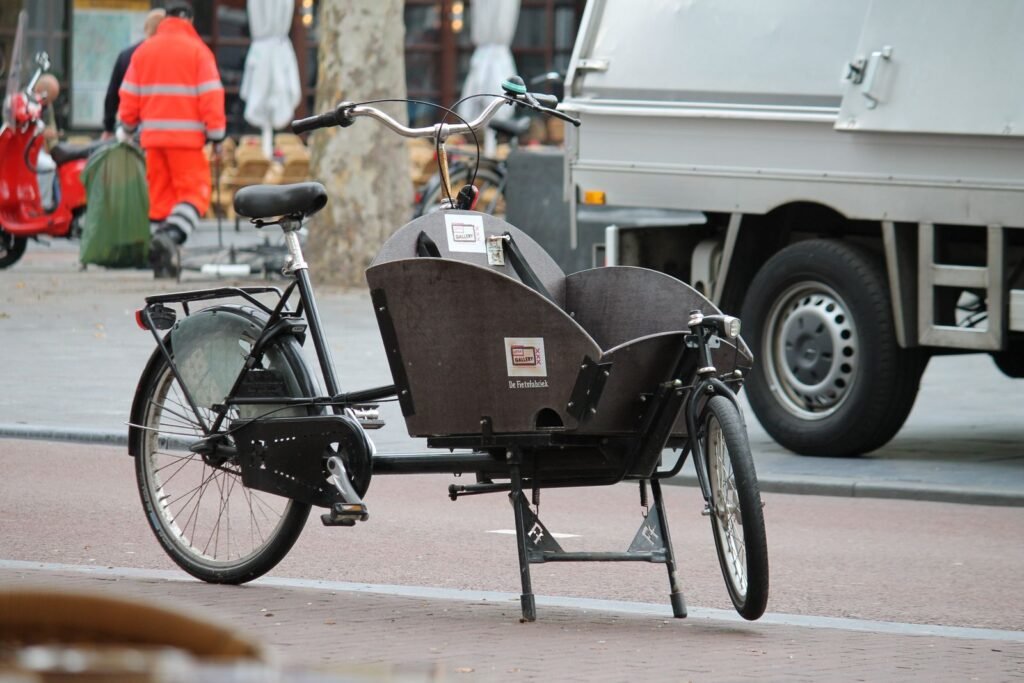
The difference is not the motor. Most cargo e-bikes already use a hub motor. The difference is the frame: a cargo e-bike is built around carrying a load, with a long wheelbase, a reinforced rack or a front box, and brakes sized for extra weight. A hub motor e-bike is usually a standard frame with the motor in the wheel hub — lighter and simpler, but with nowhere to put a big load.
So pick by the load, not the label. If your weekend regularly means a child, a dog or a full shop, the cargo bike earns its weight. If it means a solo loop on paths and quiet roads, the lighter hub motor bike is faster to live with and easier to park.
Cargo E-Bike vs Hub Motor E-Bike: Which One Is Right for Weekend rides?
A weekend ride is a different job from a commute. There is no fixed route, no office to reach and no single load. One Saturday you ride alone for an hour; the next you carry a child to the park, pick up groceries and bring home a plant that does not fit in a bag. The bike that fits one of those days can feel wrong on the other, so the choice comes down to what your weekends actually look like.
This guide compares the two side by side — load, weight, range, hills and storage — and it is part of the site’s E-Bikes Hub. If you are still weighing the cargo side, read Cargo E-Bike vs Fat Tyre E-Bike; for the closest look at the hub motor side, see Folding E-Bike vs Hub Motor E-Bike.
Cargo E-Bike vs Hub Motor E-Bike: The Core Comparison
Read the table from left to right: what each bike is built for, then what to check before you trust either claim.
| Attribute | Cargo E-Bike | Hub Motor E-Bike | What to Watch |
|---|---|---|---|
| What it is | A long, reinforced frame built to carry a load — usually a rear rack or a front box | A standard e-bike frame with the motor built into the front or rear wheel hub | Check the frame, not just the motor — most cargo e-bikes already have a hub motor |
| Best weekend use | Family outings, market runs, picnics, carrying kids or a dog | Solo loops, rail trails, coffee rides and light errands | Match the bike to your most common ride, not your rarest one |
| Carrying capacity | High — a child seat, panniers and a front box can all go on one bike | Low to moderate — a rack and small panniers, or a trailer | Measure the load you actually carry on a normal weekend |
| Weight and handling | Heavy and long — steady at speed, but hard to lift and turn in tight spaces | Light and nimble — easy to lift onto a car rack and manoeuvre | Try a tight U-turn and a kerb before you buy |
| Motor feel | Smooth, steady assist tuned for pulling weight from a stop | Direct, quiet assist with no mid-drive parts to maintain | Hub motors feel different on hills — test one on a slope |
| Range | Drops fast when fully loaded, so plan shorter loops with a heavy load | Best on flat loops at a steady pace with little extra weight | Range figures assume a light rider — load changes them |
| Hills | Climbs moderate hills well when loaded, but needs a low gear and patience | Struggles most on long, steep hills, especially with a heavy rider | Ride your local hill loaded before you decide |
When the Answer Changes
The verdict above assumes a typical family weekend. Change the facts and the answer flips:
- You ride alone almost every weekend. The cargo bike’s extra weight is dead weight, and the hub motor bike wins on fun per mile.
- Your route is all steep hills. A loaded cargo bike is hard work on a long climb, and a light hub motor bike with a trailer for the rare heavy day can be the better compromise.
- You have no garage. A long cargo bike that lives outside in the rain will age fast, while a hub motor bike you can store indoors wins.
- You carry a child every weekend. No hub motor commuter replaces a proper child seat on a cargo bike — the cargo side wins outright.
- Your weekends are mostly car trips with a bike on the back. A heavy cargo bike is hard to load on a car rack; a lighter hub motor bike, or a folding one, is the practical pick.
The Weekend Test: Cargo E-Bike vs Hub Motor E-Bike
- Load the bike the way you ride. Put your real weekend load on it — child seat, shopping bags or a picnic bag — not an empty test ride.
- Ride your own loop. Take a route with a hill, a tight turn and a stop at a shop, the way your Saturdays actually go.
- Test the stop. Brake from a normal cruising speed with the load on, then do a slow U-turn. A bike that cannot stop and turn loaded is the wrong bike.
- Park it where it will live. Carry it up your steps or into your storage space. If you cannot move it easily, you will not ride it.
- Ride it again the next day. The first ride flatters every bike. A second ride, when you are a little tired, shows you the weight you will really feel.
What a fail looks like:
- You cannot stop smoothly with the load → the brakes are too small for the weight → choose a bike with bigger brakes, or a lighter load.
- The bike feels wobbly at walking speed → the load is too high or too far back → lower the load and centre it over the frame.
- Your legs give up halfway up the hill → the gearing is too high for a loaded climb → use the lowest gear earlier, or pick a bike with a lower gear range.
- You dread lifting the bike → the bike is too heavy for your storage → store it at ground level, or switch to the lighter hub motor bike.
Myth vs Fact
Myth: a cargo e-bike and a hub motor e-bike are two different kinds of motor.
Fact: most cargo e-bikes already use a hub motor. “Cargo” describes what the frame carries, and “hub motor” describes where the motor sits — the two labels overlap, so compare the whole bike, not the label.
Before you test
- Wear a helmet and closed shoes, even on a short test ride.
- Check the brakes and tyre pressure before you roll, and test the brakes at walking speed first.
- Test a loaded bike in a quiet car park or side street — never in traffic on your first ride.
- If a child is riding along, fit their seat and check the foot guards before the bike moves.

1400W peak power, up to 80 miles, and a child safety fence — built for family loads.
How to Choose the Right Side for Your Weekend Rides
What you will need: your usual weekend load, a tape measure, and the hill you ride most often.
The method
- List your loads. Write down what you carry on three normal weekends — kids, shopping, pets, gear.
- Measure the biggest load. If the biggest regular load needs a child seat or a front box, only a cargo bike does the job.
- Measure your storage. A cargo bike needs a garage or shed; a hub motor bike fits a hallway or car boot.
- Test both loaded. Ride the same loop with the same load, and judge the stop, the U-turn and the hill.
Note: most cargo e-bikes already have a hub motor, so do not pay extra for a “hub motor cargo bike” as if it were a separate kind of bike — compare the frame, brakes and load rating instead.
Warning: never overload a rack or a child seat past the limit stamped on it. An overloaded rack can snap, and a child seat that is not rated for the weight is not safe.

750W peak motor, 60+ miles, and a 7-speed drivetrain — light and simple for weekend loops.
When the Damage Is Already Done
- Cargo bike, but you ride light and alone: use it for errands and shopping instead of car trips, keep the tyres pumped up, and store it at ground level so the weight never bothers you.
- Hub motor bike, but you now carry a child: fit a child trailer — it carries the child safely and unclips when you ride solo.
- Hub motor bike, but the shopping is too much: add panniers and a sturdy rear rack, and split heavy loads across two trips.

1450W peak power, 20×4 fat tyres, and up to 80 miles — a strong cargo-style weekend hauler.
The Safe Alternative: Start With a Hub Motor E-Bike
- Buy the light bike first. Choose a hub motor e-bike that fits your storage and your budget.
- Add carrying gear only when you need it. Fit a rack and panniers for shopping, or a trailer for a child.
- Upgrade only if the load becomes weekly. If you carry a heavy load almost every weekend, that is the moment a cargo bike pays for itself.
What to Do Next, in Order
- List your three normal weekend loads.
- Measure your storage space.
- Test both bikes loaded, on your own loop.
- Check the brakes and the load limits.
- Buy the bike that fits the load you carry most.
Never Do This on a Weekend Ride
- Never overload the rack. Stay under the limit stamped on it.
- Never ride loaded without testing the brakes first. Test them at walking speed.
- Never carry a child without a helmet and foot guards. Check both before you move.
- Never run the battery flat far from home. Leave charge in reserve for the ride back.
In Short
In short: a cargo e-bike wins when your weekends carry a real load, and a hub motor e-bike wins when you ride light and alone. Pick by the load, test both bikes loaded, and let the bike that stops, turns and stores easily take the win.
The essentials
- Cargo wins for kids, shopping and gear.
- Hub motor wins for light solo rides.
- Test both bikes with your real load.
- Check brakes, storage and load limits first.
More Questions, Answered
Can a hub motor e-bike carry a child? Yes, with a child trailer — but not with a full child seat on a standard frame, so a cargo bike is the better pick for regular child carrying.
Is a cargo e-bike too heavy for weekend fun? It feels heavy at slow speed and when lifting, but steady and calm once rolling — test a U-turn before you judge it.
Do cargo e-bikes use hub motors? Most do. “Cargo” describes the frame and load, while “hub motor” describes where the motor sits, so compare the whole bike rather than the label.
Additional Details
- Name: Cargo E-Bike vs Hub Motor E-Bike: Which Is Better for Weekend rides?
- Description: Cargo e-bike vs hub motor e-bike: which is better for weekend rides? Compare load capacity, weight, range and hills, then choose the right bike for your trips.
- Published: November 10, 2026