For most city riders, the commuter e-bike wins. It is lighter, easier to park and lock, and quicker through traffic on a normal workday. The cargo e-bike wins only when you regularly carry something a pannier cannot hold: a child, a full weekly shop, or work gear. If your load fits in a bag, the commuter is the better city bike.
That verdict assumes a typical city trip: paved roads, bike lanes, and a rack at each end. Change the load, the parking, or the stairs, and the answer can flip. The table and the 20-minute test below show where your trips fall.
Why this choice matters in the city
A city e-bike is not a weekend toy. It replaces car and bus trips, carries your work bag, and has to live somewhere: a hallway, a balcony, or a rack outside. The commuter e-bike is built for that life, with a slim frame, a rack, and fast-rolling tyres. The cargo e-bike is built for hauling weight. It does that job well, but the extra size follows you everywhere: into lifts, through doorways, and onto every rack.
The mistake is to buy for the biggest trip you can imagine instead of the one you make every day. A cargo bike bought for one school run a week still has to be parked and locked six days a week. A commuter bought for a load it cannot carry still leaves you driving. Match the bike to the everyday load, not the exception.

How a commuter e-bike and a cargo e-bike compare
| Attribute | Commuter E-Bike | Cargo E-Bike | What to watch |
|---|---|---|---|
| Best for | Daily work trips, errands, short hops | Children, a big shop, or work gear | Your weekly load |
| Weight | Lighter, easy to lift and lock | Much heavier, so stairs are a chore | Lift it first |
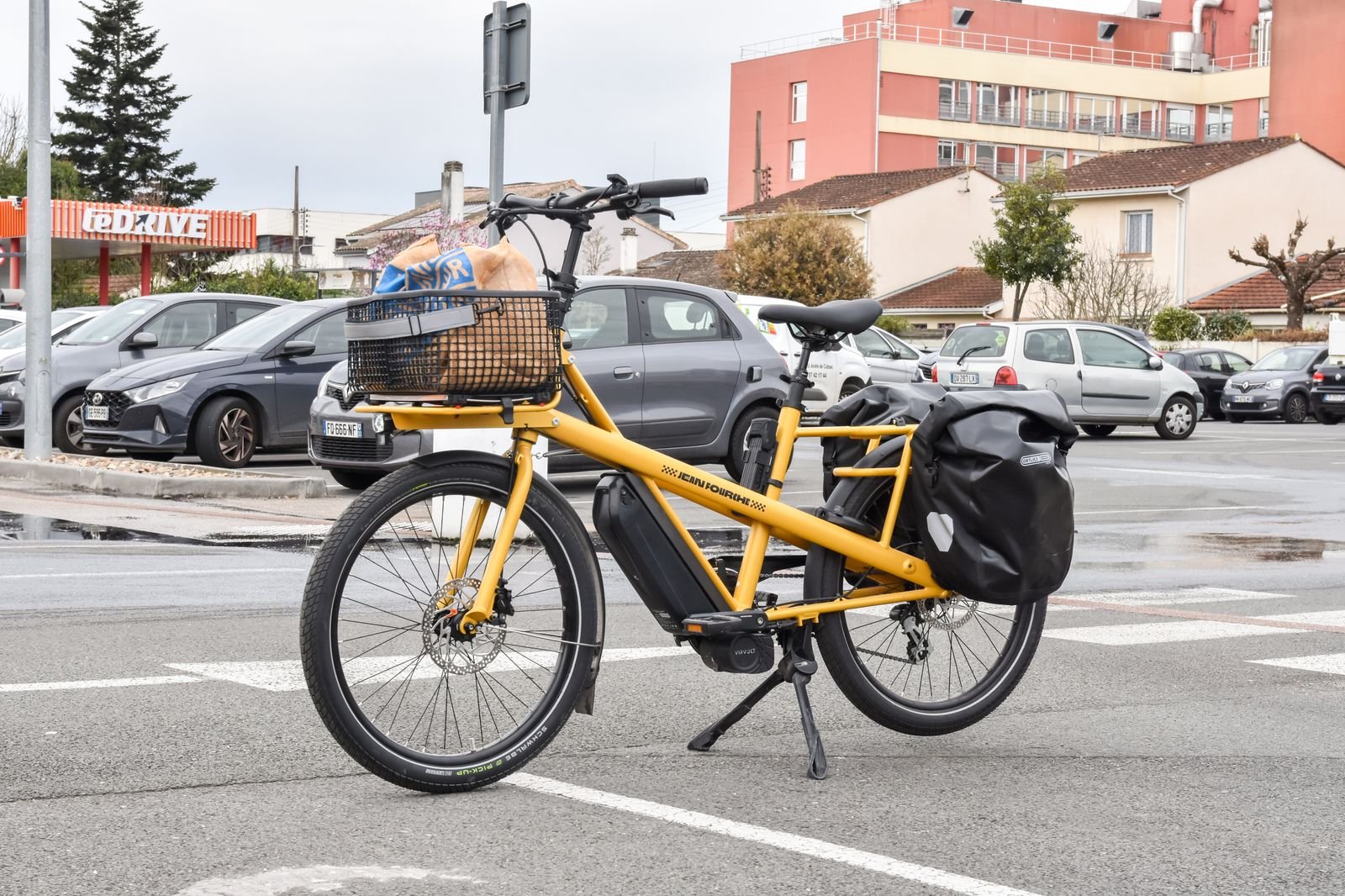
| Load space | Rack and panniers suit a bag or small shop | Long rack or front box carries far more | Measure the load |
| Parking and storage | Fits a standard rack, hallway, or flat | Needs a long space and a strong lock | Check both spaces |
| Handling in traffic | Quick to start, filter, and turn | Steady, but slow to turn and squeeze through gaps | Ride your route |
| Stability at low speed | Can feel twitchy when fully loaded | Stays planted with a heavy load | Judge it loaded |
| Motor and battery | Smaller motor and battery suit flat city miles | Bigger motor and battery move heavy loads | Loads drain batteries |
| Cost and upkeep | Usually cheaper to buy and maintain | Costs more, with bigger parts to replace | Budget for upkeep |
| Who it suits | Solo riders with a bag | Parents, couriers, daily haulers | Pick the main rider |

When the answer changes
The verdict above holds for a solo rider with a bag. These five things flip it.
- You carry a child every day. A child seat or a cargo box is the safe way to carry a child; a commuter rack with a bag is not. The cargo bike wins here.
- Your weekly shop fills a trolley. If the shop fills a trolley, panniers will not hold it. The cargo bike wins.
- You live up two flights of stairs. A heavy cargo bike becomes a daily lift, so the commuter wins unless you have ground-floor storage.
- Your route is steep and your load is heavy. Hills plus weight need a stronger motor and stronger brakes, which suits the cargo bike. Hills alone do not: we compared a commuter with an electric mountain bike for hill riding.
- One bike must do everything. If a single bike has to cover school runs, shopping, and commuting, the cargo bike’s range wins. If it only has to commute, the commuter wins.
A 20-minute test that settles it
Both bikes feel fine in a shop. This test finds the one that fits your real trips, and it takes 20 minutes per bike.
- Load it as you really ride: bag, shopping, or child seat, at your real weight.
- Ride your normal route, including the worst hill, the tightest turn, and a stop at the lights.
- Park and lock it where you would at home and at work, and time how long it takes.
- Carry it up or down any steps on your route, or lift it onto its stand.
- Do a slow U-turn and a stop-start in a narrow space, fully loaded.
- Note what annoyed you: weight, length, balance, or brakes. That is your answer.
What a fail looks like
- You cannot lift the bike up a step or onto its stand. Cause: the bike is too heavy for your storage. Fix: choose the lighter commuter.
- The bike wobbles at walking pace with a load. Cause: the load is too high or too far back. Fix: lower the load and keep weight centred. If it still wobbles, try the cargo bike’s low, long frame.
- You run out of braking on a downhill. Cause: worn pads or a load beyond the brakes. Fix: stop the test and have a bike shop check the brakes before you ride loaded again.
Myth: A bigger motor fixes a heavy city load. Fact: A bigger motor helps on hills, but it does not make a long, heavy bike easier to park, turn, or carry upstairs.
Before you test: Wear a helmet, check the brakes and tyre pressure, and test on quiet streets first. Keep the test load low and centred, and have someone nearby on your first loaded ride.
The method: choose by your load, not by the motor
Ignore the motor for a minute. City riding is decided by load, storage, and parking, and the method below works those out in order.
What you will need
- Your usual bag or weekly shopping list.
- A tape measure.
- Your storage space, doorway, and lift sizes.
- Your normal route, steepest street included.
The method
- List what you carry on a normal weekday, and weigh the heaviest day’s load on a bathroom scale.
- Measure where the bike will live: doorway width, lift size, and rack length. If it does not fit, it is the wrong bike.
- Shortlist one commuter and one cargo model from the commuter e-bike guide and the cargo e-bike guide, plus our E-Bikes Hub.
- Run the 20-minute test above on both bikes, loaded the same way.
- Choose the bike that passed with the least fuss.
When to stop: If either bike feels unsafe loaded – brakes, balance, or steering – stop the test and ask a bike shop to check the setup before you ride it again.

When the damage is already done
Bought the wrong one? Work through this list before you sell it. Most wrong buys can be fixed.
- You bought a commuter, but the load keeps growing. Add a front basket and larger panniers first, and check e-bikes with cargo space for a bigger setup. If the load still does not fit, or the bike feels unstable, sell it and switch.
- You bought a cargo bike, but you barely load it. Take the box or seat off for light days and use the bike for the weekly shop only. If parking and stairs still wear you down daily, trade down to a commuter.
- Either bike, wrong size. A frame that does not fit causes sore knees and poor control. A bike shop fit, with the saddle and handlebars adjusted, can change a bike more than a new motor can.
- Brakes feel weak with a load. Do not keep riding it. Have a bike shop check the pads and rotors: heavy loads punish brakes, and worn brakes are a safety problem, not a feature.

The safe alternative: start with the other side
If you are torn, test the cargo side first. It is the bigger commitment, so trying it first tells you the most – borrow or hire one to try it.
- Borrow or hire a cargo e-bike for a week and use it for your real trips.
- Log every trip: load, distance, parking time, and stairs.
- If the log shows mostly empty trips and slow parking, the commuter is your bike.
- If the log shows full loads and no parking trouble, the cargo bike has earned its place.
Storage is the usual deal-breaker. If the bike will not fit where you live, a folding e-bike or a step-through e-bike is worth a look before you give up on electric altogether.
What to do next, in order
- Weigh your heaviest normal day’s load.
- Measure your storage, lift, and doorway.
- Read the commuter and cargo guides linked above.
- Test both bikes loaded on your normal route.
- Buy the one that passed, and lock it well.
Never do this
- Never buy on motor size alone. A big motor does not fix a bike that is too long or too heavy for your home.
- Never test a cargo bike empty. An empty cargo bike hides the weight, balance, and braking you will live with.
- Never skip the parking check. A bike that does not fit your rack or hallway ends up left outside.
- Never carry a child on a rack not made for it. Use a proper child seat or cargo box, fitted and checked.
- Never ride loaded with worn brakes. Heavy loads need full braking power, so have them checked first.
In short
For most city riders, the commuter e-bike is the better buy: lighter, cheaper to run, and easier to live with. But if a child, a weekly shop, or work gear rides with you every day, the cargo e-bike is the right tool. Measure your load, test both loaded, and let the everyday trip decide.
The essentials
- Commuter: solo daily trips, light loads, tight parking.
- Cargo: children, big shops, daily heavy loads.
- Weight and parking matter as much as the motor.
- Test loaded, on your real route, before you buy.
- If you already bought the wrong one, adjust the setup first, then trade if it still does not fit.
More questions, answered
Is a cargo e-bike too big for a city?
It is long and heavy, so it suits riders with ground-floor storage and a real daily load. For tight flats and crowded racks, a commuter is easier.
Can a commuter e-bike carry a child?
Only with a proper child seat fitted to a rack rated for the weight; check the rack’s limit. For two children, or a child plus shopping, a cargo bike is safer.
Which is cheaper to run?
The commuter usually costs less to buy and to maintain. The cargo bike has bigger tyres, brakes, and battery to replace, so it costs more over time.
Do I need a cargo e-bike for a weekly shop?
If you shop for one or two people, panniers are enough. If you shop for a family, or carry the shop plus a child, the cargo bike earns its keep.
Can I use a cargo e-bike for commuting?
Yes. Many riders commute on one, often with a school drop-off on the way. It is slower to park and heavier to carry, so it pays only if the load is real.
Additional Details
- Name: Commuter E-Bike vs Cargo E-Bike: Which Is Better for City riding?
- Description: Commuter e-bike vs cargo e-bike — which is better for city riding? Compare weight, load, parking and cost, then run the 20-minute test before you buy.
- Published: November 9, 2026