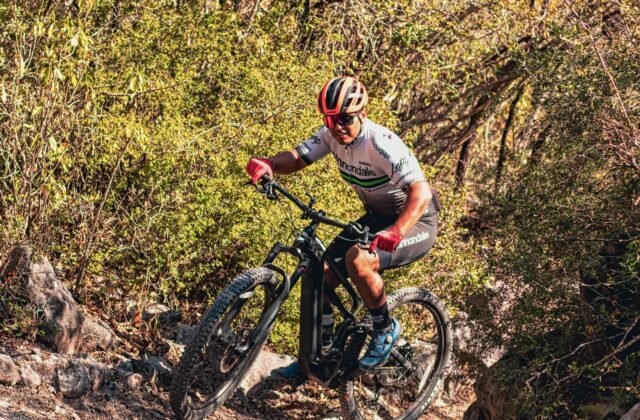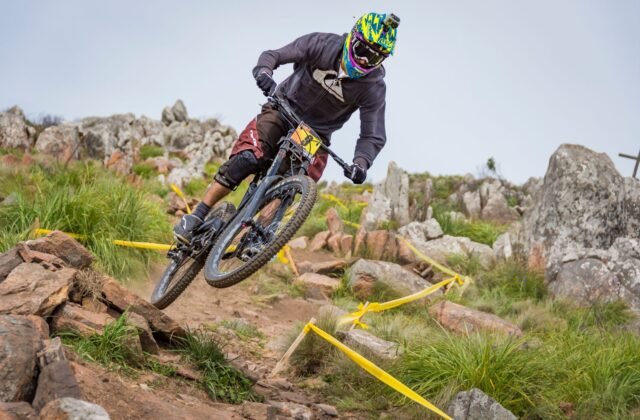
Straight answer: Cross country mountain bike vs dirt jump mountain bike — for mud, the cross country bike is the better choice. Its larger wheels, longer wheelbase and knobblier tyres keep grip and momentum on soft, slippery ground. A dirt jump bike is built for short, dry jumps: its small wheels and short frame drop into ruts, pack with mud and lose speed fast. Mud rewards grip, clearance and gearing more than the badge on the frame.
Introduction
Mud is the great equaliser on a trail. A bike that feels fast and playful on dry dirt can feel heavy, slippery and hard to steer once the ground turns soft. A cross country bike and a dirt jump bike look like cousins, but they were built for very different jobs, and mud exposes the difference within minutes.
A cross country bike is built to cover ground: larger wheels, a longer frame, gears for long climbs and tyres made to bite into loose soil. A dirt jump bike is built to leave the ground: smaller wheels, a short stiff frame, often a single gear and tyres made for smooth, dry jump lines.
This guide compares the two side by side in mud, looks at the conditions that can flip the answer, and gives you a short test to run on your own trail. It sits in our Mountain Bike category and the Mountain Bikes Hub.
Cross Country Mountain Bike vs Dirt Jump Mountain Bike in Mud: The Core Comparison
The table below compares the two bikes on the things that matter most once the trail gets wet.
| Attribute | Cross country mountain bike | Dirt jump mountain bike | What to watch |
|---|---|---|---|
| Wheel size and roll-over | 29-inch wheels roll over ruts, roots and puddles | 26-inch wheels drop into ruts and lose speed | Ride the rutted part of your trail |
| Tyre grip in mud | Wide-spaced, knobbly tread bites soft ground and sheds mud | Smoother, smaller tread packs with mud | Check the tread after one lap |
| Gearing | Gears let you spin through soft ground and climb muddy slopes | Often single-speed — you must stand and push | Try the muddiest climb |
| Frame geometry | Longer wheelbase feels stable and holds a line | Short, steep frame feels quick but washes out | Take a slippery corner at normal speed |
| Mud clearance | Frame and fork leave room for mud to clear | Tight clearances pack with mud and can stall the wheel | Check the gap around the tyres |
| Suspension | Front suspension absorbs ruts and braking bumps | Often rigid or short-travel, so ruts hit harder | Ride the rutted descent |
When the Answer Changes
The cross country bike wins most muddy days, but not every one. These are the variables that can flip the verdict.
- How deep the mud is. On a shallow, grippy surface layer, a dirt jump bike can cope. In deep, boggy mud, the cross country bike’s grip and gears take over.
- Tyres matter more than the bike. A dirt jump bike with fresh, open-tread mud tyres beats a cross country bike with worn tyres. Check the tyres before you blame the bike.
- Your trail. A muddy pump track or jump line still suits the dirt jump bike. A muddy natural trail with climbs suits the cross country bike.
- How you ride. Jumps, tricks and short bursts favour the dirt jump bike. Distance, climbs and mixed ground favour the cross country bike.
Test Both Bikes on the Same Muddy Trail
Pictures and tables cannot decide this for you. Ride both bikes on the same muddy loop on the same day and let the trail vote. The whole test takes about 20 minutes.
- Pick your loop. Choose a short loop with a muddy climb, a slippery flat corner and a short descent. Walk it once and note the deepest mud.
- Ride the cross country bike first. Ride the loop once, staying seated on the climb. Note where the tyres grip and where they slip.
- Ride the dirt jump bike second. Ride the same loop at the same pace. Note how the smaller wheels handle the ruts and how the single gear copes on the climb.
- Repeat the worst corner. Ride it twice more, once on each bike. The bike that holds its line without a foot down suits your trail.
- Choose by feel, not by speed. Pick the bike that felt controlled and predictable. A bike that is fast but frightening in mud is the wrong bike for wet winter riding.
What a fail looks like
| Symptom | Cause | Fix |
|---|---|---|
| The front wheel washes out in a corner | Tread packed with mud | Fit open-tread mud tyres, drop pressure a little and look through the corner |
| The rear wheel spins on a climb | Not enough grip, or a single gear too tall for soft ground | Fit knobblier tyres; on the cross country bike, drop to an easier gear first |
| The chain skips after a lap | Mud and grit in the gears | Wash the drivetrain, dry it and re-lube; a single-speed hides this better |
Myth: Dirt jump bikes are better in mud because they are lighter.
Fact: Weight helps less than grip. A light bike with smooth tyres slides further than a heavier bike with knobblier tyres and gears.
Myth: Mud does not matter if your bike has suspension.
Fact: Suspension helps over ruts, but it cannot create grip. Tyres, clearance and gearing decide how a bike behaves in mud.
Before you test: Walk the loop first and check the depth of any water. Wear a helmet, gloves and eye protection — mud flicks into eyes, and a washed-out front wheel can put you on the ground fast. Keep your phone in a dry bag, and never ride a flooded or closed trail.

How to Set Up Either Bike for Mud
The bike you ride matters less than the setup you ride it in. This is the setup work that makes the biggest difference in mud, and it works on both bikes.
What you will need
- A floor pump with a pressure gauge
- Helmet, gloves and eye protection
- A multi-tool with Allen keys
- Wet-weather chain lube and a clean rag
- A bucket and water, or a low-pressure hose
- Mudguards, if you have them
The method
- Fit the right tyres. Use open-tread, knobblier tyres with wide tread spacing, so mud is thrown off instead of packing in. If you only change one thing, change the tyres.
- Drop the pressure a little. A softer tyre spreads over soft ground and grips better. Use our mountain bike air pressure guide as a starting point.
- Fit mudguards. A front mudguard keeps mud out of your eyes; a rear one keeps it off your back and out of the drivetrain.
- Check the brakes. Mud cuts braking power. Squeeze both levers and check the pads before you leave — if they feel weak, change them now.
- Lube the chain the night before. Clean the chain, dry it, and apply a wet-weather lube so the links stay moving. Wipe off the extra so it does not hold grit.
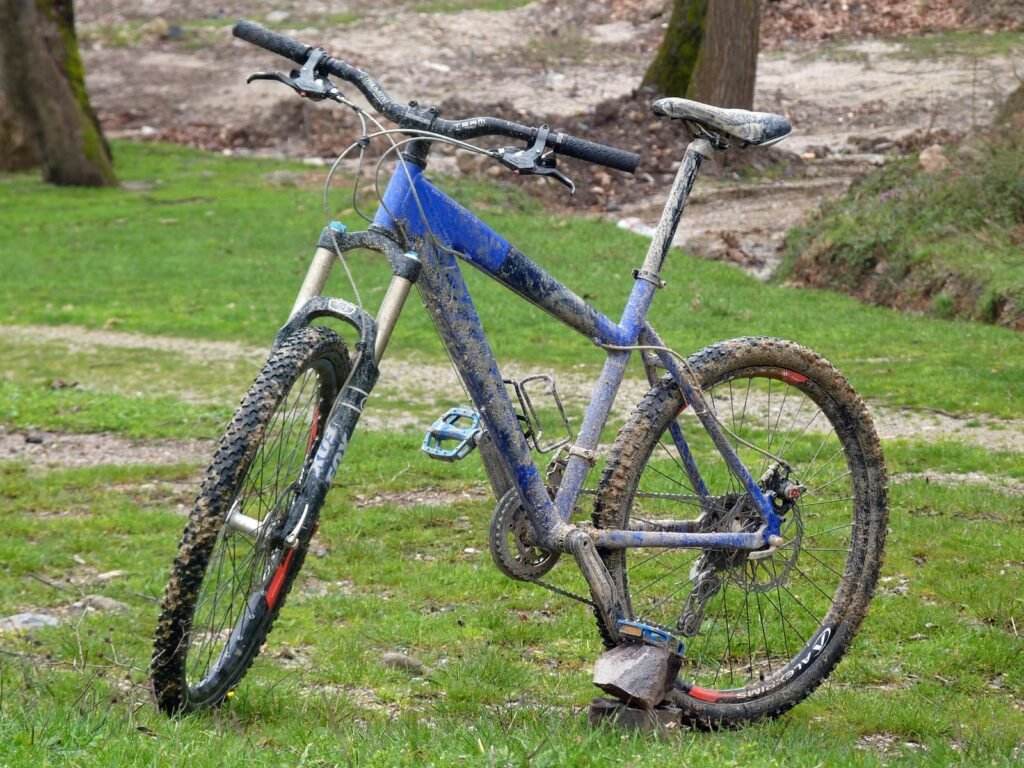
- Plan the wash. After the ride, wash the mud off before it dries. Rinse the frame and tyres, clean the chain and gears, dry everything and lube the chain again.
Do not pump your tyres to the number on the sidewall. That number is the maximum, not the pressure for mud. Over-inflated tyres skate on soft ground instead of gripping it.

When the Damage Is Already Done
Bought the wrong bike for mud? You are not stuck. Most of the difference between these two bikes can be changed after the sale.
- Dirt jump bike losing in mud. Fit open-tread mud tyres, drop the pressure a little and fit mudguards — that alone fixes most of the grip problem. See our full suspension vs dirt jump mountain bike for mud comparison.
- Drivetrain wearing fast. Mud and grit eat chains and gears. Wash the drivetrain after every wet ride, dry it and re-lube it. A single-speed setup hides this wear better.
- Nothing fixes it. Sell or trade the bike while it is still in good condition, and use the test in this guide to choose the replacement. See our cross country vs fat mountain bike comparison.

The Safe Alternative: Start with the Dirt Jump Bike
If the cross country bike feels too big or your riding is mostly jumps, start with the dirt jump bike instead. It is the safer first bike for jump lines and pump tracks — and with mud tyres, it will still ride wet days.
- Check the frame size first. A dirt jump frame is small by design; check that you can stand over it and reach the bars without stretching.
- Fit mud tyres and mudguards. This matters even more on a bike with small wheels.
- Learn on dry days. Build your skills on dry jump lines first — mud makes every landing harsher and every mistake faster.
What to Do Next, in Order
- Ride the test loop on both bikes, if you can borrow or rent them.
- Check the tyres on the bike you already own — worn tread is the first fix.
- Set the pressures with our mountain bike air pressure guide.
- Fit mudguards and lube the chain before the first wet ride.
Never Do These Things
- Never ride a flooded trail. Deep water hides holes and wrecks bearings.
- Never skip the wash after a muddy ride. Dried mud grinds the drivetrain and rusts the chain.
- Never use a high-pressure jet on the bearings. It forces grit into the hubs and bottom bracket.
- Never ride without a helmet in mud. A washed-out front wheel puts you down fast.
- Never buy on wheel size alone. Tyres, gearing and frame matter more than the rim size.
In Short
For mud, the cross country mountain bike is the better choice: larger wheels, knobblier tyres and gears keep grip and momentum where a dirt jump bike bogs down. But tyres, pressure and setup can close most of the gap, so test both bikes on the same muddy loop before you spend anything.
The essentials
- Cross country for mud: larger wheels, more grip, gears for soft climbs.
- Dirt jump for jumps: short, stiff and playful — best on dry jump lines.
- Tyres beat badges: open-tread mud tyres matter more than the bike.
- Test before you buy: one muddy loop on both bikes settles it.
More Questions, Answered
Is a cross country mountain bike better than a dirt jump mountain bike in mud?
Yes, in most cases. The cross country bike has larger wheels, knobblier tyres and gears, which keep grip and momentum on soft ground. The dirt jump bike is built for short, dry jumps and loses speed in mud.
Can you ride a dirt jump bike in mud?
Yes. Fit open-tread mud tyres, drop the pressure a little and fit mudguards. It will not climb a muddy hill as well as a cross country bike, but it will ride a muddy pump track or jump line fine.
Additional Details
Name: Cross Country Mountain Bike vs Dirt Jump Mountain Bike: Which Is Better for Mud?
Description: Cross country mountain bike vs dirt jump mountain bike: which is better for mud? Compare grip, clearance and gearing, then test both on your local trail.
Published: November 10, 2026