For most riders on dry, dusty trails, a cross-country mountain bike is the better choice. It is lighter, pedals more efficiently and holds speed on long climbs, and its fast-rolling tyres grip hard, dusty ground. An enduro mountain bike wins only when the trail turns steep, rough and fast: its longer travel and slacker geometry hold grip and control where a cross-country bike gets knocked off line. On smooth or rolling dusty trails, ride the cross-country bike. On steep, rocky descents, ride the enduro bike.
The gap is not about the frame material or the brand on the down tube. It is about what your trail asks for most of the time.
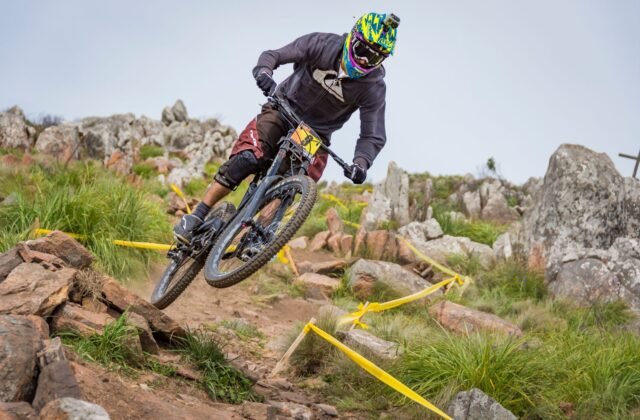
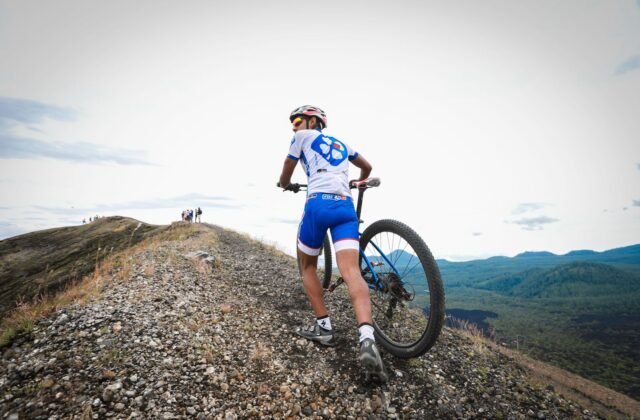
A cross-country mountain bike is built to climb and cover distance: light frame, firm short-travel suspension, steeper head angle, narrow fast-rolling tyres. An enduro bike is built to descend fast on rough ground: longer travel, slacker head angle, wider grippier tyres, and a stronger, heavier build that still climbs back up.
Dry dust adds a third factor: loose grit on hard ground cuts grip, clogs the drivetrain and turns every braking point into a skid patch. The bike that wins keeps its tyres on the ground and its rider in control, so this guide weighs weight, grip, suspension and control. It sits in the Mountain Bikes hub in the Mountain Bike category.
Cross Country Mountain Bike vs Enduro Mountain Bike for Dry Dust: The Comparison
Both bikes will finish the same dusty trail.
| Attribute | Cross-Country Mountain Bike | Enduro Mountain Bike | What to watch |
|---|---|---|---|
| Weight and pedalling | Light and efficient on climbs | Heavier, slower to speed up, stable at speed | Ride your longest climb. |
| Suspension and control | Short travel, firm, skips over bumps | Long travel, absorbs bumps, keeps tyres down | Ride your roughest descent. |
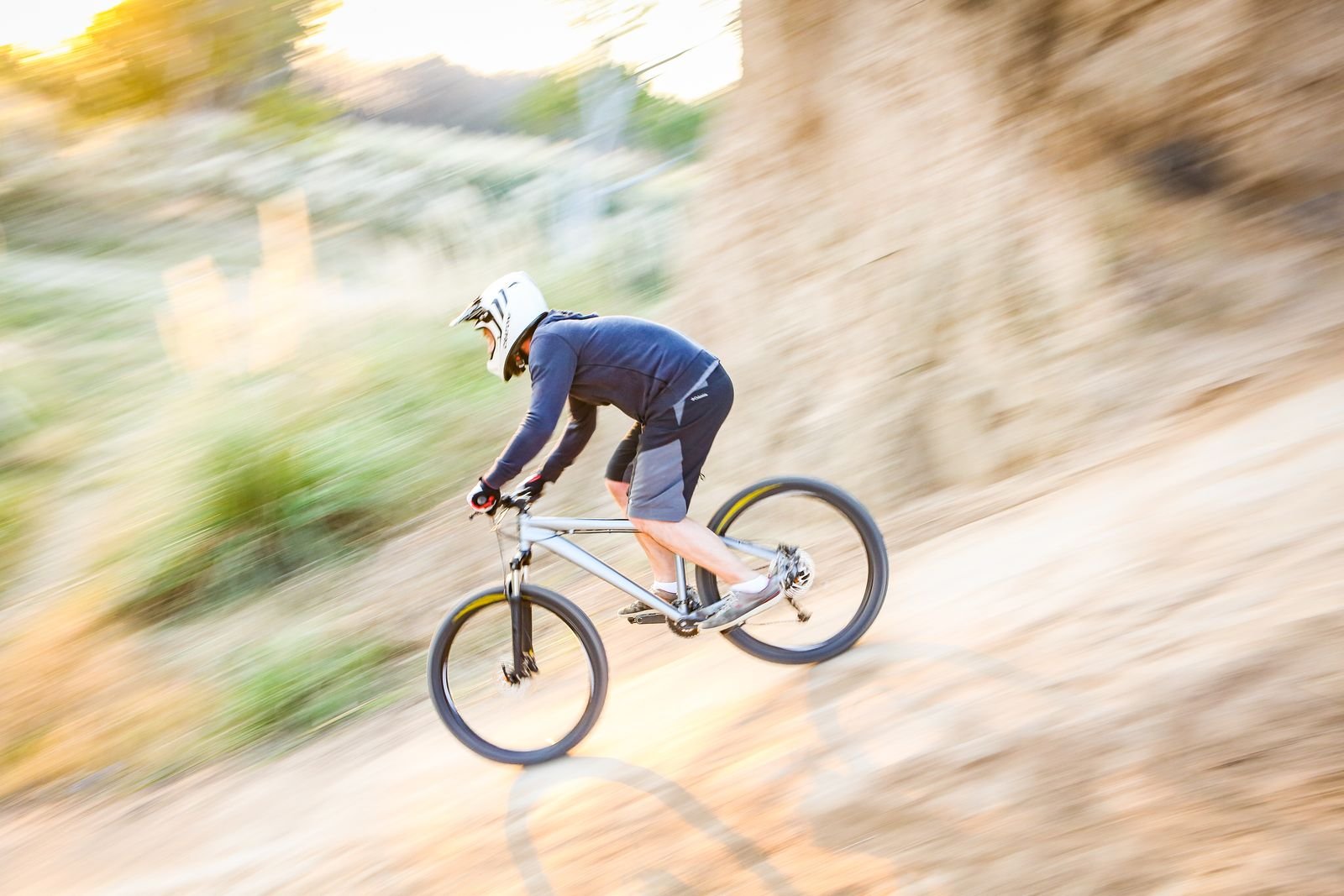
| Grip in loose dust | Fast tread, can skate on loose corners | Wider tyres, more bite in loose corners | Brake early, lean the bike. |
| Descending confidence | Quick steering, nervous at speed on steep ground | Slack and stable, calm at speed | Ride your steepest descent. |
| Durability and upkeep | Lighter parts, less to service | Stronger parts, more to service; dust enters seals | Check seals and chain after dusty rides. |
When the Answer Changes
Four variables flip the straight answer.
Your trails are steep and rough
If most of your ride is steep, rocky descending, the enduro bike wins: its suspension keeps the tyres in contact and its geometry keeps you calm. If your trails are rolling and smooth, the cross-country bike wins by a long way.
Your fitness and ride length
The lighter bike saves energy on every climb, and over two or three hours that matters more than the enduro bike’s advantage on descents. On short, mostly downhill rides, the extra weight costs you far less.
How deep the dust is
Thin dust on hard ground suits the cross-country bike: the ground underneath still gives grip if your tyres stay in contact. Deep, loose dust suits the enduro bike, whose wider tyres dig in where narrow tyres float and skate.
Your budget and servicing
An enduro bike has more suspension and stronger parts, and its pivots and seals need regular care in dust. A cross-country bike has less to service and costs less to run, and that gap adds up over a dusty season.
Test Both Bikes on the Same Dry Dusty Trail: A 20-Minute Decision Ride
Borrow a bike or rent each one once. Ride the same loop on both, back to back.
- Ride the same 20-minute loop on each bike: one long climb, one flat, fast section and one steep descent.
- Mark your effort, not your speed: how your legs feel on the climb, and how your arms feel on the descent.
- Stop and inspect the tyres: the dust on each tread and the contact patch where it met the ground.
- Pick the bike you would ride again the next day, not the one that felt faster on one section.
- Test with the correct pressure, using the air-pressure guide linked in the setup section below.
What a fail looks like
| Symptom | Cause | Fix |
|---|---|---|
| Front wheel washes out in dusty corners | Tyres too hard, tread cannot bite dust | Let air out with the setup guide below and lean the bike. |
| Rear wheel spins on dry climbs | Too much weight on the front, tyre too hard | Stay seated, shift your weight back and let the tyre grip. |
| Hands and arms beaten up after the descent | Suspension too firm, or trail rougher than the bike | Soften the suspension within the maker’s range, or try the enduro bike. |
Myth: An enduro bike is always faster downhill. Fact: On smooth or rolling dusty trail it is no faster, and it is heavier on every climb. It is faster only on steep, rough descents.
Before you test: Check the brakes on both bikes. Test each brake at walking speed, well away from the trail, and make sure the levers feel firm and even. Check the tyres, wheels and chain. Never ride a public trail without working brakes, a helmet and eye protection.

HOVERFLY OUREA 26 inch Electric Bike for Adults
750W peak motor, up to 20 MPH and 40 miles per charge.
How to Set Up Either Bike for Dry Dust
Before buying, set up the bike you ride today and watch what changes.
What you will need
- A reliable tyre pump or gauge.
- A clean cloth and dry chain lubricant, used at the label amount.
- Eye protection and gloves.
- A sealed container for spares, so dust stays out.
The method
- Wash the chain and drivetrain. Dry dust and oil make grinding paste, so wipe the chain clean and apply dry lubricant.
- Set the tyre pressure with the mountain bike air pressure guide, and check both tyres before you ride.
- Check the suspension sag: set it to the middle of the maker’s range, so the suspension follows the ground instead of skipping across it.
- Check the brakes: clean the pads and rotors, and bed them in on a flat, safe surface before the trail.
- Ride the same loop again, compare grip, comfort and effort, and note the setup that worked.
Do not pump your tyres to the number printed on the sidewall. That number is a maximum, not a ride setting. On dusty ground it shrinks the contact patch and makes the tyres skid.
Note: Start a little lower than on a wet trail, then add air if the tyres feel soft or squirm in corners. Change one thing at a time and write down what you changed.

Tamobyke V20 4.0 Electric Bike
1500W motor, 48V 15Ah battery, 20 x 4.0 fat tyres, throttle and pedal assist for steep starts.
When the Damage Is Already Done
If you already own a cross-country bike, do not sell it on the first ride.
- If the bike feels harsh on rough descents: fit wider, grippier tyres, soften the suspension within the maker’s range and add a dropper post if the frame takes one.
- If the bike feels heavy and slow on climbs: fit lighter, faster-rolling tyres and use the lockout on smooth climbs. The Trail Mountain Bike vs Cross Country Mountain Bike guide shows the middle ground.
- If the frame is the wrong size: no part will fix it. Sell the bike or trade it in, and size the next one properly before you buy.
- If the dust keeps beating the drivetrain: clean the chain after every dusty ride. Grip problems are often a pressure problem, so check the mountain bike air pressure guide too.
- If you still cannot decide between the two bikes: the Full Suspension Mountain Bike vs Enduro Mountain Bike and Trail Mountain Bike vs Enduro Mountain Bike comparisons cover the ground between them.
The Mountain Bikes hub has the rest of the cluster, including the Trail Mountain Bike vs 27.5 Mountain Bike comparison for weekend riding.

26 inch Electric E Bike for Adults
26-inch hybrid-style e-bike with a 500W brushless motor, 20 MPH top speed, and up to 37 miles pedal-assist range.
The Safe Alternative: Start with the Enduro Mountain Bike
If your trails are steeper than you thought, or you ride rough descents more than long climbs, the enduro bike is the safer first buy. It forgives mistakes on descents.
- Ride it on your usual trail for a month. Note where it feels slow and where it feels easy.
- Fit faster-rolling tyres for the climbs. Keep the wide, grippy tyre on the front if you ride in deep dust.
- Use the lockout on smooth climbs. It stops the suspension from soaking up your pedalling.
- Check the service intervals. Dust gets into pivots and seals, so plan a regular service and clean the bike after dusty rides.
What to Do Next, in Order
- Test both bikes on the same trail, using the 20-minute test ride above.
- Decide by your trails, not by the spec sheet: rolling and dusty, or steep and rough.
- Set the air pressure with the air-pressure guide, then ride the same loop again.
- Keep the setup you liked, and use it every time you ride in dry dust.
- If you already bought the wrong one, take the steps in When the Damage Is Already Done before you buy again.
Never Do These on a Dry Dusty Trail
- Never ride without eye protection. Dry dust gets into your eyes on fast sections and downhill runs.
- Never use a strong, soaking degreaser on the chain before a ride. It strips the lubricant, and dust grinds the chain dry.
- Never change tyre pressure by feel alone. Use a gauge, and write down the pressure you used.
- Never brake hard in a dusty turn. Brake before the turn, then release and roll through it.
In short
For most riders on dry, dusty trails, a cross-country mountain bike is the better choice: lighter, more efficient and easier to keep moving for a long ride. When the trail turns steep and rough, the enduro bike’s suspension and grip take over. Ride both on your trail, set the tyre pressure, and choose the bike you would ride again tomorrow.
The essentials
- Test both bikes on the same dusty trail. Riding them back to back is more useful than any list of parts.
- Set up for dust properly. Drop the pressure sensibly with the air-pressure guide. Never pump to the number printed on the sidewall.
- If your trail is mostly steep, rocky descending, the enduro bike is the better buy even though it costs you more on the climbs.
More Questions, Answered
Is a cross country mountain bike better than an enduro mountain bike for dry dust?
For most riders on dry, dusty trails, yes. On smooth and rolling trails, the cross-country bike climbs faster, holds speed better and costs less to run. On steep, rough descents, the enduro bike is better, so let your own trail decide.
Is an enduro mountain bike good for beginners?
It can be. Its stability and grip make steep descents easier, but its weight makes climbs harder. The Trail Mountain Bike vs Enduro Mountain Bike guide compares the two sides for beginners.
What tyre pressure should I use on dusty trails?
Lower than on a wet trail, but never the maximum on the sidewall. Use the mountain bike air pressure guide, then adjust in small steps and write down what you used.
Additional Details
- Name: Cross Country Mountain Bike vs Enduro Mountain Bike: Which Is Better for Dry dust?
- Description: Cross country mountain bike vs enduro mountain bike: which is better for dry dust? Compare weight, grip and control, then test both on your local trail.
- Published: November 10, 2026