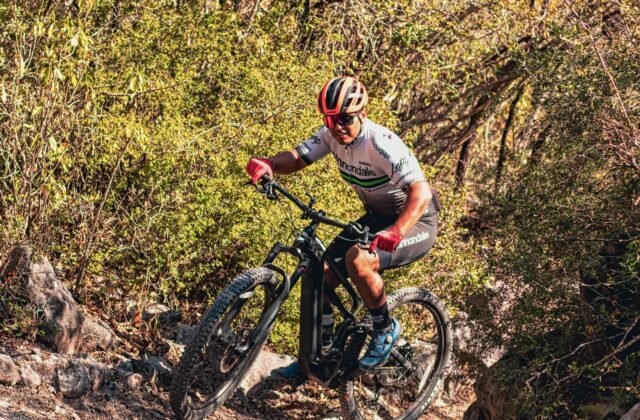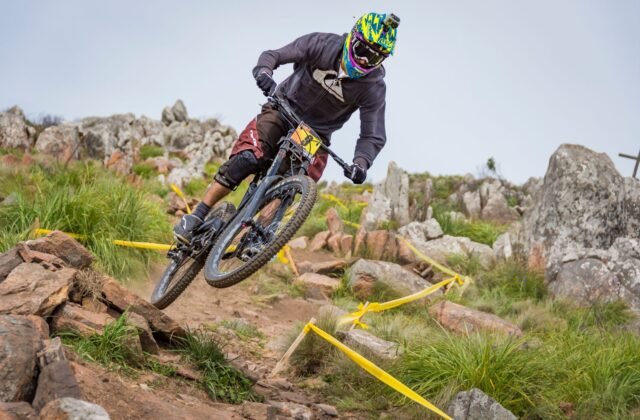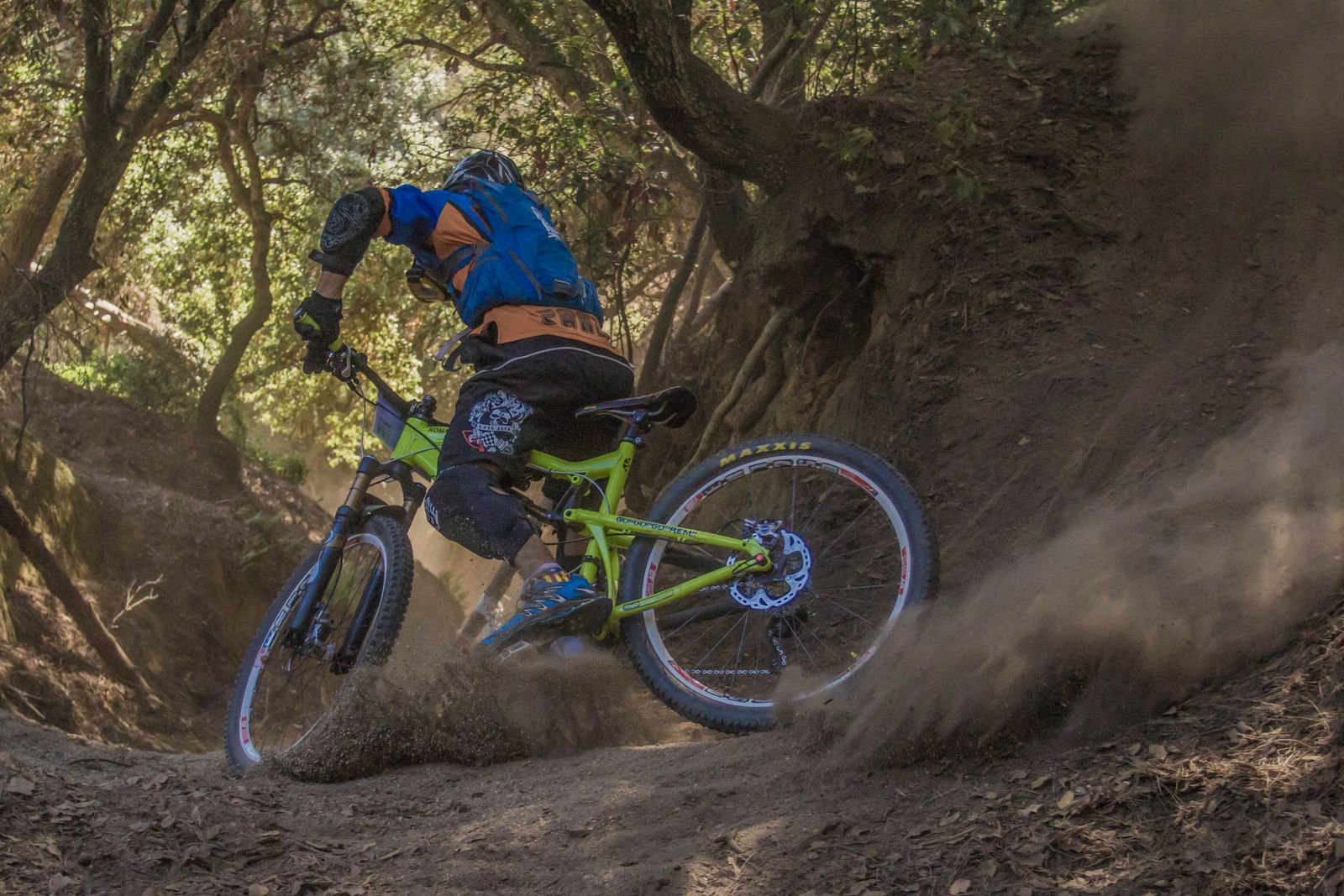
Straight answer: On dry dust, a full-suspension mountain bike is the better choice for most riders. It is lighter, it pedals more efficiently, and its rear shock keeps the tyre pressed onto loose ground. An enduro mountain bike only takes over on the steepest, roughest descents, where its longer travel and slacker geometry count for more than its weight.
A full-suspension trail bike is an all-rounder: it climbs, then it descends. An enduro bike is built for one job — going down steep, rough trails fast.
When you stand a full-suspension bike next to an enduro bike, they look like close cousins. Both have a shock at the front and a shock at the rear, wide bars and knobby tyres. The differences are in the details — suspension travel, frame angles and weight — and on dry dust, those details decide everything.
This comparison is about dry dust only: loose fire roads, powdery singletrack, moon-dust corners and dry rock gardens. Wet mud and wet roots are a different question. For the wider picture, start with the Mountain Bikes hub, then see Full Suspension Mountain Bike vs Downhill Mountain Bike and Hardtail Mountain Bike vs Enduro Mountain Bike.
Full Suspension vs Enduro on Dry Dust: The Core Comparison
The short version is weight against grip. A full-suspension bike gives away a little grip to save a lot of weight — the right trade on most dusty trails. An enduro bike buys grip with weight and slack geometry, and it only pays off on ground rough enough to punish the lighter bike.
| Attribute | Full Suspension | Enduro | What to watch |
|---|---|---|---|
| Suspension travel | 120–160 mm, built for climbing and descending | 150–180 mm, built for steep, rough descents | Long travel bobs when you pedal. |
| Weight | Noticeably lighter, easier uphill | Noticeably heavier: reinforced frame and wheels | Extra weight costs effort on every climb. |
| Pedalling efficiency | Stays firmer under power, often with a lockout | Bobs more under power and wastes energy | If it bobs, you are paying for suspension you do not need. |
| Cornering on loose dust | Stays planted and turns quickly | Stable at speed, but slower to change direction | A bike that will not turn in dust will not hold a line. |
| Traction on dry, loose ground | Good — the rear shock keeps the tyre in contact | Excellent — big travel holds traction on rough descents | Traction only wins when the surface is broken. |
| Dust in the suspension | Less travel, fewer seals to clean | More travel, more seals and pivots to keep clean | Dust works into seals and pivots — clean after dusty rides. |
| Best for | Riders who climb to earn their descents | Riders who ride steep, rough descents and race | Buy for the riding you do most. |

When the Answer Changes
The verdict above holds for most riders on most dusty trails. These are the cases that flip it.
The dust is deep and powdery
When the trail turns to moon dust — fine, deep powder that swallows the front wheel — grip and stability beat weight. An enduro bike’s longer travel and slacker head angle keep the front wheel from folding, and its wider tyres float where a shorter-travel bike digs in and stalls.
The descent is steep and rough
On steep, rocky descents, an enduro bike’s extra travel soaks up hits that would throw a shorter-travel bike off line. If your dusty riding is mostly downhill, the enduro bike is the right tool — it is built for exactly that.
The ride is mostly climbing
Long, dusty climbs punish weight more than anything else, and extra travel does not pay that bill back. For rides that go up as much as they go down, full suspension is the clear answer.
You never climb
If you ride a lift, a shuttle or a push-up trail, climbing is not part of the ride, and an enduro bike is the right tool — you never pay its climbing penalty.
Test Both Bikes on the Same Dusty Trail: A 20-Minute Decision Ride
One short ride on a trail you know well tells you more than any comparison table.
- Pick a dusty trail you ride often, 10 to 20 minutes long, with a mix of smooth and rough ground.
- Ride it on the full-suspension bike first, and note where you spin out, slide or lose the front wheel.
- Rest, drink, and ride the same trail on the enduro bike at the same effort.
- Compare how your legs feel at the top, not just the clock.
- If it was close, repeat the dustiest corners on both bikes.
- Choose the bike that got you through with the least wrestling.
What a fail looks like:
- Rear wheel spins on loose dust — the tyre is losing contact over roots or rocks. Let a little air out of the rear tyre and stay seated, so your weight keeps the tyre pressed down. See the mountain bike air pressure guide first.
- Front wheel washes out in dusty corners — your weight is too far back. Shift your weight forward, drop your outside foot and look through the corner.
- Legs give out halfway up — the bike is too heavy for the gearing, or you started too hard. Shift to an easier gear earlier and pace the climb.
Myth vs Fact
Myth: More suspension travel always grips better on dust.
Fact: Travel helps traction on rough ground, but it adds weight and pedalling bob. Past a point, extra travel costs more energy than it saves.
Before you test: Walk the trail first: check for loose rock, hidden ruts and drop-offs, wear a helmet and gloves, and test on a dry day. Carry a pump, a multi-tool and water. If a section looks dangerous, walk it — a test ride is never worth a crash.

How to Set Up a Full-Suspension Bike for Dry Dust
A full-suspension bike handles dust best when it is set up for dust, not for the bike park — and these steps take one evening and cost nothing.
What you will need:
- A shock pump
- A tyre pump or gauge
- A multi-tool
- Your normal riding shoes and pack
- A dusty trail you know well
The method:
- Set rear shock sag with your riding gear on, so the bike sits in its normal riding position.
- Add a little more air to the rear shock than for descending, or switch the lockout to its middle setting.
- Set tyre pressures for grip, not speed — lower at the rear than the front if the trail is loose and dusty.
- Slide the saddle forward a little and keep the bars low enough to weight the front wheel.
- Shift into an easy gear before a dusty climb bites, not after your legs have stopped.
- Ride the same trail again and note what changed — keep what helped, undo the rest.
Note: Change one setting at a time, ride the same trail, and write down what you felt. Two changes at once tell you nothing.
Warning: Never ride with the rear shock fully locked out on a rough descent, and never let tyre pressure drop so low the rim can strike a rock. Open the suspension back up before you point the bike downhill.
When the Damage Is Already Done
Already bought the wrong bike for your dusty trails? Work through these fixes in order — a new bike is the last resort.
- Set the bike up properly. Shock setup, tyre pressure and saddle position are free, and they fix most dust complaints.
- Change the tyres and gearing first. A grippier rear tyre and an easier lowest gear cost far less than a new frame.
- If the bike still stalls on every dusty climb, trade it. Sell the enduro bike to a rider who races or shuttles, and put the money toward a full-suspension trail bike.

The Safe Alternative: Start with an Enduro Mountain Bike
An enduro bike is the safe alternative when your riding is mostly steep, rough descents. If you shuttle, race, or ride lift-served trails, it is the right bike. For more on enduro riding, see Hardtail Mountain Bike vs Enduro Mountain Bike.
- Pick the lightest enduro bike you can afford, and use its climb switch or lockout whenever the trail points up.
- Keep the saddle high enough to pedal, and raise it for climbs if the seat post allows.
- Learn the bike’s limits on a gentle dusty trail first, before you commit to a steep one.
- Plan your rides around lifts and shuttles, and save your legs for the descents the bike was built for.
If you climb as much as you descend, this is not your bike.
What to Do Next, in Order
- Decide how much of your riding is climbing on dust, and be honest about it.
- Test both bikes on the same dusty trail, using the method above.
- Set up the winner properly — shock, tyres and saddle position — before you judge it.
- Only then spend money: tyres and gearing first, a new bike last.
Never Do This on Dry Dust
- Never lock the rear shock solid on rough ground. The tyre loses contact, and you lose traction and control.
- Never start a dusty climb in a hard gear. Your legs will stop before the top, and you will walk the hardest part.
- Never brake hard on loose dust. The wheels lock, the tyres slide, and ruts form behind you.
- Never ignore a washing front wheel. It is the bike telling you your weight is in the wrong place.
In Short
On dry dust, a full-suspension mountain bike is the better choice for most riders: lighter, more efficient, with enough traction from its rear suspension. An enduro bike only wins on descents so steep and rough that grip matters more than weight.
The Essentials
- Full suspension wins on dry dust: lighter, more efficient, enough traction.
- Enduro wins only on very rough, steep descents or lift-served riding.
- Set up matters: shock, tyre pressure and saddle position first.
- Test both bikes on the same dusty trail before you buy.
More Questions, Answered
Is a full-suspension mountain bike better than an enduro bike on dry dust?
Yes, for most dusty trails. It is lighter and pedals more efficiently, while its rear suspension keeps the tyre in contact with the ground. An enduro bike only pulls ahead on very rough, steep descents.
Can an enduro bike climb on dusty trails?
Yes — fire roads and gentle trails, especially with its climb switch on. It is slow and heavy uphill, and hard work on steep, technical climbs. It is not built for climbing as a regular part of riding.
Is an enduro bike heavier than a full-suspension bike?
Yes. An enduro bike has a reinforced frame, a longer-travel fork, stronger wheels and heavier tyres, all built to survive big impacts. That strength is what you pay for on every climb.
Which bike should I buy if I climb and descend equally on dusty trails?
Buy the full-suspension trail bike. It climbs well and descends well, which is exactly what a ride with equal amounts of up and down needs.
Additional Details
- Name: Full Suspension Mountain Bike vs Enduro Mountain Bike: Which Is Better for Dry dust?
- Description: Full suspension mountain bike vs enduro mountain bike: which wins on dry dust? Compare travel, grip, weight and climbing, then test both before you buy.
- Published: November 10, 2026
- Word count: 1,993 words