Straight answer: On steep, wet descents, the downhill mountain bike is the better choice. Its long-travel suspension front and rear keeps both tyres on the ground over slick roots and rocks, so it brakes and corners with more control. On a mixed wet trail that also climbs, the trail hardtail is the better all-round pick: it is lighter, simpler, and easier to pedal uphill. Descend only? Go downhill. Ride up and down? Go hardtail.
Introduction
Wet weather changes the mountain bike question. Mud takes grip from the tyres, roots and rocks turn slick, and braking distances grow. A bike that feels best on a dry trail can feel nervous after rain, and a heavy climber can feel planted on a wet descent. This guide compares the two directly.
Downhill Mountain Bike vs Trail Hardtail Bike in Wet Weather: The Comparison
Use this table to see the trade-off at a glance. The downhill bike wins on grip and braking, and the hardtail wins on weight and upkeep.
| Attribute | Downhill mountain bike | Trail hardtail bike | What to watch in wet weather |
|---|---|---|---|
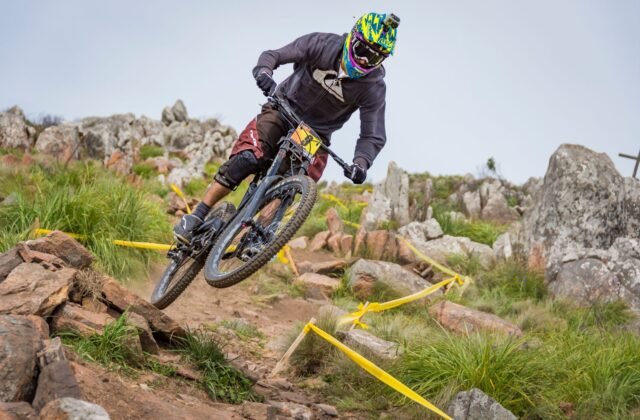
| Suspension | Long travel front and rear, built to absorb big hits | Short-travel front fork only; the rear is rigid | On wet roots and rocks, the downhill bike keeps both tyres in contact more of the time |
| Grip on slick surfaces | Two suspended wheels follow the ground, so the tyres hold on longer | The rear wheel skips over bumps, so grip breaks away sooner | If the rear wheel chatters over wet roots, the hardtail is at its grip limit |
| Braking | Big brakes and a planted rear wheel give steady, controlled stops | The rear wheel locks and skids more easily on wet ground | Brake earlier and use both brakes; a skidding rear wheel is the first warning sign |
| Climbing | Heavy and slow on climbs; built for lifts and shuttles, not pedalling up | Light, stiff and efficient; easy to keep moving uphill | On a wet ride that climbs, the hardtail saves real energy on every ascent |
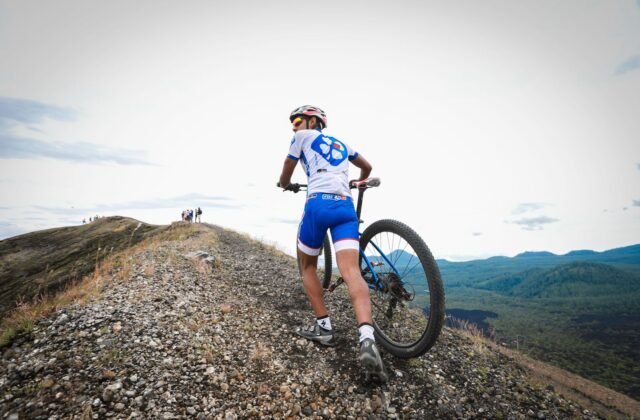
| Weight and handling | Heavy; stable at speed but hard to carry, lift and steer slowly | Light; quick to steer and easy to carry over unrideable wet sections | If you must walk a washed-out climb, the hardtail is far easier to push |
| Cleaning and upkeep | More pivots, seals and parts to clean and service after mud | Fewer moving parts; faster to wash and cheaper to keep running | After a muddy ride, budget more wash time for the downhill bike |
When the Answer Changes
- The trail is flat or rolling. Without steep descents, the downhill bike’s suspension is dead weight, and the hardtail wins on speed.
- You ride a bike park with a lift. With no climbing, the downhill bike’s weight stops mattering, and its grip takes over.
- The mud is deep and sticky. A hardtail usually has more space around the rear tyre, so it clogs less.
- You are still learning. A hardtail teaches balance but punishes mistakes on wet roots. A downhill bike forgives more, so beginners are safer on it.
- The trail is a long climb to a short descent. If you pedal up far more than you descend, the hardtail’s weight decides the ride.
Test Both Bikes on the Same Wet Trail
A ten-minute test on a wet trail tells you more than any spec sheet. Ride the same short loop on both bikes on the same day, while the ground is still wet, with the same tyres and tyre pressure on both.
- Pick a short loop with one wet descent, one wet climb and one flat muddy stretch.
- Ride the downhill bike first. Note where the tyres lose grip and how the brakes feel.
- Ride the hardtail on the same loop. Note every place the rear wheel skipped or slid.
- Repeat the descent on both bikes. The second run shows which bike brakes later and steers more calmly.
- Write down the difference. The bike that rode the loop faster, with fewer slides, is the right one.
What a fail looks like
| Symptom | Cause | Fix |
|---|---|---|
| Rear wheel locks and slides on a wet descent | Too little rear traction; the rigid rear cannot follow the ground | Shift your weight back, brake earlier, and fit a grippier rear tyre |
| Front wheel washes out on a wet corner | Too much speed and too little front grip | Slow down before the turn, keep your weight over the front wheel, and lower tyre pressure slightly |
| Mud packs between the tyre and the frame | Tight tyre clearance packs with sticky mud | Stop and clear the mud, and choose a narrower tyre or a frame with more clearance |
| You walk every climb after rain | The bike is too heavy for wet, soft climbs | Use the hardtail for climbing days, or ride at a steadier pace and pick drier lines |
Myth: A downhill bike is always better in wet weather because it has more suspension.
Fact: Suspension helps on descents, but it adds weight. On a wet ride with long climbs, the heavier bike costs you energy on every ascent, and the hardtail’s lighter frame wins.
Myth: A hardtail has no grip in the wet.
Fact: A hardtail grips well on smooth, wet ground. It loses grip when the rear wheel has to follow rough ground, because only the fork moves. Pick smooth lines and a grippy rear tyre, and a hardtail holds on.
Before you test: Wear a helmet and gloves, check that both brakes work before you ride, and tell someone where you are going. Wet trails are slippery for everyone, and a test ride is not a race.

Set Up Either Bike for Wet Weather
A wet-weather setup is mostly small changes, and both bikes use the same routine.
What you will need
- A towel and a bucket of clean water, or a low-pressure hose
- Chain lube made for wet conditions and a clean rag
- A tyre pressure gauge
- Mudguards, if your frame has mounts
- A brush for mud and a small bottle of bike wash
The method
- Lower tyre pressure slightly. Softer tyres spread over wet roots and grip better than hard ones.
- Fit mudguards. They keep spray off your face and the chain, and stop mud packing into the fork.
- Lube the chain for wet weather, then wipe the outside dry so it does not collect grit.
- Check the brakes. Squeeze both levers and make sure the pads bite cleanly.
- Clean up after the ride. Wash the mud off the frame, fork and drivetrain, then dry and lube the chain.
- Check the bearings. Spin both wheels; gritty or stiff bearings need a service before the next wet ride.
Do not blast the bike with a high-pressure washer. It forces water and grit into the bearings and the suspension seals, and the damage shows up weeks later.
Electric mountain bikes: keep the battery and motor dry while washing, and never aim water at the display or the charging port. See our downhill vs electric mountain bike in mud comparison for the wet-weather details of e-bikes.

When the Damage Is Already Done
If you already bought the wrong bike for your wet trails, a few checks and changes can still make it workable.
- Rear wheel skips on wet descents: fit a wider, grippier rear tyre and lower the pressure a little.
- You walk the climbs: a lighter wheelset or fewer accessories can help, but a downhill bike will always be heavy on a long wet climb. See our full suspension vs trail hardtail for climbs comparison.
- Mud clogs each ride: fit narrower tyres and check the clearance around the rear wheel.
- Brakes feel weak after every wet ride: clean the pads and the rotor, and bed the pads in again.

The Safe Alternative When the Wrong Bike Is Already Bought
If the downhill bike is too heavy for your climbs and the hardtail is too rough for your descents, a short-travel full-suspension trail bike is the middle ground. Work through the steps below on the bike you already own first.
The method
- Ride your usual wet loop and note the one thing that limits you most: grip, weight or mud.
- Fix that one thing first. If it is grip, change the tyres. If it is weight, strip the accessories.
- Borrow or rent the other type for one wet ride before you spend money. A hire bike costs far less than a wrong purchase.
What to Do Next, in Order
- Write down your usual wet ride: how much climbing, how steep the descents, and how muddy the trail gets.
- Check the tyre clearance and the brakes on the bike you already own.
- Read our comparison of the trail bike and the trail hardtail in wet weather and the downhill bike and the fat bike on trails.
- Test both types on the same wet trail, using the five-step test above.
Never Do These in Wet Weather
- Never ride a wet trail with worn brake pads. Wet pads wear fast, and a worn pad can stop working without warning.
- Never brake hard with only the front brake on a wet descent. The front wheel can wash out.
- Never leave a muddy bike dirty overnight. Mud dries hard, holds water against the metal, and wears the drivetrain out.
- Never ride a closed or badly damaged trail after rain. Wet trails erode fast.
In short
For steep, wet descents, the downhill bike is the better, safer bike, because its suspension keeps both tyres working on slick ground. For wet rides that also climb, the trail hardtail is the better all-round bike, because it is lighter and easier to pedal. Descents point to the downhill bike; climbs point to the hardtail.
The essentials
- Downhill bike: best for steep, wet descents; most grip and most control on slick roots and rocks.
- Trail hardtail: best for mixed wet trails with climbs; lighter, simpler and easier to pedal.
- Wet weather makes grip, braking and mud clearance matter more than weight or speed.
- Wash and lube the bike after every wet ride.
More Questions, Answered
Can a trail hardtail handle wet downhill trails?
Yes, on smooth and gentle descents, if you pick good lines and use a grippy rear tyre. On steep, rough, wet descents the rigid rear loses contact and slides, and a downhill bike is safer.
Is a downhill bike too heavy for wet trails?
For climbing, yes. Its weight makes wet, soft climbs hard work. For descending, the weight helps it stay planted, so it is not a problem on a lift-served trail.
Which bike is cheaper to run in wet weather?
The trail hardtail. It has no rear shock or linkage to service, and it washes faster after a muddy ride.
Do I need different tyres for wet weather?
Yes, for both bikes. A softer, grippier tyre with widely spaced tread sheds mud and holds on wet roots. See our mountain bike air pressure guide.
Additional Details
Name: Downhill Mountain Bike vs Trail Hardtail Bike: Which Is Better for Wet weather?
Description: Downhill mountain bike vs trail hardtail bike in wet weather: which grips, brakes and climbs better when trails turn slick? Compare both and choose well.
Published: November 10, 2026