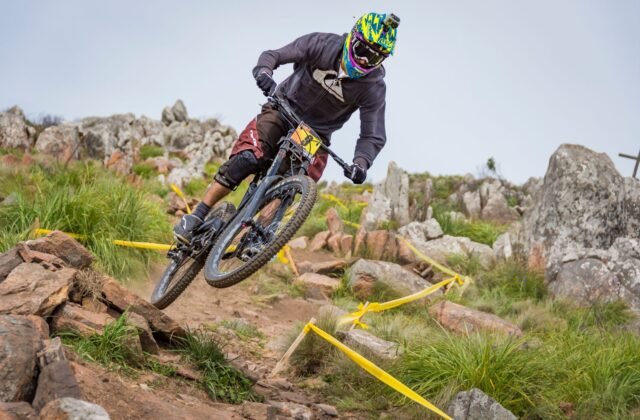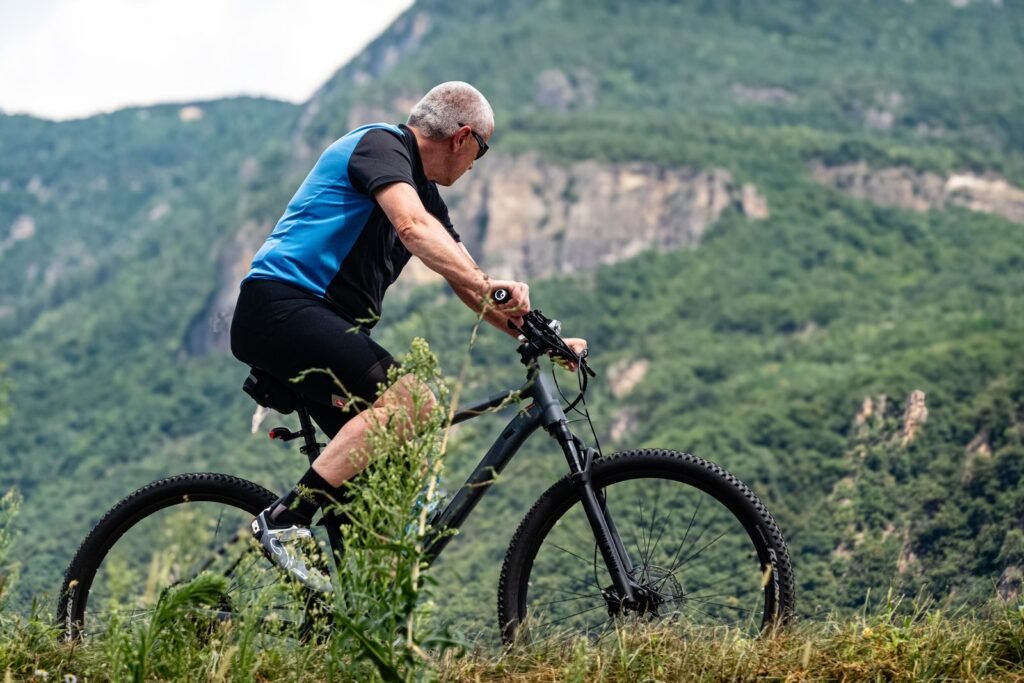
Straight answer: the all-mountain bike climbs far better. A downhill bike is built for steep descents at speed, with around 200 mm of travel, a slack 63° head angle, and roughly 16–18 kg of weight. An all-mountain bike is lighter (roughly 13–15 kg) and sits you over the pedals. On the same climb, it is faster and far less tiring — the downhill bike only wins when a lift or shuttle climbs for you.
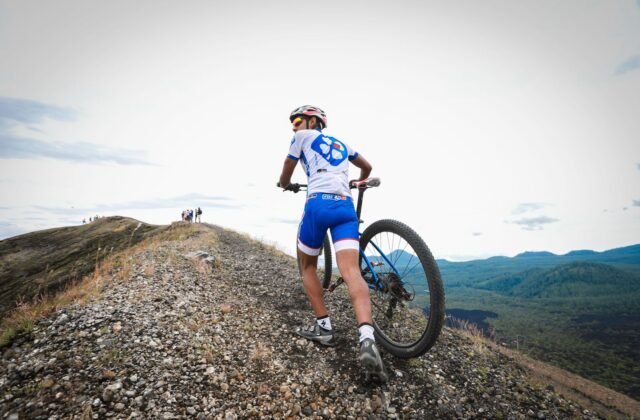
Climbing is where these two bikes stop pretending to be related. A downhill mountain bike treats every climb as the price of the next descent: it is heavy, long, and slack, and it fights you on steep pitches. An all-mountain bike earns its own descents, balancing climbing position against downhill control. This guide compares them where climbs are decided: weight, gearing, geometry, and traction.
Most riders climb far more than they descend: even at a bike park, the lift only runs on some days, and the trail to the top is usually a pedal. That is why the all-mountain bike is the default pick — and the downhill bike only makes sense when the descent is the whole ride. See the Mountain Bikes Hub, and how a full-suspension bike compares with a downhill bike on climbs.
Downhill Mountain Bike vs All-Mountain Bike for Climbs: The Core Comparison
The difference is not one spec, it is the whole design: a downhill bike spends its weight and geometry on surviving big hits at speed, while an all-mountain bike spends them on going up and down in the same ride.
| Attribute | Downhill Mountain Bike | All-Mountain Bike | What to watch |
| Suspension travel | Around 200 mm front and rear | 140–170 mm front and rear | More travel bobs more under power |
| Weight | Roughly 16–18 kg | Roughly 13–15 kg | Every kilo counts on a long climb |
| Head angle | Around 63°, very slack | Around 65–66° | Slack angles wander on steep pitches |
| Seated position | Low and rearward, slack seat tube | Steep seat tube, rider over the pedals | A rearward seat wastes pedalling power |
| Gearing | Short-range cassette, tall low gear | Wide-range cassette, true climbing gear | Gearing decides whether steep pitches are rideable |
| Climbing traction | Soft suspension soaks up pedal input too | Firmer pedalling platform, rear wheel stays loaded | A climb switch on the shock helps both |
| Descending control | Best in class on steep, rough descents | Very capable, less margin at race speeds | Only decisive if descents are the point |
Read the table as a trade, not a tie: the downhill bike’s strengths — huge travel, a slack front end, a long wheelbase — are exactly what make it slow uphill.
When the Answer Changes
The all-mountain bike wins most climbs, but four variables can flip the result:
- Lift or shuttle access. If a lift or truck does the climbing, the downhill bike’s weakness never appears.
- Climb length and grade. On a short, gentle fire road the gap is small; on a long, steep, technical climb it is huge.
- Trail mix. A ride that is 90% descent favours the downhill bike; a ride that is half climb favours the all-mountain bike.
- Setup. A downhill bike with a firm climb switch and the right tyre pressure climbs far better than one in open mode.
If three or more point the same way, trust them over the table.
How to Test Which Bike Climbs Better for You
A ten-minute test on your own trails beats a week of reading specs. Pick a climb you know, ride both bikes on it, and let the clock and your legs decide.
- Pick one climb. Use a climb you ride often, with steep, gentle, and rough sections, and time it.
- Set both bikes the same way. Match saddle height and tyre pressure so the test measures the bike, not the setup.
- Ride at the same effort. Ride each bike at a steady, sustainable effort — not a sprint on one and a cruise on the other.
- Note time, heart rate, and where you walked. If you walked a section on one bike and not the other, that is the verdict.
- Judge the descent too. A bike that climbs a minute faster but scares you on the way down is the wrong bike for the ride.
What a fail looks like
| Symptom | Cause | Fix |
| Front wheel lifts on steep pitches | Weight too far back on a slack bike | Slide the saddle forward, lower the bars, lean in |
| Rear wheel spins on loose climbs | Not enough weight over the rear wheel | Stay seated, drop tyre pressure, use a lower gear |
| You walk sections you rode before | Gearing too tall for the gradient | Fit a smaller chainring or a wider-range cassette |
Myth vs Fact: Myth — a downhill bike climbs fine if you are strong enough. Fact — strength helps, but it cannot fix geometry, weight, and tall gearing. A fit rider on a downhill bike still works much harder than on an all-mountain bike, and on long climbs that gap keeps growing.
Before you test: Test on a trail you know, away from other riders and walkers. Wear a helmet, gloves and eye protection. If a line looks too steep or too rough, walk it first.
A note on the bikes below: no non-electric downhill or all-mountain bike is listed on this site yet, so the picks are the closest mountain-style bikes we have covered.

How to Set Up Either Bike for Better Climbing
Set up either bike the same way before you judge it — a good setup is worth more than a few millimetres of travel.
What you will need
- A floor pump with a gauge
- A shock pump
- A multi-tool with Allen keys
- Chain lube
- A tape measure for saddle height
- Your usual riding shoes, helmet, and gloves
The method
- Set sag first. With your riding kit on, set rear sag to about 25–30% on the all-mountain bike and 30% on the downhill bike. Too much sag makes the bike bob; too little makes it harsh.
- Set tyre pressure for the trail. Start at the pressure in our mountain bike tyre pressure guide for your weight and conditions, then adjust in 1–2 psi steps until the tyres grip.
- Set saddle height and position. At the bottom of the pedal stroke your leg should be almost straight. Slide the saddle forward if the front wheel lifts.
- Use the climb switch. On climbs, flip the shock’s climb switch to firm the rear end. Flip it open again before the descent.
- Test, then adjust once. Ride your test climb, change one thing, and ride it again. Changing three things at once tells you nothing.
Note: Suspension setup changes climbing more than most riders expect. If you have not touched your suspension in months, read our mountain bike suspension setup guide before buying anything.
Tip: Write down your sag, tyre pressures, and saddle height once they are right. After a service or a puncture, those numbers get you back to a working setup in minutes.

When the Damage Is Already Done
If you already bought the wrong bike, do not panic — most of it is fixable without a new bike:
- You walk every steep pitch. Check your lowest gear first. A smaller chainring or a wider-range cassette is the cheapest fix, and it often turns a walk into a ride.
- The front wheel wanders and lifts. Slide the saddle forward, fit a slightly longer stem, or lower the bars. Small changes in position make a big difference on steep climbs.
- The bike bobs with every pedal stroke. Use the shock’s climb switch, add low-speed compression, and check sag — a downhill bike left in open mode wastes energy on every climb.
- Nothing above helps enough. Sell or swap the bike while it still holds value, and see how a trail bike compares with an all-mountain bike on climbs first.
The Safe Alternative: Pick the Downhill Bike Only If the Descent Is the Point
The all-mountain bike is the safe pick — but the downhill bike is right when the whole ride is the descent:
- Count your lift days. If most of your riding is lift-served or shuttled, the downhill bike’s climbing weakness barely matters.
- Rent one for a bike-park day. A day on a rental downhill bike tells you more than any review — including how you will get back to the car.
- Compare it with its closest rival. Before you commit, read how a downhill bike compares with an enduro bike for beginners — enduro is the closest thing to all-mountain, and the differences are small on paper and large on the trail.

What to Do Next, in Order
- Be honest about your riding. Count how much of your week is climbing, descending, and lift-served.
- Test both bikes on your own climb, on trails you actually ride.
- Fix the setup first. Sag, tyre pressure, saddle position, and the climb switch cost nothing.
- Fix the gearing second. A smaller chainring or wider cassette is the cheapest real climbing upgrade.
- Buy the bike that fits the riding you do most — not the riding you wish you did.
Never Do These on a Climb
- Never climb with the shock wide open. It wastes your effort and makes the bike wallow on steep pitches.
- Never stand up for a whole climb. You will spike your heart rate and lose rear-wheel traction within minutes.
- Never ride a loose climb in too high a gear. Grinding at low cadence spins the rear wheel and stalls you on the steepest part.
- Never skip the helmet on a “short” climb. Most crashes happen on easy ground, when attention drops.
In short
For climbs, the all-mountain bike wins: lighter, positioned over the pedals, with a proper climbing gear. The downhill bike trades all of that for descending control it only uses when gravity does the work — buy it only if a lift or shuttle does your climbing.
The essentials
- All-mountain bikes climb better: lighter, steeper seat angle, wider gearing.
- Downhill bikes trade climbing for descending: around 200 mm of travel, a 63° head angle, 16–18 kg.
- Lift or shuttle days are the exception — then the downhill bike makes sense.
- Set sag, tyre pressure, saddle position, and the climb switch before judging either bike.
More Questions, Answered
Can a downhill bike climb at all? Yes — but slowly and with much more effort. On long or steep climbs you will walk sections an all-mountain bike rides.
Is an all-mountain bike good on descents? Yes, for most riders. With 140–170 mm of travel it handles steep, rough descents well, giving up margin only at race speeds on the roughest tracks.
Which bike is better for a beginner who rides trails? The all-mountain bike — it climbs, descends, and handles mixed trails. See our comparison of downhill vs enduro for beginners.
Should I buy a downhill bike for bike-park days? If most of your riding is lift-served, yes — that is exactly what it is for. Keep a trail or all-mountain bike for pedalling days, or be ready to walk the climbs back out.
Additional Details
- Name: Downhill Mountain Bike vs All-Mountain Bike: Which Is Better for Climbs?
- Description: Downhill mountain bike vs all-mountain bike: which climbs better? We compare weight, travel, geometry and gearing so you buy the right bike for climbs.
- Published: November 10, 2026