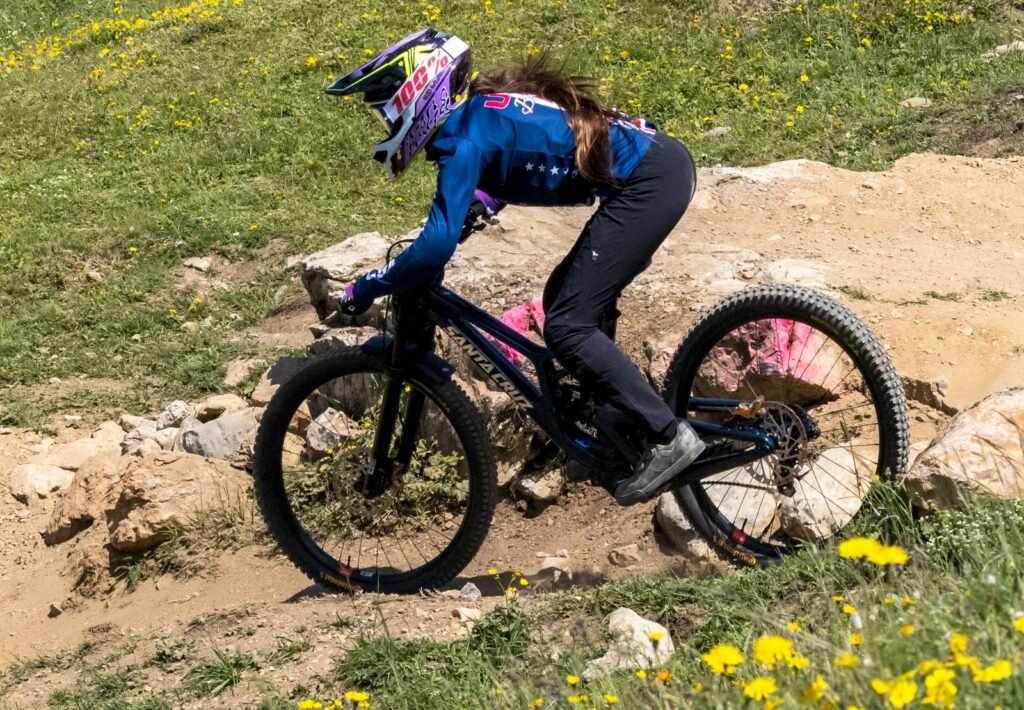
Straight answer: The cross-country mountain bike is better for rocks. Its gears let you drop into an easy ratio for steep, loose rock steps and keep pedalling when traction is thin, and its suspension fork keeps the front wheel on the ground. A single-speed works on rocks only on short, rolling sections, and only if you have the legs to stand and power through in one fixed gear. For rocky trails, pick the cross-country bike.
Introduction
Rocks are where the difference between a geared bike and a single-gear bike stops being theoretical. On smooth trails, one gear feels fine — you pick a ratio, you spin, and you go. On a rocky climb, the trail decides the gear for you: a ledge needs torque, a flat rock slab needs speed, and a loose section needs a steady, seated spin. This is a straight comparison of a cross-country mountain bike and a single-speed mountain bike for rocky trails, from the Mountain Bikes Hub. Tyre pressure also decides grip on rock, and our Mountain Bike Air Pressure guide covers that for both bikes.
A cross-country (XC) mountain bike is a light, efficient trail bike built for climbing — gears, a short-travel fork and a frame that wants to go uphill. A single-speed is the same idea stripped bare: one gear, one chainring, no derailleur, no shifter. Simpler, quieter, and almost nothing can break. Both are hardtails on the same trails. The question is which makes rocky riding easier.
If your trails are mostly smooth with short climbs, the answer is close. If they are full of rock gardens, ledges and steep, loose climbs, it is not. Below: the comparison, the test, and the fix for the wrong buy.
Cross Country Mountain Bike vs Single Speed Mountain Bike for Rocks: The Comparison
| Attribute | Cross-Country Mountain Bike | Single-Speed Mountain Bike | What to watch |
|---|---|---|---|
| Climbing steep rock steps | Wide gears — drop to an easy gear | One ratio — stand and power, or walk | Stalling on a ledge kills momentum |
| Speed on flat rock slabs | Shift up and hold speed | One gear — spin out, grind slow | Fast on short flats, tiring on long |
| Traction on loose rock | Seated spinning keeps weight on the tyre | Standing can spin the rear wheel | Lower tyre pressure helps — see our air pressure guide |
| Suspension | Short-travel fork with lockout smooths hits | Usually rigid; your arms and legs take it | A fork saves your hands on long gardens |
| Weight | Heavier — derailleur, shifter and cassette add weight | Lighter — no derailleur, shifter or cassette | Small gap; do not let it decide the purchase |
| Damage on rocks | Derailleur and hanger can bend or smash | Almost nothing to break | Carry a spare hanger on a geared bike |
| Cost and upkeep | More parts to buy, tune and replace | Fewer parts, cheaper to keep running | Simplicity is real, but it is not speed |
When the Answer Changes
The verdict flips when:
- Short, rolling rock sections: a single-speed is fun and fast if you carry speed through them.
- Smooth, flowing singletrack: if the trail is mostly smooth with a few rock patches, the single-speed’s simplicity shines.
- Very steep, loose climbs: the geared bike pulls further ahead — a single-speed runs out of torque and the rider walks.
- Strong, fit riders: strong legs and good technique can clear rock steps that would stop a weaker rider.
- Wet, slippery rocks: gears still help, but a spinning rear wheel punishes both.
- Long rides: over two or three hours, gears save your legs.
The 5-Minute Test That Settles It
Ride the same rocky section on each bike to see which suits your trails.
- Pick a rocky section with one climb, one flat slab and one descent.
- Use the same tyre pressure on both bikes if you can.
- Ride the cross-country bike first. Note where you shifted and if you cleaned the climb.
- Ride the same line on the single-speed. Note where you stood, lost speed and walked.
- The bike that cleaned more with less effort is the right one.
What a fail looks like
| Symptom | What it means | Fix |
|---|---|---|
| Wheels spin on a loose climb | Too much torque, or pressure too high | Stay seated; lower pressure a little |
| Stalled halfway up a rock step | Wrong gear, or shifted too late | Drop to an easier gear first; on a single-speed, carry more speed |
| Hands numb after a rock garden | Fork too stiff, or no suspension | Open the lockout; on a rigid bike, stand and let your legs absorb it |
| Chain drops or skips on rocks | Worn chain, loose clutch or bent hanger | Replace the chain, tighten the clutch, straighten it |
Myth: Single-speeds are better on rocks because they are simpler and lighter.
Fact: Simpler is real — but lighter does not climb a steep rock step. Gears beat light weight on sustained rocky climbs.
Myth: Gears are a weak point on rocks.
Fact: A derailleur can be damaged on rocks, but a clutch derailleur and a chain guide keep the chain quiet and in place. Carry a spare hanger.
Before you test: Walk the rocky section first and check for loose boulders, sharp edges and deep holes. Wear a helmet, gloves and eye protection, and ride the section at walking pace once before you ride it at speed. Carry a pump and a spare tube — rock edges cut tyres.
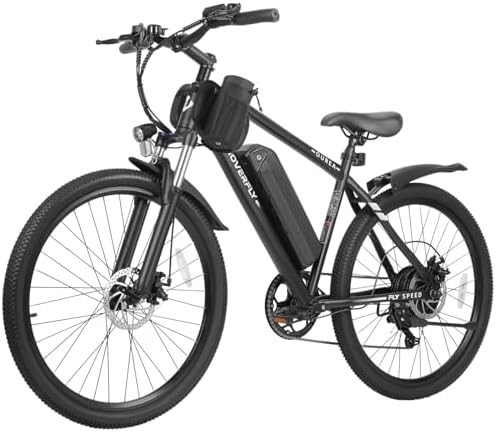
How to Ride a Rocky Trail on a Cross-Country Bike
How to get a cross-country bike cleanly through a rocky section: gear early, stay seated, let the suspension work.
What you will need
- A cross-country bike in good order
- A pump with a gauge
- A multi-tool, spare tube and tyre lever
- Gloves, helmet and eye protection
- A rocky section you know
The method
- Before the rocks, drop into a gear you can spin — shift early.
- Stay seated on loose climbs to keep the rear tyre gripping.
- Open the lockout so the front wheel follows the rocks.
- Look three or four metres ahead and pick a smooth line.
- Keep pedalling lightly over the rocks.
- On a flat slab, shift up and hold speed.
Do not shift under full power in the middle of a steep rock step: it strains the chain, skips the gear and can snap a chain. Drop to the easy gear while you are still on the flat approach.
Note: If the rear wheel keeps breaking loose on a climb, check tyre pressure before you blame the bike — too much pressure is the most common cause, and our air pressure guide shows how to set it.
When the Damage Is Already Done
Bought a single-speed and found your trails rockier than expected? You are not stuck. Work through these fixes in order:
- Re-gear the bike: a smaller chainring or bigger cog makes steep steps climbable, at the cost of top speed — the right trade on rocky trails.
- Fit wider, grippier tyres and run lower pressure — check the air pressure guide first so you do not go too low.
- Fit a suspension fork if your bike is rigid — it takes the edge off.
- Learn the standing technique: approach rock steps at speed, stand, and drive over.
- If you still walk more than you ride, convert the bike to gears, or sell it and buy a cross-country bike. Our Cross Country Mountain Bike vs 29er Mountain Bike comparison shows how wheel size changes the same test.
If you want the same question from a different angle, our Downhill Mountain Bike vs Single Speed Mountain Bike comparison looks at the single-speed on steep descents, and the Trail Mountain Bike vs Dirt Jump Mountain Bike comparison covers rocks too.

The Single-Speed Setup That Works on Rocks
Love the simplicity and want to keep the single-speed? Set it up for rocks, not for the road:
The method
- Choose a low ratio first — 32:18 is a common starting point.
- Fit the widest tyres your frame takes and run them soft enough to grip (our air pressure guide explains the trade-offs).
- Fit a chain tensioner or guide if your frame has no horizontal dropouts.
- Ride rock steps with momentum: carry speed in, stand, unweight the front wheel.
- Accept the walking: even a well-set single-speed walks some steps.
What to Do Next, in Order
- Ride the 5-minute rock test on both bikes if you can borrow one.
- If you keep stalling on rock steps, gears are the answer.
- Set tyre pressure for rock using our air pressure guide — it is free grip for both bikes.
- If you already own a single-speed and it is close, re-gear it lower.
- If you are buying new and your trails are rocky, pick the cross-country bike — then compare wheel sizes in our Cross Country Mountain Bike vs 29er Mountain Bike guide.
- Whichever you ride, walk a new rock section first.
Never Do These on Rocky Trails
- Never ride a new rock garden at full speed first time: walk it, then ride it slowly.
- Never shift under full load on a steep rock step: shift early, or do not shift at all.
- Never run rock-hard tyres on rocks: high pressure bounces and loses grip on hard edges.
- Never ignore a bent derailleur hanger: it will shift badly and can throw the chain into the spokes.
- Never ride rocks without a spare tube and pump: sharp edges cut sidewalls, and you will be a long walk from the car.
In short
For rocks, the cross-country bike is the better buy: its gears keep you pedalling on steep, loose steps and its fork keeps the front wheel connected. The single-speed is simpler, lighter and nearly unbreakable — great for short, rolling rocks. But when the rocks get steep and loose, gears win. More rock than dirt? Choose the cross-country bike. Mostly smooth? The single-speed will make you smile.
The essentials
- Rocks reward gears: a cross-country bike climbs steep, loose steps that stop a single-speed.
- A single-speed is lighter, simpler and tougher — but demands stronger legs.
- Tyre pressure and line choice matter as much as the bike — check the air pressure guide.
- Test both bikes on the same rocky section before you buy.
- If you already own the wrong one, re-gear it, re-tyre it, or swap to gears.
More Questions, Answered
Is a single-speed mountain bike bad for rocks?
Not bad, just harder: fast and fun on short, rolling rocks, but out of torque on long, steep, loose climbs.
What gear ratio should I use on a single-speed for rocks?
Start low: around 32:18 is a common starting point, with enough torque for rock steps. If you spin out, go a tooth bigger on the chainring; if you still walk, go lower.
Do I need suspension for rocky trails?
No — rigid single-speeds have ridden rocks for decades. But a short-travel fork makes rock gardens easier on your hands.
Are cross-country bikes fragile on rocks?
A modern XC hardtail is tougher than it looks — only the rear derailleur is fragile on rocks. A clutch derailleur, chain guide and spare hanger solve most of that.
Additional Details
Name: Cross Country Mountain Bike vs Single Speed Mountain Bike: Which Is Better for Rocks?
Description: Cross country mountain bike vs single speed mountain bike on rocks: gears, traction and the 5-minute test settle it — and how to fix the wrong choice.
Published: November 10, 2026