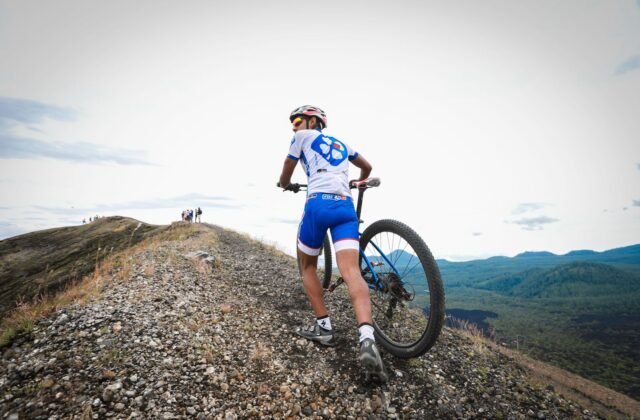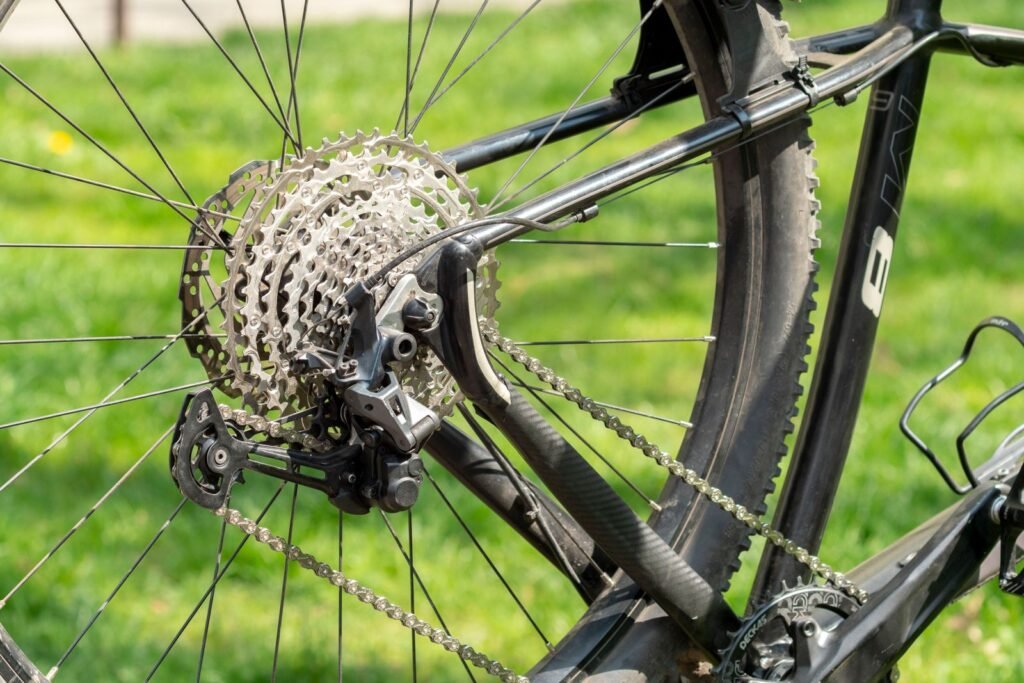
Straight answer: for most weekend trail riding, the 27.5 mountain bike is the better choice. It climbs, turns and stops on the trails you already ride, and it is a bike you can pedal to the trailhead. A downhill mountain bike only wins when your weekend is lift-served — shuttle runs, a bike park, or steep descents you never have to climb back up. It is built to go down fast, not to ride a normal trail. This downhill mountain bike vs 27.5 mountain bike comparison is drawn from riding both on the same trail.
Introduction
A downhill mountain bike and a 27.5 mountain bike look like cousins, but they are built for different weekends. “Downhill” describes the riding and the frame — long suspension travel, a slack head angle and a build that expects gravity to do the work. “27.5” describes the wheel size, and a 27.5 mountain bike is usually a trail or all-mountain machine with 130 to 160 mm of travel. The two labels even overlap: plenty of downhill bikes roll on 27.5-inch wheels. So the real question is not which label sounds more extreme. It is whether you want a bike that descends brilliantly and climbs badly, or one that does both well on a normal weekend trail.
This guide compares the two where weekend riding is decided — climbing, descending, handling, weight and cost — and then gives you a 20-minute test you can run on your own local trail. The decision should come from the ride, not from a spec sheet. Start in the Mountain Bikes Hub, and set your test up right with the mountain bike air pressure guide.
Downhill Mountain Bike vs 27.5 Mountain Bike: The Comparison
Read the table across, not down. The downhill bike wins one row — descending — and gives ground in every other one. One more thing: fit matters too. Stand over the top tube before you buy — if you cannot, no discount makes it the right bike.
| Attribute | Downhill mountain bike | 27.5 mountain bike | What to watch |
| Climbing | Built to descend, not climb. A heavy frame, slack angles and a narrow gear range turn long climbs into a slow grind. | Climbs like a normal trail bike: upright position, lighter build and a wide gear range. | If your ride holds more climbing than descending, the 27.5 bike wins before the descent. |
| Descending | Long travel and a slack head angle keep the front wheel calm on steep, rough ground. | Capable, but shorter travel and a steeper head angle ask more of the rider on very steep ground. | Ride your steepest local descent on both. The downhill advantage is real — but only at downhill speeds. |
| Suspension travel | Around 200 mm front and rear, built to absorb big drops and repeated hits. | Commonly 130 to 160 mm — enough for roots, rocks and small drops. | More travel is not better travel. Travel you never use is weight you always carry. |
| Weight | Heavy: a long-travel frame, a big fork and burly wheels add up fast. | Noticeably lighter, so it accelerates faster and is easier to lift onto a rack. | Pick both bikes up. The one you can lift easily is the one you will ride more. |
| Handling on tight trails | A long wheelbase means slow steering. Tight switchbacks ask for more room and more strength. | Quicker steering and a shorter wheelbase turn inside tight corners. | Your local trail’s tightest corner is the test. If the downhill bike needs three moves, it is the wrong bike. |
| Braking | Strong brakes, but the bike’s weight adds stopping distance. | Lighter, so it stops in less space and is easier to feather on loose corners. | Brake feel matters more than brake size. Test both from the same speed to the same marker. |
| Cost and parts | Costs more to buy and more to keep fast: more suspension to service, more wear parts. | Cheaper to buy and cheaper to keep. Its parts are the standard parts every trail shop stocks. | For weekend riding, money saved on the bike is money you can spend on riding it. |
When the Answer Changes
The 27.5 bike wins the average weekend, but the answer flips when the weekend itself changes.
- Your weekend is lift-served. Shuttle, uplift or a bike park with a lift removes the climb, and the downhill bike’s descending advantage is yours all day.
- Your local trail is almost all steep descent. A short, steep, rough drop with no real climbing is where a downhill bike is the better tool.
- You race downhill. Timed runs down a marked course reward stability at speed. For a weekend race, it is the only honest choice.
- You are buying your only bike. A 27.5 trail bike covers climbing, descending, the odd bike-park day and the ride to the trailhead. A downhill bike covers the bike park only.
Test Both Bikes Before You Choose: A 20-Minute Decision Ride
Do not choose from labels. Two short rides on the same trail answer in one afternoon what no review can. Ride your normal loop on each bike and write down what happened.
- Set both bikes up the same: tyre pressure, saddle height and suspension sag for your weight. A badly set-up bike loses before it starts.
- Ride the same loop on each bike — a 20-minute loop with a climb, a flat and a descent tells you more than a day at a bike park.
- Climb first. Time the climb on both bikes. The slower clock is the one you will feel every weekend.
- Descend second. Ride your usual line on both. Note where you brake, where you relax and where you have to fight the bike.
- Stop and compare. Write down one sentence about each ride. The bike you want to ride again is the answer.
What a fail looks like
| Symptom | Cause | Fix |
| Front wheel pushes wide in corners | A long, slack front end with most of the weight behind it | Slow down, shift weight forward, or accept the bike is too long for the trail |
| You are walking up the fire road | Gear range and geometry built for descending, not climbing | Push on, then choose the 27.5 bike for any ride with real climbing |
Myth: “A downhill bike is the fastest bike on any trail, because it is built for speed.”
Fact: It is the fastest bike only on steep descents. On a climb, a flat or a tight corner, its weight makes it slower than a lighter 27.5 trail bike.
Before you test: check both bikes before you ride — tyres and brakes first. Inflate to the pressure in the mountain bike air pressure guide, squeeze each brake lever until it feels firm, and check that quick releases and thru-axles are tight. Wear a helmet, and ride the test loop at a pace you can control.

How to Set Up Either Bike for Weekend Trail Riding
Set-up decides more of the ride than the brand. A bike dialled in for your weight rides better than a better bike set up badly.
What you will need
- A track pump with a pressure gauge.
- A shock pump for fine air adjustments.
- A multi-tool with Allen keys.
- A clean rag and chain lube.
- A helmet and gloves.
The method
- Set tyre pressure for your weight. Start from the air pressure guide, then adjust until the tyre grips.
- Set suspension sag. Sit in riding position and aim for the fork and shock to settle to a quarter of travel.
- Set the cockpit. Saddle height so your leg is nearly straight at the bottom of a pedal stroke, levers angled for straight wrists.
- Check the chain and brakes. The chain should be clean and lightly lubed, and each brake should lock its wheel.
- Ride, then re-check. After a short warm-up loop, re-check pressure and lever feel.
Do not pump the tyres to the maximum printed on the sidewall. On dirt, it reduces grip and rattles your hands.

When the Damage Is Already Done
If you already own the wrong bike for your weekends, the money is spent — but the riding is not lost.
- Match the bike to the riding it suits. Keep the downhill bike for bike-park and shuttle days, and ride a 27.5 bike for normal weekend trails.
- Do not buy parts to fix a wrong choice. A new bar, stem or tyres will not turn a downhill bike into a climber.
Also see the Hardtail vs 27.5 guide and the Trail vs Enduro guide.

The Safe Alternative: Start with the 27.5 Mountain Bike
If you are buying one bike for weekend trail riding, start with the 27.5 mountain bike. It lets you ride everything while you learn what you actually like.
The method
- Buy the trail bike, not the race bike. Mid-range parts leave money for a helmet, a pump and a year of riding.
- Ride a full season. One season tells you whether you want more travel, bigger wheels or a downhill bike at all.
- Hire a downhill bike for one bike-park day. One day on a hired bike gives you the comparison without the commitment.
- Switch only if the rental beats your own bike.
What to Do Next, in Order
- Read the Mountain Bikes Hub and the air pressure guide.
- List the riding your weekends hold: climbing, descent and trail tightness.
- Ride both bikes on your own local loop, using the 20-minute test above.
- If the downhill bike won only the descent, buy the 27.5 bike and hire a downhill bike for bike-park days.
Never Do These on a Weekend Trail Ride
- Never skip the pre-ride brake check. A lever that pulls to the bar in the car park will fail on the first descent.
- Never ride an unknown descent blind. The landing you cannot see is the one that hurts.
- Never brake with the front brake alone on a steep descent. The rear wheel lifts, and the bike goes over.
- Never buy a bike because it is fast downhill. Buy the one that is fast on your whole weekend loop.
In short
For weekend trail riding, the 27.5 mountain bike is the better bike for most riders: it climbs, turns and stops on the trails you ride every weekend. The downhill bike wins only for lift-served weekends and steep descents.
The essentials
- For most weekend riders, a 27.5 mountain bike does more of the ride better.
- Downhill bikes are descent specialists: long travel, slack angles, heavy builds.
- Test on a 20-minute loop with a climb, a flat and a descent, ridden on both bikes.
More Questions, Answered
Are 27.5 wheels too small for a downhill bike?
No. Many downhill bikes roll on 27.5-inch wheels — wheel size and purpose are separate things. This compares a downhill bike with a 27.5 trail bike, not two wheel sizes.
Is a downhill bike faster on every descent?
On steep, rough descents ridden at speed, yes. On gentle or tight descents, the lighter 27.5 bike’s quicker steering can make it just as fast.
Additional Details
Name: Downhill Mountain Bike vs 27.5 Mountain Bike: Which Is Better for Weekend trail riding?
Description: Downhill mountain bike vs 27.5 mountain bike: which wins for weekend trail riding? Compare climbing, descending, weight and fit, then test both before you buy.
Published: November 10, 2026