Straight answer: The trail mountain bike climbs better on almost every climb most riders actually ride. It is lighter, pedals more efficiently, and keeps your weight over the pedals, so you climb faster with the same effort and still have energy for the descent. The all-mountain bike only wins when the climb is rough, steep and loose — where grip and control matter more than weight.
Smooth climbs favour the trail bike; rocky, rooted climbs favour the all-mountain bike.
Introduction
In this trail mountain bike vs all-mountain bike comparison, the climb decides more rides than any descent does. You spend most of a trail ride going up, so the bike that climbs well is the bike you enjoy riding. A bike that climbs badly turns every ride into a grind, and no descent is long enough to make up for it.
The confusion is understandable. Both bikes look similar and both are sold as do-everything bikes, but their priorities differ: a trail bike is built to pedal efficiently first, an all-mountain bike to survive rough descents first. On a climb, that shows up in weight, geometry and suspension.
This guide compares the two side by side, then gives you a 20-minute test that settles the question on your own trails. It sits in our Mountain Bikes hub with the rest of the Mountain Bike category.
Trail Mountain Bike vs All-Mountain Bike: The Comparison
| Attribute | Trail mountain bike | All-mountain bike | What to watch |
|---|---|---|---|
| Suspension travel | 120–140 mm, built to pedal | 150–170 mm, built to absorb hits | Longer travel bobs on climbs without a firm climb mode |
| Weight | Usually 12.5–14 kg | Usually 14.5–16.5 kg | Every extra kilo is one your legs carry up |
| Seat angle | Steeper, around 76–77° | Slacker, around 75–76° | A steep seat angle keeps the front wheel down |
| Head angle | Around 66–67°, quick steering | Around 64–65°, stable at speed | A slacker head angle wanders on slow, steep climbs |
| Tyres | 2.3–2.5 in, faster-rolling tread | 2.5–2.6 in, aggressive tread, tougher casing | Wider, grippier tyres grip loose ground better and roll slower |
When the Answer Changes
Four variables flip it:
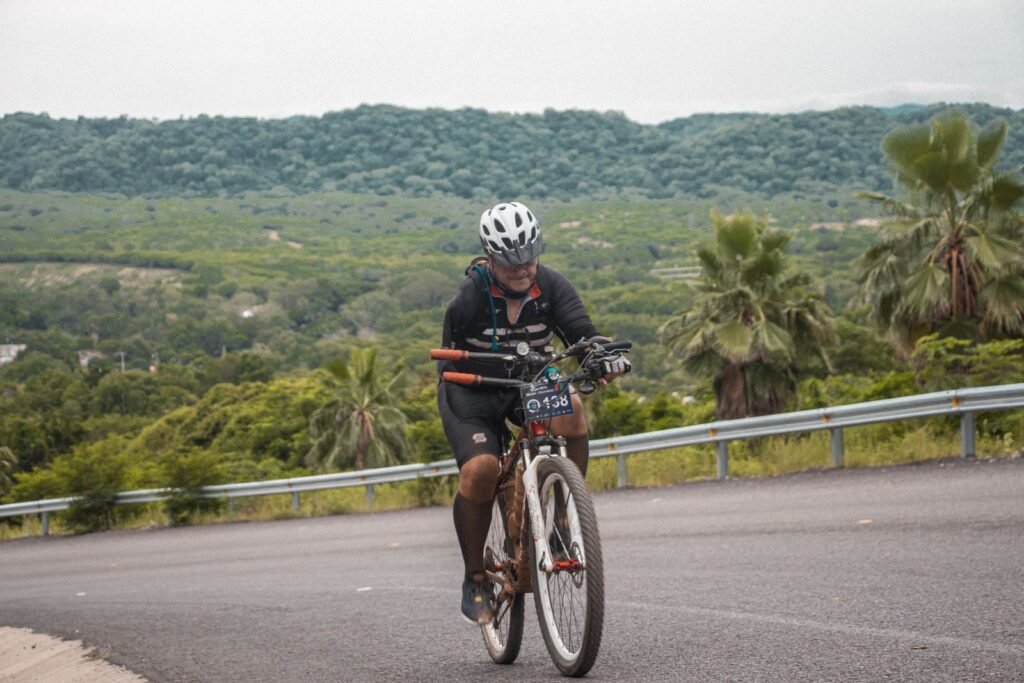
- Your climbs are long and smooth: the trail bike wins by more. Weight and efficiency decide it, and the all-mountain bike’s grip advantage never gets used.
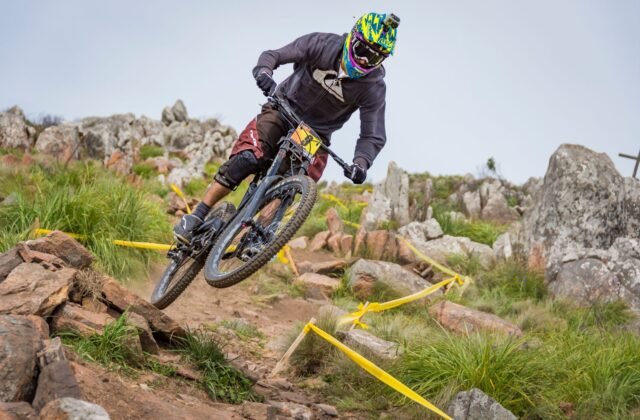
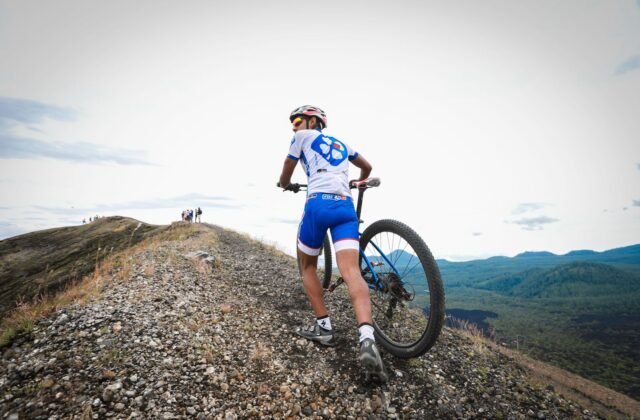
- Your climbs are steep, loose and rocky: the all-mountain bike wins. Its slacker head angle, bigger tyres and longer travel keep both wheels planted where the trail bike skips and spins.
- You are a heavier or stronger rider: the gap narrows. A strong rider can push the heavier bike up at nearly the same speed, so the all-mountain bike’s rough-ground confidence counts for more.
- Your rides are short and descent-focused: the climb barely matters. If you shuttle, ride a lift, or climb a fire road only to reach one descent, buy for the descent.
Trail vs All-Mountain: The 20-Minute Decision Test
Do not buy on paper. Two bikes can match on a chart and feel different on a climb. This test settles it for your legs, on your trail.
- Pick one climb you ride often: 5 to 10 minutes long, with smooth and rough ground. Ride it on your current bike first, at a pace you can hold without stopping.
- Ride it on the trail bike. Note your time, how often the rear wheel slips, and how your legs feel at the top.
- Rest 10 minutes, drink, then ride it on the all-mountain bike at the same effort. Do not chase your first time: match your heart rate or breathing.
- Compare the runs. The faster bike is not always the better climber: a bike 30 seconds slower that leaves you fresh is the better buy.
- Repeat it on a rough, steep pitch if you have one. The bike that keeps traction there is the one to buy for your roughest trails.
What a fail looks like
| Symptom | Cause | Fix |
|---|---|---|
| Front wheel lifts and wanders | Weight is too far back on a slack, long bike | Slide forward on the saddle and drop your chest toward the bars |
| Rear wheel spins on loose ground | Too little weight on the rear tyre, or too little tread | Stay seated, shift your weight back, and run the rear tyre 1–2 psi lower |
| Legs burn out halfway up | Gearing too tall, or the bike too heavy for the gradient | Shift into the easiest gear before the steep part and sit and spin |
Myth vs Fact
Myth: A longer-travel bike always climbs worse.
Fact: It climbs worse on smooth ground, because of weight and suspension movement. On rough, steep ground it often climbs better, because the rear wheel stays in contact.
Before you test
Check both bikes first: working brakes, tyres with no cuts, a chain that is not dry or rusty, and tight bolts. Wear a helmet and gloves, and tell someone where you ride.
How to Set Up Either Bike for Climbing
Either bike climbs better with the right setup. Ten minutes of setup beats a new part.
What you will need
- Floor pump with a pressure gauge
- Shock pump
- A multi-tool, or 4 mm, 5 mm and 6 mm Allen keys
- A clean rag and chain lube
The method
- Set tyre pressure first. Start around 22 psi front and 24 psi rear for a 75 kg rider on tubeless tyres, then adjust 1 psi at a time until the tyres grip without squirming.
- Set the sag: about 25% rear and 20% front, measured sitting on the bike in riding gear. Too much sag makes the bike wallow; too little makes the rear wheel skip.
- Use the shock’s firm or climb mode on smooth climbs, and open it again on rough ground. A firm shock stops the bike bobbing under each pedal stroke.
- Check the saddle height. At the bottom of the stroke your knee should be almost straight, with a small bend. Too low wastes power; too high makes your hips rock.
- Lubricate the chain and check the gears. A dry chain and a skipping gear cost more speed on a climb than an extra kilo of frame.
Do not set your tyre pressure by squeezing the tyre. Hands cannot tell 20 psi from 30 psi. Use a gauge, write the number down, and change one step at a time.
Note: These numbers are a starting point, not a rule. Heavier riders need more pressure and firmer springs; lighter riders need less. Change one thing at a time. For more detail, see our mountain bike air pressure guide.

When the Damage Is Already Done
Bought the wrong bike for your climbs? Do not sell it yet. Most climbing problems can be fixed for far less than a new bike costs.
- The bike is too heavy: swap to lighter, faster-rolling tyres first. Tyres are the cheapest weight to remove, and they cut rolling resistance on every climb.
- The rear wheel spins out: fit a grippier rear tyre, drop the pressure 1–2 psi, and check the sag. Too little sag means the wheel skips instead of tracking.
- The front wheel lifts: fit a shorter stem, slide the saddle forward, and climb with your chest lower. If it still lifts, a steeper seat angle is what you are missing, and no part fixes that.
If none of that fixes it, sell or trade the bike. A bike that is wrong in its frame — wrong travel, size or geometry — will always be wrong. The trail vs enduro and full suspension vs all-mountain comparisons help you pick the right frame.

The Safe Alternative: Start with the All-Mountain Bike
Not sure which trails you will ride most? Start with the all-mountain bike. It is the safer first buy: it climbs well enough for most trails and forgives mistakes a short-travel bike punishes.
The method
- Buy the all-mountain bike one size smaller than the chart suggests if you are between sizes. A smaller bike climbs better: shorter, lighter, easier to keep the front wheel down.
- Fit the lightest, fastest-rolling tyres that still grip on your trails. Tyres are the single biggest change you can make to how a bike climbs.
- Use the shock’s climb mode on every smooth climb. One flick of a lever makes it efficient.
What to Do Next, in Order
- Write down the climbs you ride: how long, how steep, how rough.
- Ride the 20-minute test on both bikes on the same day, on the same climb.
- Set up the bike you buy with the method above before your first proper ride.
- If you buy an e-bike for the climbs, test the motor and battery on a real hill before you pay. Power covers weight, not bad geometry.
Never Do These on a Climb
- Never stand and hammer from the bottom of a long climb: you will burn out before the top.
- Never lock out the fork on rough ground: the front wheel will skip.
- Never ride a climb with a dry, rusty chain: it costs speed and wears the drivetrain out.
- Never drop tyre pressure so low the tyre squirms: the tyre can roll off the rim.
- Never buy a bike a size too big for climbing: a long bike lifts its front wheel and wanders.
- Never test two bikes on different days or different climbs: the comparison is worthless.
In short
For most riders on most climbs, the trail mountain bike is the better climber: lighter, more efficient, and easier to keep moving. The all-mountain bike takes over when the climb gets rough, steep and loose, where grip and control decide the result. Test both on your own climb and buy the bike that matches the trails you actually ride.
The essentials
- Trail bike: lighter, steeper seat angle, 120–140 mm travel: the better climber on smooth and rolling trails.
- All-mountain bike: heavier, slacker, 150–170 mm travel, bigger tyres: the better climber on rough, steep ground.
- Test before you buy: same climb, same effort, same day — then judge by how fresh you feel at the top.
More Questions, Answered
Is an all-mountain bike harder to climb on?
Yes, on smooth climbs. It is heavier and its suspension moves more under pedalling, so the same climb takes more effort. On rough, steep climbs it can be easier, because the rear wheel grips better.
Can a trail bike handle steep climbs?
Yes, if the climb is not too rough. A trail bike’s steep seat angle keeps your weight over the pedals, and a low enough gear lets you sit and spin. It struggles only where the ground is so loose or rocky that the rear wheel cannot hold traction.
Which bike should a beginner buy for climbing?
A trail bike, in most cases. It is lighter and easier to pedal, and it teaches good climbing habits. Buy the all-mountain bike if your local trails are steep and rocky, or if you plan to ride rough descents as well. Before you decide, read our trail vs enduro guide and the hardtail vs 27.5 comparison.
Additional Details
Name: Trail Mountain Bike vs All-Mountain Bike: Which Is Better for Climbs?
Description: Trail mountain bike vs all-mountain bike: which climbs better? Compare weight, travel, gearing and geometry, then run a simple test to pick the right one.
Published: November 10, 2026.