In this downhill mountain bike vs enduro mountain bike comparison, a first mountain bike is not about the most travel you can buy. It is about the bike that lets you ride more, climb without dreading the next hill, and finish a ride wanting to go again. Enduro bikes do that for most new riders. Downhill bikes do it only when your riding is almost entirely lift served.
This trail mountain bike vs downhill mountain bike comparison and our trail mountain bike vs enduro mountain bike guide cover the two closest alternatives, and the Mountain Bikes Hub brings the cluster together. Below, the table, the test and the setup steps show how to decide on your own trails.
Downhill Mountain Bike vs Enduro Mountain Bike: The Core Comparison
A downhill bike is a gravity-only machine, built to survive the steepest, roughest descents at speed. An enduro bike is built for the same descents, but it must also climb back up, so it trades some travel and weight for pedalling efficiency. That trade is what makes it the better beginner bike on most trails.
| Attribute | Downhill Mountain Bike | Enduro Mountain Bike | What to watch |
| Suspension travel | About 200 mm front and rear | About 150 to 180 mm front and rear | More travel feels vague and heavy on smooth trails. |
| Weight | Heavier, built for big hits | Lighter, easier to lift and pedal | Lift the bike over a gate first. |
| Climbing | Slow and tiring uphill | Efficient on long climbs | Test a real climb, not a car park loop. |
| Descending | The most stable at high speed | Confident on steep, rough descents | Match the bike to your usual steepest trail. |
| Geometry | Very slack head angle, long wheelbase | Slack head angle, shorter wheelbase | Slack is calm at speed, slow in tight turns. |
| Handling | Stable at speed, harder at low speed | Quicker to turn, easier to correct | New riders need low-speed steering. |
| Where it fits | Lift and shuttle parks only | Trail centres, natural trails, bike parks | Ride where you actually ride. |
| Upkeep | Heavy parts wear fast if ridden daily | Standard parts, easier to service | Check brakes and tyres after rough rides. |
When the Answer Changes
The verdict flips when your trails flip. If your regular ride is a lift or shuttle to the top, followed by a long, steep, rocky descent, a downhill bike makes sense even for a beginner. You will not pedal uphill, so its climbing weakness hardly matters, and its stability will help on the hardest part of the ride.

Test It Before You Decide: A 20-Minute Trail Test
Do not choose from the specification sheet. Two bikes with similar travel can feel very different, and only a short ride on your own terrain will show which suits you. Borrow or demo both types, set them up the same way, and ride the same loop twice.
- Ride a climb. Pick a climb of about five minutes. Note how hard you are breathing, whether the front wheel lifts or wanders, and whether you want to stop. The enduro bike should feel calmer here.
- Ride a tight, flat section. Take three or four low-speed turns. Note how much you must lean, steer and brake to stay on line. A bike that needs constant correction will tire you out.
- Ride a gentle descent. Stay seated, brake early, and look ahead. Note whether the bike holds its line or bounces you off it.
- Compare the notes, not the travel. Choose the bike that climbed, turned and stopped best on your loop, not the one with the most suspension.
What a fail looks like
- Symptom: You stall on climbs and walk often. Cause: The bike is too heavy or too slack for your fitness and trails. Fix: Try an enduro bike, and check saddle height, tyre pressure and gearing first.
- Symptom: You overshoot tight corners. Cause: A long, slack bike needs more room to turn. Fix: Slow earlier, look through the turn, and test an enduro bike on the same corner.
- Symptom: Your hands and arms ache after one descent. Cause: Too much bike, or a setup that fights you. Fix: Check tyre pressure and brake lever reach, then demo a lighter bike.
How to Set Up a Beginner Bike for Your First Trail Rides
Setup matters more than the label on the frame. A well-set-up enduro bike will ride better than a downhill bike with the saddle at the wrong height and tyres at the wrong pressure, so spend a few minutes on the basics before your first rides.
What you will need
- A helmet that fits and sits level
- Gloves and eye protection
- A floor pump with a pressure gauge
- A multi-tool with Allen keys
The method
- Set saddle height. Sit on the bike with your heel on the pedal at its lowest point; your leg should be almost straight. Then put the ball of your foot on the pedal and keep a slight knee bend.
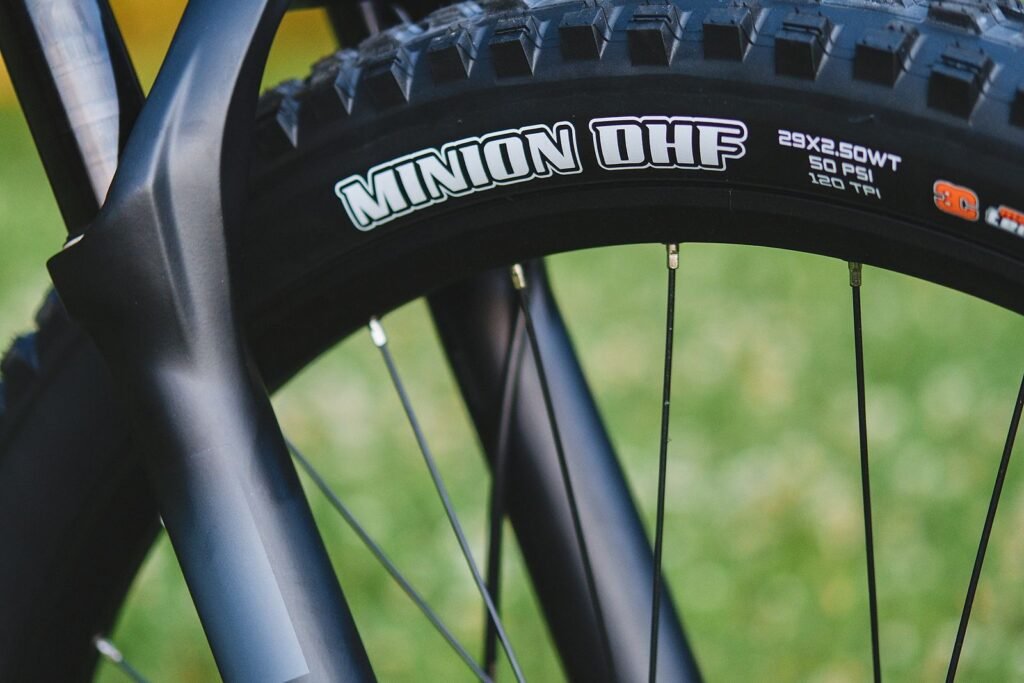
- Set tyre pressure. Use the range printed on the tyre sidewall as a starting point, and stay near the middle for a first ride.
- Check the brakes. Walk the bike forward and squeeze each brake in turn. Each wheel should stop firmly without the lever touching the handlebar.
- Ride a short, easy loop first. Note any noise, rubbing or loose feeling, and fix it before you add harder terrain.

When the Damage Is Already Done
If you already bought the wrong bike, do not assume you have to sell it at once. Many beginner problems are setup problems, not bike problems, and a few changes can make a downhill bike far easier to live with on ordinary trails.
- You struggle on climbs. Check saddle height, tyre pressure and gears first. A lower tyre pressure and an easier gear can help, but a heavy, slack bike will still be hard work uphill.
- You cannot turn the bike. Try a shorter stem and a wider bar, and demo a smaller size. If it still feels like a bus, it is too long and slack for your trails.

The Safe Alternative: Start on an Enduro Mountain Bike
If a downhill bike already feels like too much, an enduro bike is the safe alternative. It climbs, turns and descends well enough for most beginners, and it grows with you as your trails get harder.
- Choose the right size, not the longest bike. A bike that is too long will be hard to turn. Sit on it, check your reach, and ask the shop to compare sizes with you on the bike.
- Fit tough tyres and check them often. Rough trails punish thin tyres. Keep pressures in the range on the sidewall and check for cuts after rocky rides.
- Learn to brake before the corner. Brake in a straight line, release the brakes, then turn. Grabbing the brakes mid-corner is the most common beginner mistake on a heavy bike.
- Build up one step at a time. Ride the same trail a few times, then add a steeper section. Confidence grows faster than fitness on a bike that fits.
What to Do Next, in Order
- List the trails you will ride most, and note how much climbing and how steep the descents are.
- Demo a downhill bike and an enduro bike on the same loop, using the 20-minute test above.
- Choose the bike that climbed, turned, and stopped best on your loop, not the one with the most travel.
- Get the shop to set saddle height, tyre pressure, and brakes before you leave.
- Ride easy trails for your first three rides, then add harder terrain one step at a time.
Never Do This on a New Mountain Bike
- Never buy on travel alone. More travel does not fix a bike that is too big, too heavy, or too slack for your trails.
- Never skip the demo ride. A bike that looks right on paper can feel wrong on your trails.
- Never ride with soft tyres and loose brakes. Check both before every ride.
- Never start on the steepest trail. Build skill on easy ground first.
- Never ignore a loose wheel or a noisy brake. Stop and fix it before you ride on.
In short
For most beginners, an enduro mountain bike is the better first bike: it climbs, turns and descends well on the mixed trails new riders actually ride, while a downhill bike only makes sense when a lift or shuttle does the climbing for you. Demo both on the same loop, choose the bike that felt easiest to control, and set it up properly before your first ride.
The essentials
- Enduro first for most beginners; downhill only for lift and shuttle riding.
- Demo both bikes on the same 20-minute loop before you buy.
- Saddle height, tyre pressure and brakes matter more than travel.
- Build up from easy trails, one step at a time.
More Questions, Answered
Can a beginner ride a downhill bike?
Yes, if your riding is almost entirely lift or shuttle served. A beginner can enjoy a downhill bike on a bike park day, but the same bike will be hard work on any trail that needs pedalling.
Is an enduro bike good for beginners?
Yes, for most beginners. It climbs well enough, descends steep trails with confidence, and handles the flatter trails where new riders spend most of their time.
Can I climb on a downhill bike?
You can, but it is slow and tiring. Downhill bikes are heavy, with slack geometry and gearing built for descents, so long climbs are the wrong job for them.
Additional Details
Name: Downhill Mountain Bike vs Enduro Mountain Bike: Which Is Better for Beginners?
Description: Downhill mountain bike vs enduro mountain bike: which is better for beginners? Compare travel, weight, climbing and descents, then run the 20-minute test.
Published: November 10, 2026