Straight answer: In the fat tyre e-bike vs long range e-bike comparison, a long range e-bike is the better buy for long distance rides. Its bigger battery and narrow, efficient tyres carry it 60–100 miles per charge at moderate assist, while a fat tyre e-bike typically manages 25–45 miles. On sand, snow, mud or loose gravel, though, the verdict flips: only the fat tyre bike keeps its grip, and a long range bike on slim tyres will slip, sink or stop.
Buy for the ground you actually ride, not the range number on the box: range claims are measured at low assist on flat tarmac. If your 50-mile route is paved, the long range bike wins by a wide margin. If it crosses a beach or a snowy trail, the fat tyre bike is the only one that finishes.
A long ride is decided by energy and comfort: a bike that runs out of battery at mile 35 does not finish a 50-mile ride, and one that beats you up for four hours does not get ridden twice. Fat tyre and long range e-bikes solve opposite halves of that problem. One buys grip with wide, soft tyres; the other buys miles with a big battery and light, efficient tyres. Both are popular picks in our E-Bikes Hub, and both claim to be the answer to long distance.
This article compares the two the way a long ride actually tests them: range per charge, comfort, weight, control on real surfaces, and what to do if you already bought the wrong one. The comparison assumes a typical long ride of 40–60 miles — the distance where the two types part company.
Fat Tyre E-Bike vs Long Range E-Bike: The Core Differences
Measured side by side on a 40–60 mile ride, the two bikes trade range for grip. Here is how they line up.
| Attribute | Fat Tyre E-Bike | Long Range E-Bike | What to watch |
|---|---|---|---|
| Tyre | 4.0–4.8 in wide, run at 5–15 PSI | Narrower touring tyres, run at higher pressure | Soft tyres waste energy on tarmac; slim tyres risk pinch flats. |
| Battery and range | 48V 13–15Ah pack; roughly 25–45 miles per charge | 48V 15Ah+ pack (720Wh+); roughly 60–100 miles per charge | Check the Wh figure, not the Ah alone. |
| Motor | 750–1,500W, tuned for low-speed torque | 1,450–2,000W peak, tuned for steady speed | Peak watts do not tell you the range. |
| Weight | Roughly 30–35 kg with wide rims and tyres | Roughly 25–32 kg, lighter wheels and frame | Weight matters when you lift the bike. |
| Comfort and control | Soft tyres absorb bumps; stable on loose ground | Firm on tarmac; steady at speed | A suspension fork and wide saddle close the gap. |
| Terrain | Sand, snow, mud, gravel, broken tracks | Paved roads, cycle paths, firm gravel, light trails | A long range bike bogs down on deep sand or snow. |
| Best for | Short rough rides and all-weather grip | Long paved rides and commuting distance | Buy for the ground you ride most. |
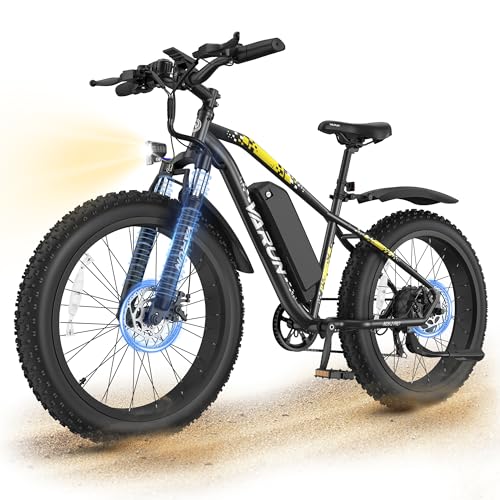
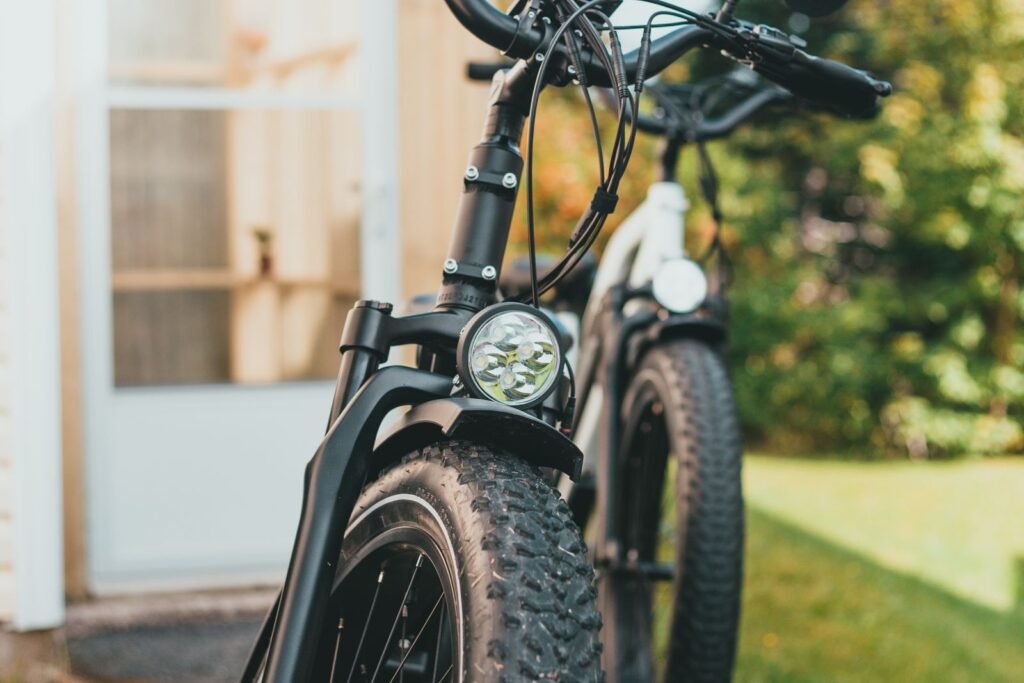
Peak 750W motor, 48V 13Ah battery, 7-speed gears, dual disc brakes and 20 x 4.0 fat tyres.
When the Answer Changes: The Variables That Decide It
Your route: paved or rough?
On paved roads and firm cycle paths, the long range e-bike wins outright: slim tyres waste less energy, so the same battery goes much further. On sand, snow, mud or deep gravel the result reverses — a slim tyre sinks and slips, while a fat tyre keeps rolling at 5–10 PSI. See the road case in our Fat Tyre E-Bike vs Road E-Bike comparison.
Your distance: under 30 or over 50 miles?
Below about 30 miles either bike finishes the ride, and the choice is about comfort and grip. Above 50 miles the battery decides: a fat tyre bike needs a mid-ride charge or a spare battery, while a long range bike usually finishes on one charge.
Your load: light or heavy?
A heavy rider, a loaded rack or a child seat drains a battery faster. Add 20% to the distance you plan for, and judge by the Wh figure rather than the headline range. Our guide to making your e-bike battery last longer shows the habits that matter most.
Your weather: dry, wet, snow or sand?
Wet tarmac is fine for both bikes. Fresh snow, beach sand and mud after rain are fat tyre ground — see our Cargo E-Bike vs Long Range E-Bike winter comparison.
Test Both Before You Buy: A 20-Minute Decision Ride
Try both on your own route, not in a car park. A short test ride answers the range question better than any spec sheet.
- Charge both bikes to 100% and note the starting battery reading.
- Set the assist to your long-ride level — usually PAS 1 or 2.
- Ride your usual long route for 20 minutes, about 5 miles.
- Note the battery used, the ride feel, and how the steering handles on the roughest part.
- Swap bikes and repeat the same loop at the same assist level.
- Keep the bike that used less battery per mile and felt better on your worst surface.
What a fail looks like. Battery drops fast on tarmac, the bike wanders on sand, or your hands and back ache after 20 minutes. The causes differ — soft tyres wasting energy, slim tyres that cannot float, or a harsh ride and poor fit — and so do the fixes: pump the tyres up for the road, pick the fat tyre bike for soft ground, or fit a suspension seatpost and a wider saddle.
Myth: “Fat tyres are always slower.” Fact: On rough or soft ground they are faster, because they keep their grip — pushing a bogged-down bike is slower. Myth: “A bigger battery always means a longer ride.” Fact: A big battery at full assist can still run out sooner than a smaller battery on an efficient long range bike. Check the Wh figure, not the headline range.
Before you test: Wear a helmet, pump the tyres to the pressure on the sidewall, and check the brakes. Use the lowest assist that keeps you moving, keep your hands on the bars on loose ground, and charge the battery first if it is under 20% — a test on a half-empty pack tells you nothing.

1500W motor, 48V 15Ah battery and 20 x fat tyres — throttle and pedal assist for steep starts.
How to Stretch a Fat Tyre E-Bike for a Long Ride
If your rides are rough but long, set the fat tyre bike up for distance. The changes below add real miles.
What you will need
- A floor pump with a pressure gauge
- A spare battery or a charger you can carry
- A tool kit and a spare tube that fits a 4-inch tyre
The method
- Pump the tyres to the top of the road range on the sidewall — 15–20 PSI for a 4-inch tyre on tarmac — and drop them to 5–10 PSI only on sand or snow.
- Ride at PAS 1 or 2. Full throttle and top assist are the fastest way to empty a pack.
- Keep a steady 12–15 mph. Stopping and starting hard uses more energy than cruising.
- Plan a charging stop at about two thirds of the way, and carry the charger.
- Pack light. Every extra kilogram on soft tyres costs range.
A note about pressure. The difference between 8 PSI and 18 PSI on tarmac is large: firmer tyres roll further. Do not leave road pressure in for a beach ride.
A note about a spare battery. A spare battery is the only way to double a fat tyre bike’s range. Check it fits the same mount first.
When the Damage Is Already Done
You bought the wrong bike for your rides. These are the common cases, and what fixes each one.
- I bought a fat tyre e-bike, but my rides are 40 miles of tarmac. Pump them to road pressure and ride at PAS 1–2. If that still falls short, fit narrower tyres.
- My battery dies halfway through every long ride. Ride at PAS 1–2 and plan a charging stop. A second battery doubles the range.
- I bought a long range bike, but it bogs down on sand and mud. Fit the widest tyres the frame allows and drop the pressure. If your routes are mostly soft, a fat tyre bike is the fix.
The Safe Alternative: A Long Range E-Bike With a Big Battery
If your rides are long and mostly paved, the long range e-bike is the simple answer: no tyre tricks or charging stops, and it finishes on one battery. The same trade-off shows up on hills — see our Commuter E-Bike vs Long Range E-Bike comparison.

1450W peak motor, 20 x 4 fat tyres and up to 80 miles — a strong cargo-style weekend hauler.
- Work out your longest ride, add 20% for headwinds and cold, and buy a pack that covers it at PAS 2.
- Compare Wh, not just Ah. A 48V 20Ah pack (960Wh) holds more than a 48V 13Ah pack (624Wh).
- Choose tyres for your ground: a light-tread touring tyre is efficient on tarmac and grips firm gravel.
- Test the fit, and check you can lift the bike with the battery out.
- Check the charging stops on your route before you buy.
What to Do Next, in Order
- Measure your usual long ride: distance and surface.
- Do the 20-minute test on that route, fully charged.
- Compare the Wh figure of the bikes you shortlist.
- Pick by ground first and range second.
- Buy, then set tyre pressure, PAS level and charging stops.
Before You Decide: Common Mistakes
- Never buy on the headline range alone. It is measured at low assist on flat tarmac.
- Never assume a 2,000W motor means a longer ride. Full throttle empties any battery fast.
- Never run soft tyres on tarmac for a long ride. They waste energy.
In Short
A long range e-bike is the better choice for long distance rides on paved or firm ground: its bigger battery and efficient tyres take it much further per charge. A fat tyre e-bike wins when the ground is soft — sand, snow, mud or loose gravel — because grip beats range when the other bike cannot move. Measure your route, test both, and buy the one that finishes.
The Essentials
- Long range e-bikes usually cover 60–100 miles per charge at moderate assist.
- Fat tyre e-bikes usually cover 25–45 miles per charge, but grip sand, snow and mud.
- Battery size in Wh matters more than the headline range.
- Low assist (PAS 1–2) is the biggest single range saver.
- Tyre pressure is a free range upgrade.
More Questions, Answered
Is a fat tyre e-bike good for long rides?
It can be, if the route is rough. On sand, snow or mud it is the best long ride choice, and with firm tyres, low assist and a charging stop it can cover 40 miles or more.
How many miles can a long range e-bike cover?
Most claim 70–100 miles or more at low assist on flat ground — the EUYBIKE model above claims up to 80 miles.
Which e-bike is better for sand and snow?
The fat tyre e-bike. Wide tyres at 5–10 PSI float over soft ground, where a slim tyre sinks.
Additional Details
Name: Fat Tyre E-Bike vs Long Range E-Bike: Which Is Better for Long distance rides?
Description: Fat tyre e-bike vs long range e-bike: which wins long distance rides? Compare range, comfort, tyres and weight, and pick the right bike for your route.
Word count: 1,987
Published: November 10, 2026