Straight answer: For most city riding, the hybrid e-bike is better. Its upright position, flat bars and wider tyres make it more comfortable and easier to control in traffic, at junctions and on rough city streets. A road e-bike is better only if your city riding is mostly long, smooth, flat stretches where speed matters more than comfort — it is faster on open tarmac, but it is less forgiving everywhere else.
That assumes a typical city: lights, potholes, kerbs and rides of 3 to 10 miles. Change the city — or the rider — and the answer can change.
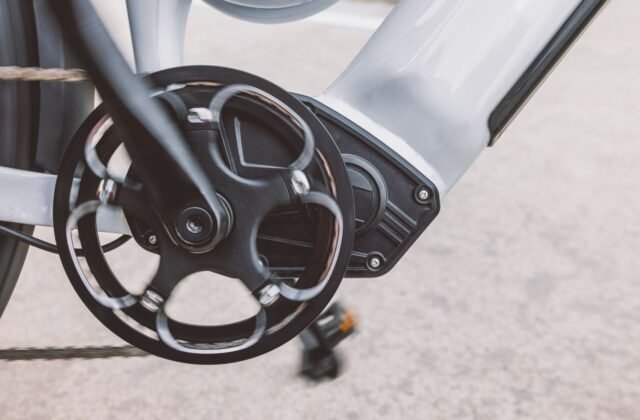
Both are electric bikes: the motor adds power as you pedal, up to the legal assist limit. The difference is position, tyres and gears — not the motor.
Introduction
City riding is not one kind of riding. One route can mean a smooth riverside path, a potholed main road and a cobbled side street. Road and hybrid e-bikes suit different ends of that range, and the wrong choice shows up daily — in a sore neck, in slow starts, or in a bike you avoid riding.
A road e-bike is a road bike with a motor: drop bars, narrow tyres, a stretched position, made for speed on smooth tarmac. A hybrid mixes road and mountain bike: flat bars, wider tyres, an upright position, made for stops, starts and mixed surfaces. This article sits in the E-Bikes Hub under E Bike — for the closest comparison, see Commuter E-Bike vs Hybrid E-Bike and Cargo E-Bike vs Road E-Bike.
Road E-Bike vs Hybrid E-Bike: The Core Comparison
| Attribute | Road e-bike | Hybrid e-bike | What to watch |
|---|---|---|---|
| Riding position | Low and stretched, weight over the front wheel. | Upright, weight over the saddle, head up. | Can you ride an hour without pain? |
| Handlebars | Drop bars, several hand positions, narrow. | Flat bars, one wide grip, easy at low speed. | Flat bars make slow turns and filtering easier. |
| Tyres | Narrow, usually 25–32 mm, high pressure. | Wider, usually 35–50 mm, lower pressure. | Narrow tyres feel fast on smooth tarmac, harsh on potholes. |
| Speed on smooth tarmac | Faster at the same effort; position and light tyres help. | Slower; the upright position catches wind. | The motor narrows the gap. |
| Comfort on rough streets | Harsher; bumps reach hands, neck and back. | Kinder; wider tyres and upright position absorb more. | On potholes, kerbs and cobbles, comfort is speed. |
| Stops and starts | Slower to get going; built for steady speed. | Quicker away from lights; low gears suit stop-start riding. | Count the lights on your route. |
| Carrying loads | Limited; few mounts, and a heavy bag feels worse. | Better; most take a rack, panniers, a basket and mudguards. | Carrying loads? Start with the hybrid. |
When the Answer Changes
The verdict above holds for a typical city commute, but five variables can flip it:
- A long, smooth commute. Ten miles or more on smooth, flat roads with few lights favours the road e-bike.
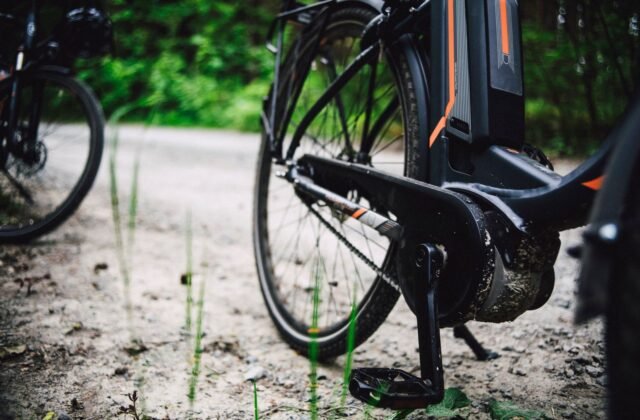
- Rough roads and bad surfaces. Potholes, cobbles, tram tracks and kerbs favour the hybrid.
- Hills and heavy loads. Short, steep climbs and a heavy bag favour the hybrid’s low gears.
- Your body and flexibility. A stiff back or sore wrists after 20 minutes points to the hybrid.
- Where you store and park it. A road e-bike is lighter to carry up steps; a hybrid is ready for daily use.
Test Both E-Bikes Before You Buy
Do this five-step test on both types, on the same day, on the route you actually use — not a car park loop.
- Ride your real route. Take each bike over your commute — the same lights, hill and rough patch.
- Stop and start five times. Pull away, stop, pull away again. The stable bike at walking pace is the one for traffic.
- Ride the rough patch. Take each bike over the worst surface on your route. If one rattles your hands and neck, that is your answer.
- Carry your load. Ride with the bag or shopping you actually carry.
- Check the fit. After 20 minutes, note your neck, wrists and back. Pain on one bike and not the other is a verdict.
What a fail looks like
| Symptom | Cause | Fix |
|---|---|---|
| Neck or wrist pain after a short ride | Position too low and stretched | Raise the bars or choose the hybrid |
| Punctures on city roads | Tyres too narrow for potholes and kerbs | Fit wider tyres, or choose the hybrid |
| You avoid riding the bike | Wrong bike for your streets, or a fit problem | Fix the fit first; if that fails, change the bike |
Myth: A bigger motor makes a road e-bike as comfortable as a hybrid.
Fact: The motor adds power, not comfort. Position, bars and tyres decide comfort.
Myth: Road e-bikes are always faster in the city.
Fact: With lights, junctions and rough streets, the hybrid is often as quick door to door.
Before you test: Test on flat ground away from traffic first, and learn the brakes and assist levels before you join traffic. Wear a helmet, check the battery and tyres, and never test on a busy road if you cannot stop confidently.

1000W peak motor, up to 25 MPH, and 40+ miles per charge.
How to Choose Between a Road E-Bike and a Hybrid E-Bike
What you will need
- Your real route, written down (distance, lights, hills, rough patches)
- The bag or load you carry every day
- A helmet and a way to note how each bike feels
The method
- Write down your route and your load before you look at any bike.
- Shortlist one road e-bike and one hybrid in your size, with the same kind of assist.
- Test both on your route, and score comfort, control and speed separately.
- Buy the bike that scores best on comfort and control for your streets.
- Check rack and mudguard mounts, tyre clearance and battery removal.
- Before you pay, confirm the size, returns policy and warranty.
Do not buy a bike you have not ridden on your own route. A shop car park hides the hill, the potholes and the lights that decide whether you will ride it every day.
E-bikes: Switch the power off before you work on the bike, and check the battery and your manual first. In the US, Class 3 models assist up to 28 mph; other places limit assist to a lower speed — check yours.

750W peak motor, up to 20 MPH and 40 miles per charge.
When the Damage Is Already Done
If you already bought the wrong one, do not write the bike off. Match the problem to the fix — and be honest about what a fix cannot do.
- Your road e-bike hurts your neck and wrists. Raise the bars and fit a shorter stem. If it still hurts after a proper fit, the frame is too stretched.
- Your road e-bike rattles over potholes. Fit the widest tyres the frame allows. If it only takes narrow tyres, no tyre can fix that.
- Your hybrid feels slow on a long, smooth commute. Use the right assist level and pump the tyres up. A hybrid will not become a road bike.
- You bought the wrong size. A wrong size is not fixed by parts. A bike far too big or too small should be returned or sold, not ridden in pain.
If the problem is fit, a bike shop fit can help. For the wider comparison, see Electric Mountain Bike vs Hybrid E-Bike and Step-Through E-Bike vs Hybrid E-Bike.

A 26-inch hybrid-style e-bike with a 500W brushless motor, 20 MPH top speed, and up to 37 miles pedal-assist range.
The Safe Alternative: Start with the Hybrid E-Bike
If you are not sure, the hybrid e-bike is the safe alternative. It is the easier bike to live with in a city, and the one most city riders should start from.
The method
- Choose a hybrid in your size, with flat bars, tyres of at least 35 mm, and rack and mudguard mounts.
- Ride it for a month on your real commute, with your real load.
- If you finish the month wanting more speed on long, smooth stretches, a road e-bike is your next bike.
- If you finish the month comfortable and riding most days, you already have the right bike.
A hybrid you ride every day beats a road e-bike that stays in the hallway. For a closer comparison, read Commuter E-Bike vs Hybrid E-Bike.
What to Do Next, in Order
- Write down your route, your distance and your load.
- Test a road e-bike and a hybrid on that route with the five-step test.
- Score comfort, control and speed, and buy the winner on comfort and control.
- Check mounts, tyre clearance, battery removal and returns before you pay.
- Ride it for a month, then adjust the fit before you change any parts.
- If it still hurts or stays too slow, use the damage list above.
Never Do This When Choosing a City E-Bike
- Never buy a city e-bike without riding it on your own route. A car park test hides what decides whether you ride it.
- Never choose by motor power alone. The motor adds power, not comfort.
- Never ride a bike that hurts for more than a few minutes. Pain after a short ride means the fit or type is wrong.
- Never ignore the returns policy. If you cannot return the bike, a wrong choice is permanent.
- Never ride without a helmet, lights and a lock in the city. The bike is only part of being safe in traffic.
In short
For most city riding, a hybrid e-bike is better: more comfortable, easier to control in traffic, kinder on rough streets and better at carrying loads. A road e-bike is better only for long, smooth stretches where speed is the point. Test both on your real route, score comfort and control ahead of speed, and if you are not sure, start with the hybrid.
The essentials
- A hybrid is better for most city riding; a road e-bike only for long, smooth stretches.
- Comfort and control matter more than speed where there are lights and rough streets.
- Flat bars and wider tyres make a hybrid easier in traffic and kinder on potholes.
- Drop bars and narrow tyres make a road e-bike faster on smooth tarmac and harsher elsewhere.
- Test both types on your real route, with your real load, before you buy.
More Questions, Answered
Is a road e-bike or a hybrid e-bike better for commuting?
For most commutes, the hybrid. It is more comfortable, easier to control at low speed and better at carrying a load. A road e-bike is better only for a long, smooth, flat commute with few stops.
Is a hybrid e-bike slower than a road e-bike?
Yes, on smooth, open roads, because the upright position catches more wind and the tyres are wider. In a city with lights and rough streets, the gap is much smaller.
Can a hybrid e-bike handle hills?
Yes, for short, steep city hills a hybrid is often easier, because its low gears help at low speed. Long, steady climbs suit a road e-bike better.
Additional Details
Name: Road E-Bike vs Hybrid E-Bike: Which Is Better for City riding?
Description: Road e-bike vs hybrid e-bike for city riding: compare speed, comfort, range and cost, then pick the right one for your daily commute and city streets.
Published: November 10, 2026