Straight answer: For most beginners, the full-suspension mountain bike is the better first bike on rough, rooty or rocky trails, because the fork and rear shock keep both wheels on the ground and forgive mistakes. On smooth, flowing trails and steady climbs, the 29er mountain bike is the better first bike: its 29-inch wheels roll over roots and rocks more easily, and the bike is lighter, simpler and cheaper to own.
For a beginner, the full suspension mountain bike vs 29er mountain bike question comes down to two different problems: comfort and control, or roll-over and simplicity. A full-suspension bike has suspension at both ends — a fork at the front and a shock at the rear — so both wheels follow the ground over roots, rocks and drops. A 29er is named for its wheel size: 29-inch wheels. Most beginner 29ers are hardtails, with a fork only and a rigid rear end.
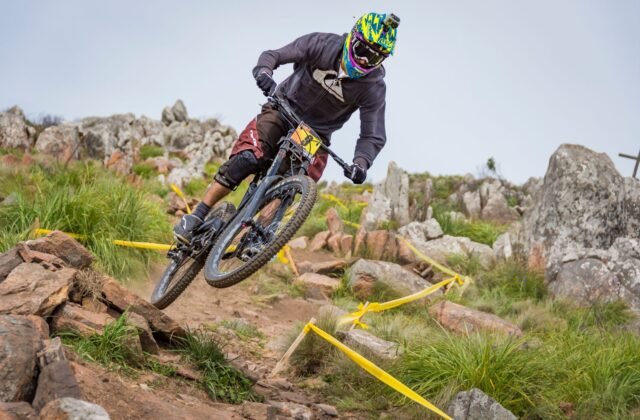
On a rough trail, a full-suspension bike stays calm where a hardtail skips and bounces, so a new rider keeps speed and steering instead of fighting the bike. On a smooth climb, the 29er feels faster: the big wheels roll over small roots and stones, and the rigid rear puts power straight into the trail. Both bikes sit in our Mountain Bikes Hub, and our guide to mountain bikes for beginners covers the basics.
Below is the side-by-side comparison, five things that can flip the verdict, a 20-minute test ride, how to set up either bike, and what to do if you bought the wrong one.
Full Suspension Mountain Bike vs 29er Mountain Bike: The Core Comparison
The table compares the two on what decides a beginner ride. Read the last column first.
| Attribute | Full Suspension Mountain Bike | 29er Mountain Bike | What to watch |
|---|---|---|---|
| Suspension | Fork and rear shock; both wheels move over bumps | Usually a fork only; most beginner 29ers are hardtails | Check whether the 29er has a rear shock too |
| Wheels | Usually 27.5-inch or 29-inch | 29-inch wheels; bigger wheels roll over roots and rocks more easily | A bigger wheel rolls over an obstacle a smaller wheel catches on |
| Comfort on rough trails | Rear shock soaks up roots, rocks and drops | Big wheels smooth small bumps, but sharp hits reach the rider | On a rooty descent, comfort keeps a beginner in control |
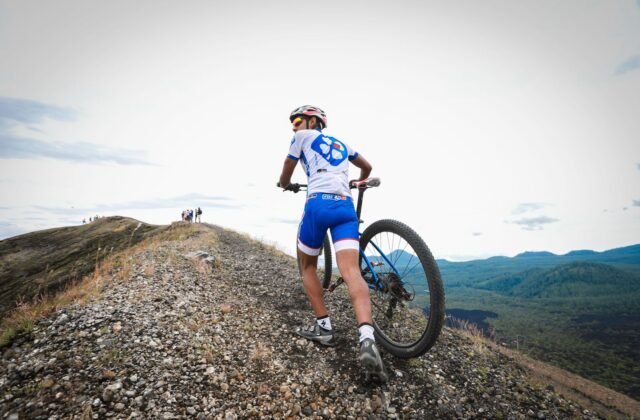
| Climbing | Rear shock can bob and waste power unless it locks out | Lighter and stiffer; power goes straight to the trail | Lock out the shock on smooth climbs, or pick the 29er |
| Weight | Heavier, because of the rear shock, linkage and pivots | Lighter, with no rear shock or linkage | A heavier bike is harder to carry and lift over obstacles |
| Maintenance | More moving parts: shock, pivots and bearings to service | Fewer moving parts; simpler to clean and cheaper to service | Budget for shock and pivot checks on a full-suspension bike |
| Best first bike | Most beginners on rough, rooty or rocky trails | Most beginners on smooth trails and climbs; usually cheaper | Match the bike to the trails you ride most |

When the Answer Changes
Five things flip the verdict:
- Trail surface. Smooth, flowing trails suit the 29er; rough, rooty or rocky trails suit the full-suspension bike.
- Your height and fit. A 29er has a tall front end, so shorter riders can find it hard to handle in tight turns. Check standover height and reach before you buy.
- Climbs or descents. Climb-heavy routes suit the lighter 29er. Descent-heavy routes suit the full-suspension bike, which stays planted where a hardtail skips.
- Your budget. At the same money, a 29er hardtail is usually the better bike.
- A 29er with full suspension. Some 29ers have a rear shock too, so check the bike, not just the name. Our full-suspension vs cross-country comparison shows what to look for.
Test Both Bikes on One Trail: A 20-Minute Decision Ride
Ride the same loop on both bikes, back to back, and let the trail decide.
- Pick your loop: a short trail with one climb, one rooty patch and one descent.
- Match the setup: set the tyre pressure the same on both bikes, from the range on the sidewall, and match the saddle height.
- Ride the full-suspension bike first. Note where the rear wheel stays planted.
- Swap to the 29er and ride the same loop at the same effort. Note whether the big wheels roll over the roots or the rigid rear skips.
- Keep the bike that was easier to control on your worst section.
What a fail looks like
| Symptom | Cause | Fix |
|---|---|---|
| Rear wheel skips over roots | Rigid rear end, no rear shock | Ride the full-suspension bike, or slow down and stand up |
| Front wheel catches on roots | Smaller wheels drop into gaps between roots | The 29er’s big wheels roll over; lift the front wheel slightly |
Myth: A 29er is always a hardtail.
Fact: Wheel size and suspension are separate choices.
Myth: Full suspension is only for downhill racers.
Fact: It also helps beginners, because it keeps the wheels on the ground.
Before you test: Wear a helmet, check the brakes and tyre pressure first, and test on a quiet trail. Walk any feature you cannot ride, and never ride with a lever that pulls to the handlebar — test the brakes first.

How to Set Up Either Bike the Same Way
Either bike rides far better with a basic setup. Do this first.
What you will need
- A floor pump with a pressure gauge
- A multi-tool with Allen keys
- Chain lube made for your conditions
- A clean rag
- A helmet
The method
- Set the saddle so your leg is almost straight at the bottom of the pedal stroke.
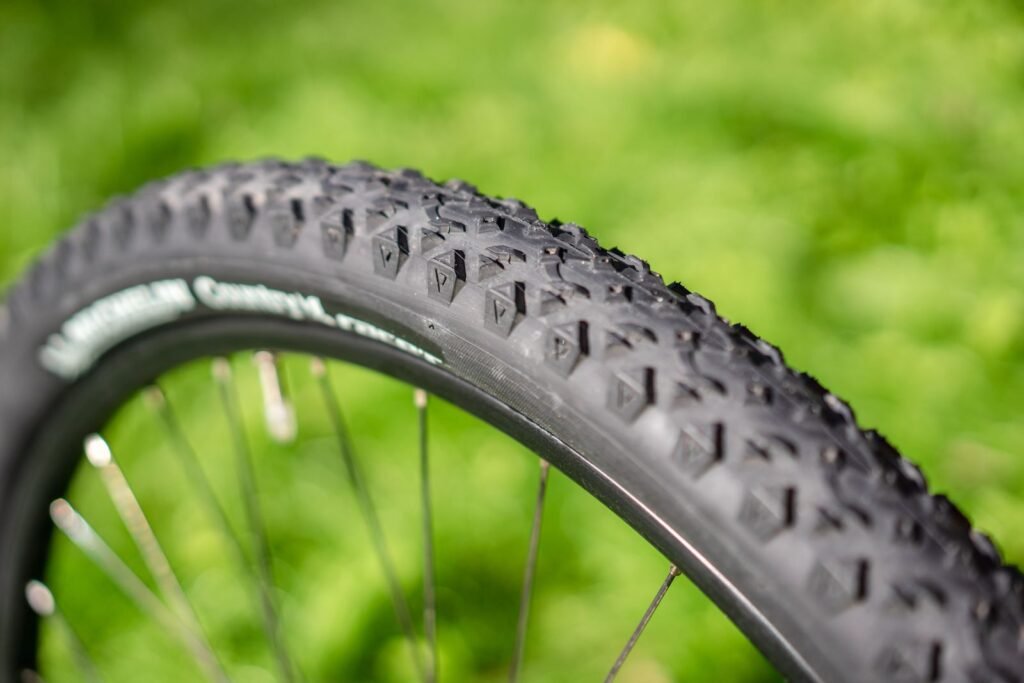
- Set the tyre pressure from the range on the sidewall. Wide mountain bike tyres often start around 25 to 35 PSI; set both tyres the same.
- On the full-suspension bike, set the rear shock sag and lock it out for smooth climbs. On the 29er, check the fork moves freely.
- Check the brakes: both levers should feel firm well before they reach the handlebar.
- Lube the chain, wipe off the excess, and check the gears shift through the whole range.
A note about tyre pressure: Lower pressure gives a bigger contact patch and more grip, but too little lets the tyre squirm and risks a pinch flat. Stay inside the sidewall range.
Warning: Never ride a descent you have not walked first, and never ride with brakes you have not tested. Do a short roll on flat ground first; if the brakes feel weak or grabby, stop.

When the Damage Is Already Done
You bought the wrong bike for your trails. Try these fixes first — starting with the tyres.
- I bought a full-suspension bike, but my trails are mostly smooth and flat. Lock out the rear shock on climbs and smooth sections, and run the tyres at the top of their pressure range.
- I bought a 29er, but my trails are rough and rocky. Fit the widest tyres the frame allows, drop the pressure a little inside the sidewall range, and stand up over the roughest patches.
- I am spending too much on servicing. A full-suspension bike needs shock and pivot checks; budget for them, or swap to the simpler 29er hardtail.
The Safe Alternative: Start With the 29er Hardtail
If the full-suspension bike feels like too much bike — too costly, too complex, or too much to maintain — the 29er hardtail is the safe alternative, and you can move to full suspension later.
The method
- Pick a 29er hardtail in your size. Check standover height and reach before you pay.
- Fit the widest tyres the frame allows and set them to the range on the sidewall.
- Set the saddle height, check the fork moves freely, and test both brakes on flat ground.
- Ride your usual loop. If the rear end skips, slow down and stand up over the rough patches.
If the 29er still feels too harsh, the full-suspension bike is the right next step.
What to Do Next, in Order
- Decide which trails you ride most: smooth and flowing, or rough and rocky.
- Ride the 20-minute test loop on both bikes before you buy.
- Buy the bike that fits your trails and your height; check standover before you pay.
- Set the saddle, tyre pressure and shock or fork before your first proper ride.
Never Do These on Your First Mountain Bike
- Never buy a bike without checking standover and reach. A bike that does not fit cannot be fixed with setup.
- Never ride a trail feature you have not walked first. Walk it, then ride it.
- Never set tyre pressure by squeezing the tyre. Use a gauge and the range on the sidewall.
- Never ignore a rear shock that leaks or a fork that will not move. A dead shock is worse than no shock.
In short
For most beginners, the full-suspension bike is the more forgiving first bike on rough, rooty or rocky trails, while the 29er is the better first bike on smooth trails and climbs. Match the bike to the trails you ride most, and test both on the same loop.
The essentials
- A full-suspension bike has a fork and a rear shock; a 29er is a 29-inch wheel size.
- On rough, rooty or rocky trails, a full-suspension bike is the more forgiving first bike.
- On smooth trails and climbs, a 29er rolls over obstacles, climbs well, and is simpler and cheaper.
- Match the bike to the trails you ride most — and to your height. Check standover and reach.
- Set tyre pressure from the sidewall range; wide mountain bike tyres often start around 25 to 35 PSI.
More Questions, Answered
Is a full suspension mountain bike good for beginners?
Yes, on rough, rooty or rocky trails. The fork and rear shock keep both wheels on the ground, so a new rider stays in control.
Is a 29er mountain bike good for beginners?
Yes, on smooth, flowing trails and climbs. The 29-inch wheels roll over roots and rocks more easily.
Can a 29er have full suspension?
Yes. Wheel size and suspension are separate choices, so a bike can have 29-inch wheels and a rear shock. Check the bike, not just the name.
Which is better for climbing, a full suspension bike or a 29er?
The 29er, usually. It is lighter and stiffer, so power goes straight to the trail. On a full-suspension bike, lock out the rear shock on smooth climbs.
Additional Details
Name: Full Suspension Mountain Bike vs 29er Mountain Bike: Which Is Better for Beginners?
Description: Full suspension mountain bike vs 29er mountain bike: for beginners, full suspension wins on rough trails, while 29ers roll over roots and climb better.
Published: November 10, 2026