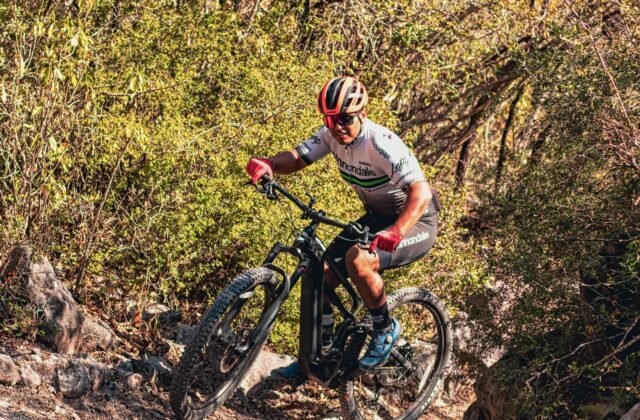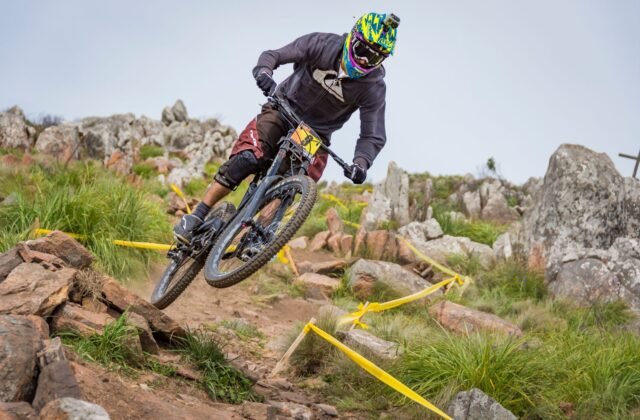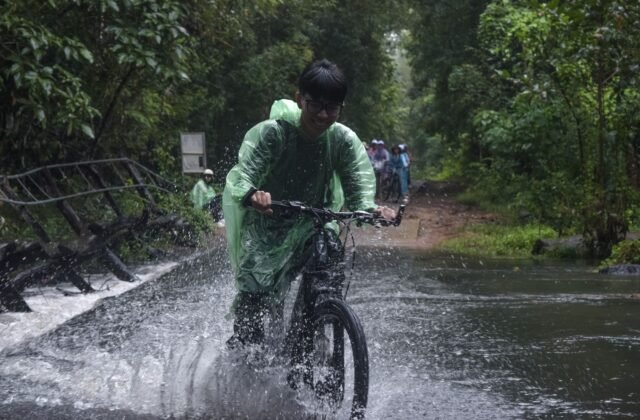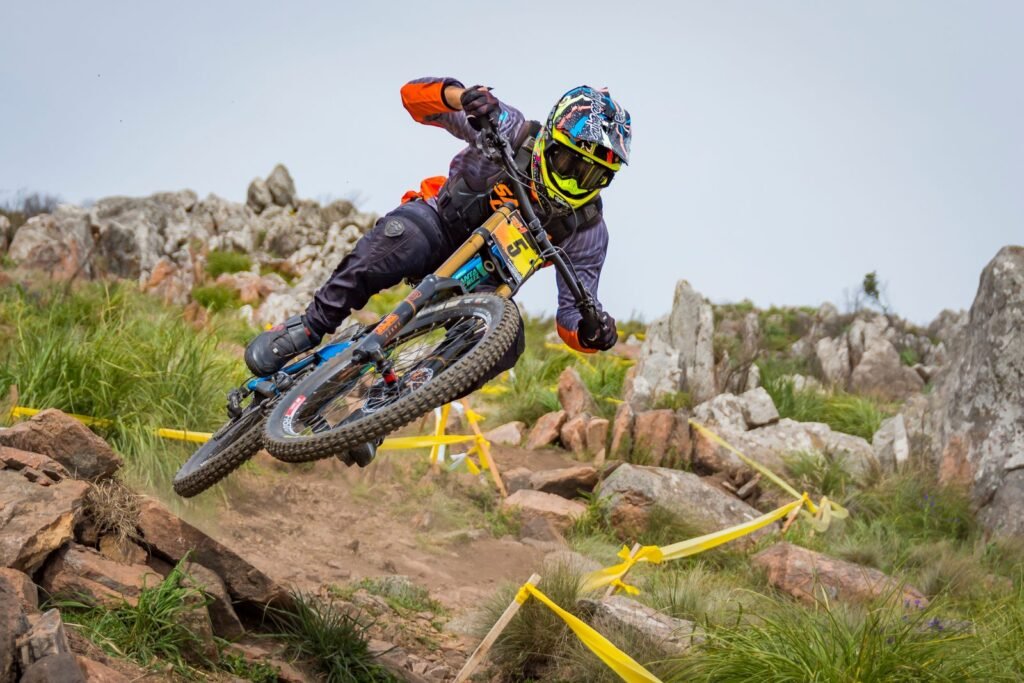
Full suspension wins on rocks. In a full suspension mountain bike vs single speed mountain bike comparison, suspension keeps both wheels on the ground over rock gardens, so it holds traction and control where a single speed bounces, skips and stalls.
The gap is about contact, not effort. Suspension lets the wheels move up and over rocks while your body stays steady. A rigid single speed has no suspension, so every rock reaches your hands, feet and back.
Rocks are the hardest surface most mountain bikers ride regularly. They are uneven, sharp and unpredictable, and they punish poor line choice and a stiff bike. Choosing between the two is a control question: which bike keeps you moving when the ground stops being smooth?
This guide compares the two bikes on rocky trails, step by step, so you can choose by the trails you actually ride. For the wider mountain bike picture, see the Mountain Bikes hub.
Full Suspension Mountain Bike vs Single Speed Mountain Bike: What Changes on Rocks
The two bikes solve the same problem in opposite ways. Full suspension adds movement, so the wheels follow the rocks. A single speed removes parts, so there is less to break, but the rider’s body becomes the suspension.
| Attribute | Full Suspension Mountain Bike | Single Speed Mountain Bike | What to Watch |
|---|---|---|---|
| Suspension | Front and rear suspension absorb sharp hits | No suspension — frame, tyres and rider take the hits | Check the travel before you buy |
| Traction on rocks | Tyres stay in contact longer, so grip is steadier | The rear wheel skips on sharp edges and loses drive | Watch the rear wheel on climbs |
| Control on descents | Braking and steering stay steady | Braking can lock the wheel when the bike bounces | Test braking on a short descent first |
| Climbing rocky steps | Suspension keeps the wheel planted | One gear forces you to stand and push over ledges | Pick a gear for your steepest rock step |
| Rider fatigue | Less shaking reaches your hands and back | Every hit reaches your body, so you tire faster | Note how your hands feel after 20 minutes |
| Weight and simplicity | Heavier, with pivots and a shock to service | Lighter, with no gears or derailleur to damage | Check what a rock strike can break |
| Cost and upkeep | More parts to check and service | Almost nothing to adjust beyond chain and brakes | Budget for suspension service too |
When the Answer Changes
Full suspension is the right answer for most rocky trails, but four variables can flip it. Check them before you decide. See our full suspension vs electric mountain bike comparison for the same trade-off on rough ground.
- Rock size. Small stones suit a single speed. Rock gardens, ledges and boulder fields suit suspension.
- Trail length. A 20-minute rocky loop is forgiving. On a three-hour ride, fatigue builds and suspension finishes fresher.
- Your gear. One gear is your only choice. Too high and you walk; too low and you spin out.
- Your strength and skill. A strong rider can carry a single speed over rocks that stop a weaker rider. A newer rider is safer on suspension.

The Rock Test: Find Out in One Ride
One short ride on your usual rocky trail tells you which bike fits you. Ride the same section twice — once on each bike if you can borrow one — and judge by control, not speed.
- Pick a five-minute rocky section you ride often, with a climb, a rock garden and a descent.
- Ride it at your normal pace, not race pace.
- Count how many times you put a foot down, lose the line or brake hard.
- Note how your hands, arms and lower back feel, and whether you could ride it again straight away.
- Repeat the section on the other bike and compare the counts.
What a fail looks like
- You keep putting a foot down on rocky climbs. The rear wheel is losing grip. Lower the gear, use bigger tyres, or let the suspension work.
- Your hands go numb on the descent. The impacts reach the bars without being absorbed. Suspension solves this; on a single speed, lower tyre pressure slightly.
- You brake hard before every rock. You do not trust the bike to hold its line. Suspension and wider tyres both help.
Myth: Single speed bikes are always slower on rocks.
Fact: On short, smooth rocky sections, a skilled single speed rider can match a suspension bike. The gap opens on long, rough sections, where fatigue and lost grip add up.
Before you test: Wear a helmet and gloves, check both brakes, and carry a pump and a spare tube. Walk the section first, so you know where the sharp edges are. Never test a new bike on a rocky descent you have never walked.
How to Set Up a Full Suspension Bike for Rocks
A full suspension bike only helps on rocks if it is set up for them. A shock that is too stiff is almost as bad as no suspension at all.
What you will need
- A shock pump
- A tyre pump and a pressure gauge
- A multi-tool with Allen keys
- A notebook or phone to record your settings
- A short, rocky test section close to home
The method
- Set sag first: stand on the pedals in your riding kit and check how far the shock compresses — start with about a quarter of its travel.
- Set tyre pressure for rocks: lower than a road tyre, high enough that it does not squirm or hit the rim.
- Open the rebound a little, so the wheel can follow the next rock.
- Ride your test section, and note where the bike feels harsh, bottoms out or skips.
- Change one setting at a time — sag, then pressure, then rebound.
- Write down the best settings, so you can return to them after a service or a puncture.
Note: Record your settings before you change them. A photo of the shock dials and a note of the tyre pressure is enough. It is easy to forget a good setup after a service.
Warning: Never ride a rocky trail with a shock that has lost air, a loose axle or a brake that fades. A failure on rocks leaves no room to recover.

When the Damage Is Already Done
If you already bought the wrong bike for the rocks near you, you do not have to start again.
- You bought a single speed and the rocks beat you up. Fit the widest tyres your frame takes, drop the pressure a little and add thicker grips.
- You bought a single speed and you keep walking the climbs. Your gear is too high. Fit a smaller chainring or a bigger rear cog.
- You bought a full suspension bike and it still feels harsh. Check sag and tyre pressure first.
- You bought a full suspension bike and the upkeep puts you off. Keep pivots and seals clean after muddy rides.
- Either bike, and you keep getting punctures on rocks. Check the tyre for cuts and fit tougher tyres.
The Safe Alternative: Ride a Single Speed on Rocks
A single speed is the safe alternative when your trails are short, the rocks are small and you value simplicity over comfort. Here is how to ride it on rocks without beating yourself up. Also read Hardtail Mountain Bike vs Single Speed Mountain Bike: Which Is Better for Trails?.
- Choose your gear for the steepest climb on your regular route, not for the flat.
- Fit the widest, toughest tyres your frame takes.
- Stand up before the rocks, not in them, and look ahead.
- Keep your hands and elbows loose.
- Take the smooth line, not the straight one, and walk if you cannot see a safe line.
- Shorten the ride: a single speed suits a 30-minute rocky loop better than a three-hour one.

What to Do Next, in Order
- Ride your usual rocky trail and note where you lose control or comfort.
- Decide by rock size and trail length, using the table above.
- Test the other bike on the same section before you buy.
- Set up the suspension and tyres first — setup is cheaper than a new bike.
- Buy the bike that fits your worst trail, not your easiest one.
- Record your settings, and revisit them after a month of rocky rides.
Never Do This on Rocks
- Never brake hard on a loose rock with the front wheel alone
- Never ride a rocky descent with a loose quick release or axle
- Never drop tyre pressure so low the rim hits the rocks
- Never follow a faster rider’s line blindly — their suspension and tyres may differ from yours.
- Never ride rocks in the dark on a new trail
- Never ignore a new noise from the suspension or wheels after a rock strike
In Short
On rocks, full suspension wins most of the time because it keeps the tyres in contact and protects your hands and back. A single speed is the right choice only for short, easy, rocky trails ridden by a strong rider who values simplicity.
The essentials
- Full suspension is better for rough, long and steep rocky trails.
- Single speed works on short, smooth rocky trails with a well-chosen gear.
- Test both bikes on the same rocky section before you buy.
- Set sag, rebound and tyre pressure before you judge a suspension bike.
- Tyres, gearing and setup can improve the wrong bike — but cannot make it the other bike.
More Questions, Answered
Can a single speed mountain bike handle rock gardens?
Yes, for short ones, with a low enough gear, wide tyres and a skilled rider. On long or steep rock gardens, it is slower and more tiring.
Is full suspension worth it if I only ride rocks sometimes?
If the rocky sections are the hardest part of your regular rides, yes. If rocks are rare and small, a simpler bike is cheaper and easier to look after.
What gear should I use on a single speed for rocky trails?
Use a gear low enough to climb your steepest rocky step without walking, even if that means spinning out on flat sections.
Do I need a dropper post for rocky trails?
It helps, because lowering the saddle moves your weight back on descents, but it is not essential here.
Can I convert a single speed into a full suspension bike?
No. Suspension is built into the frame, fork and shock, so a single speed frame cannot gain suspension.
Additional Details
Name: Full Suspension Mountain Bike vs Single Speed Mountain Bike: Which Is Better for Rocks?
Description: Full suspension mountain bike vs single speed mountain bike: which is better for rocks? Suspension wins on rough rock gardens — see when a single speed works.
Published: November 10, 2026