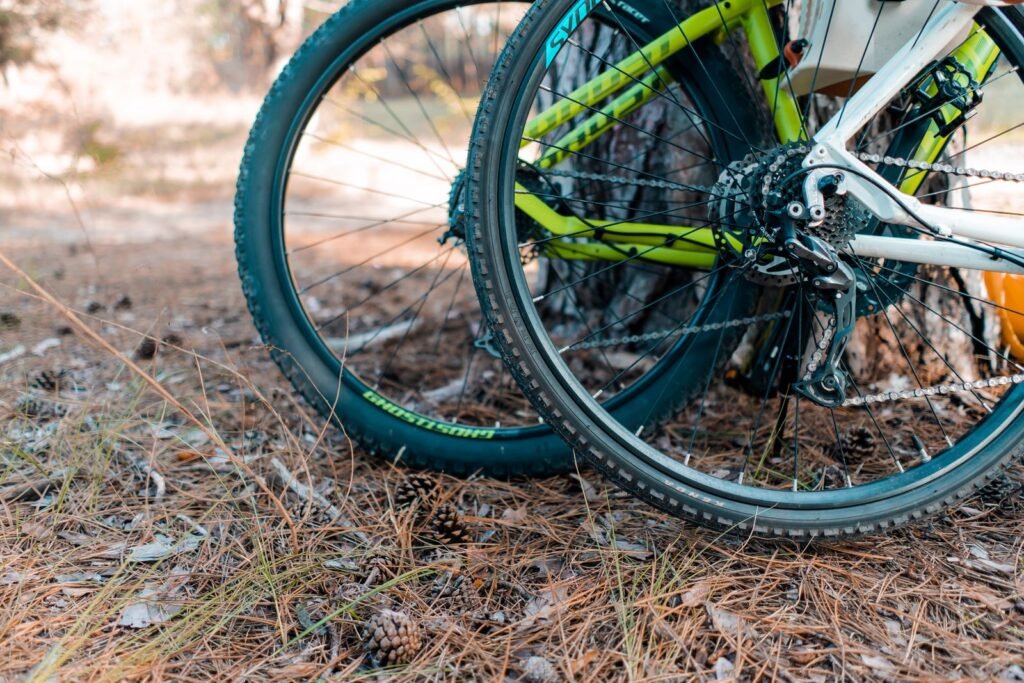
A hardtail and a single-speed mountain bike look similar at first glance. Both usually have a front suspension fork, no rear suspension and the same kind of knobbly tyre. The difference is in the drivetrain: a hardtail has gears you can shift, while a single-speed mountain bike has one gear and no shifter, derailleur or cassette to maintain.
That one difference changes how a ride feels. On a hardtail you can drop to an easy gear for a climb and shift up for a flat stretch. On a single speed you stand and push on every climb, spin fast on every descent and accept that some hills will beat you. Your fitness, the trails near you and how much maintenance you will do decide which trade-off is right.
This guide compares the two side by side, so you can choose with your eyes open. It covers climbing, speed, maintenance, cost and the test ride that settles the question on your own trails. If you are new to trail riding, start with our mountain bikes for beginners guide, and see how a hardtail fits against other designs in hardtail vs full suspension and hardtail vs trail mountain bike. The wider Mountain Bikes Hub collects the rest of the cluster.
Hardtail Mountain Bike vs Single Speed Mountain Bike: The Core Comparison
A hardtail gives you choice on every metre of trail. A single speed gives you simplicity and a bike that asks almost nothing of you between rides. Neither is the wrong answer for everyone, but the differences below decide most purchases.
| Attribute | Hardtail Mountain Bike | Single Speed Mountain Bike | What to Watch |
|---|---|---|---|
| Gears | A wide range of gears, shifted with a lever | One gear, no shifter | Pick a range that suits your steepest regular climb |
| Climbing | Easier on long, steep climbs | Hard work; you may walk steep pitches | If your trails are hilly, gears matter more than weight |
| Flat speed and flow | Keep a steady pedalling speed | Spin out on flats, coast on descents | A single gear is either too easy or too hard somewhere |
| Weight and simplicity | More parts, slightly heavier | Lighter, fewer parts to break | Check the whole bike, not just the drivetrain |
| Maintenance | Chain, cassette, derailleur and cables need care | Almost nothing to adjust; chain tension is the main job | Budget for drivetrain wear on a geared bike |
| Cost over time | More parts to replace as they wear | Fewer wear parts, lower upkeep | A cheap geared bike can cost more to keep running |
| Traction and control | Shift before a technical section to keep traction | Momentum and line choice do the work | Slow, technical climbs are the hardest test |
| Who it suits | Most trail riders, all fitness levels | Strong, fit riders on smoother trails | Be honest about your fitness and your trails |
The table shows the real trade: gears buy you range, and a single speed buys you simplicity. On varied trails the range wins. On smooth trails, or for a second bike that you ride for fun and fitness, simplicity can win.
When the Answer Changes
Very flat, smooth trails. If your regular loop is mostly flat with short, gentle rises, one gear is enough. A single speed feels quick and direct here, and you will not miss gears you never use.
Long, steep climbs. The steeper and longer your climbs, the more a hardtail pulls ahead. Walkable climbs become rideable climbs, and a ride that ends in exhaustion becomes a ride you can repeat the next day.
Your fitness and legs. A strong rider who rides often can make a single speed work on trails that would defeat a casual rider. If you ride once a month, gears are the kinder choice.
Wet, muddy or technical ground. Gears let you pick a ratio that keeps the rear wheel gripping instead of spinning. A single speed often forces a hard push that breaks traction on roots and wet rock.
How much maintenance you will do. If you will not clean a chain, adjust a derailleur or replace worn parts, a single speed stays rideable far longer.

Test It Before You Decide: A Trail Test in Four Steps
Ride both on the same trail, on the same day, before you spend money. A car-park spin will not tell you what a climb will. This test takes one afternoon and answers the question for your legs and your trails.
- Ride the hardtail first. Take it up your hardest regular climb, then along a flat stretch and down a descent. Note which gears you actually use.
- Ride the single speed on the same loop. Use the same route and the same effort. Note where you stand, where you slow to a walk and where you spin out.
- Count the walks. If the single speed makes you walk more than one climb on your normal loop, it is the wrong bike for that loop.
- Decide on the climb, not the descent. Both bikes are fun downhill. Choose the one that gets you up the climbs you ride every week.
What a Fail Looks Like
Symptom: you walk every steep climb. Cause: the single gear is too tall for your trails. Fix: fit an easier gear, or choose the hardtail.
Symptom: the chain drops, or the gears skip. Cause: a worn chain, a bent derailleur or a dirty drivetrain. Fix: clean and check the drivetrain, and replace the worn part before it damages the rest.
Myth vs Fact
Myth: A single speed is always lighter and faster. Fact: It is usually lighter and simpler, but gears let most riders hold a higher average speed on a varied trail.
Myth: A hardtail is always better. Fact: On smooth, flat trails a single speed is cheaper to run and often more fun, because there is nothing to adjust.
Before you test: check the bike, not just the gears. Wear a helmet, check the brakes before you roll, set the saddle height so your leg is almost straight at the bottom of the stroke, and check the tyre pressure — soft tyres and loose bolts will spoil any test. Ride a trail you already know.
How to Choose the Right One: The Main Method
If the test ride does not settle it, work through the method below: trails first, then gearing, then cost.
What You Will Need
- Your regular trail, or a loop like it
- A hardtail and a single-speed bike to compare, in your size
- A helmet, water and a pump
The Method
- List your trails. Write down the climbs, flats and descents on your usual rides. If steep climbs dominate, start with a hardtail.
- Match the gear to the climb. On a single speed, the gear must be easy enough for your steepest regular climb. If it is not, the bike is not right for that trail.
- Price the upkeep, not just the purchase. A hardtail needs chain, cassette and cable care; a single speed needs a clean chain and correct tension.
- Ride the loop from the test above and decide. If you walked climbs on the single speed and did not on the hardtail, the decision is made.
Note: No published post on this site names a verified non-electric hardtail or single-speed mountain bike, so the banners in this article use the closest verified mountain-style bikes the site does publish. Treat them as examples of mountain-style bikes, not as a hardtail or single-speed recommendation.
Warning: Never test a bike on a trail beyond your ability, and never ride with brakes you have not checked. A crash on an unfamiliar bike can end a day of riding — or longer.

When the Damage Is Already Done: You Bought the Wrong One
- Bought a single speed and you walk every climb? Fit an easier gear. If the trails still beat you, trade it for a hardtail.
- Bought a hardtail and the upkeep feels like too much? Clean the chain after muddy rides and book a service when shifting goes vague.

The Safe Alternative: Ride a Single Speed as a Second Bike
If a hardtail is your main bike, a single speed is the safest way to try the other side: it costs less to run and is a good second bike for short, familiar loops.
- Use it on trails you know, with no long, steep climb.
- Gear it for the climb, not the flat. An easy gear that gets you up the hill beats a fast gear that leaves you walking.
- Keep the hardtail for the hard days — hilly, wet or technical rides.
What to Do Next, in Order
- List the climbs and flats on your regular trails.
- Test a hardtail and a single speed on the same loop.
- Price the upkeep you will actually do.
- Buy the bike that climbs your trails.
Never Do This
- Never buy on looks alone — a bike that suits someone else’s trails may not suit yours.
- Never skip the test ride — a car-park spin hides the climbs.
- Never ride with brakes you have not checked — stopping matters more than gearing.
In Short
For most trail riders, a hardtail is the better buy: gears make climbs rideable and varied trails enjoyable, while a single speed makes sense only for fit riders on smooth trails who value simplicity above range. Test both, and choose the bike that climbs your trails.
The Essentials
- A hardtail suits most trail riders; a single speed suits fit riders on smooth trails.
- Gears win on steep, varied and technical trails.
- Test both on the same loop, and decide on the climb.
More Questions, Answered
Is a single-speed mountain bike good for beginners?
Usually not. A beginner does better with gears, because an easy gear makes climbs possible. A single speed is better as a second bike, once you know your trails and your fitness.
Is a hardtail faster than a single speed?
On a varied trail, usually yes. Gears let you hold a steady effort on climbs and flats, while a single-speed rider is either pushing hard or spinning out.
Which is cheaper to maintain?
A single speed. It has no derailleur, shifter or cassette to replace, and its main jobs are chain tension and cleaning. A hardtail needs drivetrain care, but a clean chain and timely replacement keep the cost down.
Additional Details
Name: Hardtail Mountain Bike vs Single Speed Mountain Bike: Which Is Better for Trails?
Description: Hardtail mountain bike vs single speed mountain bike: which is better for trails? Compare climbing, gears, maintenance and cost, then choose the right bike.
Published: November 10, 2026