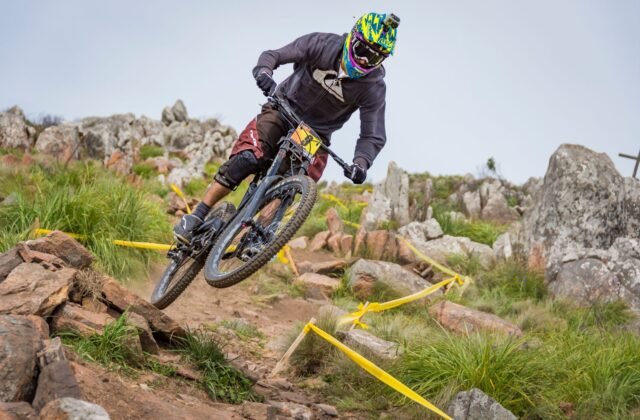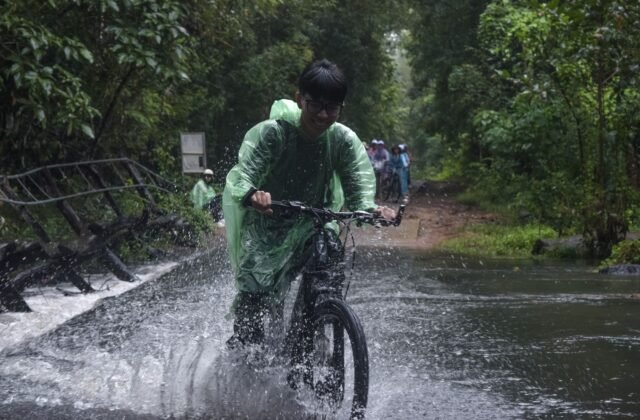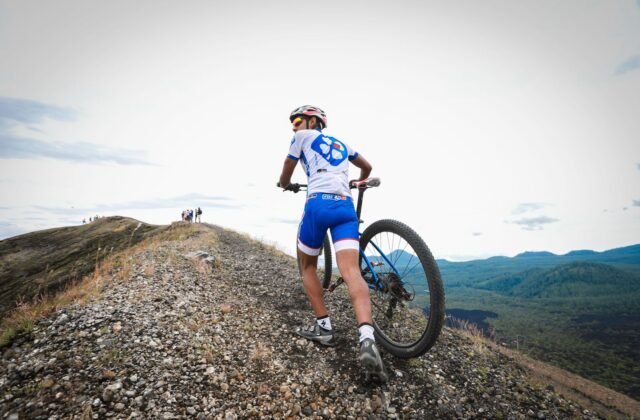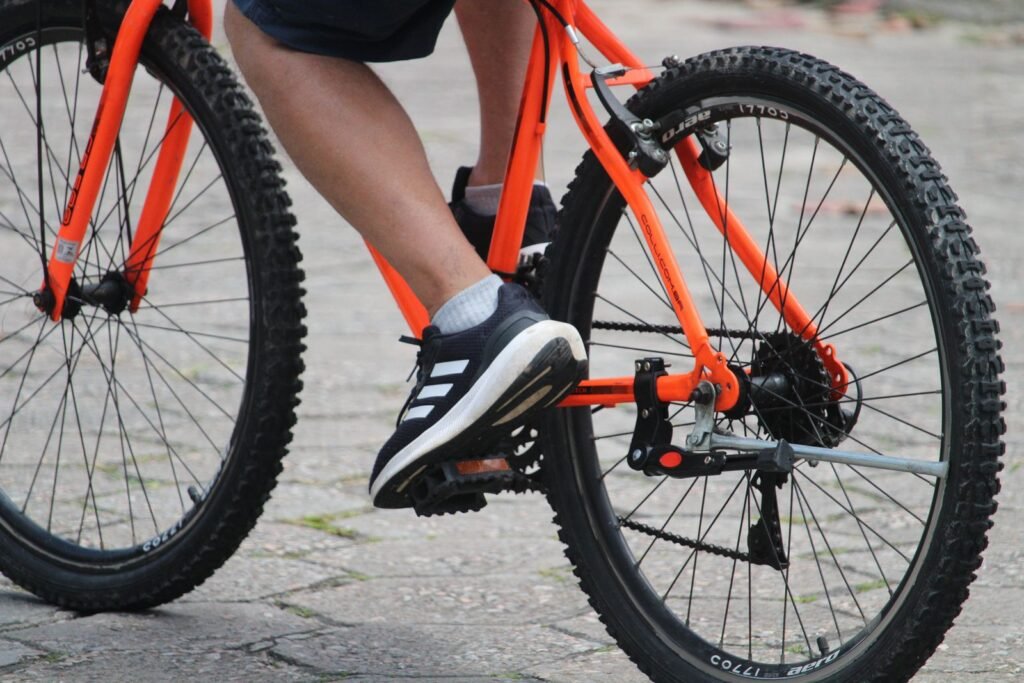
Straight answer: in a hardtail mountain bike vs electric mountain bike race, the hardtail is the better choice for most riders. It is lighter, simpler and more efficient, and it is the bike most cross-country races are run on, because pedal-only race classes do not allow a motor. An electric mountain bike climbs faster, but its motor, battery and extra weight put it in a different class, and in a pedal-only race it is not eligible at all.
The choice is therefore less about speed on a climb and more about the race you enter: check the rules first, then choose the bike that fits them.
A hardtail has front suspension only; the rear is rigid, which makes it light, direct and easy to maintain. An electric mountain bike — an e-MTB — adds a motor and a battery, so it can assist pedalling, especially on climbs. The two bikes look similar on a trail, but they are built for different rules, different effort and different kinds of race.
Racing makes the difference sharper: a race has a rule book, and the bike that wins a climb on a Sunday ride may not be allowed on the start line. This comparison starts with eligibility, then looks at climbing, weight, handling, range and maintenance, so you can match the bike to the race you want to enter. For wider context, see the Mountain Bikes Hub.
Hardtail Mountain Bike vs Electric Mountain Bike: The Core Comparison
The table below sets out the main differences. Read it as a guide to what changes on race day, not as a scorecard.
| Attribute | Hardtail Mountain Bike | Electric Mountain Bike | What to watch |
|---|---|---|---|
| Race eligibility | Eligible in most pedal-only cross-country and marathon races | Usually only in e-MTB classes | Check the race rules before you enter or buy |
| Climbing | All power comes from the rider | Motor assists pedalling on climbs, so steep sections feel easier | Assist does not remove skill: line choice and braking still matter |
| Weight | Lighter, with no motor or battery to carry | Heavier, because of the motor, battery and stronger frame parts | Extra weight is most obvious on tight turns, lifts and carries |
| Handling | Direct and nimble; easier to lift, hop and change direction | Stable at speed, but the extra weight needs earlier braking | Test both on the same descent before you judge them |
| Range and energy | Limited only by the rider; no charging needed | Limited by battery charge; a flat battery leaves a heavy bike to pedal | Plan charging and check the battery before race day |
| Maintenance | Fewer parts to service; chain, tyres and fork are the main jobs | Adds motor, battery, wiring and software checks to normal servicing | Budget time and cost for electrical as well as mechanical work |
| Cost and upkeep | Usually a simpler purchase, with fewer expensive parts to replace | More parts that can fail; battery and motor repairs can be costly | Compare servicing and spares, not only the purchase decision |
When the Answer Changes
The straight answer holds for most pedal-only racing, but a few variables can flip it. Check each one against the race you want to enter.
The race class changes the answer
If the event has a separate e-MTB class, the electric bike is the bike that class is for. Compare bikes inside that class, not with pedal-only bikes. The same applies to timed events that allow motors: once the motor is allowed, climbing speed, battery management and descending control matter more than pedalling power alone.
The course changes the answer
On a long, steep climb, motor assist makes the largest difference. On a flat, twisty course, the hardtail’s lower weight and sharper handling matter more. On a rough descent, suspension travel and tyre grip — not the motor — decide how fast you can go safely. A carry section or a tight gate will also punish extra weight.
Your fitness and goal change the answer
A rider returning from injury, or one who wants to finish a long event rather than chase a podium, may value the electric bike’s help on climbs. A rider training for a pedal-only championship gains nothing from a motor that cannot be used in the race.
Test Both Bikes on the Same Race Loop
Do not choose from a specification list alone. Ride both bikes on the same loop, on the same day, and compare the climb, the corners and the descent.
- Pick a short race loop. Choose one with a climb, a twisty flat section and a descent.
- Set both bikes up the same way. Use the same tyre pressure and saddle height. Mountain Bike Air Pressure explains the pressure basics.
- Warm up on the hardtail first. Ride at race effort, and note where you brake and where you feel fast.
- Ride the same loop on the electric bike. Use the same lines and braking points, and note where the motor helps and where the weight hurts.
- Repeat the hardtail loop. A second run removes the advantage of simply knowing the loop better.
- Decide by the race rules. If the race is pedal-only, the electric bike’s faster climb does not count — it is not eligible. If motors are allowed, compare total time, remaining battery and how fresh you felt.
What a Fail Looks Like
Symptom: You are fast on the climb but slow everywhere else. Cause: The extra weight is costing you in corners and on the descent. Fix: Brake earlier, choose a wider line, and re-test on a twistier loop.
Symptom: The electric bike feels strong at the start, then fades. Cause: The battery is running low, or you used the highest assist from the start. Fix: Use a lower assist on flat sections, save power for the climbs, and check the charge before the test.
Myth vs Fact: Myth: An electric mountain bike is always faster in a race. Fact: It is faster on climbs where motors are allowed — but heavier in corners and on descents, and not eligible in most pedal-only races.
Before you test: Check the brakes, tyres and bolts on both bikes, wear a helmet, and ride the loop at a moderate pace first. Walk any section you have not ridden before.
The Main Method: Set Up and Race the Hardtail
If the race is pedal-only, follow this method: setup, pacing and the finish, in that order.
What You Will Need
- A hardtail with brakes and gears checked
- Helmet, gloves and water
- Pump, spare tube and multi-tool
- Race rules, course map and start time
The Method
- Check the race rules first. Confirm the class, the motor rule and equipment limits.
- Set the bike up for the course. Choose tyre pressure, set the saddle height, and check the fork and brakes.
- Warm up and learn the course. Ride the start, the main climb and the finish at a moderate pace.
- Pace the climb. Start at a pace you can hold, and save a burst for the top.
- Brake early on descents. Brake before the corner, and let the bike roll through it.
- Finish in control. Shift early for the final sprint, and stay on your line.
Note: If the course changes on race day — rain, a reroute or a longer climb — re-check your tyre pressure and pacing before you start.
Warning: Do not ride a bike with a worn brake pad, a loose bolt or a cracked frame in a race. Fix it, or use another bike.

When the Damage Is Already Done
If you already bought the wrong bike for the race you want to enter, do not write the season off.
- Bought an e-MTB for a pedal-only race? Enter an e-MTB class or a timed event that allows motors instead.
- Bought a hardtail but wanted motor help? Use it for pedal-only races, and build fitness on climbs instead.
- Battery fading mid-race? Charge fully, use a lower assist on flat ground, and save power for climbs.
- Too heavy for the course? Remove anything not needed, check tyre pressure, and choose the simplest line.
If none of those fixes fits, check the rules of the races you will actually enter before you sell or trade the bike.
The Safe Alternative: Race an Electric Mountain Bike Where Motors Are Allowed
If your race allows motors, the electric mountain bike is a full alternative, not a shortcut.
- Check the class first. Enter only events that list an e-MTB class or allow motors.
- Charge and check the battery. Start with a full charge, and know how far it will take you.
- Use assist in stages. Save the highest assist for the climbs, and use a lower setting elsewhere.
- Brake earlier. The extra weight needs more stopping distance, especially on loose descents.
- Service the electrical parts too. Check the motor, battery, wiring and controls before the race.
The electric bike is right when the rules allow it, the course suits it and you can manage its weight and battery. Otherwise, the hardtail remains the safer race bike. For a closer look, see Hardtail Mountain Bike vs Full Suspension Mountain Bike.

What to Do Next, in Order
- Read the race rules. Confirm whether motors are allowed and in which class.
- Choose the bike that fits the class. Hardtail for pedal-only races; e-MTB only where motors are allowed.
- Test both bikes on the same loop, on the same day.
- Set the bike up for the course. Check tyre pressure, brakes, gears and, for an e-MTB, the battery.
- Enter the race and train on the bike you will race.
Never Do This
- Never enter a pedal-only race on an electric mountain bike. You risk disqualification.
- Never skip the battery check. A flat battery turns a fast e-MTB into a heavy bike to pedal.
- Never ride a new bike at full speed on an unknown trail.
- Never ignore a brake or tyre problem before a race. Fix it first, or do not start.
- Never buy on motor power alone. Check the rules, the course and the weight before you decide.
More hardtail comparisons: Hardtail Mountain Bike vs Trail Mountain Bike and Hardtail Mountain Bike vs Downhill Mountain Bike.

In Short
For racing, the hardtail is the better choice for most riders: it is lighter, simpler and eligible in most pedal-only races. The electric mountain bike climbs faster, but it is heavier, needs charging and is only for races that allow motors.
The Essentials
- Hardtail: lighter, simpler, eligible in most pedal-only races
- Electric mountain bike: faster on climbs, heavier elsewhere
- Always check race rules before you buy or enter
- Test both bikes on the same loop, on the same day
- Charge, check the brakes, and train on your race bike
More Questions, Answered
Can I race an electric mountain bike in a normal cross-country race?
Usually not. Most pedal-only cross-country races do not allow motors.
Is a hardtail fast enough for racing?
Yes, for most cross-country and marathon racing. Its lower weight and direct handling suit climbs and corners.
What should I check first before buying?
The rules of the races you want to enter, then the course, then the bike’s weight and servicing.
Additional Details
Name: Hardtail Mountain Bike vs Electric Mountain Bike: Which Is Better for Racing?
Description: Hardtail mountain bike vs electric mountain bike: which is better for racing? Compare eligibility, climbs, weight and handling, then test both on a race loop.
Published: November 10, 2026
Word count: 1,939 words
Category: Mountain Bike
Hub: Mountain Bikes Hub