Part of our guide on Helmets and Safety Gear.
A beginner’s first ride raises one question before any other: what gear actually protects you, and what can wait? A helmet is the one piece no ride should start without. The rest — an armoured jacket, gloves, boots that cover the ankle, and eye protection — covers the parts of you that meet the road in a fall.
This guide walks through each piece in the order that matters, how to tell real safety gear from a fashion copy, and how to check the fit. For helmet types in detail, read Best Dual-Sport Motorcycle Helmets, Best Rated Modular Motorcycle Helmets, and Best Rated Motorcycle Half Helmets.
Quick facts
| Fact | What it means for your ride |
|---|---|
| First thing to buy | A full-face helmet that fits snugly and carries a DOT or ECE safety mark |
| The full set | Helmet, armoured jacket, gloves, boots that cover the ankle, and eye protection |
| Check first | The safety mark inside the helmet, the fit, and CE armour in the jacket |
| Most common beginner mistake | Buying gear a size too big, or a helmet with no safety mark |
| When to replace gear | After any crash, or when a helmet is cracked, loose, or past its service life |
| Related guides | Best Dual-Sport Motorcycle Helmets, Best Rated Modular Motorcycle Helmets, Best Rated Motorcycle Half Helmets |
Quick recap
- Start with a full-face helmet that fits snugly and carries a DOT or ECE mark.
- Add an armoured jacket, gloves, and boots that cover the ankle before chasing speed or style.
- Fit matters as much as the label: loose gear protects less.
- Check the safety mark and the armour before the price tag.
- Replace any gear that has been in a crash, even if it looks fine.
The short answer: a full-face helmet first, then jacket, gloves and boots
A beginner needs five things: a full-face helmet, an armoured jacket, gloves, boots that cover the ankle, and eye protection. The helmet comes first, because head injuries are the most serious in a crash, and only a full-face helmet also covers the chin and jaw.
A half helmet or a fashion jacket leaves those parts open, and a helmet with no safety mark is not safety gear at all. Buy the helmet first, buy it to fit.
How to choose motorcycle safety gear, step by step
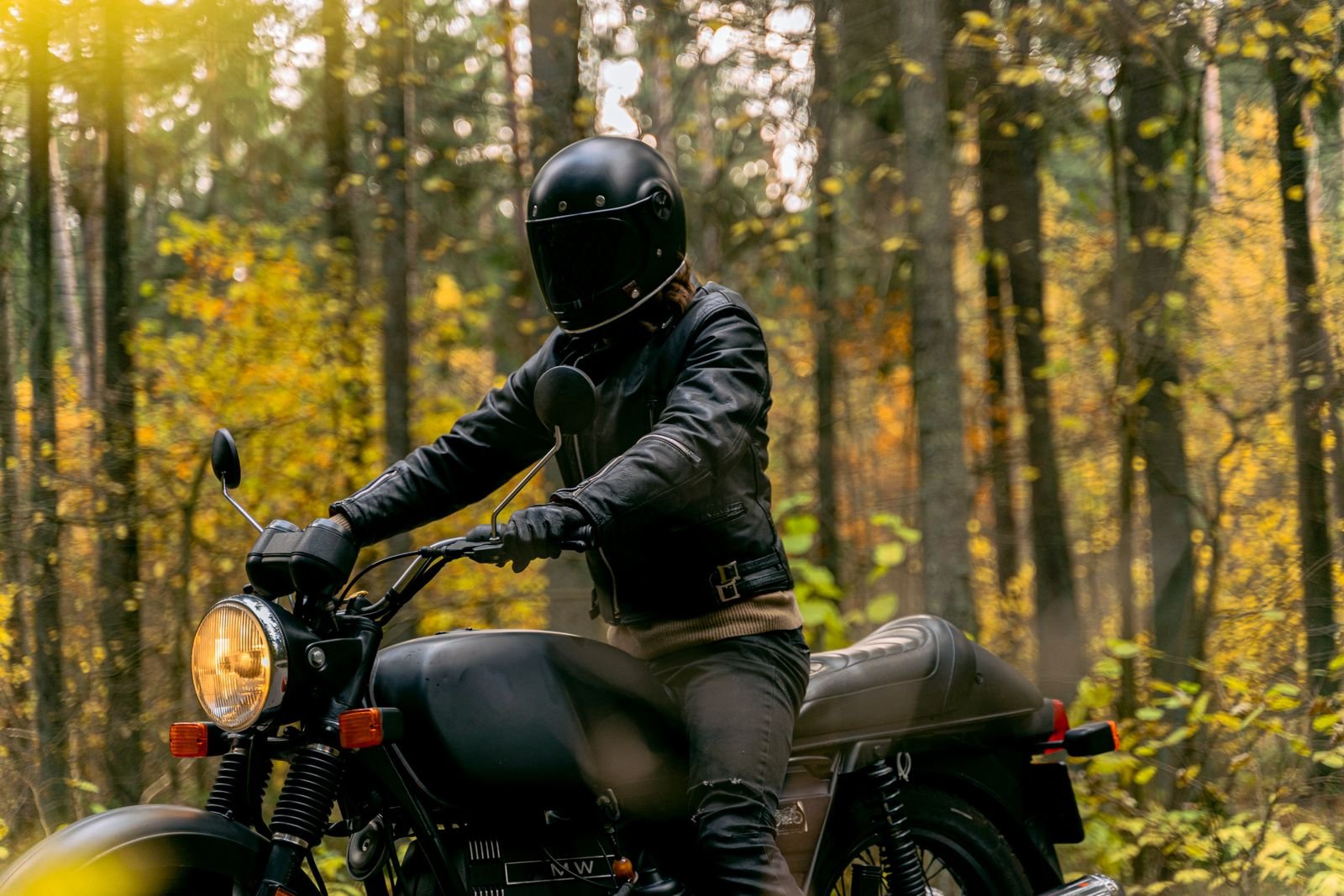
Work through these steps in order: a wrong-size helmet and a jacket whose armour sits off the joint are the two most common beginner mistakes.
- Measure your head and try the helmet on. Measure around your head just above the eyebrows, then try the size the chart gives you. It should feel snug, with no pressure point and no rocking.
- Check the safety mark. Look inside the shell for a DOT mark (FMVSS 218) or an ECE 22.05 or 22.06 mark. No mark means no tested protection.
- Pick a full-face helmet for your first helmet. It covers the chin and jaw, which a half helmet leaves open.
- Choose a jacket with CE armour. Armour should sit on the shoulders and elbows, with a pocket for a back protector and the EN 17092 mark.
- Choose gloves that cover the wrist. Look for palm and knuckle protection and a wrist closure that holds, with fingers reaching the ends.
- Finish with boots and eye protection. Boots should cover the ankle and hold it firm. If your helmet has no visor, add goggles or glasses made for riding.
What you’ll need
- A tape measure, for your head size before you order or visit a shop
- The helmet maker’s size chart, so you start from the right size
- A mirror, or a second pair of eyes, to check the fit from the front and side
One Amazon product in this section only: the full-face helmet below is a DOT-approved model with two visors.

What each piece of gear protects, and what happens without it
Use this table to match each piece of gear to what it protects. If any piece is damaged, skip the table and replace it.
| Gear | What it protects | What happens without it |
|---|---|---|
| Full-face helmet | Head, face, chin and jaw | The most serious crash injuries, with no protection for the chin |
| Armoured jacket | Shoulders, elbows, back and skin | Road rash and broken bones, even at low speed |
| Gloves | Hands, palms and wrists | Hands hit the road first in most falls; bare skin tears fast |
| Boots | Ankles, feet and lower legs | Twisted or crushed ankles, and feet trapped under the bike |
| Eye protection | Eyes, from wind, dust and insects | Watering eyes and a lost view of the road |
An armoured jacket is the second piece to buy after the helmet. The jacket below is a CE-certified model with full-body armour — look for the armour mark, not just the style.

How weather, speed and the type of ride change the answer
Heat is the most common surprise: a jacket that feels fine in the shop can feel unbearable at a traffic light, so vents matter — but the armour stays in. In rain, a waterproof layer goes over the armour, not instead of it. In cold weather, layers go under the jacket. Speed raises the stakes, and a short city ride is no reason to skip gear — most falls happen close to home.
What works
- Open the jacket and helmet vents before you set off on a hot day
- Wear a waterproof layer over your armoured jacket in rain, and keep the armour underneath
What to watch
- Never take the armour out of a jacket to cool down; the jacket without it is only clothing
- Do not ride with a visor that fogs or a jacket that has soaked through
- Do not buy gear a size up for summer and expect it to protect you in a fall
Fit and controls that change how gear protects you
A new helmet should feel snug on the cheeks, with no pressure point and no lift when you push up on the chin bar. If it rocks, it is too big — try a different model instead.
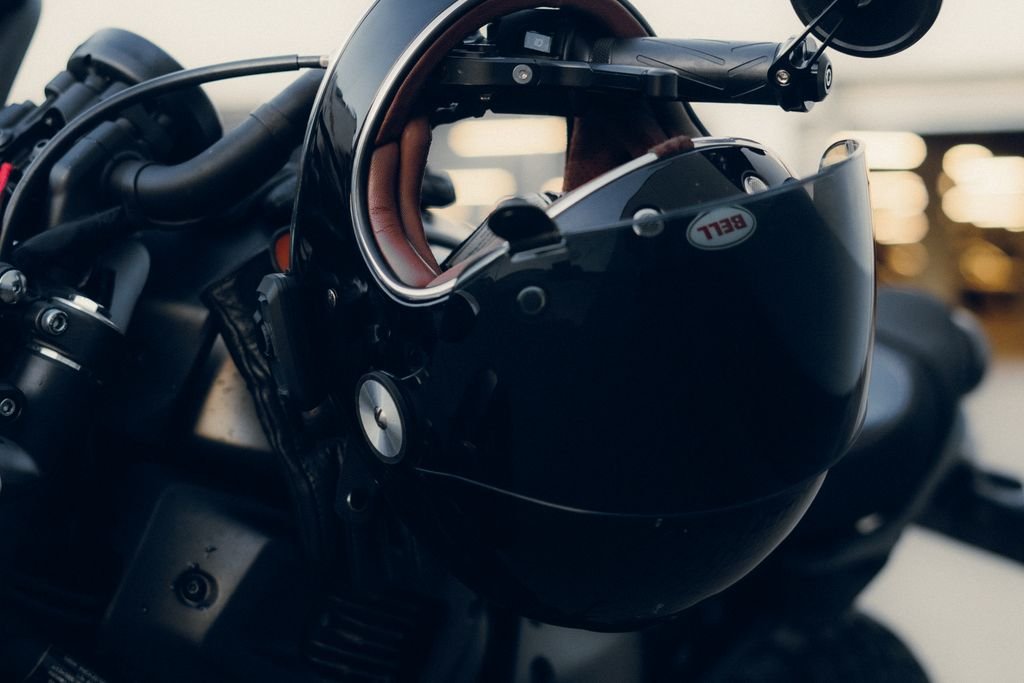
The same check applies to the rest of the set. A jacket fits when the armour sits on the joints while you reach for the bars and the sleeves cover your wrists. Gloves fit when your fingers reach the ends and the wrist closure holds. Boots fit when the ankle is held firm.
What works
- Fasten the chin strap and push up on the chin bar to check for lift
- Check the armour sits on the joints while you reach for the bars
- Close the glove wrist strap and pull — it should stay put
What to watch
- A rocking helmet is too big; a different model fits better than a bigger size
- Armour that sits off the joint is armour that will not be there in a fall
- A visor that does not seal lets wind and rain in — get it checked
When gear needs replacing, not repairing
Some gear problems have a simple fix: a scratched visor can be swapped and a jacket can be re-waterproofed. But a helmet that has been in a crash needs replacing — the liner crushes once and does not spring back. The same rule covers any gear that has slid along the road.
| Fix | Best use | Limit |
|---|---|---|
| Replace the helmet after a crash | Any impact, even a short drop onto concrete | A fine-looking helmet can still have a crushed liner |
| Replace worn straps and visors | Strap fraying, or a scratched visor that blurs vision | Only with parts made for that exact helmet model |
| Re-waterproof a jacket | A jacket that wets through with sound armour | Will not restore worn fabric or torn seams |
| Replace gloves with worn palms | Palm leather thin or torn, or seams split | Stitching a worn palm rarely holds under a slide |
| Get a professional fit check | Gear that never felt right, or a helmet that has loosened | A shop can measure you; a guess cannot |
What works
- Keep the helmet’s manual and size label, so a replacement is matched from the label
- Ask a shop to check a dropped helmet before you keep using it
- After any fix, take a short ride and check everything still feels normal
What to watch
- A second-hand helmet with no history can carry a crash you cannot see
- A cheap visor that only fits the shape can blur your vision at speed
- Do not keep using gear that a shop has told you to stop using
Gloves wear out faster than any other piece of gear. The gloves below are a hard-shell pair with palm padding — look for a secure wrist closure and protection on the parts that hit the road first.

The verdict
Start with a full-face helmet that fits and carries a DOT or ECE mark, then add an armoured jacket, gloves and boots that cover the ankle. Gear that fits and gets replaced after a crash turns a bad day into a story you can tell.
Readers also ask
Do I need a full-face helmet as a beginner?
Yes. It covers the chin and jaw, which a half helmet leaves open. It is the one piece no beginner should skip.
What does DOT mean on a helmet?
DOT means the helmet meets the FMVSS 218 standard for motorcycle helmets in the United States. ECE 22.05 and 22.06 are the European equivalents — look for the mark inside the shell.
Are motorcycle gloves really necessary?
Yes. Your hands hit the road first in most falls, and bare skin tears fast. Gloves with palm protection are the cheapest piece of the set.
How should a motorcycle helmet fit?
It should feel snug all round, with no pressure point and no rocking. Push up on the chin bar: if the helmet lifts, it is too big.
Can I buy a second-hand helmet?
No, not safely. The liner crushes once in a crash and does not spring back. Buy new.
Affiliate Disclosure: We may earn a commission when you buy through links on this site, at no extra cost to you.
Additional Details
Name: Learn About Motorcycle Safety Gear: A Beginner’s Guide
Description: Learn about motorcycle safety gear for beginners: what you need, how to check helmet fit and safety marks, and when gear must be replaced after a crash.
Published: November 17, 2026