Part of our guide on Helmets and Safety Gear.
Motorcycle safety gear is the one thing between you and the road when a ride goes wrong, and most riders buy it in the wrong order. They start with the jacket that looks good, or the gloves that feel soft, and leave the helmet as an afterthought. That order is backwards: a helmet protects the part of you that cannot be repaired, and everything else works around it.
This guide shows what motorcycle safety gear you need, how each piece should fit, and how to choose it without paying for features you will never use — the helmet, the jacket, the gloves and the boots, in the order that matters.
Quick facts
| Fact | What it means for your ride |
|---|---|
| Gear this guide covers | Helmet, jacket, gloves and boots |
| Buy first | A full-face helmet that fits |
| Fit rule | Snug all round, no pressure points, no rocking when you shake your head |
| Standards to look for | DOT or ECE on the helmet, CE armour in the jacket |
| Most common mistake | Buying a size too big because it feels comfortable |
| When to replace | After any crash or hard drop |
Quick recap
- Start with a full-face helmet, then the jacket, gloves and boots.
- Fit beats brand: gear that moves in a fall does not protect you.
- Check for a DOT or ECE label on the helmet and CE armour in the jacket.
- Try gear on with what you ride in.
- Replace a helmet after a crash or a hard drop.
The short answer: a full-face helmet first, then jacket, gloves and boots
The straight answer is that motorcycle safety gear starts with a full-face helmet that fits properly, then an armoured jacket, gloves with palm protection, and boots that cover the ankle. A full-face helmet covers the chin and jaw, where a large share of impacts land, and no other piece protects as much of you. Buy the helmet first, then match the rest to how you ride.
How to choose motorcycle safety gear, step by step
Work through these steps in order, then try everything on together.
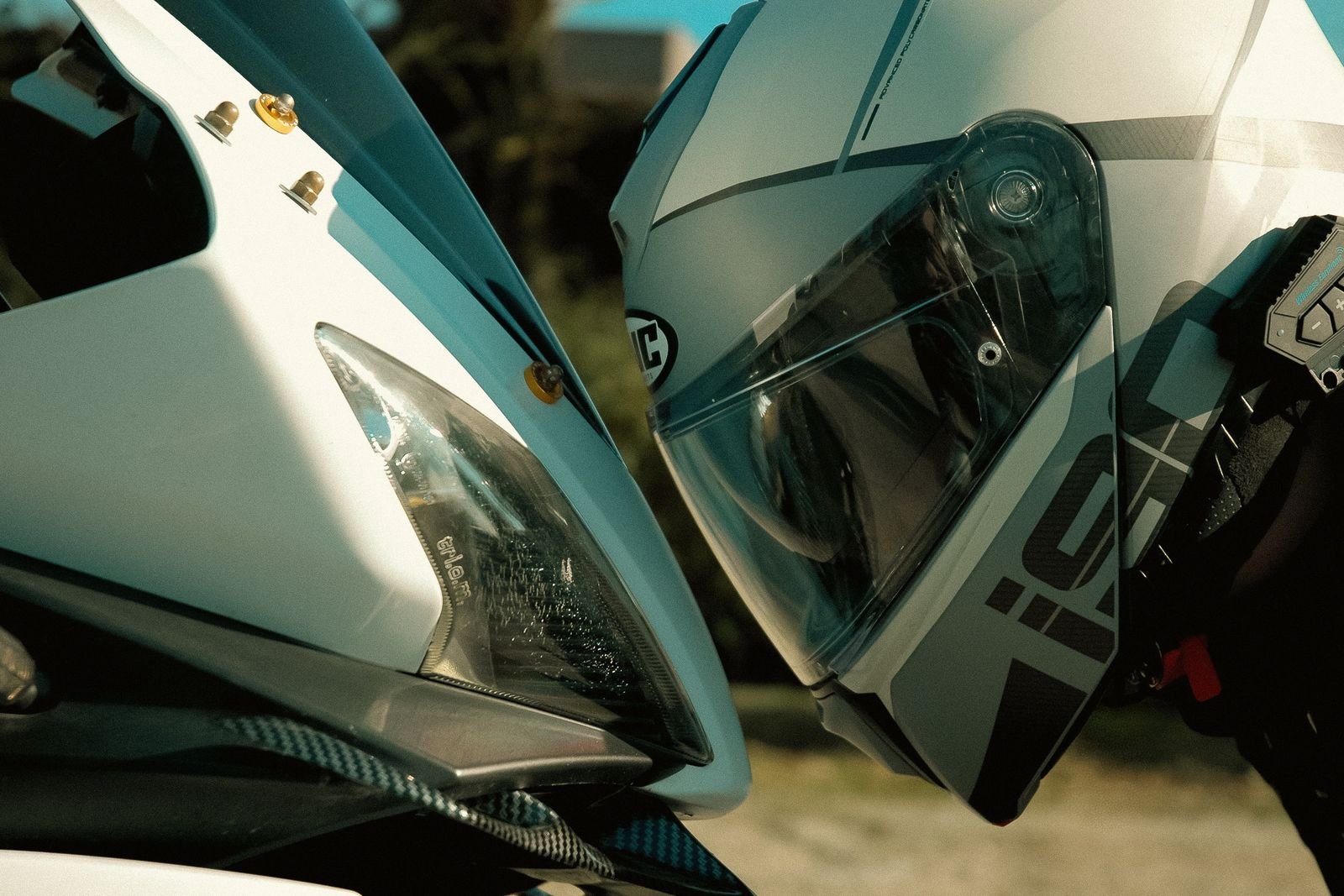
- Try the helmet first. Put it on, fasten the strap, and shake your head side to side and up and down. It should feel snug all round, with no pressure point. Wear it ten minutes; a hot spot usually shows up by then.
- Check the certification label. Look for a DOT label, or an ECE 22.05 or 22.06 label, inside the helmet. A label is the only proof it was tested to a standard — a hard shell alone proves nothing. No label, no sale.
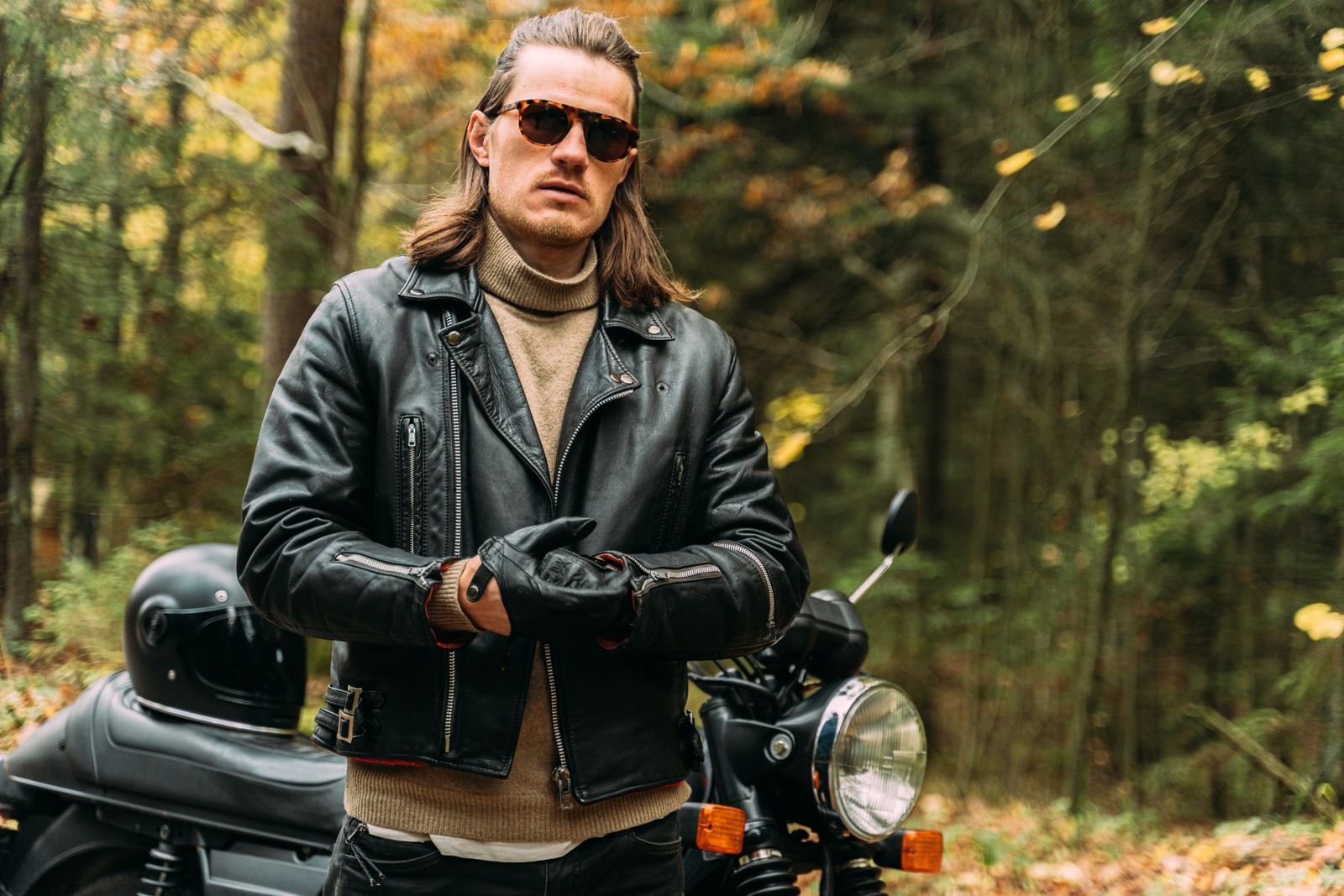
- Try the jacket with the armour in place. Put it on over your usual layers and reach forward as if holding the bars. The elbow and shoulder armour should sit on the joint, not slide off it, and the back protector should cover your spine.
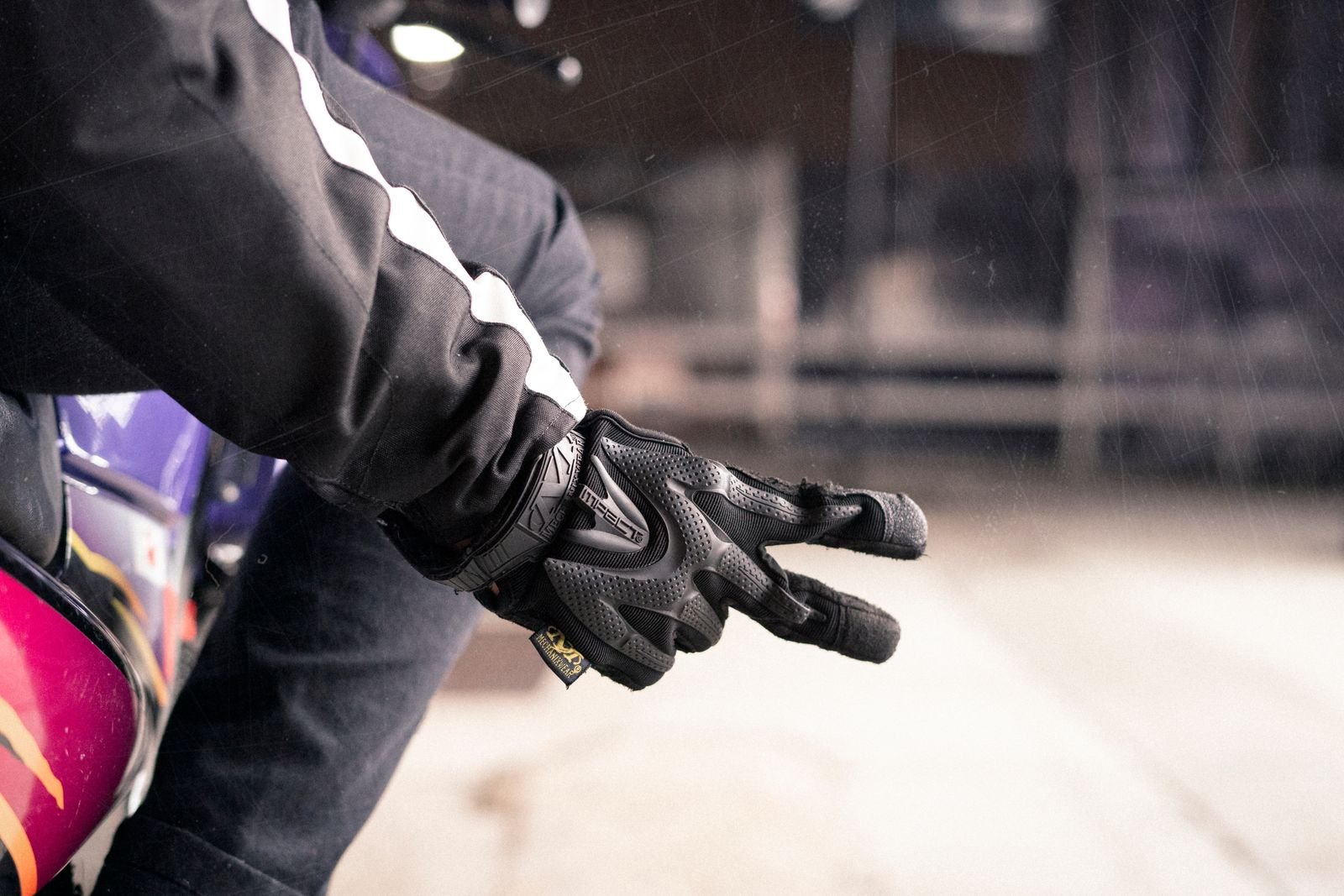
- Try the gloves on the grips. Close your hand around a grip. The fingers should reach the ends without bunching, the palm should feel flat, and the levers should work without the glove pulling tight across the knuckles.
- Check the boots. They should cover the ankle, fasten firmly, and have a stiff sole. Walk in them and sit as if on the bike; the heel should not lift.
- Check how visible you are. Bright colours and reflective panels help other drivers see you, especially at dusk and in rain. An all-black set with no reflective material is hard to spot in low light.
- Try the full set together. All four on at once. Sit, reach, turn your head, and check the cuffs meet the gloves and the trousers meet the boots.
If every step checks out, the gear fits you. See also our guides to the best-rated modular motorcycle helmets and the best dual-sport motorcycle helmets.
What you’ll need
- A tape measure and the maker’s size chart for the helmet.
- The layers you normally ride in, so the jacket fits over real clothes.
- Ten unhurried minutes to wear the helmet and check for pressure points.

What worn or wrong gear usually means
Match what you notice with what to try first. If gear has been through a crash, the answer is replacement, not adjustment.
| Situation | What you’ll notice | What to try |
|---|---|---|
| Helmet rocks or lifts at speed | Wind gets under the edge | Try a smaller size or a different shape |
| Pressure point on the forehead | A sore spot after about ten minutes | Try a rounder or longer internal shape |
| Jacket armour sits off the joint | Armour slides off the joint | Tighten the straps, or try a different size |
| Gloves bunch at the fingertips | Loose fabric, poor feel on the levers | Try a shorter finger length or another brand’s fit |
| Boots pinch or the heel lifts | Sore ankles, heel rising | Adjust the fastening, or try a different last |
| Visor fogs on cold mornings | Mist builds inside the visor within minutes | Use a pinlock insert, or crack the visor open slightly |

How weather, ride length and speed change the answer
The right gear depends on where and how you ride. A jacket perfect for a short summer trip can be wrong for a long ride in the rain, and a helmet fine for twenty minutes can hurt after two hours.
What works
- Vented jackets and helmets for hot weather, so you stay cool enough to concentrate.
- A waterproof layer for rain, instead of a jacket that soaks through.
- A tinted visor for sun, with a clear one kept for night.
- A neck scarf or balaclava under the helmet for cold mornings.
What to watch
- A jacket with no vents leaves you sweating in traffic — and a sweating rider loses focus.
- Mesh gear is cool in summer but offers less slide protection than textile or leather.
- A dark visor at night cuts what you can see.
- Loose straps and flapping fabric tire you over a long ride.
Fit and adjustment: how gear should sit
Fit is not one check at the start — it is small adjustments you repeat every time you ride. Straps loosen and linings settle. Check the fit before you set off.
What works
- A helmet strap fastened so two fingers fit under it, no more — tight enough to stay on, loose enough to breathe.
- Jacket armour held against the joint by straps, so it cannot slide away in a fall.
- Gloves with the cuff under the sleeve, so wind and rain cannot run up your arm.
- Boots fastened so the ankle cannot twist inside them.
What to watch
- A helmet snug when new that now rocks has a settled lining — check the fit again.
- Armour that has moved out of its pocket is not protecting the joint it was made for.
- Gloves that have stretched loose will not hold your hand on the grips in a slide.
- A visor with scratches across your line of sight will glare at night — replace it.
When a fix means repair or replacement
Some problems are fixed with an adjustment or a new part. Others mean the gear has done its job and must be replaced. When in doubt, replace it.
| Fix | Best use | Limit |
|---|---|---|
| New visor | Scratched or fogging visor on a sound helmet | Only the maker’s own visors; a wrong visor may not seal |
| New cheek pads or lining | Helmet gone loose as the lining settled | Does not help a cracked shell or a hard drop |
| New armour inserts | Jacket with worn or flattened armour | Must match the original size and rating |
| New gloves | Stretched, torn or worn-through palms | Gloves cannot be repaired once the palm is worn |
| New helmet | Any crash, hard drop, or helmet over five years old | A new helmet costs little next to a head injury |
What works
- Replacing a visor or cheek pads, made to be swapped.
- Checking the armour pockets every season.
- Keeping a spare clear visor, so you never ride tinted after dark.
What to watch
- A helmet dropped hard can be damaged inside while looking fine outside.
- Stitching undone on a jacket seam will not hold in a slide.
- Gloves with worn palms will not protect your hands.

The verdict
Buy a full-face helmet first and spend the most time on its fit, then add an armoured jacket, gloves and boots that work as a set. When any piece has been through a crash or no longer fits, replace it.
Readers also ask
What motorcycle safety gear do I need first?
A full-face helmet comes first, then an armoured jacket, gloves with palm protection, and boots that cover the ankle. Those four cover the injuries riders suffer most in a fall, and the helmet matters most.
How should a motorcycle helmet fit?
It should feel snug all round, with no pressure point and no rocking when you shake your head. Wear it for ten minutes — a hot spot usually shows up by then. A new helmet feels tight at first, but it should never hurt.
Do I need a DOT or ECE certified helmet?
Yes — look for a DOT label or an ECE 22.05 or 22.06 label inside the helmet. The label is the only proof it was tested to a standard. A hard shell with no label proves nothing.
How often should I replace my motorcycle helmet?
Replace it after any crash or hard drop, even if it looks fine, and when the fit goes loose or the lining wears out. Most makers also suggest a new helmet after about five years, because the materials age even without a crash.
Are motorcycle gloves really necessary?
Yes. In a fall your hands reach out first, so the palms take the slide. Gloves with palm padding and hard-shell knuckle protection keep your hands working, and stop blisters and wind burn on long rides. Ordinary work gloves are no substitute.
Affiliate Disclosure: We may earn a commission when you buy through links on this site, at no extra cost to you.
Additional Details
Name: Motorcycle Safety Gear: What You Need and How to Choose It
Description: Motorcycle safety gear explained: what to buy first, how a helmet, jacket, gloves and boots should fit, and when to replace worn gear.
Published: November 17, 2026