Straight answer: For daily use, a lightweight e-bike is better for most riders: easier to lift and carry, and it still rides well with the motor off. A road e-bike wins only on a long, flat, smooth route. The two overlap — a road e-bike can be light, and a lightweight e-bike can be road-shaped — so buy for your route, stairs and storage, not the label.
Introduction
A road e-bike and a lightweight e-bike look alike at first glance: slim frames, narrow tyres and a motor you can barely see. The difference shows up after a week of daily riding — when you lift the bike, park it and ride it home with a flat battery. That is where this comparison is decided. Our E-Bikes hub explains the classes, motors and batteries behind both sides.
A road e-bike is a shape and a use: drop handlebars, narrow tyres and a riding position built for speed on smooth tarmac — see our road e-bike vs throttle e-bike guide. A lightweight e-bike is a weight and a build: a light frame, a small motor and a small battery, made to be carried and to ride like a normal bike with the assist off. So a road e-bike can be light — and a lightweight e-bike can be shaped like a road bike.
This article compares the two as you will actually use them: daily trips, stairs, racks, locks and the ride home. If your days are short trips with lifts and stairs, the lightweight side will suit you. If your days are long, flat, fast rides on good roads, the road side will. The 15-minute test below settles it for your own route.
Road E-Bike vs Lightweight E-Bike: The Core Comparison
The table compares the typical road e-bike with the typical lightweight e-bike for daily use — neither is a single bike.
| Attribute | Road E-Bike | Lightweight E-Bike | What to Watch |
|---|---|---|---|
| What it is | Drop bars and narrow tyres, built for speed | Light frame, small motor and battery, built to be carried | Check both. |
| Weight and lifting | Heavier, so it is harder to lift | Light and easy to lift | Lift it first. |
| Riding with the motor off | Hard work — built around its assist | Still rides like a normal bike | Ride it unassisted. |
| Speed on smooth roads | Fast — the position and tyres suit a quick pace | Slower at the top end | Match your route. |
| Battery use and range | Good on flat, smooth roads | Smaller battery; use less assist | Wh decides it. |
| Carrying and storage | Rack only, if fitted | Easy to carry and store | Measure first. |
| Best for daily use | Long, flat, smooth commutes | Short trips, stairs and lifts | Buy for your worst day. |
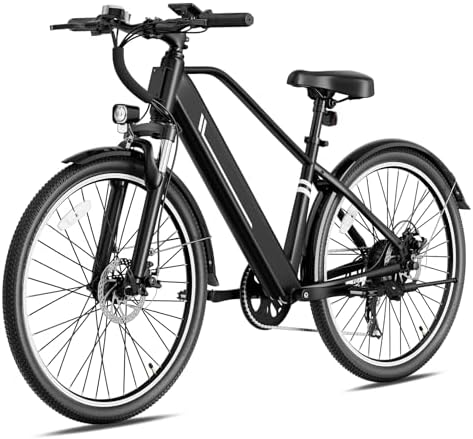
1000W Peak Electric Bike for Adults, Up to 40+ Miles, Max 25MPH Commuter Ebike
1000W peak motor, up to 25 MPH, and 40+ miles per charge.
When the Answer Changes
The verdict above is for a typical daily ride — change one thing, and the answer moves.
- Your route is long and flat. A road e-bike holds a faster pace and wastes little charge on smooth tarmac; see our road e-bike vs hybrid e-bike guide.
- Your building has stairs or a lift. A light bike you can carry beats a fast bike you cannot.
- Your battery runs out before home. A light bike is still easy to pedal; a heavier one is hard work with no assist.
- You lock the bike outside. A light bike is easier to move to a safe rack; any bike left outside needs a strong lock.
- Your roads are rough. Kerbs, potholes and gravel suit wider tyres — neither side here is best for rough ground. Our fat tyre vs lightweight e-bike guide covers that ground.
Test It Before You Buy: A 15-Minute Daily-Use Test
A short test on your own route tells you more than any spec sheet.
- Ride your real route. Use the same roads, hills and stops as a normal day.
- Carry the bike up your stairs and lift it onto your rack. If it is not easy, it is the wrong bike.
- Ride with the motor off for a few minutes. The bike you can still pedal gets you home with a flat battery.
- Park and lock it where you will park every day. Note the space, the rack and the walk to the door.
- Ride the same loop on the other bike. The one that feels easier over the whole day is the one to buy.
- Check the brakes and tyres after the test: one hard stop, then look for loose bolts.
What a Fail Looks Like
| Symptom | What It Usually Means | What to Do |
|---|---|---|
| The bike is too heavy to carry | The build suits speed, not lifting | Choose the lighter bike |
| The battery runs out before home | Too much for a small battery | Ride a lower level |
| Your hands or back ache on the ride | Too low or stretched | Raise the bars, or choose the upright bike |
| The bike will not fit your storage | Too long for the space | Measure first |
Myth: A road e-bike is always faster, so it is always better.
Fact: Speed helps only on long, flat roads.
Before you test: Wear a helmet, and test on a quiet road away from traffic. Check both brakes and the tyre pressure first, and walk the bike if the brakes feel weak.

Electric Bikes for Adults, 26 inch Commuter EBikes
A lightweight city commuter e-bike for daily rides.
The Method: How to Set Up Either Bike for Daily Use
The method below fits either side. Set the bike up for your body and route, then test it loaded.
What You Will Need
- A helmet and lights
- A strong lock
- A pump, a spare tube and tyre levers
- A rack or basket for your frame
- Chain lube and a multi-tool
- Your route, stairs and parking
The Method
- Set the saddle so your knee bends slightly at the bottom of the pedal stroke, then tighten the clamp.
- Set the tyre pressure for a loaded bike, following the range on the sidewall, and check it weekly.
- Fit the rack or basket low and tight, with the load near the centre. Tighten every bolt and check it clears the tyre and brake.
- Check both brakes, the chain, the gears and the axle nuts before you ride. On a road bike, look at the brakes first; on a light bike, the chain.
- Charge the battery fully, and learn the lowest assist level that suits your route.
- Test ride at low speed in a quiet place: stop, start, turn and park before traffic.
Note: A road e-bike and a lightweight e-bike can share one motor type. The motor is a separate choice from the frame shape: our road e-bike vs mid-drive e-bike guide explains that split.
Warning: Never ride with a loose rack, bag, or pannier. A load that moves can throw the bike off balance in a turn.
When the Damage Is Already Done
If you already bought the wrong one, do not write the bike off. Most problems have a cheap fix; a few mean it is time to change bikes.
- Road bike, stair-heavy days. Take a flatter route if there is one and keep the load light. If you still dread the stairs, the lighter side is the fix.
- Lightweight bike, long flat route. Use the assist that suits the route, keep the tyres pumped hard, and stay tucked. If the route is still slow, a road e-bike suits that day better.
- Battery runs out on the way home. Lower the assist on flat ground, charge fully, and plan a charging stop.
- Bike will not fit the stairs or the rack. Store it at the door, use a wall hook, or fit a smaller rack.
- Hands or back ache. Raise the bars, shorten the reach, and wear padded gloves. If it keeps aching, the frame shape is wrong for you.
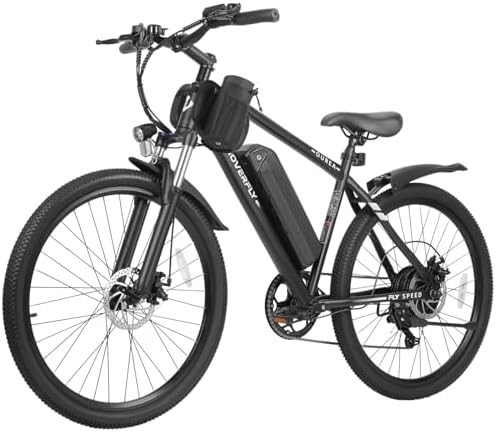
HOVERFLY OUREA 26 inch Electric Bike for Adults
750W peak motor, up to 20 MPH and 40 miles per charge.
The Safe Alternative: Start With a Lightweight E-Bike
If the road e-bike wins for your route, a lightweight e-bike is still the safe alternative: easy to carry and simple to store.
- Write down your round trip, stairs and storage. The one that limits you most decides the side.
- Test ride a lightweight e-bike on that route, with your usual bag, and carry it up your stairs. If it feels easy, it is your answer.
- Check the rack mounts, tyre clearance and battery size (Wh) before you buy.
- Add the lock, lights and rack to the price, then buy the bike that fits your day.
What to Do Next, in Order
- Measure your stairs, your lift, your doorway and your parking.
- Ride your route and note the hills, rough roads and stops.
- Test ride both bikes with your usual bag, on the same loop.
- Choose the side that fits your limits: stairs, storage, or distance.
- Add the lock, lights and rack to the price.
Never Do This After Buying an E-Bike for Daily Use
- Never ride with a loose rack, bag, or pannier. A load that moves can throw the bike off balance.
- Never leave the battery flat for weeks. Charge it and store it dry.
- Never wash the motor area with a pressure washer. Water in the motor or battery contacts causes faults that are hard to dry out.
- Never ride without checking the brakes. A daily bike wears faster than a weekend bike.
- Never ride with the assist on full for the whole trip. A lower level lasts your day.
In Short
For daily use, a lightweight e-bike is the better choice for most riders: easy to lift and store, and still rides well with a flat battery. A road e-bike is better only on long, flat, smooth routes. Test both on your own route — the bike you can carry and park is the one you will ride every day.
The Essentials
- Lightweight wins for short trips, stairs and storage; road wins for long, flat, fast routes.
- Road is a shape and a use; lightweight is a weight and a build. A bike can be both.
- Test both bikes on your route, with your bag, before you buy.
- Lift it, park it and ride it with the motor off before you decide.
More Questions, Answered
Is a road e-bike the same as a lightweight e-bike?
No. A road e-bike is a frame shape and a use — drop bars and narrow tyres for smooth, fast roads. A lightweight e-bike is a weight and a build — a light frame and small motor and battery. One bike can be both.
Which e-bike is best for a daily commute?
For most daily commutes, the lightweight e-bike: easier to carry, park and ride with a flat battery. If your commute is long and flat on smooth roads, the road e-bike is the better tool — see our road e-bike vs hybrid e-bike guide.
Can a lightweight e-bike keep up on a flat road?
It can hold a steady pace, but it will not match a road e-bike at speed: position and tyres are built for comfort.
What should I test before buying either one?
Lift it, park it, and ride it with the motor off on your own route.
Additional Details
Name: Road E-Bike vs Lightweight E-Bike: Which Is Better for Daily use?
Description: Road e-bike vs lightweight e-bike: which is better for daily use? Compare weight, speed, range and carrying, then run the 15-minute test before you buy.
Published: November 10, 2026