Straight answer: for most weekend riders, the hybrid e-bike is better. It rolls more efficiently on paved roads, cycle paths and light gravel, so a typical weekend loop feels easier and uses less battery than the same loop on a step-through. A step-through is the better choice when easy mounting and a relaxed, upright ride matter more than distance — for short rides, frequent stops and riders who find a high frame awkward. Pick the hybrid for the ride; pick the step-through for getting on and off.
In a step-through e-bike vs hybrid e-bike comparison, a weekend ride has a shape: it starts at your front door, lasts one to three hours, and ends on the same battery you left with. You stop for coffee and ride with a friend. Both bikes here can do that ride. The question is which one leaves you fresher in the second hour.
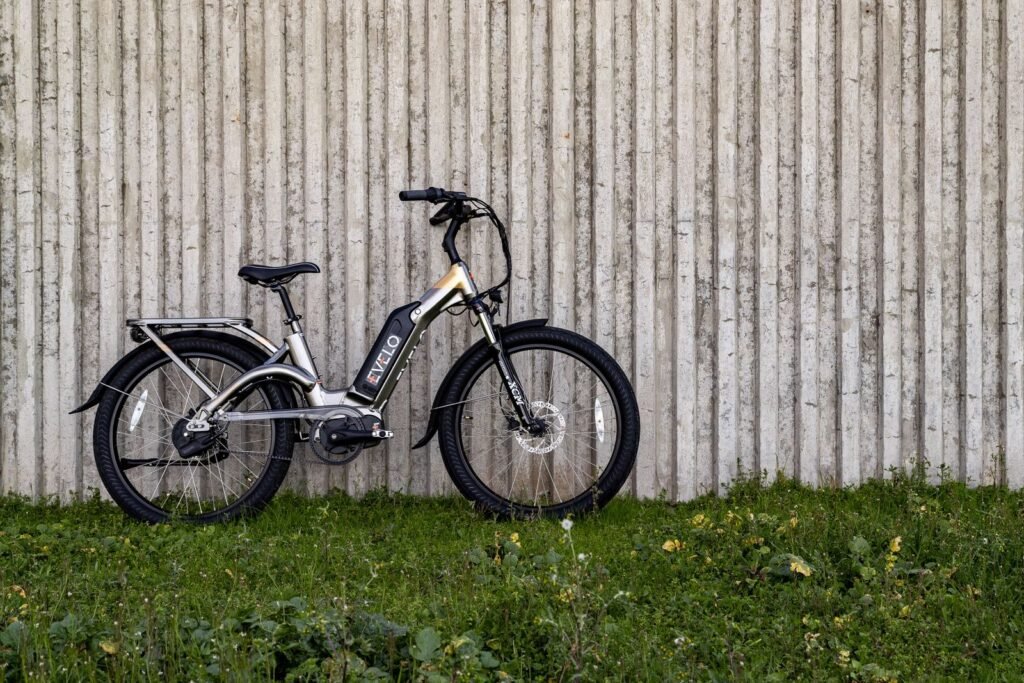
A step-through e-bike has a low, open frame, so you step through it and sit down instead of swinging a leg over a high bar. A hybrid e-bike mixes a road bike’s efficiency with a mountain bike’s steady handling: flat handlebars, mid-width tyres and a riding position that is upright enough to see the road but low enough to keep the bike stable at speed. One is designed around access; the other around covering ground. For more e-bike comparisons, see the E-Bikes Hub.
Step-Through E-Bike vs Hybrid E-Bike: The Core Differences
The two bikes look similar at a glance — flat bars, a motor, a battery — but the frame changes almost everything else. The table below is the comparison in one place.
| Attribute | Step-Through E-Bike | Hybrid E-Bike | What to watch |
|---|---|---|---|
| Frame and mounting | Low, open frame; step through | Step-over frame, or a low-step hybrid | If mounting feels like a hurdle, the step-through wins |
| Riding position | Very upright; wide saddle | Slightly forward; flat bars | Upright suits short rides; the hybrid position is steadier at speed |
| Tyres and surfaces | Mid-width, comfort-focused | Mid-width, faster-rolling | Wider tyres feel safer off-road but cost range on tarmac |
| Range on a charge | Shorter on the same route: the upright position and comfort tyres use more energy | Further on the same route, thanks to a more efficient position | Compare range on your own loop |
| Weight and handling | Often heavier; easy at low speed, less steady at higher speed | Usually lighter and more balanced; steadier above walking pace | Lift the bike first — weight matters at gates and kerbs |
| Comfort on long rides | Excellent for the first hour | Better after the first hour; the position shares the work between hands and back | Longer rides favour the hybrid |
| Best weekend use | Short, relaxed rides with stops | Longer mixed loops | Match the bike to your longest regular ride |
When the Answer Changes
The hybrid wins the average weekend ride. These are the variables that flip the answer.
Your longest ride is under an hour. If your weekend ride is a gentle loop to a café and back, the step-through’s comfort and easy stops matter more than the hybrid’s efficiency.
You stop a lot. Gates, crossings, photos, a stop for the dog: every stop is a mount and a dismount. A low frame turns that from a chore into nothing.
Your knees, hips or balance argue with a high frame. If swinging a leg over a bar is painful or unsteady, the step-through is not a compromise — it is the bike that lets you ride at all.
Your route is mostly rough, or mostly smooth. Light gravel and packed dirt suit both bikes, but a route that is mostly loose gravel favours wider tyres, while smooth tarmac favours the hybrid’s faster tyres.

How to Decide in One Weekend
Ride both bikes on the same loop, on the same day, and let the loop decide.
- Pick your real loop: the route you ride on a Saturday, with road, path and gravel.
- Use the same assist level and tyre pressure on both bikes, so the comparison is about the bike, not the settings.
- Ride the step-through first. Note how easy it mounts, how your back and hands feel halfway round, and the battery left at the end.
- Ride the hybrid on the same loop. Note the same three things, plus how steady it feels at speed and on the gravel.
- Add a stop. Get off and on at a gate halfway through each ride, and notice which bike is easier to restart.
- Choose by the second hour, not the first ten minutes: the bike that still feels good at the end of your loop is the right one.
What a fail looks like
Your hands go numb halfway round. → Too much weight on the bars and the wrong grip angle. Fix: raise the bars or fit a more swept-back bar; if the position still hurts, the bike’s riding position does not suit your body.
The battery is nearly empty before you are home. → The route was longer or hillier than the bike’s efficient range — or the assist level was too high. Fix: use a lower assist level on flat ground and recharge before a long loop.
Myth vs Fact
Myth: Step-through e-bikes are only for older or less fit riders.
Fact: A step-through is a frame design, not a fitness level. It suits anyone who values easy mounting, frequent stops or a relaxed position — including younger riders who ride in town. The same is true in reverse: a hybrid is not only for fast riders; it is for anyone whose weekend ride is long enough for efficiency to matter.
Before you test: Check the brakes, tyre pressure and battery charge on both bikes before you set off, and wear a helmet. Ride the loop in daylight and tell someone your route. A test ride should never become a rescue.

The Weekend Test: How to Compare Both Bikes Fairly
One ride on each bike is enough if the two rides are genuinely alike.
What you will need
- Two bikes to compare — a step-through and a hybrid, both in your size
- A measured loop of your usual weekend distance
- A phone or watch to time the loop and note the battery level
- A helmet, water and a small pump
- A notebook for the three scores below
The method
- Charge both batteries fully and check the tyre pressure on both bikes.
- Ride the loop on the step-through at a steady pace. Write down your time, the battery left, and a comfort score out of 10 for your back, hands and seat.
- Rest, then ride the same loop on the hybrid at the same pace. Write down the same three things.
- Compare the numbers first. The faster time and higher remaining battery usually belong to the hybrid.
- Now compare the feeling. Which bike did you want to keep riding at the end of the loop? That counts as much as the numbers.
- Repeat the winning bike on a second loop if you can. A bike that feels good twice is a safer choice than one that felt good once.
Note: Keep the assist level, the route and the pace the same on both rides. Change only the bike. If you change two things at once — a different route and a different assist level — the test tells you nothing.
Warning: Do not test ride on a battery that is nearly empty, and do not ride a bike that has not been checked. A dead battery on a heavy e-bike turns a test ride into a long walk home.
When the Damage Is Already Done
If you already bought the wrong one, the bike is not wasted. Most of the gap can be closed with small changes.
- Mounting is a struggle on your hybrid. Lower the saddle for stops and practise mounting with the pedal low. If it still hurts, a step-through frame is the real fix.
- Your step-through runs out of range on long loops. Use a lower assist level on flat ground and keep the tyres at the pressure shown on the sidewall.
- Your hands or back ache after an hour on the step-through. Raise the handlebars, try a different saddle, and take a short break every 45 minutes.
The Safe Alternative: Start With the Step-Through
If you are still unsure, the step-through is the safer first buy. It is the bike that gets ridden: easy to mount, easy to stop on, comfortable from the first minute. You can add range later by riding further and using less assist; you cannot add easy mounting to a frame that does not have it.
- Choose a step-through in your size, with a battery suited to your longest ride.
- Set the saddle so both feet reach the ground at a stop, and the bars so your back is upright.
- Ride your usual weekend loop at a relaxed pace, and note the battery left at the end.

What to Do Next, in Order
- Write down your usual weekend loop.
- Decide what matters more: easy mounting or longer range.
- Test ride both frame types on the same loop, using the method above.
- Choose the bike that still feels good at the end of the loop, then ride it for a month before adding accessories.
Never do this:
- Never buy on motor power alone. A bigger motor does not fix a frame that does not fit you, and it drains the battery faster.
- Never skip the test ride. A bike that looks right online can still feel wrong in the first ten minutes, and that feeling rarely improves.
- Never ride a new bike on a long loop first. Learn the brakes, the assist levels and the weight on a short, quiet route.
In Short
For most weekend riders, a hybrid e-bike is the better buy, because it covers the mixed roads, paths and light gravel of a real weekend loop more efficiently and with more range to spare. A step-through is better when easy mounting, frequent stops and a relaxed, upright ride matter more — and if you are unsure, it is the safer first bike, because it is the one you will actually ride. Test both on your own loop, and let the second hour decide.
The Essentials
- Buy for the mix — road, path and light gravel — not for one surface.
- Step-through: easy mounting, upright and relaxed, best for short rides and frequent stops.
- Hybrid: more efficient, longer range, steadier at speed, best for longer loops.
- Test both bikes on the same loop and score comfort and battery.
More Questions, Answered
Can a step-through e-bike handle gravel?
Yes, on light gravel and packed dirt a step-through with mid-width tyres is fine. Avoid loose, deep gravel and mud; the smoother tyres and upright position make it less steady there than a hybrid.
Which e-bike goes further on a charge?
Usually the hybrid, on the same route, because it rolls more efficiently. The difference depends on assist level, hills and wind.
Which one should I buy if I only ride at weekends?
Buy for your longest regular weekend loop: under an hour with stops, a step-through; longer and mixed, a hybrid.
Additional Details
Name: Step-Through E-Bike vs Hybrid E-Bike: Which Is Better for Weekend rides?
Description: Step-through e-bike vs hybrid e-bike: which is better for weekend rides? Compare frames, comfort, range and handling, then pick the right one for your roads.
Published: November 9, 2026