Straight answer: For most beginners, the step-through e-bike is the better first e-bike — easier to mount, lighter to handle at low speed, and simpler to park and store. The cargo e-bike wins only when you regularly carry a child, heavy shopping, or work gear that will not fit on a normal rear rack.
Introduction
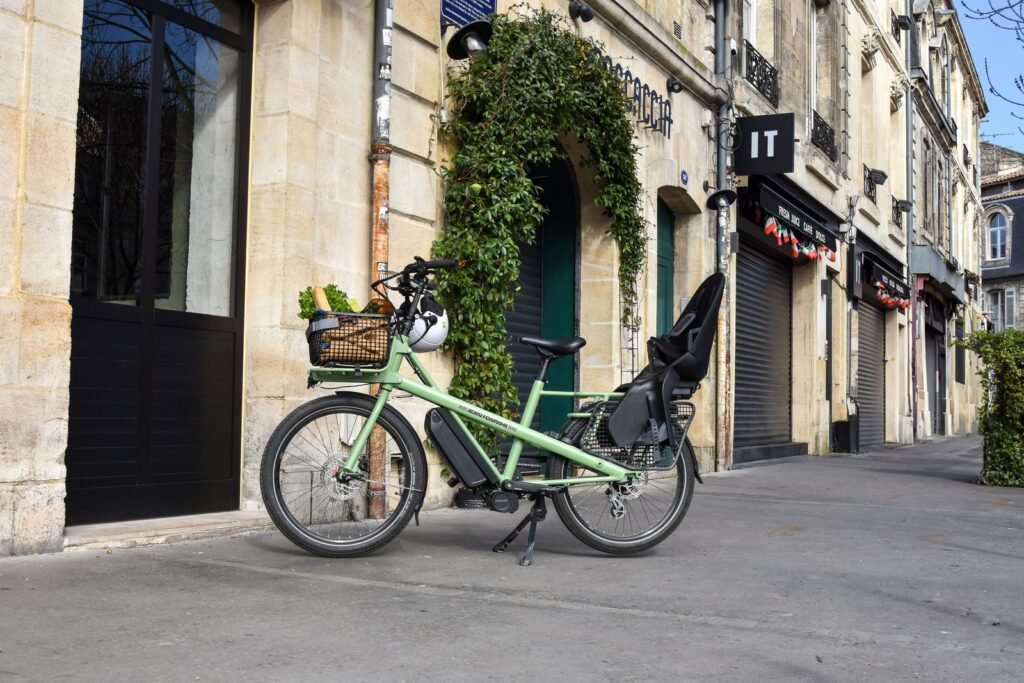
A first e-bike should make riding easier, not harder. The step-through e-bike does that by removing the high top tube: you step through the frame instead of swinging a leg over it, so mounting feels natural. The cargo e-bike takes the opposite approach — a long frame, a big rack or front box, and the strength to carry far more than a normal bike.
This guide compares the two for beginners only, judged by what matters in your first months: mounting, low-speed balance, carrying, parking, and storage. The E-Bikes Hub explains the wider choices — motor types, battery size, and fit. For detail, see our step-through comparison and our cargo comparison for beginners.
Below: the side-by-side comparison, the five things that can flip the verdict, a five-step test, a simple method, and what to do if you already bought the wrong one.
Step-Through E-Bike vs Cargo E-Bike: The Comparison
| Attribute | Step-through e-bike | Cargo e-bike | What to watch |
|---|---|---|---|
| Getting on and off | Step through the low frame. | Swing a leg over a long frame. | Awkward now means worse loaded. |
| Weight and handling | Lighter to push and turn. | Heavier and longer; steadier moving. | Try a slow U-turn. |
| Carrying capacity | A rack and panniers suit a bag or shopping. | Built for a child seat or heavy loads. | Check the rack’s rated load. |
| Stability with a load | A heavy rear bag lightens steering. | The load sits low, so it stays planted. | Ride the bike loaded, not empty. |
| Parking and storage | Fits a normal rack, hallway, or shed. | Needs a longer space. | Measure your storage first. |
| Range with a load | A light load barely changes range. | A heavy load shortens range. | Treat claimed range as an estimate. |
| Cost and upkeep | Simpler and cheaper to own. | Costs more; tyres, brakes, and chains wear faster. | Budget for stronger brakes and tyres. |
When the Answer Changes
The verdict above holds for a typical beginner who rides alone with a light bag, but five things can flip it:
- Regular child or passenger: If you carry a child every day, the cargo e-bike wins.
- Heavy or bulky loads: Weekly shopping, work tools, or a dog need the cargo bike’s frame and rack.
- Hills: A heavy cargo bike needs more power and stronger brakes.
- Storage space: A cargo bike that will not fit through your door or into your shed is the wrong bike.
- Rider mobility: If mounting is the problem, the step-through wins outright.
Test Both Bikes Before You Buy
Do this five-step test on both bikes, on the same day, before you pay. A short shop test tells you more than any specification list.
- Mount and dismount five times. Step on and off as you would at a kerb, with your normal bag. Note any hesitation or wobble.
- Ride slowly in a straight line. Ride at walking pace for 20 metres. A beginner-friendly bike stays steady without constant corrections.
- Turn in a tight space. Do a slow U-turn in a car park bay. A long cargo bike needs far more room.
- Brake to a stop. From a gentle speed, stop smoothly with both brakes, in a straight line.
- Park it and push it. Put it on its stand, lift it onto a kerb, and push it a few metres. If you cannot manage it empty, you will not manage it loaded.
What a fail looks like
| Symptom | Cause | Fix |
|---|---|---|
| You wobble every time you mount | The frame is too tall for you | Choose a step-through or a smaller frame |
| The bike will not hold a slow straight line | Too much weight or a long wheelbase | Practise slow riding, or pick the lighter bike |
| The steering feels vague with a load | The load is too far back or too heavy | Move the load lower, or switch to a cargo bike |
| The bike is too heavy to push or lift | The cargo bike is too heavy for you | Choose the lighter step-through, or store it at ground level |
Myth: A cargo e-bike is just a step-through with a bigger rack.
Fact: A cargo e-bike has a longer frame, stronger brakes, and a different balance — it handles differently loaded.
Myth: Beginners should always buy the bike with the most carrying capacity.
Fact: Extra capacity adds weight and length you pay for on every ride.
Myth: A step-through frame is only for older riders.
Fact: The low frame helps any rider who mounts often or carries a bag.
Before you test: Test on flat ground away from traffic. Wear a helmet, keep your speed down, and test with the load you actually carry.

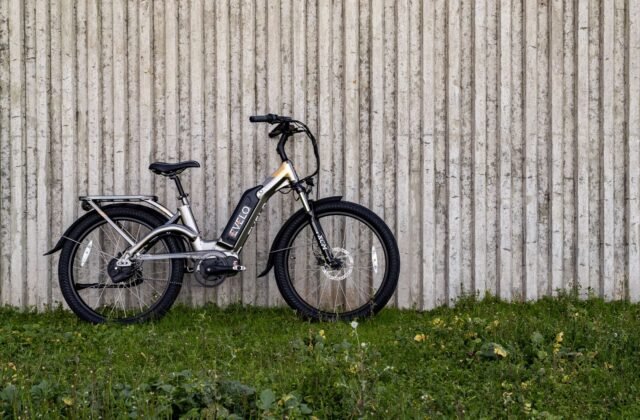
750W peak motor, up to 20 MPH and up to 40 miles per charge.
How to Choose the Right One for You
Use this method before you visit a shop, and you will know which bike to test first.
What you will need
- Your helmet
- Your usual bag, load, or shopping
- A tape measure
- A notebook or your phone
- The measurements of where the bike will live — door width, hallway, or shed length
The method
- List your three most common rides. Write down where you go, what you carry, and how far you ride.
- Weigh your load. Put your usual shopping or work gear in a bag and weigh it. If it regularly exceeds what a normal rack carries, you need a cargo bike.
- Measure your storage. Measure the door, hallway, or shed where the bike will live — check the length, not just the width.
- Test the step-through first. Mount it, ride slowly, and do the tight turn.
- Test the cargo bike loaded. Ask the shop to load it as you will use it, then repeat the slow ride and the tight turn.
- Decide by your worst ride, not your best. Choose the bike that handles your hardest regular trip.
Do not buy the bigger bike “just in case”. A cargo bike you rarely load is heavier, longer, and harder to store. Buy the bike for the rides you do every week.
E-bikes: Switch the power off before you adjust anything, and check your manual first. For battery care, read our guide on making your e-bike battery last longer.

1400W peak power, up to 80 miles per charge, and a child safety fence and rear rack.
When the Damage Is Already Done
Some choices cannot be undone by adjusting the bike. Match the problem to the fix below.
- You bought a step-through, but you now carry a child every day. A child seat on a standard rack works for short trips; for daily school runs, choose a cargo bike with a proper child seat.
- You bought a cargo bike, but it is too heavy to store. A step-through is lighter and easier to store.
- The bike feels unstable with your usual load. Move the load lower and closer to the centre, and keep heavy items off a high rear rack.
- Range drops sharply when you carry a load. Charge more often and use a lower assist level.
- The frame is the wrong size. Have the shop check the fit.

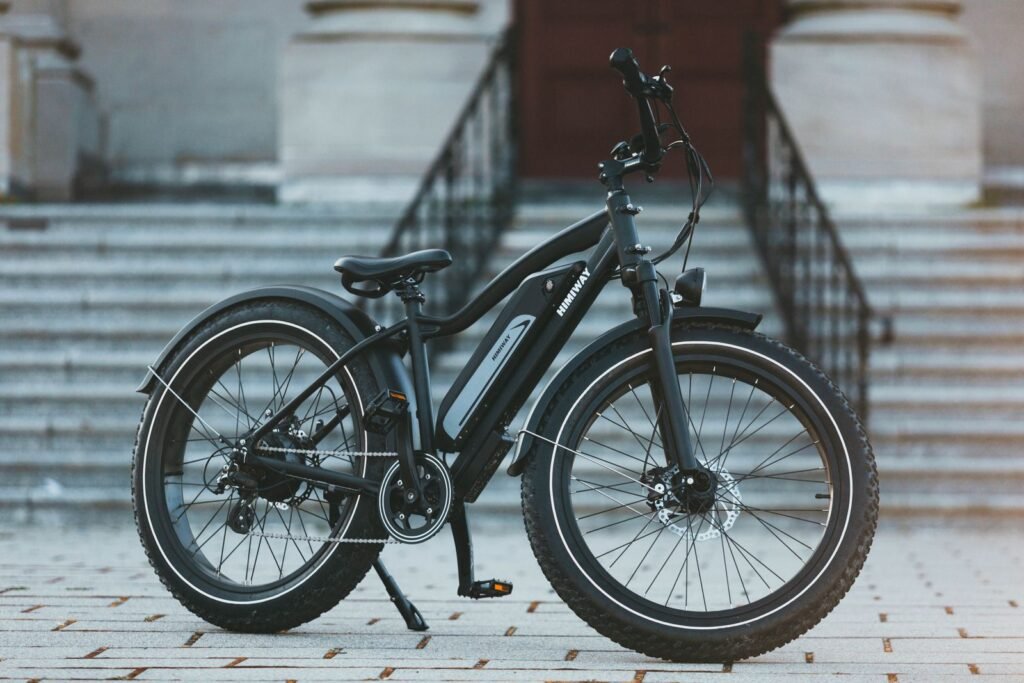
2000W motor, speeds up to 32 MPH, full suspension and 20-inch fat tyres.
The Safe Alternative When the Step-Through Is Not Enough
If the checks above point to a cargo bike, treat it as the full alternative rather than a bigger step-through. A cargo bike is built for loads from the frame up.
The method
- Inspect the load area. Check the rated load, solid fixings, and room for your child seat or shopping.
- Check the brakes. A loaded bike needs strong brakes — look for hydraulic disc brakes and unworn pads.
- Test it loaded. Ride with your actual load at walking pace, and practise stopping and turning before you ride in traffic.
- Check the stand. Check it holds the loaded bike upright while you load it.
If the cargo bike still feels too heavy or too long after a loaded test, it is the wrong bike for you.
What to Do Next, in Order
- Write down your three most common rides and the load each carries.
- Measure your storage space and your door width.
- Test the step-through first, then the cargo bike loaded.
- Choose by your hardest regular ride, not your easiest.
- Buy the bike that passed the test, and keep the receipt.
- Read the step-through and cargo comparisons linked above before you order accessories.
Never Do These as a Beginner
- Never buy the biggest bike “just in case”. A cargo bike you rarely load is heavier and harder to store.
- Never test a loaded bike for the first time in traffic. Practise slow riding, turning, and stopping in a quiet car park first.
- Never overload a standard rear rack. Exceeding its rated load bends the rack and makes the steering vague.
- Never skip the slow-speed test. A bike that is steady at speed can still be hard to control at walking pace.
- Never carry a child without a proper seat and safety frame. A child on a normal rack or in a bag is not a safe load.
In short
For most beginners, the step-through e-bike is the better first e-bike: easier to mount, lighter to handle, and simpler to park and store. The cargo e-bike wins when you regularly carry a child or heavy loads that will not fit on a normal rack. Test both bikes loaded and choose by your hardest ride.
The essentials
- The step-through is the better first e-bike.
- The cargo e-bike wins for a child, heavy shopping, or work gear.
- Mounting, slow-speed balance, and storage matter more than motor power.
- Test both bikes loaded, on the same day, before you pay.
- A heavy load shortens range and wears brakes and tyres faster.
- Measure your door and storage space before you buy.
More Questions, Answered
Is a step-through e-bike good for beginners?
Yes. The low frame makes mounting easy, the bike is usually lighter, and it is simpler to park and store.
Is a cargo e-bike hard to ride for a beginner?
It is steadier once moving, but harder at walking pace, in tight turns, and heavier to push and park. Test it loaded first.
Can a step-through e-bike carry shopping?
Yes, for a normal weekly shop in panniers or on a rear rack, within the rated load. For very heavy loads, choose a cargo bike.
Can you carry a child on a step-through e-bike?
A child seat fits many step-through bikes for short trips. For daily school runs, choose a cargo bike with a proper child seat.
Which e-bike is better for hills: step-through or cargo?
A lighter step-through climbs more easily. A loaded cargo bike needs more power and stronger brakes.
Additional Details
Name: Step-Through E-Bike vs Cargo E-Bike: Which Is Better for Beginners?
Description: Step-through e-bike vs cargo e-bike: the step-through wins for most beginners, while the cargo e-bike wins for heavy loads. Compare both before you buy.
Published: November 9, 2026