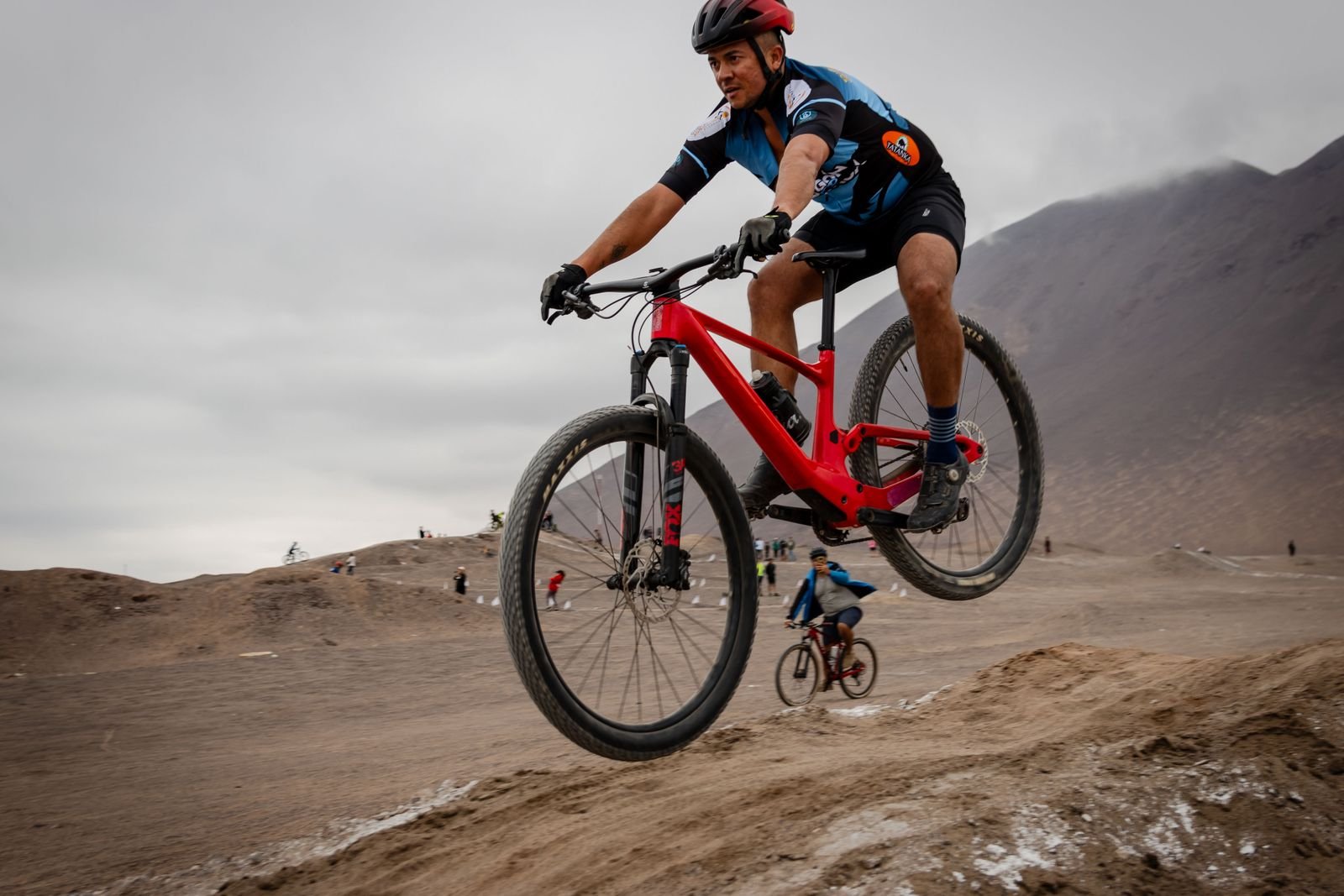
Straight answer: A 29er is the faster race bike on a smooth, rolling course: its big wheels hold speed and roll over roots and rocks more easily. An all-mountain bike wins on a steep, rough course: its longer suspension keeps the tyres in contact and lets you descend with control. The two overlap — many all-mountain bikes are 29ers — so match the bike to your race course.
Introduction
A 29er and an all-mountain bike look similar on a start line, but they answer different questions. A 29er is defined by its wheel size: 29-inch wheels. An all-mountain bike is defined by its job: climb up, then descend hard, on rough ground. One is a measurement; the other is a category.
This guide compares them for racing only, so you can judge your own race course: the side-by-side comparison, the five-step test, how to set up either bike, and what to do when the bike you own is the wrong one. It sits in the Mountain Bikes Hub.
The short version: smooth course, take the 29er; rough course, take the suspension.
29er Mountain Bike vs All-Mountain Bike for Racing: The Comparison
| Attribute | 29er mountain bike | All-mountain bike | What to watch |
|---|---|---|---|
| What it means | A wheel size: 29-inch wheels. | A category: built to climb and descend hard. | Check the wheel size, not the label. |
| Roots and rocks | Rolls over obstacles easily; holds speed. | Suspension keeps the tyre in contact instead. | A 29er rolls over; suspension keeps grip. |
| Suspension | Often a hardtail or short travel. | Longer travel, front and rear, for rough descents. | More travel adds weight. |
| Climbing | Efficient on smooth climbs. | Climbs well, but weight costs energy. | Lock the suspension on smooth climbs. |
| Descending | Fast on smooth descents; less nimble in tight turns. | Stable on steep, rough descents. | Geometry matters more than wheel size. |
| Weight | Usually lighter. | Usually heavier, from the suspension. | Weight costs time on climbs. |
| Best race course | Smooth, rolling cross-country courses. | Steep, rough courses and enduro racing. | Match the bike to the course. |
| Spec | 29er mountain bike | All-mountain bike |
|---|---|---|
| Price | $849.99 | $1,799.00 |
| Weight | 26 lbs | Not published |
| Motor | Not applicable | Not applicable |
| Battery | Not applicable | Not applicable |
| Range | Not applicable | Not applicable |
Prices as of 17 Nov 2026. Prices change — check the current price on Amazon.
When the Answer Changes
Five variables can flip the verdict above:
- Course surface. Smooth hardpack favours the 29er. Rock gardens, roots and drops favour the all-mountain bike.
- Climbing against descending. Mostly climbing rewards the lighter bike. Long descents reward suspension and geometry.
- Race format. Cross-country is short and fast, which suits a 29er. Enduro times the descents, which suits all-mountain.
- Rider height and fit. A shorter rider can find a 29er tall and hard to handle. Check standover and reach first.
- The bike you own. A 29er with full suspension is both things at once, and many all-mountain bikes are 29ers.
Test Both Bikes on Your Race Course
Ride the same loop on both bikes before race day, and time it.
- Ride the same loop. Your race course, or the closest local loop, same direction, same effort, on both bikes.
- Time the climb. Note where each bike feels fast or slow, and whether the suspension moves as you stand to pedal.
- Time the descent. Note where each bike skips, bounces, or holds its line on the roughest part.
- Test the tight turns. Ride the tightest switchbacks and note which bike turns without braking.
- Check your body after. Note hand, back and shoulder fatigue — the bike that beats you up costs time late in the race.
What a fail looks like
| Symptom | Cause | Fix |
|---|---|---|
| Slow after corners | Heavy wheels, or suspension bob | Check tyre pressure; lock the suspension |
| Front wheel washes out | Wheelbase too long, or weight too far back | Shift weight forward; brake before the turn |
| Hands go numb | Harsh front end, or too little suspension | Lower tyre pressure; check the suspension |
| Bike bounces off line | Suspension too stiff, or hardtail on rough ground | Soften the suspension, or pick the smoother line |
Myth: A 29er is always faster than any other mountain bike.
Fact: A 29er is faster on smooth ground; a smaller wheel accelerates quicker and turns tighter.
Myth: All-mountain bikes cannot race.
Fact: All-mountain bikes race well on rough, steep courses — enduro racing is built around them.
Myth: More suspension travel is always better.
Fact: Extra travel adds weight and pedalling loss, and costs time on a smooth course.
Before you test: Test on a quiet trail, wearing a helmet and gloves. If a bike feels wrong — a loose wheel, a slipping brake, a cracked frame — walk it home. Never race a bike you have not tested.

How to Set Up Either Bike for Racing
The faster bike is usually the better set-up bike, not the more expensive one. Set it for your course, then leave it alone.
What you will need
- A pump and a pressure gauge
- A shock pump, if the bike has air suspension
- A multi-tool with hex keys
- Chain lube and a clean cloth
- Your race-day tyres, fitted before the test
The method
- Fit your race tyres first. Fast-rolling tread for a smooth course, grippier tread for a rough one. The tyre changes the bike more than any other part.
- Set tyre pressure for the course. Lower pressure grips better on rough ground; higher pressure rolls faster on smooth hardpack. Test both and keep the faster one.
- Set the suspension for the ground. A 29er hardtail has nothing to set, which is part of its speed. On an all-mountain bike, set the sag so the suspension uses most of its travel on the biggest hits, and lock it out for smooth climbs.
- Check the brakes. Firm levers, clean rotors, pads with life left. If you are unsure how they behave when wet, read Disc Brake vs Rim Brake: Which Is Better After Rain? first.
- Lube the chain and check the gears. A dry chain costs watts on every climb, and a missed shift costs positions.
- Test ride with your race kit loaded. Bottle, tools, spares — ride with the weight you will race with, and fix anything that rattles.
Worth knowing: A 29er with locked suspension climbs like a hardtail, and an all-mountain bike with open suspension descends like a trail bike. Set-up matters as much as the bike.
When the Damage Is Already Done
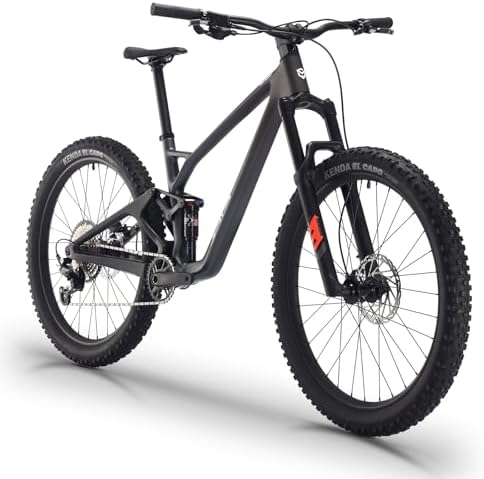
If you already bought the wrong bike for your race, do not buy a new one the week before the event. A new bike you have not tested is a bigger risk than the wrong bike you know. Change what you can instead: fit faster-rolling tyres for a smooth course, or grippier tyres for a rough one; firm up the suspension and lock it out on the climbs; shorten the stem a little if the bike feels too long in tight turns. Then race the course that suits the bike you own — the rough, technical events for the all-mountain bike, the smooth, fast ones for the 29er. If the frame is cracked, the fork is bent, or a wheel will not run true, do not race it at all: a damaged bike is a safety problem, and a shop check comes before any start line. For the full comparison of hardtail and smaller-wheel bikes, read Hardtail Mountain Bike vs 27.5 Mountain Bike.
The Safe Alternative: Race Your All-Mountain Bike
If the 29er is too much bike for your trails — too tall, too long, too nervous in tight turns — the safe alternative is the bike you already trust: your all-mountain bike. It will not be fastest on a smooth course, but it will finish the rough ones and keep you upright where a nervous 29er would put you down.
The method
- Fit faster-rolling tyres for race day — the biggest speed gain on an all-mountain bike, for far less than a new bike.
- Lock out the suspension on smooth climbs. Open suspension wastes your energy; a firm setting or a lockout keeps the power at the wheel.
- Set the suspension firm for the course. On a smoother course, run it firmer than for a trail ride, so the bike pedals better and still takes the hits.
- Practise the descents. The all-mountain bike’s strength is downhill — ride them until they feel easy, because that is where you make up the time you lose on the climbs.
- Race the rough courses. Enter the technical, steep events where suspension and geometry count, and skip the smooth ones.

What to Do Next, in Order
- Walk or ride your race course and note the surface.
- Decide which side the course favours: smooth means 29er, rough means all-mountain.
- Test both on the same loop and time them.
- Set up the winner: tyres, pressure, suspension, brakes, chain.
- Keep the other bike for training.
Never Do These on Race Day
Never race a bike you have not ridden on that course.
Never change tyres or suspension the night before a race.
Never ride with brakes you have not tested.
Never ignore a cracked frame or a loose wheel.
Never let a label decide — test the bike, not the category.
In short
A 29er is a wheel size and all-mountain is a category, so the two overlap — many all-mountain bikes are 29ers. On a smooth course the 29er is faster; on a steep, rough course the all-mountain bike wins. Test both, set up the winner, and race the bike that suits the ground.
The essentials
- 29er means 29-inch wheels; all-mountain means a full-suspension trail category.
- Smooth course: 29er. Rough, steep course: all-mountain suspension.
- Test both on the same loop before race day.
- Set the bike up for the course: tyres, pressure, suspension, brakes.
- Set-up can beat a better bike.
More Questions, Answered
Is a 29er better than an all-mountain bike for racing?
It depends on the course. A 29er is better on smooth, rolling cross-country courses, where its big wheels hold speed. An all-mountain bike is better on steep, rough courses, where its suspension keeps control. There is no single winner.
Can an all-mountain bike be a 29er?
Yes. Wheel size and bike category are different things, so an all-mountain bike can have 29-inch or 27.5-inch wheels. Many modern all-mountain bikes are 29ers, so the choice is about suspension and geometry as much as wheel size.
Are 29ers good for short riders?
They can feel tall and long, which makes tight turns harder. Shorter riders should check standover height and reach, and test the bike on tight turns before deciding. A smaller wheel can feel more nimble.
Do I need full suspension to race?
No for smooth cross-country courses, where a hardtail 29er is lighter and more efficient. Yes for rough, technical courses, where full suspension keeps the tyres in contact. Match the suspension to the ground.
Which is faster uphill?
The lighter, more efficient bike, usually the 29er on a smooth climb. On a rough climb, the all-mountain bike can be faster, because its suspension keeps the rear tyre gripping. Test both on your longest climb.
Additional Details
Name: 29er Mountain Bike vs All-Mountain Bike: Which Is Better for Racing?
Description: 29er mountain bike vs all-mountain bike for racing: 29ers roll faster on smooth courses, while all-mountain suspension wins on steep, rough, technical ground.
Published: November 17, 2026