Straight answer: In the cargo e-bike vs hybrid e-bike choice, the hybrid e-bike is better for most daily riders. It is lighter to ride, easier to park and lock, and more comfortable on a regular route, so it suits the commute, the school run and the weekly shop without a heavy load. A cargo e-bike is better only when you carry a heavy load most days — children, a large weekly shop, work tools or a dog. If your load is heavy almost every day, buy the cargo e-bike. If it is not, buy the hybrid.
That last line matters most. A hybrid with panniers handles a bag, a laptop and a small shop, while a cargo bike is built for loads that do not fit a normal rack. Choose by what you carry most days, not once a month.
Introduction
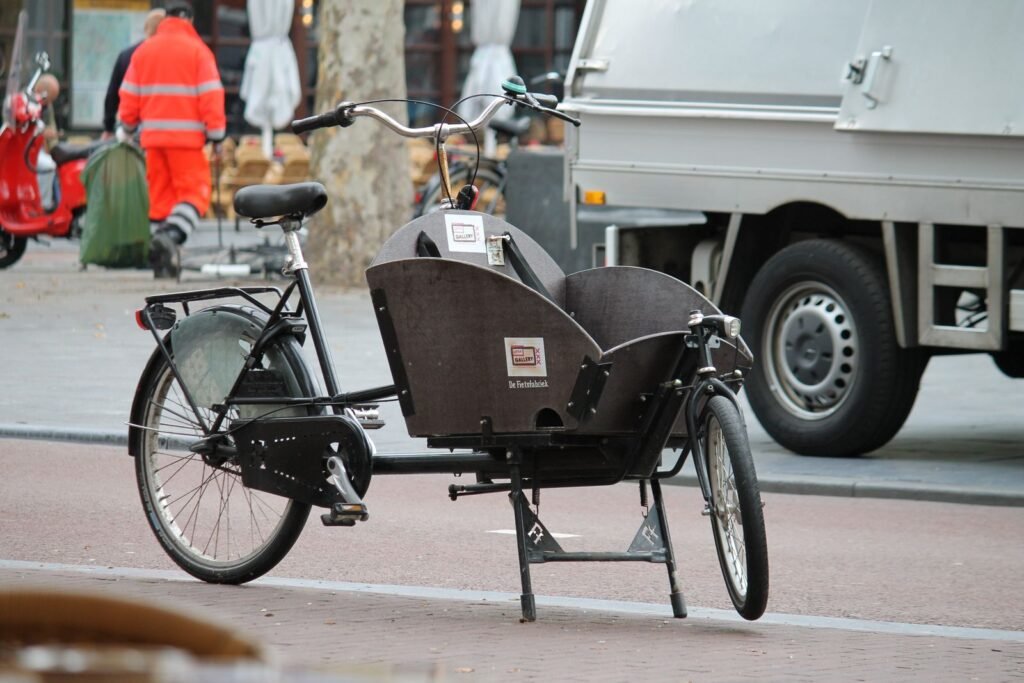
A cargo e-bike is built to carry a load. It has a long frame, a large rack or a front box, and strong brakes and tyres for the extra weight. A hybrid e-bike is built for the ride itself. It mixes a comfortable upright position, full-size wheels and medium-width tyres, so it works on roads, cycle paths and light gravel without feeling slow or heavy.
The mistake is to buy for the wrong day. A cargo e-bike is a big, heavy bike to ride, park and store, and it only earns its size when the load is there most days. A hybrid is an easy everyday bike, but it cannot carry children safely or take a large weekly shop in one trip. The right choice comes from your most common day, not your busiest one. That choice is easier once you know what each type does well, and the full comparison is in our E-Bikes Hub.
This guide compares the two types for daily use, comfort, load, range, storage, cost and care, and gives you a short test to run before you buy, on your own route with your own load.
Cargo E-Bike vs Hybrid E-Bike: The Comparison
| Attribute | Cargo E-Bike | Hybrid E-Bike | What to watch |
|---|---|---|---|
| Daily comfort | Long and steady, with a heavy feel at low speed | Light and nimble, with an upright riding position | Ride both on your own route before you decide |
| Carrying capacity | Built for children, a large shop, tools or a dog | A rack and panniers carry a bag and a small shop | Weigh your usual load, not your biggest one |
| Range with a load | Shorter when the load is heavy, as the motor works harder | Longer on a normal day, with less work for the motor | Check the range with the load you carry most days |
| Weight and handling | Heavier to push, lift, turn and park | Lighter to push, lift and steer in tight spaces | Lift and turn the bike before you buy it |
| Storage and parking | Needs a long space, a wide rack or a shed | Fits a normal rack, a hook or a hallway | Measure your storage space first |
| Upfront cost | Costs more for the frame, brakes and tyres | Costs less for the same motor and battery size | Compare the whole bike, not the motor alone |
| Care and wear | Brakes, tyres and the chain wear faster under load | Standard parts that are easy to service | Budget more care for a cargo bike |
| Best for | Daily heavy loads | Daily riding without a heavy load | Let your load decide |
When the Answer Changes
- Children every day: the cargo e-bike wins. A child seat on a hybrid is fine for a short trip, but a cargo bike carries children, bags and the school run in one ride.
- A large weekly shop or work tools: the cargo e-bike wins. If the load fills a pannier and a backpack, a rack is not enough.
- A long, hilly route with a light bag: the hybrid wins. It is lighter to climb and easier to keep moving.
- No garage and tight storage: the hybrid wins. A cargo bike needs a long, wide space that a flat or a small shed may not have.
- An occasional big load: the hybrid wins. Use panniers for the usual days and borrow or hire a cargo bike for the rare big load.

Test Before You Buy: The Five-Step Daily-Use Test
- Ride your real route. Take both bikes on the road, path and hill you use most days.
- Ride them with your usual load. Put your bag, shopping or child seat on the bike, and see how it handles and stops.
- Park and lock both bikes. Try your rack, shed or hallway, and check the bike fits and locks in a normal space.
- Turn in a tight space. Make a U-turn, lift the front wheel over a kerb and push the bike through a gate.
- Check the battery after the ride. See how much charge is left, and whether the bike still feels easy to ride.
What a Fail Looks Like
- Too heavy to push: the load or the bike is too much for your route. Fix: choose a lighter hybrid, or a cargo bike with a lower frame.
- It will not fit where you park: the bike is longer than your space. Fix: measure the space first, then choose the bike that fits it.
- The battery runs flat on a normal day: the load is heavy for the motor. Fix: ride with a lighter load, or choose a cargo bike built for heavy loads.
- Your back or knees hurt after a short ride: the riding position does not suit you. Fix: adjust the saddle and bars, and test a hybrid with an upright position.
Myth: A cargo e-bike is too heavy for daily use.
Fact: The motor helps with the weight while you ride. The weight matters most when you push, lift or park the bike. If you can push it and store it easily, it is fine for daily use.
Myth: A hybrid e-bike cannot carry anything.
Fact: A rack and panniers carry a bag, a laptop and a small shop. It is only a large load — children, a big weekly shop or tools — that needs a cargo bike.
Before you test: Check the brakes, tyres and battery before every ride. Wear a helmet, keep your hands on the bars when you test a loaded bike, and take it slow the first time you turn or stop with a load.
How to Choose the Right One for Daily Use
What You Will Need
- Your usual load — bag, shopping, child seat or tools
- A tape measure, for your storage space
- A helmet and a lock, for the test ride
- The route you ride most days
- A note of how far you ride each day
The Method
- List what you carry most days. Write down every item, and weigh the load if you can.
- Measure your storage space. Note the length, width and height of your rack, shed or hallway.
- Ride both bikes with that load on your route. Use the five-step test above, and keep the load the same for both bikes.
- Check the battery and brakes after the ride. See how much charge is left, and whether the brakes still stop the loaded bike well.
- Choose the bike that passed the test. Pick the bike that fit your load, your storage and your route, not the one you liked in the shop.
Tip: If you pick a cargo e-bike, disc brakes are worth the extra care, as they hold their braking in wet weather. See how disc brakes and rim brakes compare after rain.

1400W peak motor, up to 80 miles per charge, and a child safety fence and rear rack.
When the Damage Is Already Done
- The bike is too big to store: add a wall hook or a shed, or move it to a garage.
- The load is too heavy to push: take the load off before you push the bike.
- The battery runs flat: charge it fully, and ride with a lighter load.
- The brakes feel weak with a load: get the brakes checked before your next ride.
- You never use the cargo space: use panniers for now, and sell the bike only if it still does not suit you.
The Safe Alternative: Choose a Cargo E-Bike
If your load is heavy most days, the cargo e-bike is the safe choice. It carries children, shopping and tools in one trip, and it stops the daily struggle with a rack that is too small.
- List the load you carry most days.
- Measure your storage space first.
- Test the bike with your heaviest load.
- Check the brakes, tyres and child seat before you buy.
- Buy the cargo bike only if the load is there most days.

500W brushless motor, 20 MPH top speed and up to 37 miles on pedal assist.
What to Do Next, in Order
- Write down what you carry most days.
- Measure your storage space.
- Ride both bikes with your usual load.
- Choose the bike that passed the test.
- Check the brakes, battery and tyres before you ride.
- Buy from a shop that lets you test the bike.
Never Do This
- Never buy for one big trip. Buy for your most common day.
- Never skip the loaded test ride. A bike that feels fine empty can feel heavy loaded.
- Never ignore storage space. A bike that does not fit will not get used.
- Never ride with a load you cannot stop. Check the brakes with the load on.
- Never leave the battery flat. Charge it after a long ride.
In Short
For most daily riders, the hybrid e-bike is better: lighter, easier to park and lock, and more comfortable on a regular route. A cargo e-bike wins only when you carry a heavy load most days. Let your load decide.
The Essentials
- A hybrid e-bike wins for most daily riders.
- A cargo e-bike wins when you carry a heavy load most days.
- Test both bikes with your usual load before you buy.
- Measure your storage space first.
- Check the battery and brakes after a loaded ride.
- Choose the bike that passed the test, not the one you liked in the shop.
More Questions, Answered
Can a cargo e-bike be used every day?
Yes, if you carry a heavy load most days and have space to store it. The motor helps while you ride, but the bike is heavier to push and park, so it suits a rider with a garage or shed more than one with a small hallway.
Is a hybrid e-bike good for a daily commute?
Yes. It is light, easy to park and comfortable on roads and cycle paths, and a rack and panniers carry your bag and a small shop. It is the simplest choice for a regular commute without a heavy load.
Which e-bike is cheaper to run?
A hybrid e-bike is usually cheaper to run. It is lighter, so its brakes, tyres and chain wear more slowly than those of a cargo bike used with heavy loads.
Additional Details
Name: Cargo E-Bike vs Hybrid E-Bike: Which Is Better for Daily use? Description: Cargo e-bike vs hybrid e-bike: which is better for daily use? Compare load, comfort, range, storage and cost, then choose the right e-bike for your daily rides. Published: November 10, 2026.
As an Amazon Associate, we earn from qualifying purchases made through the links on this page.