Straight answer: In the commuter e-bike vs folding e-bike choice, a full-size commuter e-bike is better for most commuters. It rides steadier, carries loads more easily and stays comfortable over a full week of daily riding. A folding e-bike wins only when you must carry the bike — onto a train or bus, up stairs, or into a small flat or office. If you can store a full-size bike securely at home and at work, buy the commuter. If you cannot, buy the folder.
Both are e-bikes, and the motor is rarely the deciding factor. What decides a commute is the frame, the wheels and where the bike lives when you are not riding it.
Introduction
A commuter e-bike is a full-size bike made for daily riding: an upright position, larger wheels, and room for a rack, mudguards and lights. A folding e-bike is a different tool. Its frame hinges and folds, and its smaller wheels let it pack into a shape you can carry, put under a desk or take on a train.
That one difference — ride it versus carry it — is the whole decision. Buyers who choose wrong usually buy for the wrong reason: the folder because it looks clever, or the commuter because it looks faster. The right choice comes from your route, your stairs and your storage. Our guide to the best budget commuter e-bikes lists full-size models for daily riding, and our foldable electric bike guide lists folders for mixed transport. This article sits in the E-Bikes Hub.
Below is the side-by-side comparison, the situations that flip the verdict, a five-step test for your own route, a method for choosing, what to do if you already bought the wrong one, and a checklist to follow in order.
Commuter E-Bike vs Folding E-Bike: The Comparison
Read the “What to watch” column first — it holds the detail that catches most buyers out.
| Attribute | Commuter e-bike | Folding e-bike | What to watch |
|---|---|---|---|
| Ride comfort | Upright, stable, smoother over potholes. | Smaller wheels feel twitchier and pass on more bumps. | Test the worst stretch of your route. |
| Wheels and stability | Larger wheels roll over bumps — the HOVERFLY OUREA has 26-inch wheels. | 20-inch wheels need more attention at speed. | Small wheels need more care in crosswinds and wet roads. |
| Storage and carrying | Needs a garage, shed or secure rack. | Folds under a desk, into a hallway or a car boot. | Measure your space and lift the folded bike first. |
| Public transport | Hard to take on a crowded train or bus. | Ride, fold, board — made for mixed trips. | Check your operator’s folded-bike rules. |
| Range per charge | Depends on the battery; the HOVERFLY lists up to 40 miles. | Folders in our guides list up to 75–80 miles. | Listed range is a best case — hills, load and cold cut it. |
| Hills and loads | Better for hills, panniers and a child seat. | Fine on flat, short trips; weaker with heavy loads. | Ride your steepest hill loaded. |
| Security | Lives outside more, so it needs a good lock and anchor. | Can come indoors, removing most theft risk. | If it must live outside, indoor storage is worth a lot. |
| Best for | One bike, one route, ridden every day. | Mixed transport, small homes, stairs and shared spaces. | Choose by storage and train, not top speed. |
When the Answer Changes
The verdict above holds for a simple door-to-door ride. Change the journey, and the winner changes:
- You take a train or bus part-way: the folder wins — a full-size bike is a problem on a crowded carriage.
- You have secure storage at both ends: the commuter wins — if it can live in a garage and a work rack, you never need to fold it.
- You live upstairs with no lift: the folder wins, if you can lift its folded weight.
- You carry a child or heavy load: the commuter wins — larger wheels and rack mounts handle weight better.
- Theft is common where you park: the folder wins, because it can come inside with you.

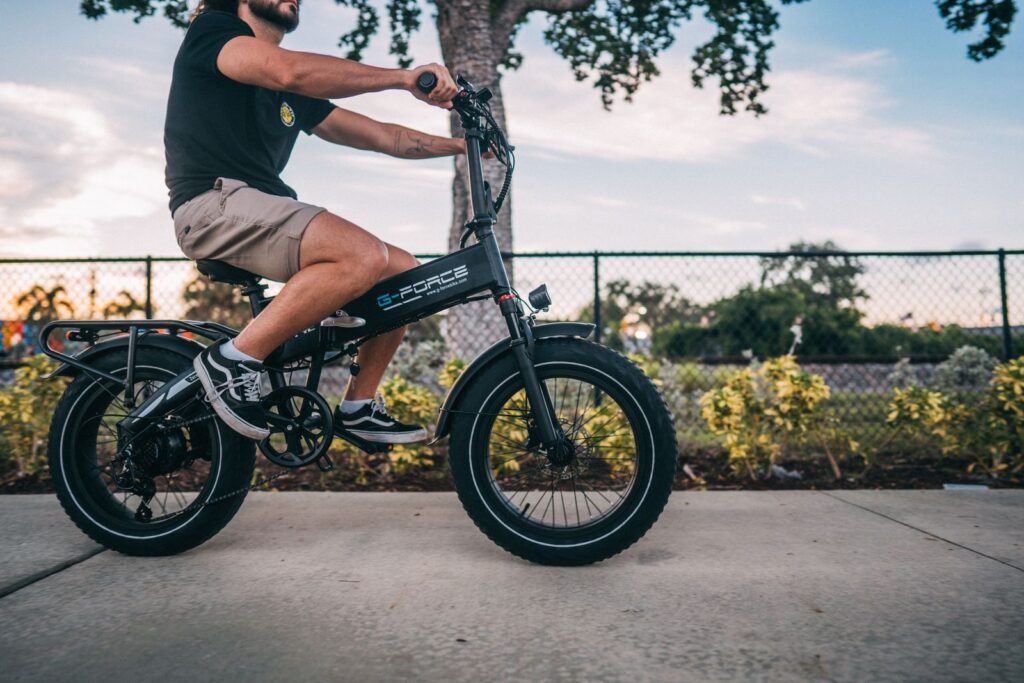
750W peak motor, up to 20 MPH and up to 40 miles per charge.
Test Before You Buy: The Five-Step Commute Test
Do not buy either type from a showroom lap. Run this test on your real route, with your real bag.
- Ride your exact route: door to desk, including the worst junction and surface and the place you will park.
- Climb your steepest hill loaded: carry your work bag and daily kit — a bike that copes empty can fail loaded.
- Fold it and carry it: fold the bike, lift it, carry it up the stairs and into your storage spot.
- Park it where it will live: lock it where you would leave it every day, and come back later.
- Ride it in the wet: after rain, check the brakes on a quiet stretch. See our wet-weather brake guide.
What a Fail Looks Like
- Your hands and shoulders ache after a short ride → the position is too cramped or the wheels too small → try a larger frame or a full-size commuter.
- You cannot lift the folded bike up the stairs → folded weight beats your strength → store it at ground level, or choose a lighter folder.
- The battery runs low before you get home → the listed range assumed ideal conditions → charge at work where you can. See our guide on making your e-bike battery last longer.
Myth vs fact:
Myth: Folding e-bikes are only for short trips. Fact: A folder can cover a long mixed journey — ride, fold, train, ride again — but it is less comfortable than a commuter ridden end to end.
Myth: A folding e-bike is always light. Fact: Many folders are heavy once battery and fat tyres are counted. Lift the folded bike yourself before you believe the listing.
Before you test: Wear a helmet, check the brakes and tyre pressure, and make sure every hinge and latch is locked before you ride. Learn the controls on a quiet street first and follow your local e-bike rules.
How to Choose the Right One for Your Commute
What You Will Need
- A tape measure, for your storage spot and stairwell
- Your work bag, packed as you carry it every day
- A lock you would actually use every day
The Method
- Measure first: your storage at home and at work, and the narrowest door or stair turn.
- Write your must-haves: train or bus, stairs, a child seat, heavy loads, rough roads — in order.
- Shortlist one of each: one commuter e-bike and one folding e-bike. Start with our commuter guide and folding guide.
- Run the five-step test on both: same route, same bag, same hill. Score ride, folding, parking and range out of ten.
- Decide by the lowest score: the bike whose worst point you can live with is the right bike.
Tip: If you can only test one thing, test the fold and the stairs. The ride is easy to judge in a shop; the carry is not — and it is the carry you will repeat twice a day.

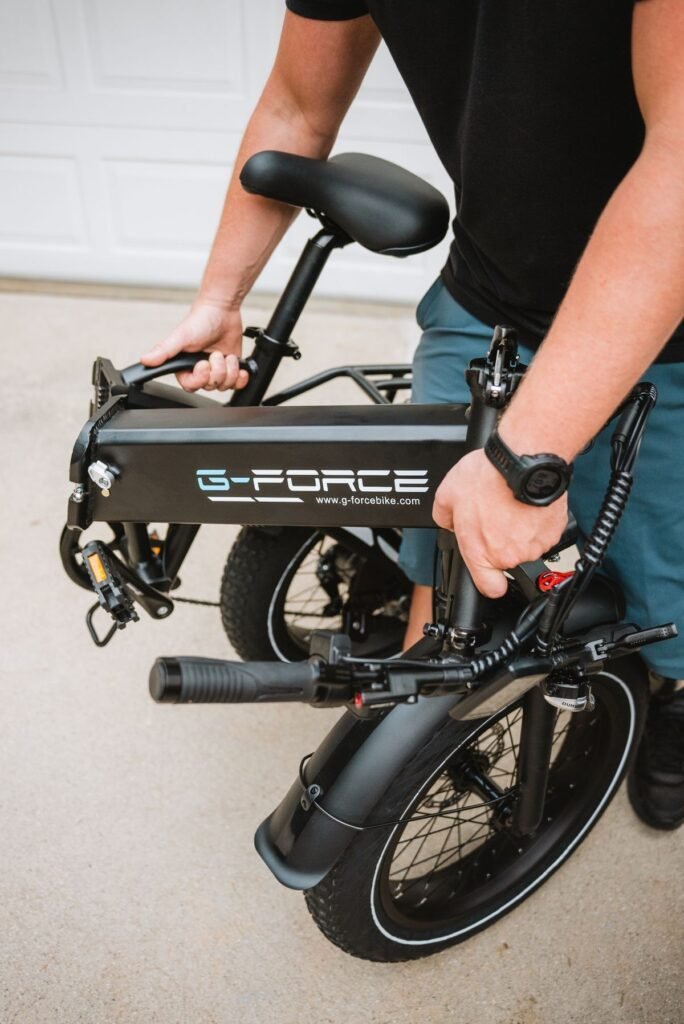
48V 20.8Ah removable battery, 30+ MPH and up to 80 miles max range.
When the Damage Is Already Done
Bought the wrong one? Do not write the bike off. Most mismatches can be fixed for far less than a new bike:
- You bought a commuter but have nowhere to store it: rent a ground-floor store or secure cycle locker, or fit a wall mount. If there is truly no space, exchange it for a folder.
- You bought a folder but the ride hurts: check saddle height and position first, then fit wider, softer tyres if the frame allows. If the frame itself is too small, change the bike.
- You bought a folder but never fold it: you paid for the hinge and carry its weight for nothing. If your storage allows it, swap to a commuter; if not, store it indoors.
- The battery is too small for your route: charge at work if you can and carry the charger. If not, you need a larger battery — or a train for part of the trip.
- You worry about theft every day: bring the bike indoors, or buy a better lock and anchor it to something fixed. Our scooter vs e-bike for commuting guide also covers locking and carrying.
The Safe Alternative: Choose a Folding E-Bike
If the commuter e-bike wins on paper but your building, your train or your storage says otherwise, the safe alternative is a folding e-bike — not a smaller commuter, and not no bike at all:
- Pick a folder with 20-inch fat tyres: they take the edge off small wheels on rough city roads.
- Check the folded size against your space: measure it folded, not unfolded, and stand it where it will live.
- Practise the fold until it is quick: fold and unfold it several times before your first commute, and check the latch clicks home every time.
- Plan charging like a commuter would: a removable battery you can charge at your desk is one of the best features a folder can have.

Up to 40+ miles and 25 MPH, with a 360Wh removable battery.
What to Do Next, in Order
- Measure your storage at home and at work.
- List your must-haves: train, stairs, loads, rough roads.
- Shortlist one commuter e-bike and one folding e-bike.
- Run the five-step test on both, on your real route.
- Buy the bike whose worst point you can live with.
- After buying, check the hinge or rack bolts, the brakes and the battery in the first week.
Never Do This
- Never ride with an unlocked hinge or latch — a folder that opens while you ride can throw you off.
- Never carry a folded e-bike by its hinge — lift it by the frame or the carry handle instead.
- Never judge range by the listing alone — hills, load and cold weather all cut the distance you will get.
- Never buy without measuring your storage space — a bike that does not fit where it must live will end up outside.
- Never ignore a loose hinge, a wobble or a grinding noise — stop riding and find the cause first.
In Short
A commuter e-bike is the better commuter for most riders: steadier, more comfortable and better at carrying loads. A folding e-bike is better only when the journey demands carrying — a train, a bus, stairs or a small home. Measure your storage, run the five-step test, and buy the bike whose worst point you can live with.
The Essentials
- Commuter e-bike: steadier ride, larger wheels, better for loads and hills.
- Folding e-bike: folds for trains, stairs and small spaces; firmer ride, more hinge checks.
More Questions, Answered
Can a folding e-bike handle a long commute?
It can, as part of a mixed journey — ride to the station, fold, take the train, ride the last stretch. Ridden end to end over a long distance, a full-size commuter is more comfortable, because its larger wheels smooth the ride.
Is a commuter e-bike better for hills?
Usually, yes. Its larger wheels and stable frame handle climbs with a load better, and it takes a rack and panniers more easily. Test your steepest hill loaded before you decide.
Can I take a folding e-bike on a train?
Often, but not always. Rules vary by operator and time of day, and some require the bike to be folded or in a bag. Check your operator’s rules before you buy a folder for that reason.
Additional Details
Name: Commuter E-Bike vs Folding E-Bike: Which Is Better for Commuting?
Description: Commuter e-bike vs folding e-bike — which is better for commuting? Compare ride, storage, range and cost, then test both on your real route before you buy.
Published: November 9, 2026