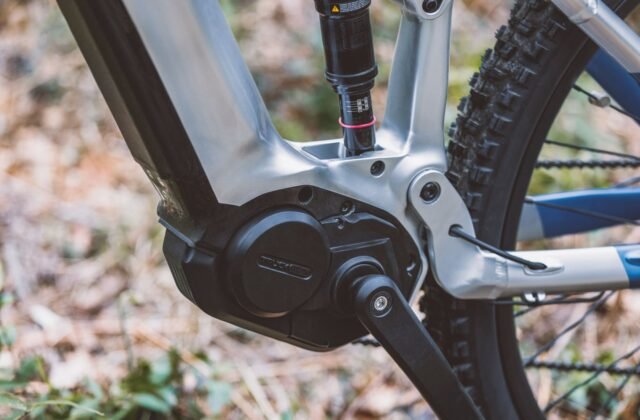
Straight answer: For most winter commuters, a commuter e-bike is better. On ploughed or gritted roads it is lighter, easier to carry, and its narrower tyres cut through slush to the road below, so it grips better. A fat tyre e-bike is better only on unploughed snow or soft ground, where its wide, low-pressure tyres float and keep you moving. Cleared roads: choose the commuter. Unploughed snow: choose the fat tyre.
Introduction
In the commuter e-bike vs fat tyre e-bike question, winter asks more of an e-bike than summer does. Grip, stopping distance, battery life and weight matter more on cold, wet, slippery roads. Choosing between the two is not only about comfort. It is about reaching work safely on the worst morning of the week.
A commuter e-bike is built for the daily trip: upright position, mudguards, a rack, lights, and narrower tyres that roll easily on tarmac. A fat tyre e-bike is built for soft ground: wide tyres at low pressure spread the weight and float over snow, sand and mud. Both are e-bikes, but they solve different problems.
This guide compares them for winter, shows what flips the verdict, and gives a short test for your own route. It also covers a winter setup, what to do if you bought the wrong type, and the safe alternative. See the E-Bikes Hub and our best budget commuter ebike guide.
Commuter E-Bike vs Fat Tyre E-Bike in Winter: The Comparison
The deciding factor is the surface you ride on most winter mornings.
| Attribute | Commuter E-Bike | Fat Tyre E-Bike | What to watch |
|---|---|---|---|
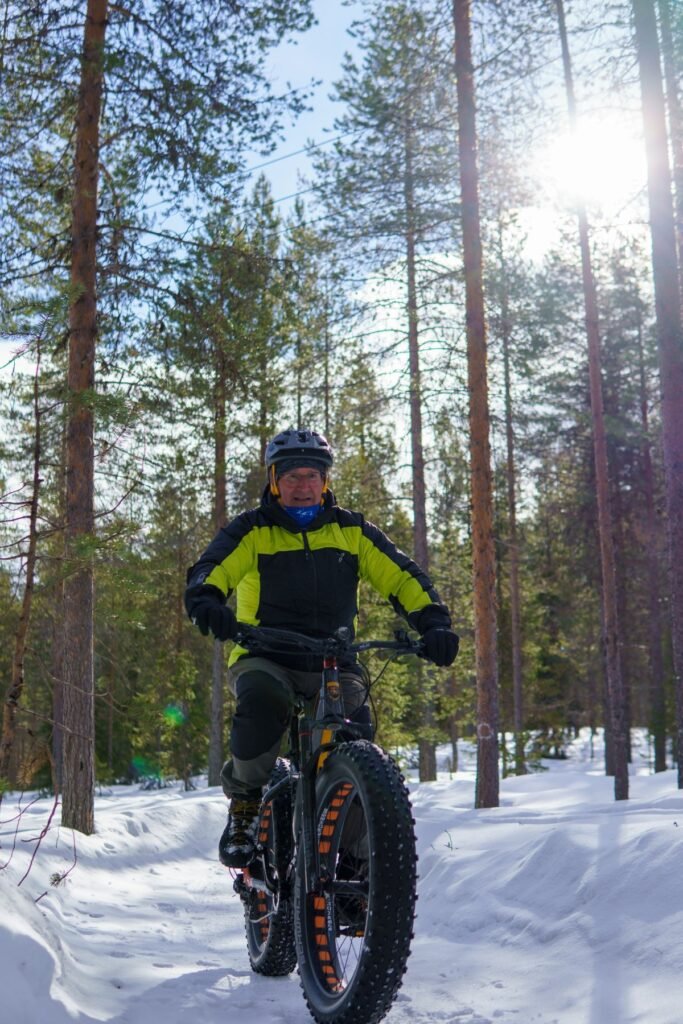
| Tyre width and grip | Narrow tyres cut through slush | Wide tyres float on snow | Judge by your deepest snow |
| Deep snow | Digs in and slips | Keeps moving on unploughed snow | Wasted on ploughed roads |
| Ice | Little grip; studded tyres bite | Little grip; width does not bite | Never trust either on black ice |
| Weight and carrying | Lighter, easier to lift | Heavier, wider, harder to lift | Lift it before you buy |
| Battery and range in cold | Cold cuts range; lighter needs less help | Wide tyres need more help | Store and charge indoors |
| Cleared-road speed | Faster on cleared tarmac | Slower, more rolling resistance | Your normal commute matters most |
| Cost and upkeep | Standard parts are easy to find | Wide tyres cost more, wear faster | Check spares first |
When the Answer Changes
These five things flip the verdict.
- Roads never ploughed. If the first mile is unploughed every morning, the fat tyre wins, even if the rest is clear.
- Route mostly ice. On smooth ice neither tyre grips, so the choice is studded tyres, and often not riding at all.
- Long, cleared commute. The commuter’s speed and range matter more, and the fat tyre’s extra effort adds up daily.
- You carry it upstairs or on a car. A heavy fat tyre bike is a struggle on stairs, and needs a carrier made for fat tyres.
- Storage is tight. A fat tyre bike is wider and harder to fit in a hallway, a flat or a shed.
Test Your E-Bike Before You Commit to Winter
Run this test on your route, on a cold morning after snow or slush, before you decide.
- Ride your route gently, off the brakes for the first minute. Note where the wheels slip: corners, painted lines, or the unploughed stretch.
- On a quiet, flat stretch, brake gently, rear first, then front. Note the distance, and repeat until it feels the same every time.
- Check the pressure printed on the tyre sidewall, then try the low end for snow. Lower pressure gives a bigger contact patch, but never go below the minimum.
- Ride the same route with a full battery and watch the charge at the end, not the start. Cold mornings use more help.
- Lift the bike onto its stand, up a step, and onto the car rack. Hard on a dry day means worse with wet gloves.
What a fail looks like
| Symptom | Cause | Fix |
|---|---|---|
| Front wheel washes out | Too much speed or pressure | Slow down first; try low pressure |
| Rear wheel spins on set-off | Too much help or pressure | Use lowest assist; let the tyre grip |
| Brakes grab, wheel locks | Hard braking on a slippery surface | Brake earlier, gently, both brakes |
| Battery drops fast | Battery left out in freezing air | Store and charge indoors |
Myth: A fat tyre e-bike grips ice. Fact: A wide tyre floats on soft snow, but on smooth ice it slides like a narrow tyre. Only studded tyres bite, and on black ice, walk or wait.
Before you test: Wear a helmet and gloves, fit lights, and choose a quiet street. Keep your speed low, keep both hands on the bars, and stop if the surface changes under you.

Fat tyres and front suspension for snow, slush and rough winter roads.
Set Up Your E-Bike for Winter Riding
What you will need
- A tyre pressure gauge and a bike pump for commuting
- Mudguards and lights, front and rear
- Wet-weather chain lube and a clean rag
- A dry place indoors to store and charge the battery
- Warm gloves that still let you brake
The method
- Clean and dry the bike after wet rides. Salt and slush cause rust and wear.
- Set the tyres for the conditions: low end of the printed range for snow, higher end for cleared, wet roads.
- Fit mudguards and check both lights. Winter spray and dark mornings make you hard to see.
- Keep the battery warm. Take a removable battery indoors overnight and charge it indoors, at room temperature.
- Lube the chain and check the brakes. Fix worn pads or a soft lever before winter. See disc brake vs rim brake after rain and how to replace disc brake pads.
- Take a short shakedown ride, then recheck tyres, bolts and lights. Check again after the first week.
E-bikes: cold shortens range, and a dead battery on a heavy fat tyre bike is a long walk home. Plan with charge to spare.
Warning: Never charge a battery left out in freezing cold until it has warmed indoors. Never ride with a loose rack, loose handlebars or a battery that will not lock.

When the Damage Is Already Done
Own the wrong type? You do not have to start again. Work down this list, worst first.
- Commuter, unploughed lane. Fit the widest tyres your frame and mudguards allow, use low-end pressure, and walk the worst stretch. Studded tyres are next if ice is common.
- Fat tyre, cleared route. Raise pressure to the high end, use the lowest assist that keeps you moving, and expect faster tyre wear.
- Range collapsed. Store the battery indoors, charge it indoors, and plan shorter trips until you know its true winter range. See our guide to making your e-bike battery last longer.
- You slipped and the bike is damaged. Check wheels, handlebars, brakes and frame for cracks or wobble. If anything is bent or cracked, do not ride it.
- Cannot carry or store it. Measure the rack and the space. A fat tyre bike often needs a carrier made for fat tyres; check its width limit first.

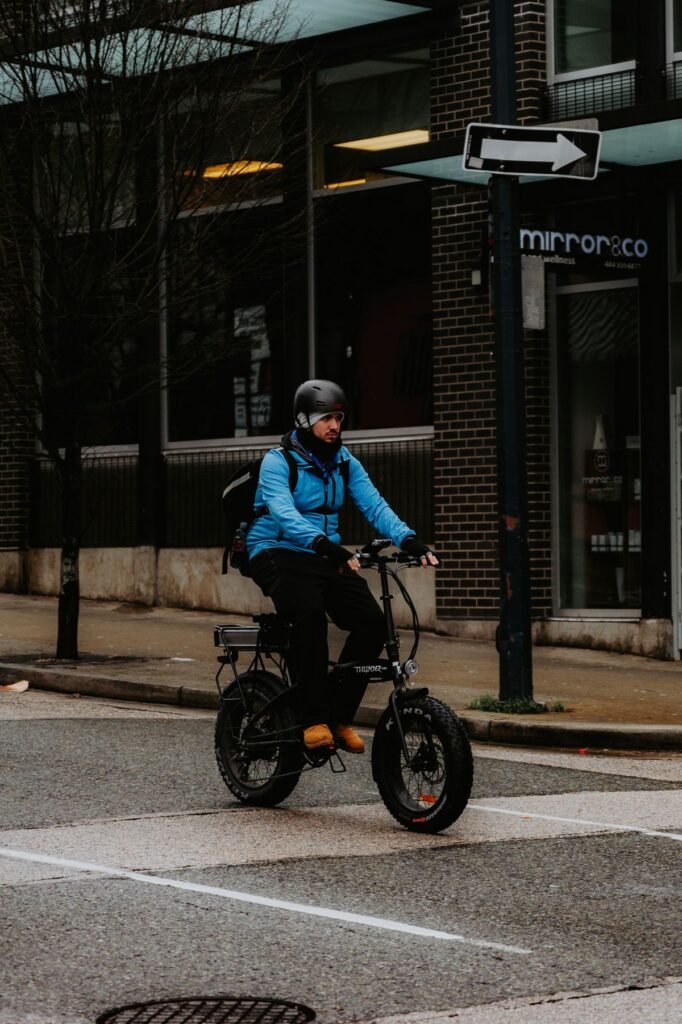
A lighter commuter e-bike for cleared roads and shorter winter trips.
The Safe Alternative: The Other Bike for Winter
Do not force the wrong bike through winter. If your commuter cannot cope with your snowy route, the fat tyre bike is the alternative, and the other way round.
- Check the alternative bike first: tyres, brakes, lights and battery, as in the method above.
- Ride it on your shortest, quietest route first.
- Swap back when your normal route is cleared.
- When neither bike is safe, on ice or in a storm, walk, take the bus, or wait.
Still choosing? Compare the commuter e-bike with a step-through e-bike, a folding e-bike, and an electric mountain bike.
What to Do Next, in Order
- Walk your winter route; note what is ploughed.
- Run the five-step test on the bike you have.
- Set the tyres and brakes for winter, and store the battery indoors.
- If your route is unploughed, try a fat tyre bike first.
- Check the rack, carrier and storage space.
- Recheck brakes and tyres after the first week.
Never Do These Things in Winter
- Never trust a wide tyre on ice. Width floats on snow, not on smooth ice.
- Never brake hard on a slippery corner. Slow down before you turn, and brake gently.
- Never leave the battery out in freezing air. Cold cuts range and can damage it.
- Never ride with worn brake pads in winter. Wet, salty roads wear pads faster, so check them often.
- Never ignore a new noise or wobble. Stop and check the wheels, brakes and bolts first.
In short
For most winter commuters on ploughed roads, the commuter e-bike is better: lighter, quicker, easier to carry and to run. A fat tyre e-bike is better only where the route stays snowy or unploughed, because its wide tyres float where narrow tyres dig in. Judge by your worst winter morning, then test it on your route.
The essentials
- Commuter e-bike for cleared roads; fat tyre e-bike for unploughed snow.
- Neither tyre grips smooth ice; only studded tyres bite.
- Lower tyre pressure helps on snow, but never below the printed minimum.
- Cold cuts range; store and charge indoors.
- Test the brakes and the lift before you commit, not after.
- Wrong bike? Change the tyres, the pressure and the route first.
More Questions, Answered
Which is better for winter commuting, a commuter e-bike or a fat tyre e-bike?
A commuter e-bike, for most people, because most winter commutes run on ploughed or gritted roads. A fat tyre e-bike is better only on unploughed snow.
Are fat tyre e-bikes good in snow?
Yes, in soft snow they float where narrow tyres dig in. In deep slush they need care, and on ice they slide like any tyre.
Do fat tyre e-bikes use more battery in winter?
Yes. Wide tyres and a heavier bike need more help, and cold cuts range, so a fat tyre bike’s range falls further.
Can I ride a commuter e-bike in snow?
Yes, in light snow and slush, if you slow down, use low-end tyre pressure, and brake early and gently. Deep snow will beat it.
Are fat tyre e-bikes harder to store and carry?
Yes. They are heavier and wider, so they are harder to lift, harder to fit indoors, and need a carrier made for fat tyres.
Additional Details
Name: Commuter E-Bike vs Fat Tyre E-Bike: Which Is Better for Winter?
Description: Commuter e-bike vs fat tyre e-bike for winter: which one grips, stops and holds its charge on snow, slush and ice? Compare tyres, weight, range and cost here.
Published: November 9, 2026