Straight answer: For most commuters, a hub-motor e-bike is the better buy — because a hub motor is a motor type, not a bike type, and the best commuter e-bikes already use one. An electric mountain bike only wins when your commute includes rough tracks, steep off-road climbs, or unpaved shortcuts every day.
A hub-motor commuter is usually lighter, cheaper, and simpler to live with: upright position, rack, lights, and mudguards often fitted, and a motor that pushes steadily on flat roads and gentle hills. The mountain bike’s wide tyres, suspension, and heavy frame soak up rough ground, but add weight, drag, and cost on tarmac — and most commutes are tarmac almost all the way.
Commuting by e-bike sounds simple until you shop for one. “Electric mountain bike vs hub motor e-bike” is a choice between two kinds of bike, but the labels are not the same kind. One names a whole bike built for rough ground; the other names where the motor sits. You can have a mountain bike with a hub motor, and a commuter bike with a mid-drive motor — and the name on the box will not tell you which one rides better to work.
This comparison judges a purpose-built electric mountain bike against a typical hub-motor commuter bike on comfort, hills, range, weight, carrying, and cost. More e-bike comparisons live in our E-Bikes hub.
Electric Mountain Bike vs Hub Motor E-Bike: The Core Comparison
The mountain bike wins on rough ground; the hub-motor commuter wins on almost everything else.
| Attribute | Electric Mountain Bike | Hub Motor E-Bike | What to watch |
|---|---|---|---|
| What it is | A complete trail bike: wide knobby tyres, suspension, strong frame. | Any bike with the motor in its wheel hub, usually a commuter bike. | Compare complete bikes, not a motor against a bike. |
| Motor feel | Mid-drive or a strong hub motor; strong on steep, rough climbs. | Smooth, steady push; simple and quiet on flat roads. | Start on a gentle slope and feel the first push. |
| On hills | Climbs steep, loose slopes better, with grip and low gears. | Handles gentle to moderate hills; steep hills need low gears and a full battery. | Test your steepest regular hill, loaded. |
| Comfort on tarmac | Upright trail position; knobby tyres hum and drag on smooth roads. | Upright and relaxed; smoother tyres roll easily and quietly. | Ride ten minutes on tarmac before you judge. |
| Weight | Usually heavier: suspension, wide tyres, and a tough frame. | Usually lighter, and the weight sits low in the wheel. | Lift it onto a kerb and carry it up one flight of steps. |
| Everyday kit | Often sold bare: no rack, lights, or mudguards. | Rack, lights, mudguards, and kickstand often fitted. | Add up the extras, not just the bike. |
| Range | A big battery helps, but heavy tyres and drag use it faster. | A similar battery often goes further on tarmac. | Check range on your route, not on a flat test loop. |
| Cost and upkeep | Costs more up front; suspension and trail parts need more care. | Often cheaper; few moving parts and simple to look after. | Ask who services it, and what a puncture repair involves. |
When the Answer Changes
The verdict above holds for most commuters. It changes when:
- Your commute is mostly off-road. Gravel, mud, or broken tracks every day: the mountain bike’s grip and suspension earn their keep.
- Your route has one very steep hill. Low gears and trail tyres climb loose slopes better; a hub motor can struggle there.
- You want one bike for commuting and trails. If weekends mean singletrack, buy the mountain bike.
- Your commute is short and flat. A hub-motor bike is quicker, easier to store, and cheaper.
- You carry shopping or a laptop every day. A commuter with a fitted rack and mudguards beats a bare trail bike.
- You must lift the bike often. Stairs, trains, and car boots punish heavy bikes.
Test Both Types Before You Buy
Test both types on your real commute, in daylight.
- Ride your full commute route on each bike, with your normal bag.
- Climb your steepest hill seated, on the lowest assist that still gets you up it.
- Ride a rough or wet stretch and brake gently, rear first, then front.
- Stop and start again on a slope; the push should arrive smoothly.
- Lift the bike onto a kerb, then carry it up a flight of steps.
- Park it where you will keep it, and lock it as you would every day.
What a fail looks like
- You spin the rear wheel on a loose climb → not enough grip or too much assist → use a lower assist level and gear, or choose knobby tyres.
- The bike surges when you start → assist comes in too sharply → try a lower assist level.
- Your hands or shoulders ache after ten minutes → bars too low or too far forward → ask for a raised bar.
- You cannot lift it up the steps → too heavy for your routine → choose the lighter bike, or remove the battery first.
Myth: A mountain bike is always better because it is stronger. Fact: Trail strength is not tarmac comfort: wide tyres and suspension add drag and weight on the commute most riders actually do.
Myth: A hub motor is a cheap, weak motor. Fact: Most commuter e-bikes use hub motors, including well-built ones. The frame, gears, and battery matter more than the motor’s position.
Before you test: Wear a helmet and lights for your first ride. Keep your speed low, a finger on a brake lever, and never test a new bike in heavy traffic.

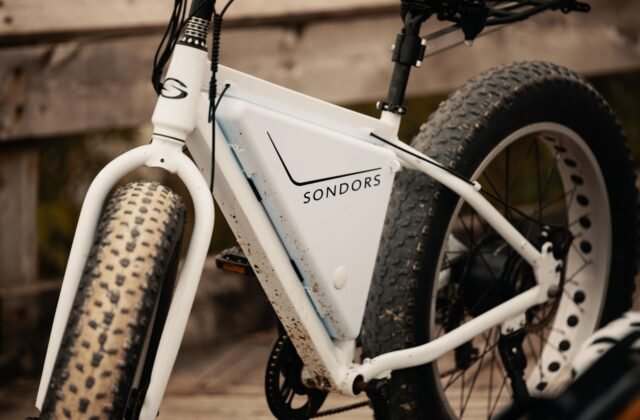
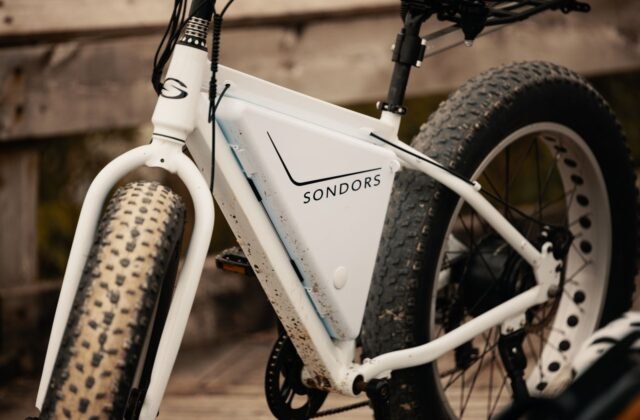
A 750W peak motor with up to 40 miles of claimed range.
How to Choose the Right One for Your Commute
What you will need
- A tape measure, for saddle height and reach.
- Your usual commute: distance, hills, and surfaces.
- Your work bag or pannier, packed as usual.
- A helmet and lights, front and rear.
- The stairs, train, or car boot it must fit.
The method
- Walk your commute and note the surfaces: tarmac, gravel, mud, or broken ground.
- List what must be easy: mounting, stopping, carrying, and lifting.
- Try a hub-motor commuter first, then a mountain bike, on the same day and route.
- Score each out of five for comfort, hills, starting off, carrying, and lifting.
- Check what is fitted: rack, mudguards, lights, kickstand. Price the missing parts.
- Ask who services the bike, what a puncture repair costs, and how the battery is removed.
- Choose the bike that handles your worst daily surface, not the fastest on a flat test ride.
Do this first: Decide your route before your motor: a smooth hub motor in a comfortable commuter frame suits most commuters best.
Watch out: If a shop will not let you test the bike on a real hill, shop elsewhere.

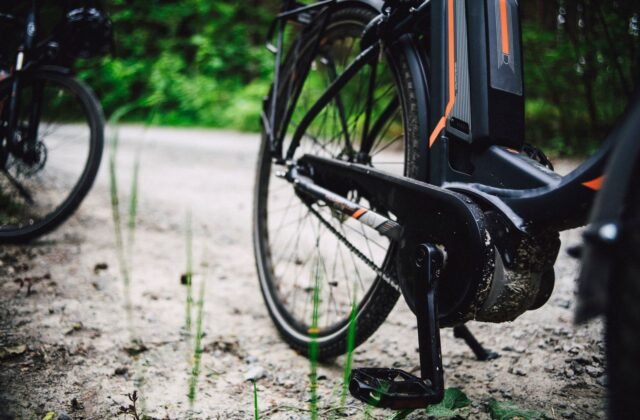
A 500W brushless motor, 7-speed gears, and a 37+ mile claimed range.
When the Damage Is Already Done
Bought the wrong one? Work down this list first.
- Mountain bike, slow on tarmac. Fit smoother, narrower tyres at the printed pressure; lock out the suspension on roads.
- Hub-motor bike, struggling on hills. Use a lower gear earlier, switch assist on before the slope, and charge fully.
- No rack or mudguards. A rear rack and clip-on mudguards turn most bikes into commuters.
- Range is shorter than expected. Store and charge the battery indoors, and use a lower assist level on flat stretches.
- Too heavy to lift. Remove the battery before lifting — the heaviest single part — or store the bike at ground level.
- Knobby tyres wearing fast on roads. That is normal on tarmac; budget for a smoother tyre.

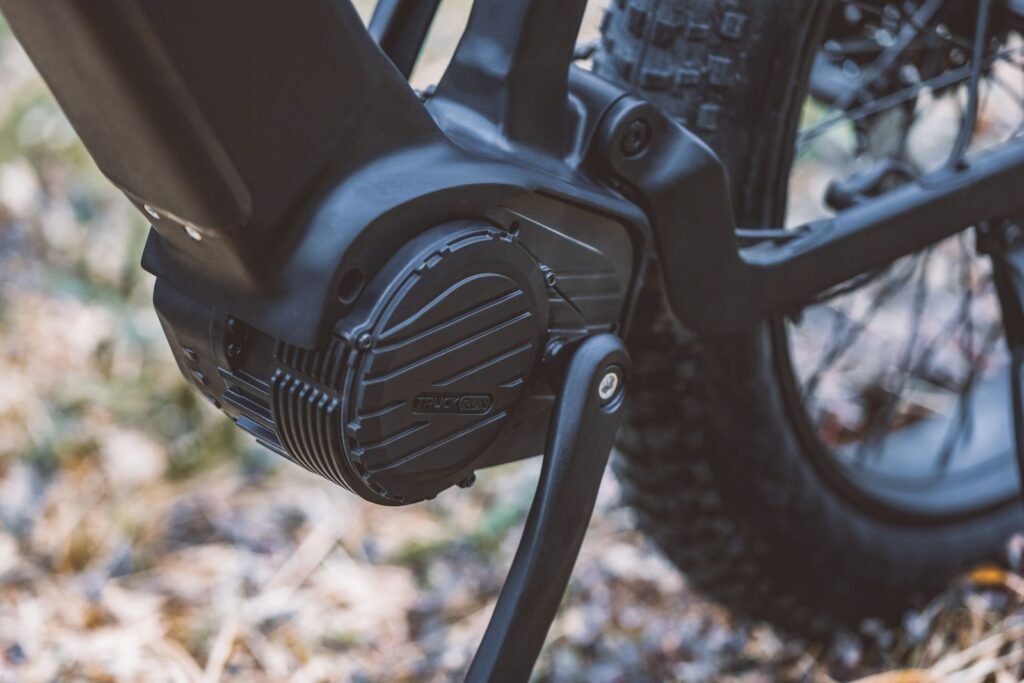
Up to 40+ miles and 25 MPH, with a 360Wh removable battery.
The Safe Alternative: Start with the Hub-Motor Commuter
If the mountain bike is more than your commute needs, the hub-motor commuter is the safe alternative — and for most commuters, it is the better buy. Our commuter e-bike vs hub motor e-bike guide reaches the same conclusion from the comfort side, and our folding e-bike vs hub motor e-bike comparison covers the same motor on a smaller frame.
- Start with the frame, not the motor: upright position and room for a rack.
- Check the mount and the feet-flat stop as in the test above.
- Have a rack, mudguards, and lights fitted before you leave, with saddle and bars set to your height.
- Ride your shortest, quietest route first, then your full commute on a dry day.
- Charge after every ride, and book a service after the first month.
What to Do Next, in Order
- Walk your commute; note surfaces, hills, and storage.
- Run the test on both types, on the same day.
- Score comfort, hills, carrying, and lifting.
- Add up the fitted kit and the parts you need.
- Choose the frame first and the motor second.
Never Do These Things
- Never buy without a test ride on your own route. A bike that looks right on paper can feel wrong in five minutes.
- Never choose the most powerful motor by default. More power adds weight.
- Never ride a new bike in traffic first. Learn the brakes on a quiet, flat road.
- Never ignore the weight. You will lift, walk, and store this bike far more often than you ride it.
- Never skip the helmet and the lights. Being seen matters on every commute.
In short
For most commuters, a hub-motor e-bike is the better choice: lighter, simpler, cheaper, and usually already fitted with a rack, lights, and mudguards. A mountain bike is better only when your commute is rough, steep, or unpaved every day — or when one bike must do both the commute and the trails.
The essentials
- A hub motor is a motor type, not a bike type.
- Buy for your worst daily surface, not your best one.
- Test both types on your real commute.
- Check what is fitted and what a puncture repair costs.
- Choose the frame first and the motor second.
More Questions, Answered
Which is better for commuting, an electric mountain bike or a hub motor e-bike?
For most commuters, a hub-motor e-bike is better: lighter, cheaper, and fitted for daily riding. A mountain bike wins only on rough or steep off-road commutes.
Do electric mountain bikes have hub motors?
Some do, and some use a mid-drive motor at the cranks. “Electric mountain bike” describes the bike; “hub motor” describes where the motor sits. The two labels overlap, which is why the frame and tyres matter more than the name. For a closer look at the mountain bike side, see our electric mountain bike vs fat tyre e-bike comparison.
Can a hub motor e-bike climb hills?
Yes, on gentle and moderate hills, with low gears and a full battery. For long, steep hills every day, test the exact route first.
Are hub motor e-bikes easier to maintain?
Hub motors have few moving parts and are simple to look after. A puncture repair can be slower, because the wheel is connected to a motor cable — ask the shop first.
Is an electric mountain bike too heavy for commuting?
Often, yes, for a commute with stairs, trains, or lifting. Suspension, wide tyres, and a tough frame add weight. If you must lift it daily, try lifting it with the battery removed before you buy.
Additional Details
Name: Electric Mountain Bike vs Hub Motor E-Bike: Which Is Better for Commuting?
Description: Electric mountain bike vs hub motor e-bike: which is better for commuting? We compare comfort, hills, range, weight, battery and cost so you choose right.
Published: November 9, 2026