Electric mountain bike vs mid-drive e-bike: for steep hills, a mid-drive e-bike usually wins — and the best hill bike is often an electric mountain bike with a mid-drive motor. The mid-drive works through the gears, so it can stay in a low gear and keep pulling on a long climb, while a hub-motor e-MTB drives the wheel directly and can fade as the gradient bites.
That does not make every electric mountain bike a poor climber, or every mid-drive the right buy. “Electric mountain bike” describes the bike: wide tyres, suspension and a strong frame for rough ground. “Mid-drive” describes where the motor sits: at the crank, driving the chain.
If your hills are short and mostly on smooth roads, a hub-motor e-MTB can be enough, and it is often simpler and cheaper to keep running. If your hills are long, steep, loose or loaded, the mid-drive earns its place.
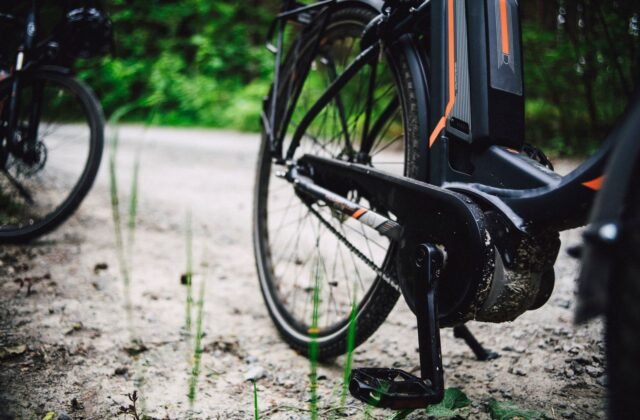
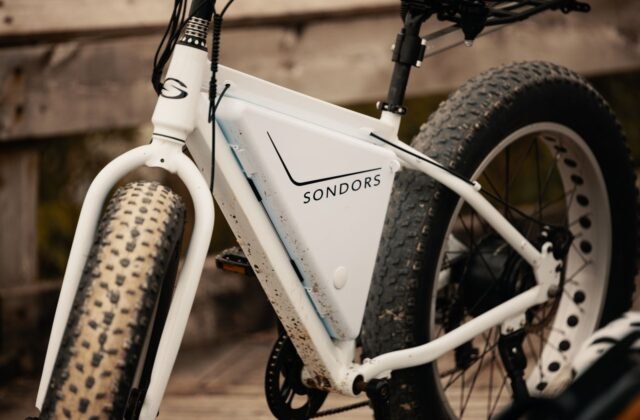
An electric mountain bike is built for trails: wide, knobby tyres, suspension for rocks and ruts, and a strong frame. A mid-drive e-bike, by contrast, can be any kind of bike, with its motor at the bottom bracket, between the pedals, sending power through the chain and gears.
The confusion comes from the names. People shop for a “mountain bike” or a “mid-drive” as if they were two kinds of bike, but one names the riding and the other names the motor. A trail bike with a hub motor and one with a mid-drive motor are both electric mountain bikes, and they climb very differently.
Electric Mountain Bike vs Mid-Drive E-Bike: The Complete Comparison
Use the table below to see where each side stands. The left column is the trail bike itself; the middle column is the mid-drive motor, which can sit on a trail bike or on another frame. Judge a bike by both columns together, not by one label on the sales page. If you want more background on trail riding, see our commuter e-bike vs electric mountain bike guide for hills.
| Attribute | Electric Mountain Bike | Mid-Drive E-Bike | What to watch |
|---|---|---|---|
| What it is | A trail bike with wide tyres and suspension | A bike whose motor sits at the crank and drives the chain | Check the motor type, not the frame badge |
| How it climbs | Depends on the motor; a hub motor can struggle on long climbs | Uses low gears to keep pulling on steep climbs | Ride your steepest hill |
| Gears | Gears help the rider, not the motor | The motor shares the gears, so a low gear means more climbing help | Count the low gears |
| Rough ground | Built for it: suspension and grip | Depends on the frame — a mid-drive commuter is not a trail bike | Match the frame to the ground |
| Weight and balance | On hub models, motor weight sits in the wheel, which can feel rear-heavy | Weight sits low and central, which steadies the bike | Feel where the weight sits |
| Wear and upkeep | A hub motor leaves the chain alone, so drivetrain wear is lower | The motor drives the chain, so it wears faster | Budget for chain checks |
| Cost and choice | Often simpler and cheaper | Often costs more | Compare the whole bike |
When the Answer Changes
The mid-drive wins the average steep hill, but the answer flips as soon as your riding changes.
- Steep, long climbs: the mid-drive pulls ahead, because it can drop into a low gear and keep the motor turning at a useful speed.
- Short, gentle hills: a hub-motor e-MTB is often enough, and it is simpler to own, with less wear on the chain.
- Loaded riding: a heavy rack, panniers or a child seat favours the mid-drive, which uses the gears to move the extra weight uphill.
- Rough trails: the e-MTB frame matters more than the motor. Suspension, tyres and clearance decide whether you can ride the trail at all.
- Tight budget or simple upkeep: a hub-motor e-MTB is usually the easier buy, and it asks less of your chain and gears.
How to Test Which One Climbs Better for You
You do not need a shop test loop to choose well. A short ride on your own hill tells you more than any sales page.
- Pick your steepest regular hill, with the surface you actually ride on.
- Ride it on an e-MTB, in the gear and assist level you would really use.
- Note how hard your legs worked.
- Ride the same hill on a mid-drive bike, the same day if you can.
- Try a rough patch and a restart midway up the slope.
- Pick the bike that leaves you fresher at the top, not the one that felt fastest on the flat.
What a Fail Looks Like
| Symptom | Cause | Fix |
|---|---|---|
| Speed falls away halfway up the climb | The motor is working outside its best range on a steep gradient | Shift down earlier and add assist before the gradient bites |
| Rear wheel slips on loose ground | Too much power, too high a gear, or tyres unsuited to the surface | Use a lower gear, ease the power on, and check tyre tread |
| Chain skips or slips under power | Worn chain or cassette, or a gear change made under full load | Ease off the power before shifting, and have the chain checked |
Myth: a bigger motor always means a better hill climber. Fact: how the motor reaches the ground matters more. A mid-drive that uses the gears can out-climb a stronger hub motor that cannot, especially on a long, steep slope.
Before you test: check the brakes, tyres and battery charge, wear a helmet, and ride the hill at a quiet time. Tell someone where you are going if you test alone on trails. For daily-ride thinking, our commuter e-bike vs mid-drive e-bike guide covers what a mid-drive feels like away from the trail.
The Hill Test: The Method That Settles It
Use one climb to score both bikes on the same day, with the same load and the same assist level.
What You Will Need
- Your steepest regular hill, with its real surface and gradient.
- A charged battery and the same assist level on both bikes.
- A way to note the time, such as a phone timer.
- Your usual load, so the test matches a real ride.
- A helmet and working brakes, checked before you start.
The Method
- Charge both bikes fully and set the same assist level.
- Ride the hill on the e-MTB with your usual load.
- Note the time, the battery left, and how your legs felt near the top.
- Repeat the same climb on the mid-drive bike, the same day if you can.
- Stop midway on the slope and restart, to test balance and pull-away.
- Compare times and battery left, not just top speed on the flat.
Tip: if you only have a shop test loop, ride it twice, in the lowest assist you would use and in the assist you would use on your steepest hill.
When the Damage Is Already Done
Already bought a bike that does not fit your hills? You are not stuck. Small changes can fix most mismatches.
- Climbs feel too hard: shift down earlier, keep a steady pedalling rhythm, and add assist before the gradient bites.
- Range runs out on climbs: lower the assist on flat stretches, and charge fully before a hilly ride.
- Mid-drive motor, wrong frame: fit wider tyres if the frame has clearance, and have a shop check the brakes and suspension.
- Ride feels rough: wider tyres at a lower pressure soften rocks and ruts without changing the bike.
The Safe Alternative: A Mid-Drive E-Bike
If the test points away from a hub-motor trail bike, the mid-drive is the safe alternative. It fits best when your rides are hilly, loaded or rough underfoot.
- Start with a bike that fits you, with gears and brakes in good shape.
- Check the frame has room for the motor at the crank and a place for the battery.
- Follow the kit instructions, or have a shop fit it if you are unsure.
- Test it on your steepest hill before your first long ride on it.
- Keep the chain clean and check it often, because the motor adds wear.
- Carry the charger on long hilly days, and learn the assist levels first.

What to Do Next, in Order
- Write down your route: its hills, surfaces and usual load.
- Mark the two or three spots that would hurt most on the wrong bike.
- Check whether the e-MTBs you like have a mid-drive or a hub motor.
- Ride your steepest hill on an e-MTB, with your load.
- Ride the same hill on a mid-drive bike, the same day if you can.
- Compare the time, the battery left and how fresh you felt at the top.
- Choose for your hardest climb, not for the easiest road.
Never Do This on a Hill E-Bike Ride
- Never ride a new bike flat out on your first hill: it does not tell you how the bike climbs, and it leaves you nothing in reserve.
- Never ignore a worn chain or slipping gear: on a mid-drive, a worn chain wastes the motor’s help and can fail under load.
- Never test without a helmet and working brakes: a quiet trail can still surprise you, and a hill leaves no room for weak brakes.
- Never buy for the top speed alone: what matters is the climb and the load, not the flat-road number.
- Never leave the battery flat for weeks: a flat battery can fail to hold a charge when you need it next.
In Short
For hills, the mid-drive usually wins — and the strongest choice is an electric mountain bike that has a mid-drive motor, so you get the trail frame and the climbing motor together.
The Essentials
- An electric mountain bike is a trail frame; a mid-drive is a motor at the crank — many e-MTBs have both.
- A mid-drive uses the gears, so it climbs steep hills better.
- A hub-motor e-MTB suits gentle hills and simpler upkeep.
- Test on your own hill, with the same load, before you commit.
- Before you buy, see more e-bike guides in the E-Bikes Hub.
More Questions, Answered
Can an electric mountain bike handle steep hills?
Yes, if the motor suits the climb. A mid-drive e-MTB holds its pace on a steep hill by using low gears, while a hub-motor e-MTB can fade on a long gradient.
Is a mid-drive e-bike better than a hub-motor e-bike for hills?
Usually, yes. The mid-drive works through the gears, so it can stay in a low gear and keep pulling uphill, while a hub motor drives the wheel directly and cannot use the gears.
Can I convert my bike to a mid-drive e-bike?
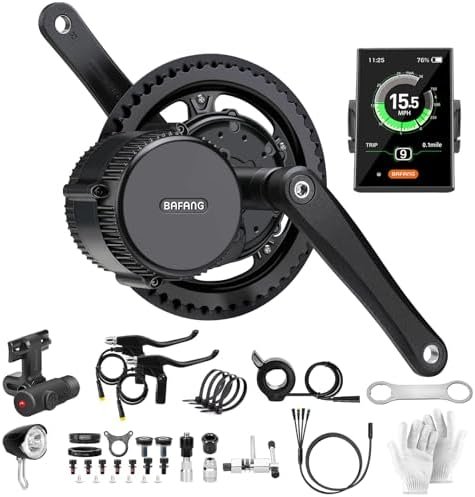
Yes, a mid-drive kit such as the BAFANG 48V 750W kit fits a regular bike, if the frame has room at the crank and a place for the battery.
Which is cheaper to run and maintain?
A hub-motor e-MTB is usually cheaper day to day, because the motor does not drive the chain. A mid-drive climbs better but wears the chain and cassette faster.
Additional Details
Name: Electric Mountain Bike vs Mid-Drive E-Bike: Which Is Better for Hills?
Description: Electric mountain bike vs mid-drive e-bike: which climbs hills better? Compare motors, gears, terrain and cost, then test on your steepest hill before you buy.
Published: November 9, 2026