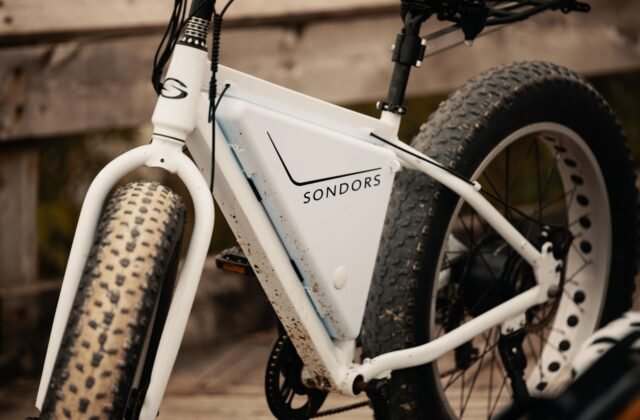
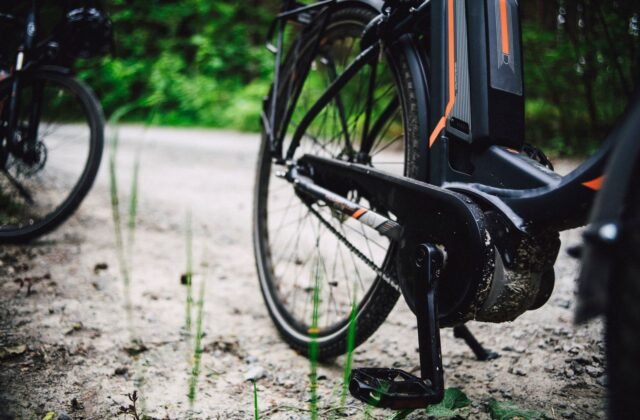
Straight answer: For most city riding, a pedal assist e-bike is better than an electric mountain bike. It is lighter, easier to lift and park, quicker to stop, and uses less battery on flat roads. A mountain e-bike only wins when your route has steep climbs and rough roads daily, or you also ride trails.
Electric Mountain Bike vs Pedal Assist E-Bike for City Riding
An electric mountain bike and a pedal assist e-bike are not the same kind of machine, though both have a motor and a battery. A mountain e-bike is built for trails: wide, knobbly tyres, long-travel suspension and a powerful motor for steep, loose climbs. A pedal assist e-bike, in the city sense, is usually a commuter or hybrid-style bike: narrower tyres, an upright position, a lighter frame and a motor that helps only while you pedal.
That matters more in the city than on a trail. City riding is mostly flat, with frequent stops at junctions and traffic lights. You need a bike that is easy to start, easy to stop, easy to carry into a flat, and comfortable for 20 to 40 minutes.
Most electric mountain bikes are also pedal-assist bikes: the motor helps while you pedal. So this is really a trail-built e-bike in the city versus a city-built pedal-assist e-bike. Read our Commuter E-Bike vs Pedal Assist E-Bike guide, and browse the E-Bikes Hub for the rest of this cluster.
Electric Mountain Bike vs Pedal Assist E-Bike: The Core Comparison
The table compares the two types in the city, with the same rider and route. Motor power, battery size and weight vary widely within each type, so check any bike you consider.
| Attribute | Electric Mountain Bike | Pedal Assist E-Bike | What to watch |
|---|---|---|---|
| City comfort | Very comfortable over potholes and kerbs | Comfortable on smooth roads and lanes | Try your own worst road surface |
| Weight | Usually heavier, bigger motor and battery | Usually lighter, easier to lift and park | Lift the bike yourself |
| Hills | Strong on steep climbs and loose surfaces | Good on city hills, with assist while pedalling | Test your steepest hill, loaded |
| Range | Wide tyres and weight use more energy | Narrower tyres stretch the charge further | Range depends on assist and wind |
| Handling | Wide bars and tyres feel bulky in lanes | Narrower and more nimble at low speed | Ride a narrow gap at walking pace |
| Stopping | Strong brakes, but more weight to stop | Less weight to stop, so braking feels sharper | Check brake feel in the wet; see our disc brake vs rim brake after rain guide |
| Cost | Tyres, suspension and drivetrain can cost more | Simpler parts are usually cheaper | Ask about tyre and brake pad prices |
When the Answer Changes
The pedal-assist e-bike is the better city choice for most riders, but the answer flips with the route or the rider. A short, flat commute on smooth lanes is the clearest case for it. A long route with a steep hill, a badly broken surface, or a rider who needs maximum help can change the result.
If the same bike must also handle weekend trails, a mountain e-bike starts to make sense, even if it is heavier in the city. Our Electric Mountain Bike vs Hybrid E-Bike and Electric Mountain Bike vs Fat Tyre E-Bike guides cover that trade-off. What changes the verdict most often is:
- Steep hills: a mountain e-bike climbs more easily, but a pedal-assist e-bike with low gears still handles most city hills.
- Rough roads: suspension and fat tyres help on broken tarmac, gravel and high kerbs.
- Storage: if you carry the bike upstairs, a lighter e-bike wins every day.
- Distance: on a long, flat commute, the lighter bike usually uses less battery.
- Weather: in rain, tyre grip and brake feel matter more than motor power.

Test Both Bikes on Your City Route in 20 Minutes
Do not decide from a specification sheet. Ride both types on the same route, with your normal bag and the same assist level. The right bike usually becomes obvious in 20 minutes.
- Ride your normal route. Include your steepest hill, worst surface, a narrow lane and a junction.
- Stop and start five times. Note how easy each bike is to start, balance at walking pace and stop.
- Lift and park it. Carry it up a step, lift it onto a stand and lock it where you normally park.
- Check the battery. Compare how much charge each bike used on the same route.
- Ride again the next day, if you can. A second ride shows what tired legs feel like.
What a fail looks like
- Hard to start on a hill → gearing does not suit your climb → try a lower gear and higher assist, or choose the stronger bike.
- Tyres feel slow → wide, knobbly tyres are dragging → try a pedal-assist e-bike with smoother tyres.
- Arms ache after 10 minutes → riding position does not fit → adjust saddle and bars, or try another size.
- Battery drops fast → high assist or heavy load → lower the assist, carry less, or check a bigger battery.
Myth vs Fact
Myth: A mountain e-bike is always better because it is more powerful. Fact: In the city, more power often means more weight and tyre drag.
Myth: A pedal assist e-bike will not climb a city hill. Fact: The motor helps while you pedal, and low gears handle most city hills.
Before you test: Wear a helmet, check the brakes before you ride, and test in a quiet street first. Do not test a new bike in heavy traffic or rain until you know how it brakes.

How to Choose in One Afternoon
Use this method once you have ridden both types. It turns a vague feeling into a decision, and avoids buying a bike for the route you wish you had.
What you will need
- Your normal bag, load and lock
- A helmet and comfortable shoes
- A note of your usual route, with its steepest hill marked
- A phone or notebook to record battery use and comfort
- A note of your storage space, lift and parking spot
The method
- Write down your route. Note distance, hills, surface, parking and any steps.
- Score each bike from 1 to 5. Score comfort, hills, stopping, carrying and parking.
- Check the practical details. Measure the bike against your storage, check your lock fits, and confirm where you will charge it.
- Compare running costs. Ask about tyre, brake pad and chain prices.
- Choose the bike that wins on your route. If tied, choose the lighter, simpler bike.
Note: Battery range figures are estimates for ideal conditions. Range is lower in cold weather, in a headwind, on hills or with a heavy load. See our guide on how to make your e-bike battery last longer.
Warning: Do not ride a bike with a loose wheel, a rubbing brake or a battery that is hot, swollen or damaged. Stop and ask a qualified shop to check it.

When the Damage Is Already Done
If you already bought the wrong bike for city riding, most problems can be reduced, and the bike can often be adapted.
- Too heavy to carry or park: remove the battery before lifting, use ground-floor parking, and fit a lighter lock.
- Wide tyres feel slow: switch to smoother tyres in the same size, at the pressure shown on the sidewall.
- Range is short: use a lower assist level on flat ground and charge after every ride.
- Riding position hurts: adjust saddle height and bar position, and ask a shop to check the frame size first.
- You rarely ride trails: accept the extra weight, or sell the bike in good condition and buy a city pedal-assist e-bike.
The Safe Alternative: Start With a Pedal Assist E-Bike
The safer starting point for city riding is a pedal-assist e-bike built for the road. It helps while you pedal, without the weight, bulk and tyre drag of a trail bike.
- Choose a city frame first. Look for an upright position, a step-through frame if you stop often, and space for a rack and mudguards.
- Pick the assist levels you will use. Test the lowest level you can ride comfortably, then check the highest level on your steepest hill.
- Test it loaded. Ride with your bag, lock and usual load, and check the battery after a full round trip.
What to Do Next, in Order
- Write down your daily route: distance, hills, surface and parking.
- Test-ride a pedal assist e-bike and an electric mountain bike on that route.
- Score comfort, hills, stopping, carrying and parking after each ride.
- Check storage, charging and running costs for the bike you prefer.
- Buy the bike that wins on your route, and keep the receipt and warranty.
- After the first week, re-check saddle position, tyre pressure and brakes.
Never Do These Things
- Never buy on motor power alone: power does not fix a bike that is too heavy, too big or uncomfortable.
- Never skip a test ride on your own route: a smooth shop loop hides hills, kerbs and narrow lanes.
- Never ignore weight and storage: a bike you cannot lift, carry or park will not be ridden often.
- Never ride with faulty brakes or a damaged battery: stop and get a qualified shop to check it.
- Never buy a bike you cannot charge: check where the battery charges and how you will carry it.
In short
For most city riding, a pedal assist e-bike is better than an electric mountain bike: lighter, easier in traffic, easier to park and usually gentler on the battery. Choose the mountain e-bike only for steep climbs, rough roads or weekend trails, and test both on your own route first.
The essentials
- Pedal assist e-bike: best for most city routes, lighter and easier to live with.
- Electric mountain bike: best for steep hills, rough roads and weekend trails.
- Test both on your own route, with your normal load, before buying.
- Check weight, braking, battery use and parking, not just motor power.
- If you bought the wrong bike, change tyres, lower the assist, or sell it in good condition.
More Questions, Answered
Is an electric mountain bike good for city riding?
It can be, on rough roads and steep hills, but it is usually heavier and slower on flat roads.
Is a pedal assist e-bike enough for hills?
For most city hills, yes. The motor helps while you pedal, and low gears help on steep climbs.
Does an electric mountain bike use more battery in the city?
Often, yes. Wide tyres, extra weight and a powerful motor use more energy on flat roads.
Which is easier to carry and park?
Usually the pedal assist e-bike. It is lighter and narrower, so it is easier to lift, carry and lock.
Can I use one bike for city riding and trails?
Yes, but it is a compromise. A mountain e-bike handles trails and works in the city; a city e-bike is better in the city.
Additional Details
Name: Electric Mountain Bike vs Pedal Assist E-Bike: Which Is Better for City riding?
Description: Electric mountain bike vs pedal assist e-bike: which is better for city riding? Compare comfort, range, weight and cost, then test both on your route.
Published: November 9, 2026
As an Amazon Associate, we earn from qualifying purchases made through the links in this article, at no extra cost to you.