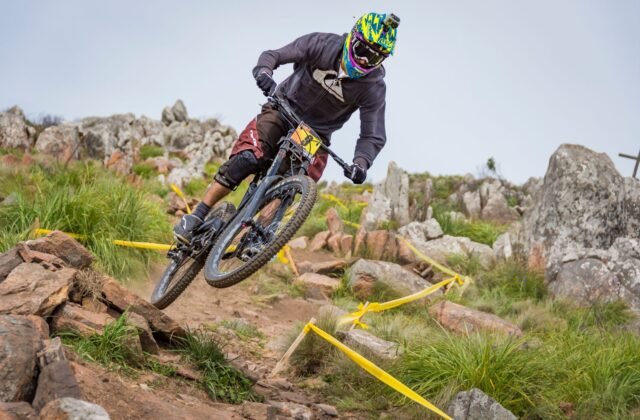
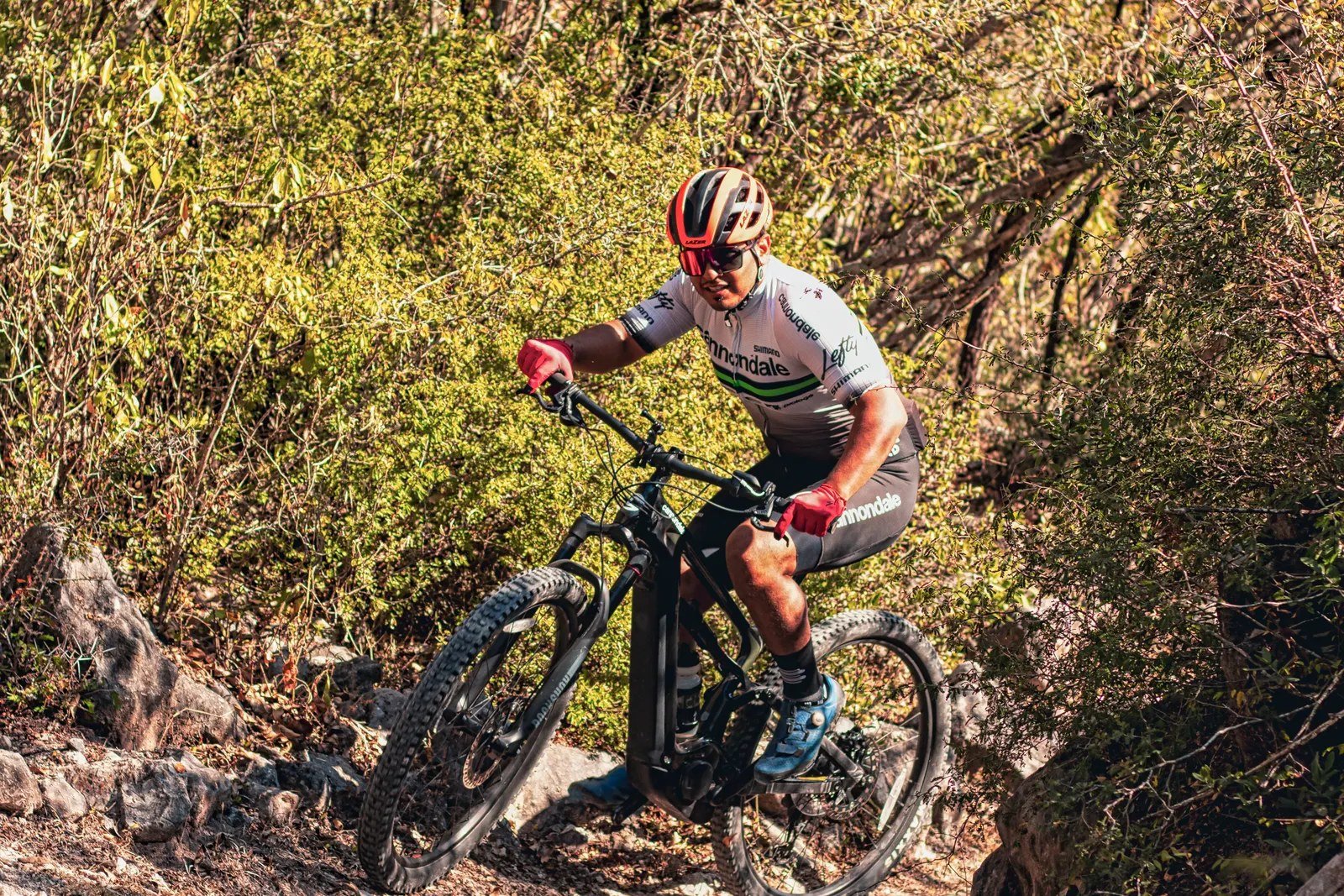
Straight answer: for most organised racing, the enduro mountain bike wins — because the electric mountain bike usually is not allowed in the same race at all. Enduro events time the downhill stages and run separate classes for e-bikes. If you race in an e-bike class, the electric bike is faster on the climbs; in a normal class, the enduro bike is the only legal choice — and the lighter, sharper bike on the descents.
The real question is which race you are entering. An electric motor flattens the climbs and saves your legs for the timed stages; a lighter enduro bike changes direction faster and forgives mistakes on rough ground. Both are real advantages — only one counts in your class.
This guide compares the two on power, weight, climbing, descending, battery and rules — plus a timed test you can run yourself.
Enduro Mountain Bike vs Electric Mountain Bike for Racing: The Comparison
| Attribute | Enduro Mountain Bike | Electric Mountain Bike | What to watch |
|---|---|---|---|
| Race legality | Legal in normal enduro classes | Needs a separate e-bike class in most events | Check your event’s rules first |
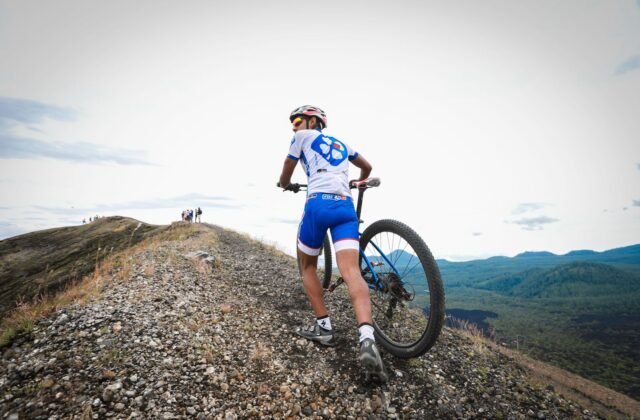
| Climb speed | Depends fully on your legs and fitness | Motor assist keeps speed up on long climbs | Assist saves energy for the timed descents |
| Weight | Lighter, easier to lift and move | Heavier — motor and battery add real weight | Weight shows most in tight turns and jumps |
| Descending | Sharper handling, later braking | Stable at speed but harder to change direction | Test both on the same rocky section |
| Range on race day | Unlimited — no battery to manage | Depends on battery size, assist level and course length | A dead battery mid-race is a heavy penalty |
| Cost and upkeep | Simpler parts, cheaper to keep running | Motor, battery and electronics add cost and servicing | Budget for battery care, not just the bike |
| Skill building | Builds fitness and bike handling fast | Lets you ride more laps, but masks weak fitness | More laps help only if you practise the hard parts |
Read the table as a trade, not a scoreboard. The electric bike buys climb speed and fresh legs; the enduro bike buys lightness, handling and a place in the normal class.
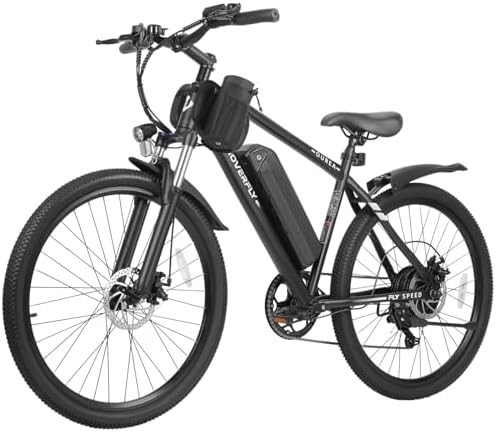
When the Answer Changes
The enduro bike is the safe default. But a few situations flip the verdict.
- You race in an e-bike class: the electric bike is the right tool — the question becomes which one.
- Your course has long, steep climbs between stages: the motor saves the legs you need for the timed descents.
- You are returning from injury or building fitness: assist lets you finish races and ride full courses while your strength comes back.
- Your event has no e-bike class: the electric bike is not an option. Enter on the enduro bike.
- The course is tight and jump-filled: the lighter enduro bike turns faster and lands easier.
- You train on the same trails you race: more laps on an e-bike mean more practice on the descents, which is where enduro races are won.
If you are unsure which class your event runs, ask the organiser. The rulebook decides this one, not the bike.
Test the Two Bikes Before You Race
Twenty minutes on both bikes answers this better than any review. Ride the same short loop on each, same rider and trail conditions.
- Pick a loop with one climb and one descent. Two to three minutes up, two to three minutes down, on trails like your race course.
- Ride it on the enduro bike first. Note climb time, descent time, and how tired your legs feel.
- Rest ten minutes, then ride the same loop on the electric bike, using the assist level you would actually race with.
- Compare times and legs. The e-bike should be clearly faster uphill; the question is how much descent time the extra weight costs.
- Repeat the descent once more on each bike. The second run shows whether the gap grows as you tire — that is what a race feels like.
What a fail looks like:
| Symptom | Cause | Fix |
|---|---|---|
| Climb time barely improves on the e-bike | Assist too low, or the climb too short to matter | Use your race assist level and test a longer climb |
| Descent feels slow and heavy on the e-bike | Extra weight in tight turns and braking zones | Brake earlier, before the turn, and let the bike settle |
| Legs are dead on the enduro bike by the second run | Climbs eat the energy you need for the stages | Train the climbs, or accept that an e-bike class suits you better |
| Battery drops fast on the test loop | High assist on steep ground drains it quickly | Work out the range for a race day before you enter |
Myth: An electric mountain bike is always faster. Fact: It is faster on climbs, but the extra weight costs time on tight descents — and it races in a different class. Myth: E-bikes do the work for you. Fact: You still pedal, steer and brake. The motor adds power; it does not add skill.
Before you test: check brakes, tyre pressure and bolts on both bikes first. Wear a helmet and gloves, and test on a quiet trail. Never test a new bike at full race speed on your first run.
How to Set Up Either Bike for Racing
A fair test needs both bikes set up the same way. Ten minutes of setup removes most of the noise.
What you will need:
- A track pump with a gauge, and a shock pump for suspension
- A multi-tool for cockpit and axle checks
- A fully charged e-bike battery
- A stopwatch or phone timer
- The same helmet, shoes and pack you race with
The method:
- Set sag on both bikes to your race setting. Different sag makes the test meaningless.
- Set both to your race tyre pressure. Same tyres, same pressure, same trail — pressure changes grip more than most riders expect.
- Set saddle and bars to your fit. A bike that does not fit feels slow whatever its motor does.
- Note the assist mode and battery percentage at the start of the loop.
- Ride the loop as written above: same loop, same effort, same rest. Write the times down — memory lies about small gaps.
Worth knowing
The biggest setup mistake is testing an e-bike on maximum assist and an enduro bike on soft tyres. Match the setup to how you would actually race.

For related comparisons, see the Mountain Bikes Hub, Enduro Mountain Bike vs 29er Mountain Bike, Enduro Mountain Bike vs Fat Mountain Bike, Commuter E-Bike vs Mid-Drive E-Bike and Fat Tyre E-Bike vs Lightweight E-Bike.
When the Damage Is Already Done
Already bought the wrong bike? You are not stuck — small changes fix most mismatches for far less than a new bike.
- Bought an e-bike but your event has no e-bike class: keep it for training, and race your enduro bike — or enter events that run an e-bike class.
- Bought an enduro bike but the climbs destroy your legs: train climbs in blocks and pace the transfers so you arrive at each stage fresh.
- Battery dies before the race ends: use a lower assist level on transfers and keep a spare battery if your event permits it.
- E-bike feels too heavy on descents: fit lighter tyres, firm up the suspension, and brake earlier — the weight punishes late braking most.
- Enduro bike feels slow on race day: check the drivetrain and tyre pressure first — a dragging brake or soft tyre costs more time than most riders believe.
The Safe Alternative: The Electric Mountain Bike
If the test points the other way, the electric mountain bike is the safe alternative — best when your course has long climbs, your fitness is still building, or you want more practice laps.
The method
- Enter the e-bike class, not the open class, and read its motor and battery rules first.
- Learn the assist modes before race day: which mode for climbs, which for transfers, and how far the battery goes in each.
- Practise the descents at race speed. The weight changes braking distance — brake earlier than on a lighter bike and let it settle before each turn.
- Plan charging and spares: where you can charge between stages, and whether a spare battery is allowed.
- Train your legs anyway. Assist helps, but fitness decides the descents.
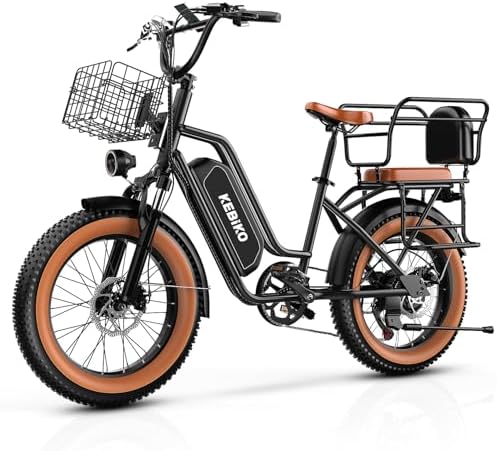
What to Do Next, in Order
- Check your event’s classes: does it run an e-bike class, and what are its motor and battery rules?
- Run the twenty-minute test on both bikes and write the times down.
- Decide by the rules first, then by the times.
- Set up the bike you chose — sag, tyre pressure, saddle, brakes — and ride it for two weeks before race day.
- Plan battery and spares if you race electric.
Never Do These
- Never enter an electric bike in a non-electric class. You will be disqualified.
- Never race a bike you have not tested on that kind of trail.
- Never start a race with a half-charged battery. A dead battery turns an e-bike into the heaviest bike on the course.
- Never skip the brake and bolt check before a race.
- Never choose by top speed alone. Enduro races are won on the descents, not on the flat.
In Short
For racing, the enduro mountain bike is the default: legal in the normal class, lighter, and sharper on the descents. The electric bike wins when your event runs an e-bike class and the course has long climbs. Test both on the same loop and decide by the rules first.
The essentials:
- Check your event’s classes before you buy or enter.
- Test both bikes on the same loop and write the times down.
- Match sag, tyre pressure and fit before you judge either bike.
- Plan battery range for a full race day if you go electric.
- Practise the descents — that is where the race is decided.
More Questions, Answered
Can I race an electric mountain bike against normal enduro bikes?
In most organised events, no. Enduro races run separate e-bike classes, and entering one in a non-electric class leads to disqualification.
Is an electric mountain bike faster than an enduro bike on a race course?
On climbs, yes. On tight, technical descents the lighter enduro bike is often faster, because the e-bike’s extra weight costs time in turns and braking zones.
Do I need to be fit to race an electric mountain bike?
Yes. The motor adds power, but you still pedal, steer and brake, and the descents demand the same skill and fitness as on any bike.
How far will an e-bike battery last in a race?
It depends on battery size, assist level and course. High assist on steep climbs drains it fast, so work out the range for a race day before you enter.
Which bike should a beginner racer choose?
Start with the enduro mountain bike: legal in the normal class, builds fitness and handling fast, and costs less to run.
Additional Details
Name: Enduro Mountain Bike vs Electric Mountain Bike: Which Is Better for Racing?
Description: Enduro mountain bike vs electric mountain bike: which is faster in a race? Compare power, weight, handling, battery life and race rules before you choose.
Published: November 11, 2026