For most seniors, a hub-motor e-bike with standard tyres is the better buy. It is lighter, easier to mount and lift, simpler to push when the battery runs out, and it still gives smooth electric help on paved roads and firm paths.
Choose a fat tyre e-bike only if most of your riding is on sand, gravel, grass or loose paths, where the wide tyres add grip and cushioning. Remember the overlap: most fat tyre e-bikes are hub-motor e-bikes too — the tyre is the difference, not always the motor. So the real choice is wide tyres and extra weight, or a lighter hub-motor bike with standard tyres.
Introduction
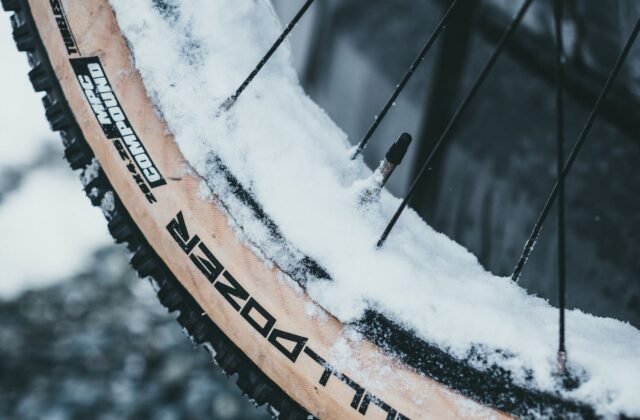
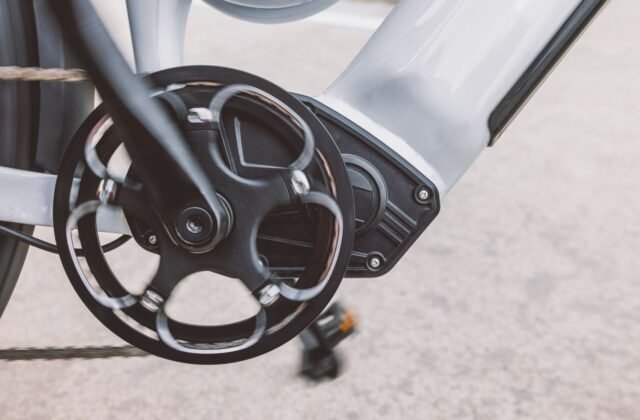
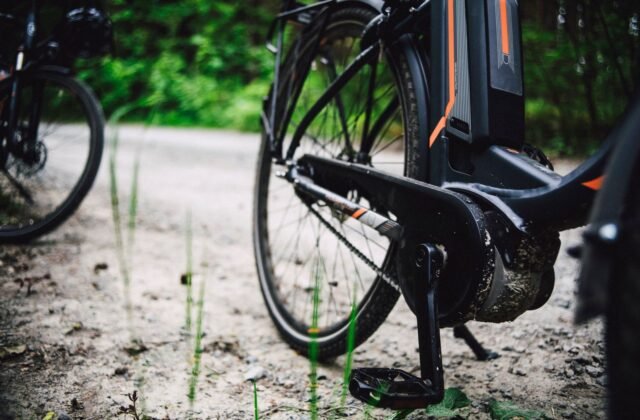
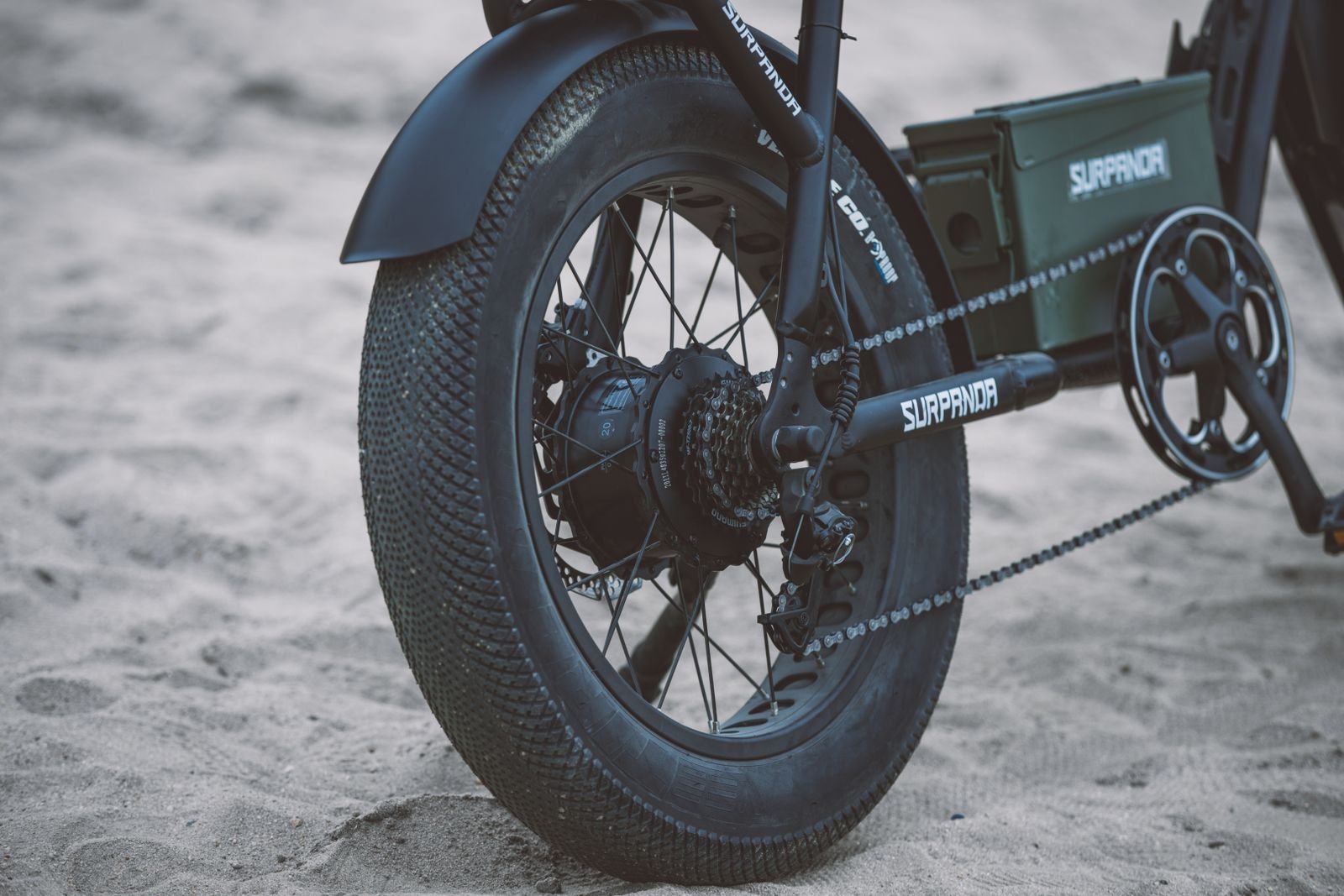
In this fat tyre e-bike vs hub motor e-bike comparison, “fat tyre” describes the tyres — usually about 4 inches wide, run at low pressure. “Hub motor” describes the motor — a motor built into the front or rear wheel that drives it directly. So the two overlap: many fat tyre e-bikes use a hub motor, and many hub-motor e-bikes use standard tyres.
For seniors, the right choice is not the label on the box. It is about riding where you actually ride, getting on and off without a struggle, stopping safely, and handling the bike when it is not moving.
This comparison puts the two side by side for senior riders: grip and comfort, weight and mounting, range and cost, and a short test you can do before you buy. It also explains what to do if you already bought the wrong one. For the wider e-bike picture, start at the E-Bikes hub.

1450W peak power, 20×4 fat tyres, and up to 80 miles — a strong cargo-style weekend hauler.
Fat Tyre E-Bike vs Hub Motor E-Bike: The Core Comparison
A hub motor drives the wheel directly, so it is simple, quiet and cheaper than a mid-drive. A fat tyre adds grip on loose ground, but also adds weight. The table compares a fat tyre e-bike with a hub-motor e-bike on standard tyres.
| Attribute | Fat Tyre E-Bike | Hub Motor E-Bike | What to Watch |
| Tyres and grip | About 4 in wide, low pressure; grips sand and gravel | Standard 1.75–2.4 in tyres; grips paved paths well | Where do you ride most days? |
| Motor and drive | Usually a hub motor, often a larger one | Hub motor in the wheel; simple and direct | A bigger motor does not fix a heavy bike |
| Weight | Heavier — wide tyres, rims and frame add kilos | Lighter, often by several kilos | Can you lift it into a car? |
| Getting on and off | Often a high crossbar; step-through models exist | Low step-through models are common and easy to mount | Choose step-through if your hip or knee is stiff — see step-through vs fat tyre for seniors |
| Comfort on rough ground | Softer ride; the tyres absorb bumps and ruts | Firmer ride; bumps reach your hands more | Test a bumpy path, not a smooth shop floor |
| Range on paved roads | Shorter per charge; wide tyres add resistance | Longer per charge on the same battery | Range figures are best-case; test them yourself |
| Low-speed handling | Steady in a straight line; heavy at walking pace | Lighter steering; easier to turn and park | Can you do a slow U-turn? |
| Cost and upkeep | Often costs more; wide tyres cost more to replace | Usually cheaper to buy and to run | Ask the price of a replacement tyre |
Weight is a daily problem, while grip is an occasional one. You lift, push and park the bike every ride, and only need fat-tyre grip on loose ground. A hub motor is the simple drive most senior-friendly e-bikes use — the question is whether wide tyres are worth their weight.
When the Answer Changes
The hub-motor bike is the better default for seniors, but these variables can flip the verdict:
- Loose surfaces most days: If sand, gravel or grass is your usual route, the fat tyre bike wins.
- Stiff hip, knee or back: Mounting height beats tyre width.
- Storage and transport: If you lift the bike into a car, up steps or onto a rack, every kilo counts. The lighter hub-motor bike wins — and a folding hub-motor bike wins again. See folding e-bike vs hub motor e-bike.

750W peak motor, 60+ miles, and a 7-speed drivetrain — light and simple for weekend loops.
The 10-Minute Test That Decides It
Do this test on both bikes, on the same day, on the route you actually ride.
- Mount and dismount three times, from both sides, without help.
- Walk the bike 20 metres with the motor off, then lift the front wheel over a kerb.
- Ride slowly in a straight line, then do a slow U-turn.
- Brake to a full stop from a gentle speed, twice, on dry ground.
- Ride your usual roughest 200 metres — gravel, grass or a bumpy path.
What a Fail Looks Like
- Bike wobbles at walking pace → cause: weight is high and steering is heavy → fix: choose the lighter hub-motor bike, or a step-through model.
- You cannot lift it over a kerb → cause: the bike is too heavy for your strength → fix: do not buy it; a folding hub-motor bike is the safer alternative.
- Tyres slip on gravel → cause: standard tyres have too little grip for that surface → fix: a fat tyre bike, or wider tyres at lower pressure, will help.
Myth vs Fact
Myth: Fat tyre e-bikes are always safer for seniors.
Fact: A fat tyre is steadier on loose ground, but the extra weight makes the bike harder to stop, steer at low speed and lift. Safety depends on weight and fit as much as on grip.
Myth: A hub motor is weak and old-fashioned.
Fact: A hub motor is simple, quiet and direct, and it is the motor most senior-friendly e-bikes use. Weakness comes from a small motor or a heavy bike, not from the hub design itself.
Before you test
Wear a helmet, test in a quiet place away from traffic, and bring someone with you. Start on the lowest assist until you know how the bike responds. If a health condition affects your balance, check with your doctor before you test-ride.
How to Choose the Right One for You
Use this method in the shop, before money changes hands, to find which bike fits your body and your roads.
What You Will Need
- The two bikes you are comparing, side by side
- Your usual shoes, bag and lock
- A tape measure
- The route you ride most
The Method
- Write down your three most common rides before you go to the shop.
- Measure the step-over height and sit on each bike.
- Weigh each bike and lift it as you would into a car.
- Ride both bikes on your worst surface, then on smooth tarmac, at the same assist level.
- Brake hard from a gentle speed on both.
Note: Range figures are best-case. A bike that claims a long range on flat ground at low assist may go much less far on your hilly route. Judge range by your test ride, not by the brochure.
Warning: Do not buy a bike you cannot mount, lift or stop safely, even if it is on sale. A cheap bike that stays in the garage, or that you cannot control at low speed, is the most expensive mistake of all.
When the Damage Is Already Done
If you already bought the wrong one, do not give up on riding. Most mismatches can be eased — but a bike too heavy to lift or stop is a safety problem.
- You bought a fat tyre bike and it is too heavy: Lower the tyre pressure a little, remove the battery before lifting, and store it at ground level.
- You bought a hub-motor bike and it slips on gravel: Fit the widest tyres the frame allows, run them at lower pressure, and slow down on loose corners.
- Mounting is a struggle: Lower the saddle and look for a low step-through frame.
The Safe Alternative: A Light Hub-Motor Step-Through
If neither side fits you perfectly, the safest middle ground is a light hub-motor step-through with tyres a little wider than standard — about 2.2–2.4 inches — and a low frame. It keeps the hub motor’s simplicity and light weight, adds a little grip, and is easy to mount. Test this kind of bike first if you are unsure. For a closer look at the step-through choice, see step-through vs fat tyre for seniors and cargo e-bike vs fat tyre e-bike.
- Choose a step-through frame with a low step-over height you can clear easily.
- Pick a hub motor that helps smoothly from a standstill, without a sudden surge.
- Fit tyres a little wider than standard, at the pressure the seller recommends for your weight.
- Set the saddle low enough to put both feet flat on the ground at a stop.
What to Do Next, in Order
- Write down your three most common rides and their surfaces.
- Test both bikes on the same day, using the 10-minute test above.
- Reject any bike you cannot mount, lift or stop safely.
- Price a replacement tyre and a service for each bike before you decide.
- Buy the bike that fits your roads and your strength.

Folding 20-inch fat-tyre e-bike with a low step-through frame.
Never Do This
- Never buy without a test ride: A bike that looks right online can be too heavy or too high once you sit on it.
- Never choose the widest tyre by default: Wide tyres help on loose ground and hurt everywhere else — weight, effort and range all suffer.
- Never ride with the battery flat on a heavy bike: A heavy fat tyre bike is hard to pedal home without help.
- Never ignore brakes: Check that both brakes stop the bike straight and short before every ride, and after any rain.
In Short
For most seniors, a hub-motor e-bike with standard tyres is the better buy: lighter, easier to mount, simpler to run and cheaper — and most fat tyre e-bikes use a hub motor anyway. Choose fat tyres only when loose ground is your usual ride, and test both bikes on your own roads before you buy.
The Essentials
- A hub motor is simple, direct and low-maintenance.
- Fat tyres add grip on loose ground, but also add weight, effort and cost.
- Weight, mounting height and braking matter more than tyre width on paved roads.
- Test both bikes on your own route before you buy.
More Questions, Answered
Can a fat tyre e-bike also have a hub motor?
Yes — most do. “Fat tyre” is about the tyres and “hub motor” is about the motor, so the two are not opposites. Compare wide tyres against standard tyres on a hub-motor bike. Our fat tyre vs hybrid e-bike comparison covers the tyre side in more detail.
Is a hub motor strong enough for hills?
A hub motor can help well on gentle and moderate hills. Test the steepest hill on your route, because a heavy bike and a small motor together will struggle. See also electric mountain bike vs hub motor e-bike.
Do fat tyres use more battery?
Yes, usually. Wide tyres roll with more resistance, so the motor works harder and range per charge is shorter.
Additional Details
Name: Fat Tyre E-Bike vs Hub Motor E-Bike: Which Is Better for Seniors?
Description: Fat tyre e-bike vs hub motor e-bike for seniors: compare grip, weight, mounting, range and cost, then pick the steadier, easier bike for your roads today.
Published: 10 November 2026