Part of our guide on E-Bikes.
A folding e-bike motor problem usually shows up at the worst moment: the assist fades halfway up a hill, the motor cuts out after you unfold the bike, or a new grinding noise appears. Most of these faults are not a dead motor — they are a hinge that was never locked, a cable pinched in the fold, a loose connector, or a habit that has worn the motor down.
This guide shows how to care for a folding e-bike motor in a safe order, from the two-minute checks to the point where a part is the right answer. For battery care, read How to Fix Commuter E-Bike Battery Problems and How to Make Your E-Bike Battery Last Longer.
Quick facts
| Fact | What it means for your ride |
|---|---|
| Problem this guide fixes | A folding e-bike motor that gives weak assist, cuts out, grinds, or stops |
| Check first | The hinge and lock, the motor cable, the connectors, the battery mount and the display |
| Most common causes | A hinge left unlocked, a pinched or loose cable, a dirty connector, or habits that strain a small motor |
| Tools you need | Your manual, the correct charger, a dry cloth, and the bike’s Allen keys |
| Stop and get help | Grinding, a hot motor, a burning smell, smoke, or a cracked case |
| Related guides | How to Fix Commuter E-Bike Battery Problems, How to Make Your E-Bike Battery Last Longer, Folding E-Bike vs Lightweight E-Bike |
Quick recap
- Start with the hinge, the lock, the motor cable and the connectors. A motor that worked before you folded the bike rarely fails without a cause.
- A motor that cuts out after folding is often a pinched cable or a loose connector.
- Weak assist on hills, with a heavy load or a nearly empty battery, is often normal.
- Always lock the hinge fully before you ride, and never force the fold when a cable is in the way.
- Stop at once if the motor grinds, overheats, smells strange or smokes.
- When a fix needs a part, match the voltage, connector and maker approval exactly.
The short answer: check the hinge, the motor cable and the mount before you blame the motor
Most folding e-bike motor problems are not a dead motor. A motor that suddenly loses assist, cuts out after folding or starts grinding is far more likely to have a hinge that was not locked, a cable pinched in the fold, a loose connector, or a battery that is not seated. Work through the simple checks in order before thinking about a replacement.
That order matters because the symptoms overlap. A hinge that is not locked can flex under load and look like a dying motor. A cable pinched in the fold can cut power only when you turn the handlebar and look like a faulty controller.

The rest of this guide follows that rule.
How to diagnose a folding e-bike motor problem, step by step
Work through these steps in order, and note when the fault happens.
- Lock the hinge and check the latch. Close the hinge until it clicks and check the latch is fully home.
- Follow the motor cable through the fold. Check the cable at the hinge and stem for pinching, rubbing, a sharp bend or a cut.
- Check every connector. Push each connector fully home and look for damp, dirt or corrosion.
- Seat the battery again. Switch the bike off, take the battery out if your manual allows it, and refit it until it clicks.
- Read the display. Compare the assist level and any error code with what the motor does.
- Ride a short test route on low assist. On a flat, familiar route, note whether the fault happens only after folding, only on hills, only on bumps, or only when the battery is nearly empty.
- Listen to the motor. A healthy hub motor hums quietly; grinding or a rattle points to wear inside the motor.
If every step looks normal and the problem stays, get a qualified shop to test the motor, controller and battery.
What you’ll need
- Your manual, or the motor label, for voltage, connector and wheel size
- The Allen keys that came with the bike, for the hinge and latch
- A dry cloth for the connectors, and a clean, dry place to work
- A notebook to record when the fault happens

What the symptom usually means
Match what you notice with what to try first. This is a starting point, not a diagnosis.
| Situation | What you’ll notice | What to try |
|---|---|---|
| Motor cuts out after folding | Assist stops on the first ride after unfolding | Check the hinge lock, the cable and every connector |
| Weak assist on hills | The motor fades on climbs but feels fine on the flat | Check the battery level, the assist setting and the load |
| Motor grinds or clicks | A noise that changes with speed | Stop riding and get a shop to test the motor |
| Assist comes and goes | Power surges or drops without a pattern | Check the connectors, the battery mount and the cable |
| Display shows an error code | A code or a blank display | Note the code, restart the bike and refit the battery |
| Motor is hot or smells strange | Heat, a burning smell or smoke | Stop riding at once and get qualified help |

How folding, temperature and charging habits change the answer
The same motor can feel like a different motor after a week of train commutes, on a cold morning, or at the end of a long summer of daily folding. A bike folded twice a day wears its cables faster than a bike that is never folded, and a cable pinched once can fail weeks later. Fold slowly, watch the cables, and never force the hinge.
Cold matters too: a battery that spent the night in a cold hallway gives less power on the morning ride. A motor ridden hard up a long hill on the highest assist should be allowed to cool before the next climb. See How to Make Your E-Bike Battery Last Longer for charging habits.
What works
- Fold and unfold slowly, watching the motor cable, and keep cables out of the hinge
- Lock the hinge fully every time, and check the latch before you ride
What to watch
- Never force the hinge when a cable is in the way, and never ride with the latch half closed
- Never charge a frozen, swollen, cracked, hot or damp battery
Settings and controls that affect motor wear
Before deciding a motor is weak, check the settings that decide how hard it works. The highest assist on a flat commute can empty a battery and heat a small motor far sooner than the lowest assist.

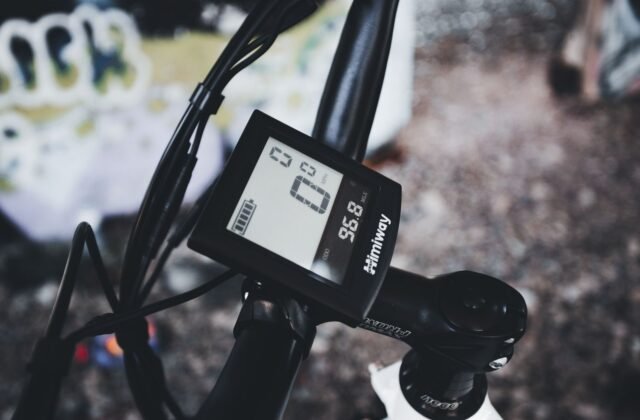
The display is part of the diagnosis too. Its assist bars show the level you asked for, while a speed or range estimate is only a guess based on recent riding. If the display goes blank while the battery still shows charge, check the connection first.
What works
- Use the lowest assist level that keeps the ride comfortable, and save the highest level for hills
- Compare the assist and the motor’s sound on the same route, on similar days
What to watch
- A motor that gets hot on the highest assist on a flat road points to a setting or load problem
When a fix needs a part or a replacement
Some motor problems have a simple fix, and some need a part. A loose connector can be pushed home, and a pinched cable can be rerouted. A grinding motor or a failed controller cannot be fixed at home.
| Fix | Best use | Limit |
|---|---|---|
| Lock the hinge and latch properly | Assist cuts out after folding | Will not help if the hinge or latch is worn |
| Reroute a pinched motor cable | Power fails when you turn the handlebar or fold the bike | Will not help if the cable is cut inside the cover |
| Push connectors home and clean dry contacts | Intermittent assist after wet or dusty rides | Do not use water on contacts |
| Replacement motor or controller | Grinding, no assist after all checks | Must match voltage, connector and wheel size exactly |
| Professional diagnosis | Heat, smell, smoke, or a fault no check explains | Do not open or try to repair a damaged motor or battery |
What works
- Keep the manual and motor label with the bike
- Ask a shop to test a motor that will not give assist before buying a replacement
What to watch
- A cheap motor that only fits the plug can damage the battery
- A second-hand motor with no history can carry the same fault

The verdict
Most folding e-bike motor problems are fixed by locking the hinge properly, freeing a pinched cable and pushing the connectors home, not by buying a new motor. When those checks fail, or the motor grinds, overheats or smells strange, a qualified shop test is the right next step.
Readers also ask
Why does my folding e-bike motor cut out after unfolding?
A cable pinched in the hinge, a connector that came loose, or a hinge that was not locked will cut the power on the first ride after unfolding.
Why is my folding e-bike motor weak on hills?
Small folding motors work hardest on hills, and a nearly empty battery, a heavy load or the wrong assist level make it feel weaker.
Can I ride with the folding hinge half locked?
No. A hinge that is not fully locked can flex under load and make the steering unsafe. Always close it until it clicks.
How do I know if my folding e-bike motor needs replacing?
When the assist stays weak on the flat as well as on hills, after the hinge, cables, connectors, battery and settings have been checked, and a shop test agrees.
Why does my folding e-bike motor make a grinding noise?
Grinding that changes with speed usually means wear inside the motor or something caught in the wheel. Stop riding and get a shop to check it.
Is it safe to keep riding a motor that gets hot or smells strange?
No. Stop riding at once, do not charge the battery, and get qualified help.
Affiliate Disclosure: We may earn a commission when you buy through links on this site.
Additional Details
Name: Folding E-Bike Motor Care Guide for Beginners
Description: Learn how to care for a folding e-bike motor: diagnose weak assist, cut-outs and grinding, fix the hinge and cables, and know exactly when a part is needed.
Published: November 15, 2026