Part of our guide on E-Bikes.
A commuter e-bike frame problem usually announces itself quietly: a creak on every pedal stroke, a wheel that no longer sits straight, or a hairline mark near a weld. Most of these faults are not a broken frame. They are usually a loose headset, a bent derailleur hanger, a wheel that is not seated, or a bolt that has worked loose.
This guide shows how to check a commuter e-bike frame in a safe order, from the two-minute checks to the point where a part or a replacement is the right answer. For battery faults, read How to Fix Commuter E-Bike Battery Problems; for charging and storage, read How to Make Your E-Bike Battery Last Longer.
Quick facts
| Fact | What it means for your ride |
|---|---|
| Problem this guide fixes | A frame that creaks, sits crooked, or shows a crack, dent or rust spot |
| Check first | The welds, headset, wheels, bottom bracket and bolts |
| Most common causes | A loose headset, a bent hanger, a wheel not seated, or loose bolts |
| Tools you need | Your manual, hex keys, a clean cloth and a torch |
| Stop and get help | A crack in the frame or fork, or damage near the head tube or bottom bracket |
| Related guides | How to Fix Commuter E-Bike Battery Problems, How to Charge an E-Bike Battery Safely |
Quick recap
- Start with the welds, the headset and the wheels.
- A creak is usually a loose bolt, a dry headset or a bottom bracket — but check for a crack first.
- A wheel that rubs the brake is often a wheel not seated in the dropouts.
- Never ride a frame or fork with a visible crack.
- Clean the frame after wet rides and touch up paint chips early so rust cannot start.
- When a fix needs a part, match the size, dropout type and maker approval exactly.
The short answer: check the welds, headset and wheels first
Most commuter e-bike frame problems are not a broken frame. The straight answer is that a creak, a wobble or a crooked wheel is far more likely to come from a loose headset, a bent derailleur hanger, a wheel not seated in its dropouts, or a bolt that has worked loose than from a frame that has failed without warning. Check the simple causes first, and only think about a repair when they point that way.
The rest of this guide follows that rule. The diagnosis section finds the fault, the reference section matches each symptom to its cause, and the later sections cover size, load, weather and settings. If a step tells you to stop, stop.
How to diagnose a commuter e-bike frame problem
Work through these steps in order and note what you find. That note helps a shop if the problem needs a professional.
- Look at every weld. With a torch, check the head tube, bottom bracket, seat tube, dropouts and rack mounts for cracks or rust. A crack is a stop-riding fault.
- Check the headset. Hold the front brake and rock the bike. Any play means it needs adjusting.
- Check both wheels are seated. Open the quick release or axle, seat the wheel fully in the dropouts, and close it again. A wheel at an angle rubs the brake.
- Spin each wheel and watch the rim. A rim that wobbles needs truing. A tyre that rubs in one spot means the wheel is not seated.
- Stand on the pedals and listen. A creak only under hard pedalling often comes from the bottom bracket; a creak when turning, from the headset.
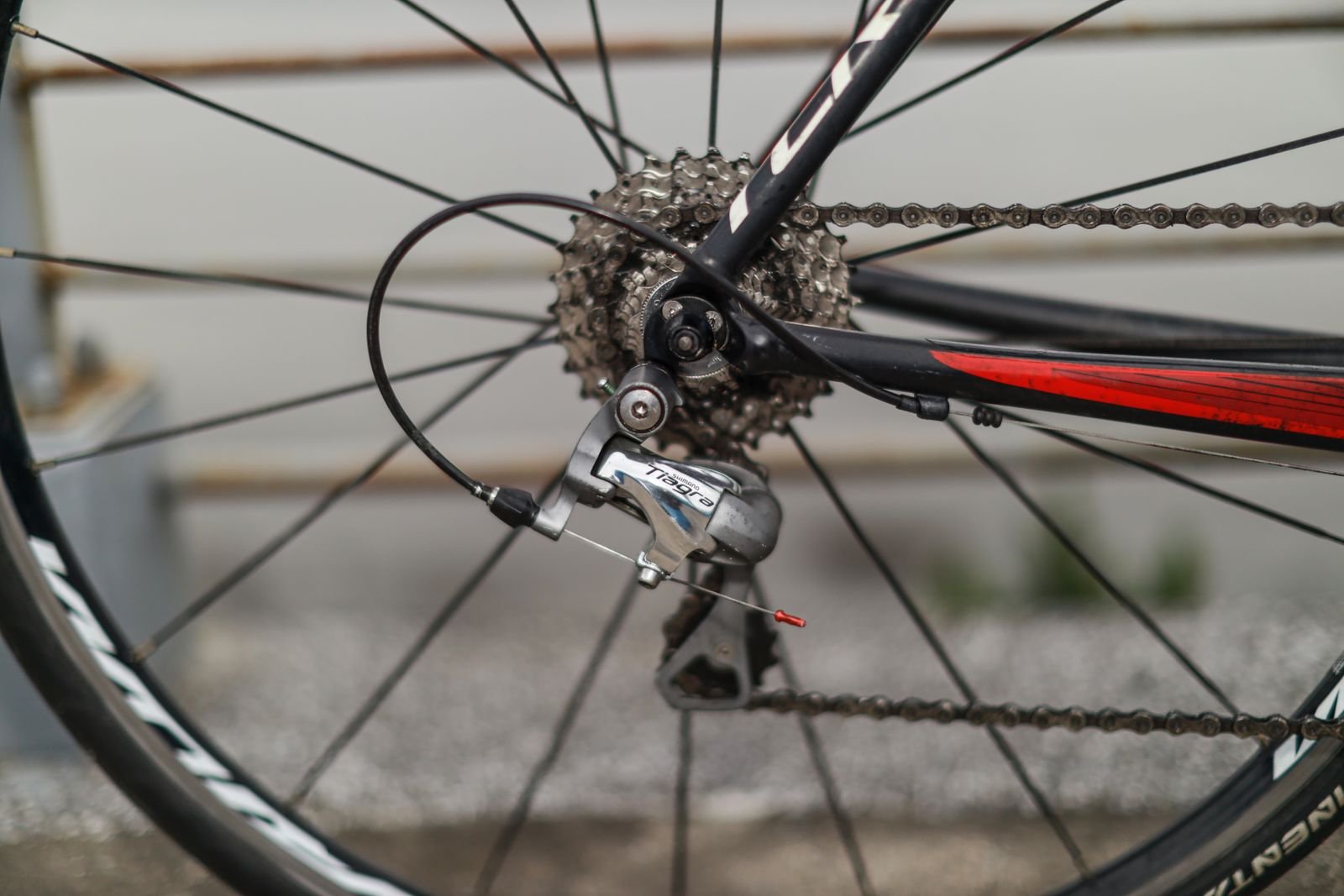
- Check the hanger and every bolt. If the tab the rear derailleur bolts to is bent, the gears will skip. Then snug the stem, bars, seat post, rack and motor bolts to the torque in your manual.
If every step looks normal and the problem stays, get a shop to check the frame.
What you’ll need
- Your manual, for torque values
- Hex keys that fit the bolts on your bike
- A torch and a clean cloth
One Amazon product in this section only.

What the symptom usually means
Use this table to match what you notice with what to try first. If the frame or fork shows any sign of a crack, skip the table and get qualified help.
| Situation | What you’ll notice | What to try |
|---|---|---|
| Creak when pedalling hard | A click on every pedal stroke, worse uphill | Check the bottom bracket, crank bolts and pedals |
| Knock when braking or turning | A click in the front end | Check the headset, then the stem and handlebar bolts |
| Wheel rubs the brake or frame | The tyre or rim touches one side | Reseat the wheel in the dropouts, then check it is true |
| Gears skip or the chain jumps | Shifting is rough, or the chain jumps | Check the derailleur hanger is straight, then the chain |
| Frame or fork looks bent | The wheel sits at an angle after a crash | Stop riding and get a shop to measure the frame |

How frame size, load and weather change the answer
Frame size is the most common surprise: a frame too big or too small puts the rider’s weight in the wrong place, so the headset and bottom bracket take loads they were not set up for. Load matters too: a rack, panniers and a lock ask the frame and rack mounts to carry more than a bare bike. And rain and road salt get into every joint, so a frame that is never washed rusts at the chips.
What works
- Ride a frame that fits, with the seat post inside its minimum mark
- Spread the load across the rack and panniers; keep heavy items low
- Wash salt and mud off after wet rides, then dry the frame
What to watch
- A seat post past its minimum mark can crack the seat tube
- A rack that sways or rattles is overloading its mounts
- Rust bubbling under paint is worse than surface rust
Settings and controls that affect frame wear
Before deciding a frame is worn out, check the settings that decide how much of it you use. Tyre pressure is the biggest one: soft tyres let every pothole hit the frame and rims directly. A locked-out fork passes every bump to the frame, while a soft fork dives under braking and loads the head tube.
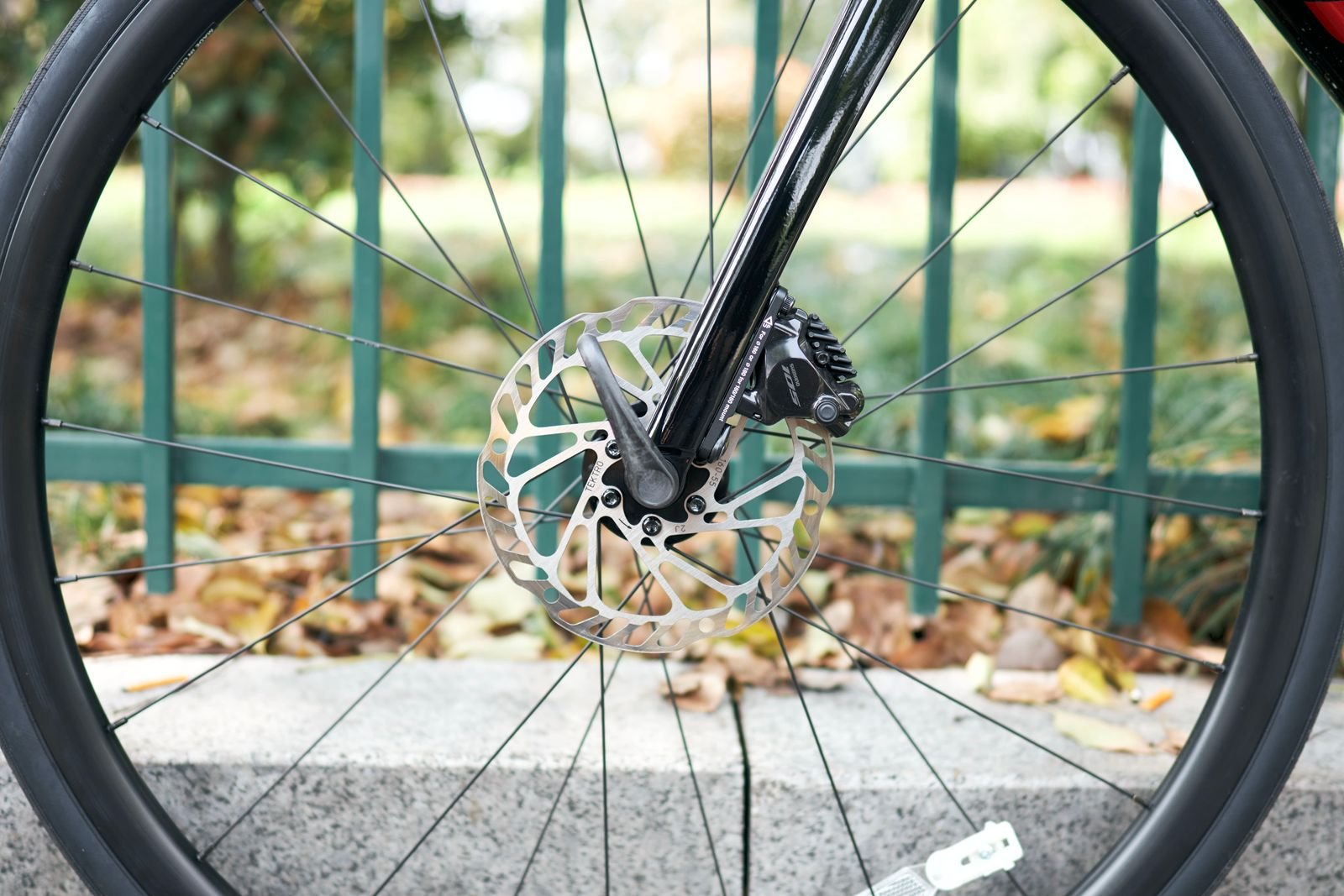
Brakes are part of the diagnosis too. A disc brake that rubs after a wheel change usually means the wheel is not seated, so reseat the wheel before you touch the brake. For the full comparison, read Disc Brake vs Rim Brake: Which Is Better After Rain?.
What works
- Keep tyres at the pressure in your manual; check them weekly
- Set the fork to suit the road: open for rough streets, firm for smooth tarmac
- Check wheels are seated and brakes centred after any wheel change
What to watch
- A brake that rubs after every wheel change points to seating, not the frame
- A fork that bottoms out on small bumps is too soft; one that never moves, too firm
When a fix needs a part or a replacement
Some frame problems have a simple fix, and some need a part. A loose headset can be adjusted, a bent hanger straightened or replaced, and a dirty joint cleaned and greased. A cracked frame or fork cannot be fixed at home, and a frame that will not hold its alignment is a job for a qualified shop to measure. When a part is needed, match it exactly.
| Fix | Best use | Limit |
|---|---|---|
| Adjust and grease the headset | Knocking or play in the front end | Will not help if the bearings are worn |
| Straighten or replace the hanger | Gears skip, or the chain jumps under load | Must match the frame; replace a hanger bent twice |
| Replace headset or bottom bracket bearings | Creaking that stays after cleaning | Must match the frame; get a shop to fit them |
| Professional frame repair | A dent or crack a builder can repair | Carbon needs a specialist; not every crack is fixable |
| Frame replacement | A crack the builder will not repair | Must match the bike and motor system |
What works
- Keep the manual and frame label with the bike
- Ask a shop to measure a frame that will not stay straight before buying a part
- After any fix, start with a short, low-assist ride
What to watch
- A cheap hanger that only fits the bolt can damage the frame
- A second-hand frame with no history can carry the same fault
- Do not keep riding a frame a shop has told you to stop using
Frame work often means taking a wheel off. The commuter e-bike below is the same kind used in the site’s e-bike guides.

The verdict
Most commuter e-bike frame problems are fixed by adjusting the headset, reseating the wheels, straightening the hanger and snugging the bolts, not by buying a new frame. When the frame is cracked, bent or will not stay straight, get a shop to measure it.
Readers also ask
Why does my commuter e-bike frame creak when I pedal?
A creak only under hard pedalling usually comes from the bottom bracket, crank bolts or pedals. Check those first.
How do I know if my e-bike frame is cracked?
Check the welds with a torch for hairline cracks, flaking paint or rust lines. Any crack means stop riding and get a shop to judge it.
Can a bent e-bike frame be fixed?
A bent hanger can usually be straightened or replaced, and some dents can be repaired by a builder. A bent fork or cracked frame often cannot be fixed safely.
Why does my wheel rub the brake after I take it off?
The wheel is usually not seated fully in the dropouts. Open the quick release or axle, seat it properly, close it again, and check the brake is centred.
Is it safe to ride a commuter e-bike with a dented frame?
A small dent in a tube is often only cosmetic, but a dent near a weld or on the fork needs a professional check. Do not ride a frame with a visible crack.
Affiliate Disclosure: We may earn a commission when you buy through links on this site, at no extra cost to you.
Additional Details
Name: Commuter E-Bike Frame: Common Problems and How to Solve Them
Description: Commuter e-bike frame problems — cracks, creaks, misalignment and bent dropouts — and how to check, fix and ride safely, step by step, before you call a shop.
Published: November 15, 2026