Part of our guide on E-Bikes.
A folding e-bike pedal assist sensor problem usually shows up without warning: the motor stays silent when you pedal away from a junction, the assist surges and fades, or the motor keeps pushing for a second after you stop pedalling. Most of these faults are not a dead motor or a worn-out battery. They are usually a magnet disc that has slipped, a sensor that has moved out of place, or a cable pinched where the frame folds.
This guide fixes them in a safe order, from the two-minute checks to the point where a replacement sensor is the right answer. For motor care, read Commuter E-Bike Motor Care Guide for Beginners; for battery faults, read How to Fix Commuter E-Bike Battery Problems.
Quick facts
| Fact | What it means for your ride |
|---|---|
| Problem this guide fixes | A sensor giving no assist, jerky assist, or assist that will not switch off |
| Check first | The magnet disc, the sensor gap, the cable and connectors, and the assist level |
| Most common causes | A slipped magnet disc, a sensor knocked out of line, and a cable pinched at the hinge |
| Tools you need | Your manual, a clean dry cloth, and a small Allen key set |
| Stop and get help | A cable damaged inside the frame, a cracked sensor housing, or assist that will not switch off |
| Related guides | Commuter E-Bike Motor Care Guide for Beginners, How to Fix Commuter E-Bike Battery Problems, Hybrid E-Bike vs Throttle E-Bike |
Quick recap
- Start with the magnet disc, the sensor gap and the cable.
- No assist is often a slipped disc, a loose connector, or the assist level set to zero.
- Jerky assist often means the disc is wobbling or the sensor gap has changed.
- On a folding e-bike, check the cable where the frame folds.
- Never ride with assist that will not switch off.
- When a fix needs a part, match the sensor type, connector and magnet count to your bike.
The short answer: check the magnet disc, the gap and the cable first
Most folding e-bike pedal assist sensor problems are not a failed sensor. The straight answer is that a sensor that suddenly stops giving assist, gives it in jerks, or keeps it going after you stop pedalling is far more likely to have a magnet disc that has slipped, a sensor that has moved out of line, or a cable pinched at the fold than to have failed without warning. Work through the simple checks in order, and only think about a replacement when they point that way.
The diagnosis section finds the fault, the reference section matches each symptom to the likely cause, and the later sections cover sensor types and settings.
How to diagnose a folding e-bike pedal assist sensor problem, step by step
- Switch off and unfold fully. Lock the hinge first.
- Look at the magnet disc. Find the disc of small magnets on the crank, next to the sensor. It should be centred and flat, and turn with the crank.
- Check the sensor and the gap. The sensor sits on the frame facing the disc, with a small, even gap; check your manual for the exact gap.
- Follow the cable. Trace it from the sensor, looking closely where the frame folds, and push each connector home until it clicks.
- Check the assist level. The level can be knocked to zero when the bike is folded or carried, so set a mid level.
- Spin the cranks by hand. Lift the rear wheel on a stand, switch on, and turn the cranks slowly on low assist.
- Take a short test ride. On a flat route, note whether the assist starts late, surges or fades.
What you’ll need
- Your manual, for sensor type, magnet count and connector
- A clean, dry cloth for the sensor and the disc
- A small Allen key set, for the sensor mount and the disc
- A bike stand or a helper, to spin the cranks with the wheel up
One Amazon product in this section only: the sensor below is the same kind of cadence sensor fitted to many folding e-bikes.

What the symptom usually means
Match what you notice with what to try first. If the assist will not switch off, switch the bike off and get help.
| Situation | What you’ll notice | What to try |
|---|---|---|
| No assist at all | Pedalling does nothing, display looks normal | Check the assist level, disc, gap and connectors |
| Assist starts late | The motor kicks in a second or two late | Check the disc for slipping and the gap |
| Jerky or surging assist | Power comes in bursts, not smoothly | Check the disc is centred, and the cable at the hinge |
| Assist will not switch off | The motor keeps pushing after you stop | Switch off at once and get help |
| Assist fades on bumps | Power cuts out on rough ground, then returns | Check the sensor mount is tight |
| Assist only works sometimes | Fine one ride, gone the next, often after folding | Check the cable at the fold |
A sensor that only fails after folding is telling you about the cable, not the sensor.

How the folding frame and the sensor type change the answer
Two sensor types work in different ways. A cadence sensor watches magnets pass and switches the motor on when you pedal; a torque sensor measures how hard you press. Most folding e-bikes use a cadence sensor.
On a folding frame, the hinge is the weak point for wiring. Every fold bends the cable a little, and a cable folded hundreds of times can fail inside its sleeve with no mark outside. A fault that appears after folding points to the cable first.
What works
- Unfold fully and lock the hinge before every ride
- Keep the disc and sensor clean and dry
- Match a replacement to your bike’s type, connector and magnet count
- A fault only after a fold is a cable fault
What to watch
- Do not force the hinge shut on a trapped cable
- Do not ride with a sensor loose on its mount
- Do not judge the sensor from one ride alone
- Do not open the motor or controller; that is a shop job
Settings and controls that affect pedal assist
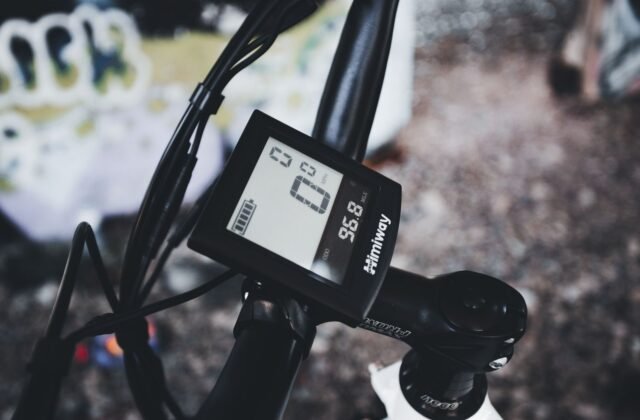
Before deciding a sensor is faulty, check the settings that decide how much assist you get. Level zero gives no assist at all, and a rider who knocked the level down by accident can mistake that for a sensor fault. On many bikes the display shows an error code when the sensor or its wiring fails.
What works
- Use a mid assist level for the test ride
- Check the display for an error code before touching the sensor
- Compare the assist on the same route, not one ride
- Start a ride at a known assist level
What to watch
- A blank display while the battery shows charge points to the display, not the sensor
- An error code that returns after a restart points to the sensor
- Do not ride with a display that changes assist by itself
When a fix needs a part or a replacement
Some sensor problems have a simple fix, and some need a part. A slipped disc can be refitted, a dirty sensor cleaned, and a loose connector pushed home. A sensor with a cracked housing or a cable damaged inside the frame cannot be fixed at home. When a part is needed, match it exactly: sensor type, magnet count and connector.
| Fix | Best use | Limit |
|---|---|---|
| Refit and centre the magnet disc | Late, jerky or missing assist | No help if the disc is cracked |
| Clean the sensor and disc | Intermittent assist after wet rides | No help if the sensor housing is cracked |
| Re-seat the connectors | Assist cuts out on bumps | Do not pull the cable |
| Replacement sensor | No assist after all checks | Must match type and magnet count |
| Professional diagnosis | Assist will not switch off | Do not open the motor; do not ride it |
What works
- Keep the manual with the bike
- Ask a shop to test a sensor before buying one
- After any fix, start with a short, low-assist ride
What to watch
- A sensor that only fits the plug is not proof it matches
- A second-hand sensor can carry the same fault
- Do not keep riding a bike whose assist will not switch off
The 12-magnet sensor below is the same type used in the site’s pedal assist guides.

The verdict
Most folding e-bike pedal assist sensor problems are fixed by refitting the magnet disc, lining the sensor up again, and checking the cable where the frame folds, not by buying a new sensor. When those checks fail, or the assist will not switch off, a qualified shop test is the right next step.
Readers also ask
Why does my folding e-bike have no pedal assist at all?
Check the assist level, disc, gap and connectors. A slipped disc, a sensor knocked out of line, or a loose connector will stop the assist.
Why is my pedal assist jerky or surging?
It often means the sensor reads the magnets unevenly. Check the disc is centred and flat, the gap is small and even, and the cable is not pinched.
Why does the assist stop working after I fold my e-bike?
Folding bends the cable at the hinge, and a cable folded many times can fail inside its sleeve. Check the cable run, and fold slowly so the cable is never trapped.
How do I know if my e-bike has a cadence sensor or a torque sensor?
Check your manual: a cadence sensor uses a magnet disc and a frame sensor, while a torque sensor sits at the bottom bracket.
Can I replace a pedal assist sensor myself?
A sensor on the outside of the frame with a plug connector is often a straightforward swap, if the replacement matches the type, connector and magnet count. If the cable runs inside the frame, get a shop to fit it.
Is it safe to ride if the assist will not switch off?
No. Switch the bike off at once and get it checked. A motor that keeps pushing after you stop pedalling is a fault.
Affiliate Disclosure: We may earn a commission when you buy through links on this site, at no extra cost to you.
Additional Details
Name: Folding E-Bike Pedal Assist Sensor: Common Problems and How to Solve Them
Description: Learn how to fix a folding e-bike pedal assist sensor: diagnose no assist, jerky power and cut-outs, and know when a sensor replacement is the right call.
Published: November 16, 2026