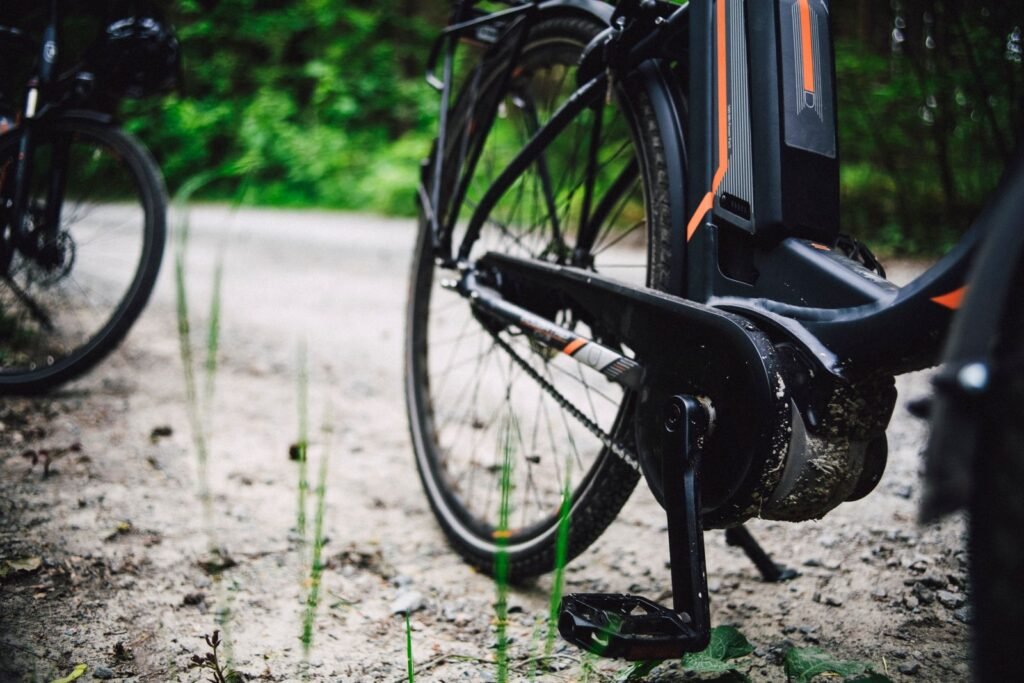
Straight answer: For long distance rides, a hybrid e-bike is the better buy for most riders. You pedal with the motor, so the battery lasts longer, the bike stays lighter, and you can still ride home if the charge runs low. A throttle e-bike wins only when pedalling is hard, or the ride is short, flat and close to a charger.
Introduction
A hybrid e-bike and a throttle e-bike look much the same on a shop floor. On a hybrid, the motor only helps while you pedal: upright position, flat bars, wider tyres and mounts for a rack and mudguards. On a throttle e-bike, a twist grip or thumb throttle drives the motor on its own, so the bike can move without any pedalling.
That difference matters most over distance. On a short ride, either bike will do. On a long ride, the battery, your legs and the weight of the bike all add up. The bike that shares the work usually covers more ground; the bike that does everything for you needs more charge, or a charging stop, to go as far.
This guide compares the two types for long distance rides. For the wider picture, start at the E-Bikes Hub, and compare the two shapes of e-bike power in the road e-bike vs throttle e-bike and hybrid e-bike vs hub motor e-bike guides.
Hybrid E-Bike vs Throttle E-Bike for Long Distance: The Comparison
The table compares what actually matters on a long ride.
| Attribute | Hybrid E-Bike | Throttle E-Bike | What to watch |
|---|---|---|---|
| Range per charge | Longer — pedalling shares the work | Shorter — the motor does all the work | Compare battery size and assist level, not watts |
| Rider effort | Steady pedalling, assist when needed | Little or no pedalling needed | Easier on knees and tired legs |
| Hills | Strong if you pedal and use low gears | Strong at first, then the battery drains faster | Long climbs drain throttle-only range fastest |
| Comfort and position | Upright, flat bars, wider tyres | Depends on the frame; many are heavy and hard to steer slowly | Test the position after an hour |
| Weight and carrying | Built for loads: rack, mudguards | Usually heavier, and hard to pedal home dead | Lift it, then ride it loaded |
| Battery and charging | Uses power steadily | Drains faster on throttle | Plan charging stops before you set off |
When the Answer Changes
The hybrid is the right answer for most long distance rides, but not every one. These variables flip the verdict.
- Your fitness and joints. If pedalling for hours is impossible or painful, a throttle e-bike wins, even on a long route.
- The route is flat and short. If the ride is under an hour, flat and close to a charger, the throttle’s shorter range stops mattering.
- Battery size. A large battery narrows the gap; a small one widens it. Compare battery size in watt-hours, not just motor power.
- Wind and hills. A headwind or a long climb drains any battery faster, and throttle-only riding suffers most.
- Local rules. Some places limit throttle use, motor power or speed on paths. Check the rules where you ride.
In short, the hybrid wins long distance because it stretches every charge. The throttle is the better tool when effort, not distance, is the limit. For the hybrid side, see the road e-bike vs hybrid e-bike comparison.
Test Both E-Bikes Before a Long Ride
Test both types on the same day, on a route like the one you plan.
- Ride each bike over your real route, with the same hills, rough patch and stops.
- Watch the battery at the start, halfway and at the end. If half the battery is gone at half the distance, the ride is too long for that setting.
- Ride with your bag or load; a bike that feels fine empty can feel very different loaded.
- Check your legs, hands and back after an hour. Note tired legs, sore knees and numb hands.
- Test the brakes and the way home. Brake firmly on a safe, empty stretch, then ride the last part with the assist off, as if the battery had died.
What a fail looks like
| Symptom | Cause | Fix |
|---|---|---|
| Battery half gone at half the distance | Too much throttle or too high an assist level | Use lower assist, pedal more, shorten the route |
| Legs give out halfway | Too high a gear or too low an assist level | Use a lower gear, raise the assist and take a break |
| Brakes feel weak on a descent | Pads or discs worn, or the bike too heavy for the brakes | Get the brakes checked before any long ride |
Myth: A throttle e-bike always goes further, because you do not have to pedal.
Fact: The motor does all the work on throttle, so the battery drains faster. Pedalling with assist shares the work, so a hybrid usually covers more distance per charge.
Before you test: Test on flat ground away from traffic first, and learn the brakes and assist levels before you join traffic. Wear a helmet, and check the battery and tyres.

A 26-inch hybrid-style e-bike with a 500W brushless motor, 20 MPH top speed, and up to 37 miles pedal-assist range.
How to Plan a Long Ride on Either E-Bike
Use this method before you pay, and before any long ride. It stops the most common mistake: planning on the full claimed range and running out of battery.
What you will need
- Your real route: distance, hills, rough patches and charging stops.
- A fully charged battery, and a charger or charging stop.
- A helmet, water, food and a basic repair kit.
The method
- Write down your route. Note distance, hills, rough patches and charging stops first.
- Split the ride into legs of about an hour, with a rest and a charging point at each break where possible.
- Start in a low assist level. Use the lowest assist that feels comfortable, and save the highest level and the throttle for hills.
- Check the battery at each stop, and compare it with the distance left.
- Keep a turnaround point. Decide in advance where you will turn back if the battery or your energy runs low, and stick to it.
- Leave a margin. Choose the bike and setting that leaves at least a quarter of the battery at the end.
Note: Claimed ranges are measured in easy conditions, with light pedalling on flat ground. Plan on about two-thirds of the claimed range, and less in hills, wind or cold.
E-bikes: Switch the power off before you work on the bike, and check the battery and your manual first. In the US, Class 3 models assist up to 28 mph; check yours.

Folds for storage, with a 1300W motor for easy starts without pedalling.
When the Damage Is Already Done
If you already bought the wrong one, do not write the bike off. Match the problem to the fix below.
- Battery runs out too soon: Ride in a lower assist level, pedal more, and plan shorter legs with a charging stop. If it still runs out, the battery is too small for your route.
- The bike is too heavy to lift or push home: Keep it on the ground floor, use a ramp, or ask for help with stairs.
- Your knees or back hurt: Raise the saddle, lower the assist, and take shorter rides with breaks. If pain keeps coming back, get a bike fit.
- The throttle feels too fast: Start in the lowest power mode, practise starting and stopping on a quiet road, and do not use full throttle until you can stop straight.
For a closer comparison, read the hybrid e-bike vs hub motor e-bike guide and the commuter e-bike vs hybrid e-bike guide.
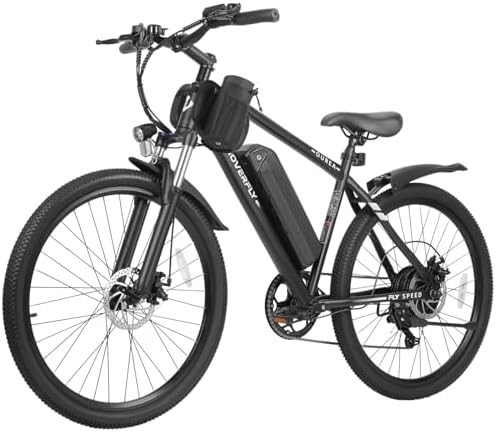
750W peak motor, up to 20 MPH and 40 miles per charge.
The Safe Alternative: Start with a Throttle E-Bike
If pedalling for hours is hard for you, the throttle e-bike is the safe alternative. It is the easier bike to start on, and it still gets you out on long, easy routes.
The method
- Choose a throttle e-bike in your size, with flat bars, wide tyres and rack mounts.
- Keep rides short and flat at first, close to a charger, and build up distance a little at a time.
- Start in the lowest power mode, practise starting and stopping on a quiet road, and learn the brakes first.
- Check the battery at every stop, and turn back while you still have at least a quarter of the battery left.
A throttle e-bike you ride every week beats a hybrid that stays in the hallway. For a closer comparison, read the electric mountain bike vs throttle e-bike guide.
What to Do Next, in Order
- Write down your usual route, distance, hills and charging stops.
- Test a hybrid e-bike and a throttle e-bike on that route with the five-step test.
- Compare battery left, weight and how your legs feel.
- Plan every long ride in legs, with a turnaround point and a quarter of the battery in reserve.
- Ride it for a month, then adjust the fit.
Never Do This
- Never buy on motor watts alone. Battery size, weight and assist level matter more.
- Never use full throttle on a first ride. Learn the brakes and balance first.
- Never plan a ride on the full claimed range. Plan on about two-thirds.
- Never ride without a helmet, lights and a lock.
- Never keep riding on a bike that hurts. Pain means the fit or type is wrong.
In short
For most long distance rides, a hybrid e-bike is better: it stretches the battery and can still be pedalled home when the charge runs low. A throttle e-bike wins only when pedalling is hard and the route is short, flat and close to a charger.
The essentials
- A hybrid e-bike wins on range, weight and control.
- A throttle e-bike wins when you cannot pedal, on short flat routes.
- Pedalling with assist shares the work, so the battery lasts longer.
- Plan on about two-thirds of the claimed range, less in hills, wind or cold.
- Leave a quarter of the battery in reserve.
- Test both on your real route, with your real load, before you buy.
More Questions, Answered
Is a hybrid e-bike better than a throttle e-bike for long distance?
Yes, for most riders. Pedalling with assist shares the work, so the battery lasts longer. A throttle e-bike is better only when pedalling is hard, on a short, flat route.
How far can a throttle e-bike go on one charge?
It depends on the battery, the assist level and the route. Throttle-only riding usually drains the battery faster than pedal assist, so plan on about two-thirds of the claimed range, and less in hills, wind or cold.
Can I pedal a throttle e-bike home if the battery runs out?
Most throttle e-bikes can still be pedalled, but they are usually heavy. A hybrid is lighter and easier to pedal without power.
Additional Details
Name: Hybrid E-Bike vs Throttle E-Bike: Which Is Better for Long distance rides?
Description: Hybrid e-bike vs throttle e-bike for long distance rides: compare range, comfort, hills and battery use, then test both on your real route before you buy.
Published: November 10, 2026