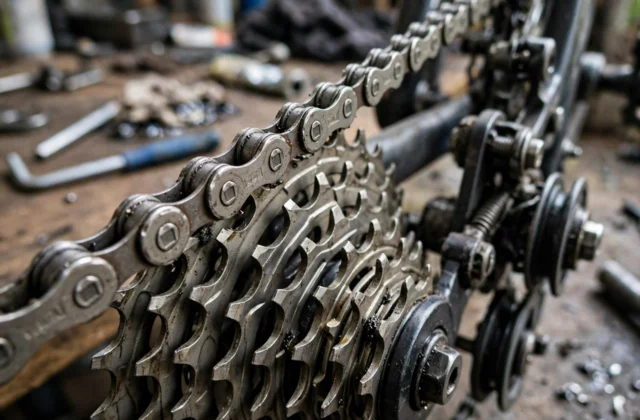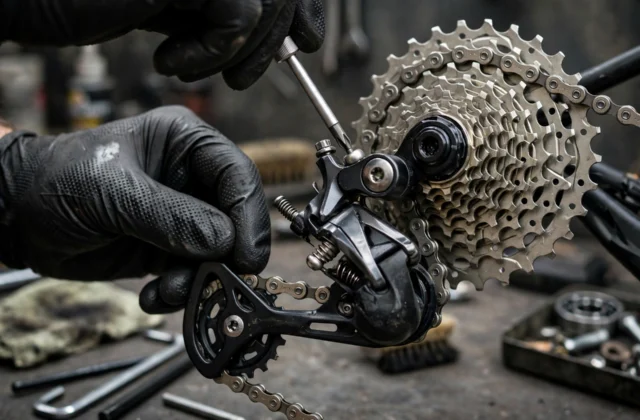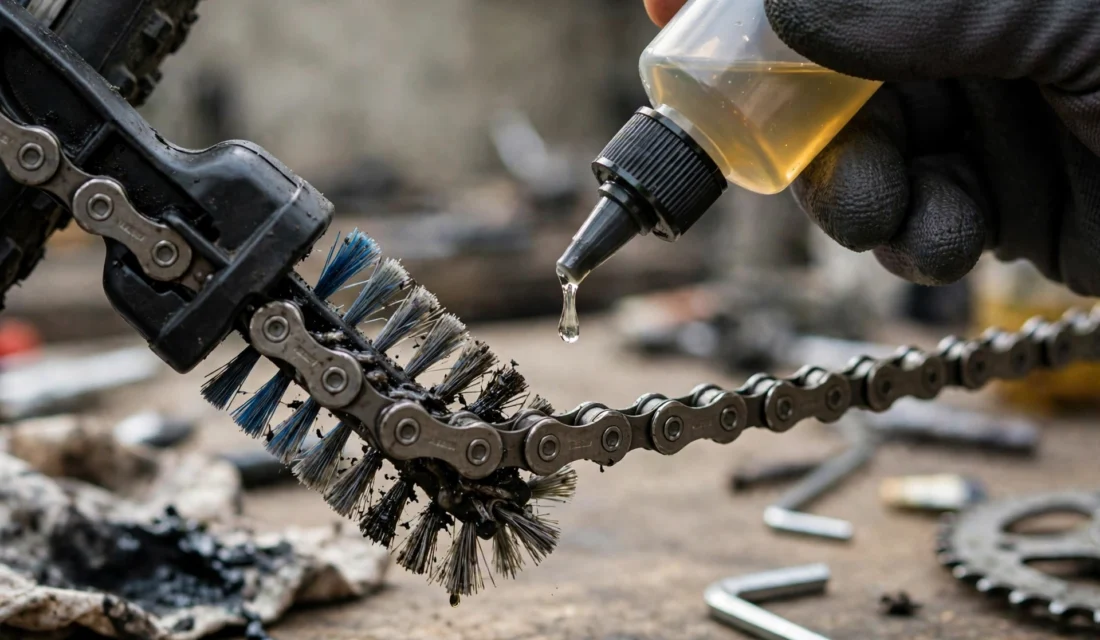
Short answer: Clean a bike chain by degreasing and brushing it, rinsing and drying it fully, then applying chain lubricant drop by drop to the inside of the chain and wiping off the excess. Never use a high-pressure washer on bearings, never lube a dirty chain without cleaning it first, and never leave a thick, dripping coat of lube on the outside, because it only attracts grit.
Introduction
A clean, well-lubricated chain is one of the cheapest ways to keep a bike feeling smooth, shifting cleanly, and lasting longer. Dirt and old oil form a grinding paste on chain rollers, chainrings, and cassette teeth, which wears parts faster and can make shifting noisy or hesitant. The good news is that chain care does not need special skill, only a routine, a few basic supplies, and care to keep cleaners and oil away from brakes and tyres. This guide covers a full clean and lube, a quicker wipe-down between full cleans, and how to tell when a chain needs more than cleaning. Follow your bike and chain instructions first, and switch an e-bike off before working near the wheel, chain, or motor cables.
When to clean, and how deep a clean to do
| Chain condition | What to do | Why |
|---|---|---|
| Light dust, quiet running | Quick wipe and top-up lube, as directed. | Keeps the chain protected without a full wash. |
| Dark, gritty, or noisy chain | Full clean: degrease, brush, rinse, dry, lube, wipe. | Removes grinding paste before it wears parts. |
| After rain, mud, or a wet commute | Wipe and dry, then lube once dry. | Prevents rust and keeps shifting smooth. |
| Stiff links, skipping, or heavy wear | Clean, inspect, and check wear; replace if needed. | Cleaning cannot fix a worn or damaged chain. |
There is no single cleaning interval that fits every rider, because rain, mud, dust, and riding distance all change it. Judge by look, sound, and feel, not by a calendar alone, and clean sooner after wet or muddy rides.
What you will need
| Item | Use |
|---|---|
| Bike-specific degreaser or chain cleaner | Loosens old oil and grit; follow its instructions. |
| Brushes: chain brush and a stiff brush | Clean between links, chainrings, and cassette teeth. |
| Clean rags, kept oil-free for wiping | Wipe the chain dry and remove excess lube. |
| Bucket of clean water or a gentle hose | Rinse after degreasing; avoid high pressure. |
| Chain lubricant suited to your conditions | Dry lube for dry, dusty riding; wet lube for wet riding, as a general guide. |
| Gloves and a stand, if you have one | Keep hands clean and let the pedals turn freely. |
Step 1: Prepare the bike and protect the brakes
- Put the bike in a stand, or upside down on a soft surface only if your bike allows it, so the pedals can turn freely.
- Switch an e-bike off, and keep motor cables clear of brushes and rags.
- Cover disc brake rotors and pads, or at least keep all cleaners and oils well away from them. A contaminated brake is a safety problem, not a cleaning shortcut.
- Shift to a gear that lets the chain run freely, and check that the chain is not twisted, jammed, or damaged before you start.
Step 2: Degrease and brush the chain
- Apply degreaser to the chain as directed, working in short sections.
- Back-pedal slowly and brush the top, bottom, and sides of the chain, plus the chainring teeth and cassette teeth.
- For a very dirty chain, repeat with a fresh brush pass rather than flooding the chain with more cleaner.
- Do not use a high-pressure washer. It can force water and grit into bearings, the bottom bracket, and hubs.
- Check for stiff links as you brush: a link that stays bent or kinks as it passes the chainring needs attention or replacement.


Step 3: Rinse and dry fully
- Rinse with clean water, using a gentle flow, until the water runs clear and no degreaser remains.
- Wipe the chain with a clean rag, back-pedalling slowly, until it feels dry to the touch.
- Let the chain air-dry fully before lubricating. Lubing a wet chain traps water inside the rollers and washes lube off.
- While it dries, wipe the chainrings, cassette, and derailleur pulleys, and check for bent teeth or a worn, hooked tooth shape.
Do not skip drying. A chain that looks clean but is still wet inside will rust faster and will not hold lubricant properly.
Step 4: Lubricate drop by drop
- Shake the lubricant bottle if its instructions tell you to, and apply one small drop to each roller, on the inside of the chain, while back-pedalling slowly.
- Work around the full chain, then keep back-pedalling for a short while so the lube can work into the rollers.
- Let the lube settle for the time your product instructions advise, so it can reach inside the links.
- Wipe the outside of the chain thoroughly with a clean rag. The outside should feel only slightly oily, not wet or dripping.
- Do not spray lube all over the chain, cassette, and frame. Excess lube on the outside only collects grit and flings onto wheels and brakes.
| Lube choice, as a general guide | Good for | Watch out for |
|---|---|---|
| Dry lube | Dry, dusty conditions; stays cleaner. | Washes off faster in rain; needs more frequent top-ups. |
| Wet lube | Rain and mud; lasts longer when wet. | Attracts more grit in dry dust; wipe excess well. |
| Wax-based lube | Clean running in dry conditions, when applied to a clean chain. | Needs a very clean chain first, and regular reapplication. |
Step 5: Test, and check for wear
- Pedal by hand through all gears, slowly, and check that shifting is smooth and the chain does not skip, catch, or rub.
- Listen: a quiet, even chain sound is normal; a constant clicking, grinding, or squeak after lubing points to wear, a stiff link, or a derailleur problem.
- Check chain wear with a chain checker or a repairer’s gauge if you have one. A worn chain wears chainrings and cassettes faster, so replace it before it damages them.
- Take a short, slow test ride in a safe area, shifting through the gears, before a longer ride.
Quick clean between full cleans
- Wipe the chain with a clean rag while back-pedalling, until most surface grit is off.
- Apply a small top-up of lube to the inside of the chain, let it settle, and wipe the outside again.
- Do not top up a very dirty chain again and again without a full clean; you will only build up gritty paste.
Common problems after cleaning
Even a careful clean can reveal a problem that was hidden under grime, or leave the chain feeling worse if a step was rushed. Use this table before adding more lubricant or repeating the whole wash.
| Problem after cleaning | Likely cause | Fix |
|---|---|---|
| Chain feels dry and noisy | Lube wiped off too soon, or not enough reached the rollers. | Lube again drop by drop, let it settle, then wipe only the outside. |
| Chain looks black again quickly | Too much lube left on the outside, attracting dust. | Wipe thoroughly with a clean rag and ride briefly, then wipe again. |
| Skipping in one gear | Worn chain or cassette, or a derailleur adjustment problem. | Check wear and derailleur alignment, or get a repairer’s check. |
| Rust spots appear | Chain stored wet, or lubed before it was fully dry. | Clean, dry fully, lube, and store the bike dry. |
| Brakes feel weak after cleaning | Cleaner or lube reached a rotor or rim. | Do not ride in traffic; clean the braking surface as directed or get a repairer’s check. |
Keep a short note of when you cleaned the chain, what lubricant you used, and any wear you found. That record makes the next clean faster, and it helps a repairer spot a pattern, such as a chain that wears quickly because of a bent derailleur hanger or a worn cassette.
For more repair help, see the Parts, Maintenance and Fixing Hub, browse the Frame category, and read the live guides E-Bike Chain Keeps Slipping and How to Fix a Flat Tyre on the Road.
Frequently asked questions
How often should I clean my bike chain?
Judge by condition, not by a fixed calendar. Clean sooner after rain, mud, or dusty rides, and whenever the chain looks dark, feels gritty, or sounds noisy. A quick wipe and top-up between full cleans keeps it protected.
Can I use household oil or spray lubricant on a chain?
Use a lubricant made for bike chains. Household oils and general sprays may not stay in the rollers, may attract grit, or may reach brakes and tyres. Follow your chain and lubricant instructions.
Should I remove the chain to clean it?
Most routine cleans can be done on the bike with brushes and rags. Removing a chain needs the correct tool and, for some chains, a new connecting link, so only remove it if you are confident doing so safely.
Why does my chain still squeak after lubing?
A squeak after lubing can mean the chain was not fully dry, lube did not reach the rollers, a link is stiff, or the chain is worn. Clean again properly, check for stiff links, and check wear before adding more lube.
Can I clean a chain with a pressure washer?
No. High pressure can force water and grit into bearings, hubs, and the bottom bracket, and it can spray cleaner onto brakes. Use a gentle rinse and brushes instead.
When should a chain be replaced instead of cleaned?
Replace a chain that is worn beyond its limit, has stiff or damaged links, skips after cleaning and adjustment, or has visible cracks or severe rust. A repairer can measure wear if you are unsure.