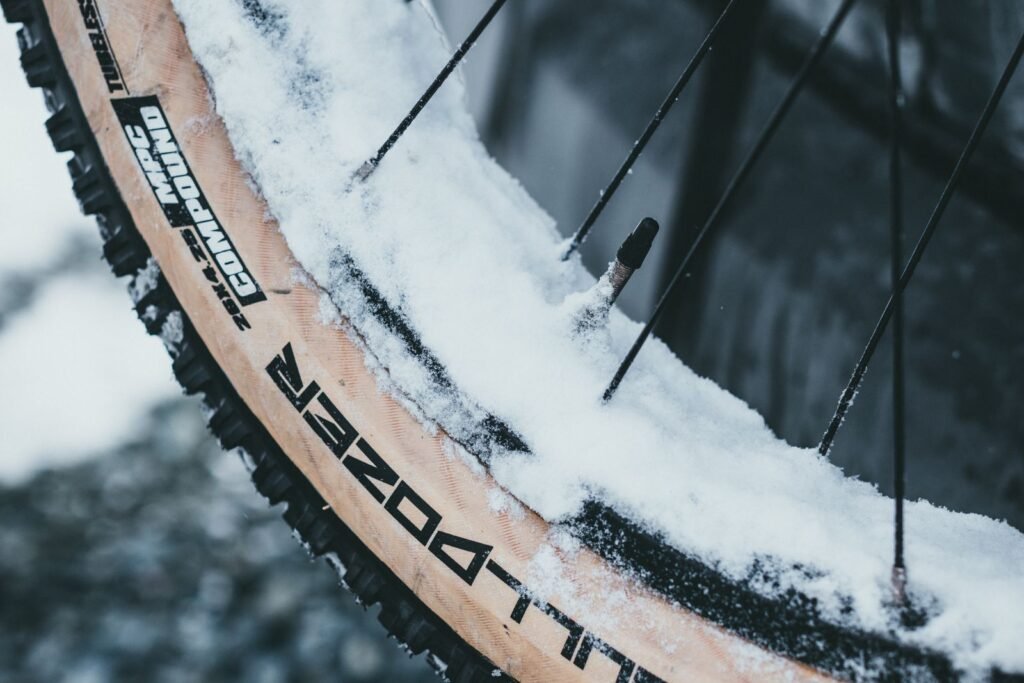
Straight answer: For winter, a hybrid e-bike is better for most riders. Its wider tyres, upright position and steadier frame give more grip and control on snow, slush and ice, and it has room for the mudguards and rack that winter riding needs. A lightweight e-bike wins only when you carry the bike often, store it indoors, or ride mostly on cleared roads.
Winter changes what matters. Speed and range matter less than staying upright and getting home. The hybrid’s extra weight, which counts against it in summer, helps it track straight through slush. The lightweight bike’s advantage is the opposite: less weight to lift, push and control when the surface turns bad.
Introduction
A hybrid e-bike is built for everyday riding: an upright position, medium-to-wide tyres and a frame made to take mudguards, a rack and lights. A lightweight e-bike is built to be light: a slim frame, a small motor and a small battery, made to be carried and ridden with the motor off.
Winter tests both designs at their weakest points. Snow and slush punish narrow tyres, ice punishes a twitchy frame, and cold saps a battery. This article compares the two as you will actually ride them in winter: cold starts, unplowed lanes, slushy roads and dark evenings. For the wider picture, start with the E-Bikes Hub. If your winter route is mostly commuting, also read our hybrid e-bike vs hub motor e-bike guide.
Hybrid E-Bike vs Lightweight E-Bike: The Core Comparison
The table compares the typical hybrid and lightweight e-bikes for winter riding. Neither side is a single model; check the frame, tyres and battery before you buy.
| Attribute | Hybrid E-Bike | Lightweight E-Bike | What to Watch |
|---|---|---|---|
| What it is | Upright frame, medium-to-wide tyres, built for mixed riding | Slim frame, small motor and battery, built to be carried | Check the frame, not the badge |
| Grip on snow and slush | Wider tyres hold a line | Narrow tyres cut through slush but slip sooner | Look at tyre width and tread |
| Weight and lifting | Heavy to lift over snow banks | Light, easy to lift and carry | Lift it with your winter kit on |
| Battery in the cold | Bigger battery, so cold hurts less | Small battery, so the same drop takes more of the range | Check the battery size in Wh |
| Winter kit | Fittings for mudguards and rack | Often no rack or mudguard mounts | Check the mounts, not the spec sheet |
| Best for winter | Regular riding on snow, slush and wet roads | Cleared roads, stairs, indoor storage and short trips | Buy for your worst winter day |

When the Answer Changes
The hybrid wins most winter tests, but not every one.
- Your roads are cleared quickly. Gritted, plowed lanes suit the lightweight bike; the hybrid’s grip is wasted there.
- You carry the bike upstairs or store it indoors. A light bike you can carry beats a heavy one you dread lifting through a doorway in wet boots.
- Your route is long and unplowed. Wider tyres and a bigger battery handle deep slush better than a light build.
- Your battery runs out before home. A lightweight bike still pedals like a normal bike; a heavy hybrid with a flat battery is hard work in snow.
- You ride at night as well as in snow. The hybrid’s mudguards, lights and rack matter more than weight on dark winter evenings.
- Your winter is mild. If snow is rare, the daily-use verdict applies — see our road e-bike vs lightweight e-bike guide for cleared-road riding.
Test Both Types on the Same Winter Route
Test both types on the same winter route before you buy.
- Pick your winter route. Choose the route you ride most in winter, with its worst section of snow or slush.
- Ride it in winter clothing, with your usual bag. The extra layers and load change how the bike handles.
- Start from a stop on a snowy patch. Note which bike pulls away without the wheel spinning.
- Brake gently on a slippery stretch. Note which bike stops straight and which slides.
- Ride the same loop with the motor off. The bike you can still pedal gets you home with a flat battery.
- Carry the bike up your steps and into your storage. If it is not easy, it is the wrong bike for winter.
What a fail looks like
| Symptom | Cause | Fix |
|---|---|---|
| Wheel spins when you pull away | Too much power, or a tyre too narrow for snow | Use the lowest assist and a lower gear; fit wider tyres |
| Bike slides under braking | Braking too hard on ice or slush | Brake early and gently, in a straight line |
| Battery dies before home | Cold and a small battery | Lower the assist and charge the battery indoors |
| Mud and slush soak your back and legs | No mudguards fitted | Fit full mudguards |
Myth: A lightweight e-bike is always better in winter because it is easier to control.
Fact: Light helps only when you lift or push the bike. On snow and slush, the hybrid’s wider tyres and steadier frame give more grip, which is what keeps you upright.
Before you test: Test on a quiet road away from traffic, wear a helmet and winter gloves, and check both brakes and the tyre pressure first. If the road is icy, walk the test route first. Never test a bike on black ice you have not seen in daylight.

The Method: How to Set Up Either Bike for Winter
The test shows which bike suits your winter. Here is how to set up either type.
What You Will Need
- A helmet, gloves and lights
- A strong lock
- A pump and a spare tube
- Mudguards and a rack
- Wet-weather chain lube and a multi-tool
- A dry place to charge the battery indoors
The Method
- Fit full mudguards and check the lights before the first snow, and carry a spare light.
- Lower the tyre pressure a little for snow and slush, staying inside the range printed on the sidewall, and check it weekly.
- Set the saddle and bars for an upright, relaxed position, so you can put a foot down quickly on ice.
- Use the lowest assist that moves you. High assist spins the wheel on snow; low assist and steady pedalling keep grip.
- Clean and lube the chain after wet, salty rides, and wipe down the brakes and battery contacts.
- Charge and store the battery indoors, at room temperature, and never leave it flat for weeks.
Note: A hybrid and a lightweight e-bike can share one motor type. The motor is a separate choice from the frame. Our hybrid e-bike vs mid-drive e-bike guide explains that split.
Warning: Never ride with a loose rack, bag or pannier in winter. A load that moves can throw the bike off balance on ice. Never wash the motor or battery area with a pressure washer.
When the Damage Is Already Done
If you already bought the wrong one, do not write the bike off.
- Hybrid too heavy to carry. Keep the load light, walk the worst steps, or store the bike at ground level.
- Lightweight bike slips on snow. Fit the widest, grippiest tyres your frame allows, lower the pressure a little, and use the lowest assist. If it still slips on your route, the bike is not matched to your winter.
- Battery runs out in the cold. Lower the assist on flat ground, charge the battery indoors before you ride, and plan a shorter route. If the range still fails, the battery is too small for your winter.
- Brakes feel weak in slush. Clean the rims or discs and pads after salty rides, and have them checked. If braking stays poor, read our disc brake vs rim brake guide for wet weather.
The Safe Alternative: Start With a Lightweight E-Bike
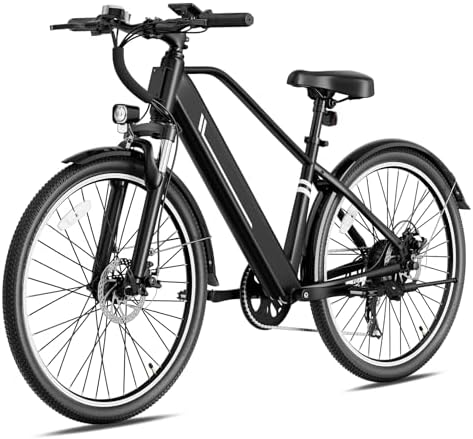
If the hybrid wins for your winter but costs too much, a lightweight e-bike is a sound alternative.
- Choose a lightweight e-bike with the widest tyres its frame allows. Tyre width matters more than motor power in snow.
- Fit mudguards and lights, and add a rack only if the frame has mounts.
- Test it on your winter route, with your usual bag, and carry it up your steps. If it feels easy, it is your answer.
- Keep the battery charged indoors, ride on low assist, and plan your route around the worst snow, not through it.
What to Do Next, in Order
- Ride your winter route and note snow, slush, ice and stairs.
- Test both bikes on that route, with your usual bag and winter clothing.
- Choose the side that fits your worst winter day: grip and range, or lifting and storage.
- Check the tyres, battery size and mudguard mounts before you pay, not watts alone.
- Add the mudguards, lights and lock to the price, then buy the bike that fits your winter.
Never Do This When Riding an E-Bike in Winter
- Never ride on black ice you have not checked.
- Never use full assist from a stop on snow. It spins the wheel and digs the tyre in.
- Never brake hard on ice. Brake early and gently, in a straight line.
- Never leave the battery flat in the cold. Charge it indoors and store it dry.
- Never ride without checking the brakes in winter. Salt and slush wear brakes faster than dry roads.
In Short
For winter, a hybrid e-bike is better for most riders: wider tyres, a steadier frame and room for mudguards give it grip on snow and slush. A lightweight e-bike wins only if you carry it often or ride mostly on cleared roads.
The Essentials
- Hybrid wins in winter: wider tyres and a steadier frame grip snow and slush.
- Lightweight wins when you carry the bike, store it indoors or ride cleared roads.
- Cold saps batteries; a bigger battery and indoor charging protect your range.
- Grip matters more than power in snow; low assist keeps the wheel turning.
- If your bike slips, fit wider tyres — or change to the hybrid.
More Questions, Answered
Is a hybrid e-bike better than a lightweight e-bike in winter?
Yes, for most winter riding. The hybrid’s wider tyres and steadier frame give more grip on snow and slush.
Can a lightweight e-bike handle snow?
It can handle light snow and cleared roads, especially with the widest tyres the frame allows and a low assist level. For regular snow and slush, the hybrid is the safer choice — see our road e-bike vs hub motor e-bike winter guide.
Do e-bike batteries lose range in winter?
Yes. Cold slows the battery, so range drops. Charge it indoors and use a lower assist level.
What should I test before buying either one for winter?
Ride your real winter route, start on snow, brake on a slippery stretch, ride with the motor off, and carry the bike up your steps. The bike that passes is the one to buy.
Additional Details
Name: Hybrid E-Bike vs Lightweight E-Bike: Which Is Better for Winter?
Description: Hybrid e-bike vs lightweight e-bike: which is better for winter? Compare grip, weight, battery and cold-weather control on snow, slush and ice before you buy.
Published: November 10, 2026
Affiliate Disclosure: We may earn a commission when you buy through links on this site, at no extra cost to you.