For most beginners, a commuter e-bike is the better first buy — if your riding is mainly a paved daily trip. It arrives ready for the road: a rack, fenders, and lights are already fitted, and the upright position makes traffic easier to read. A hybrid e-bike is the better pick when your regular routes mix paved roads with packed gravel or smooth dirt, because its medium-width tires and relaxed gearing stay comfortable on both. The real question is not which bike is better in general. It is where you will ride on most days.
That distinction matters because both bikes have motors. A hybrid e-bike is not a regular pedal bike — it is an electric bike built on a hybrid frame. The difference is purpose and equipment, not power. Choose the one that matches your everyday route, and the bike feels easy from the first week.
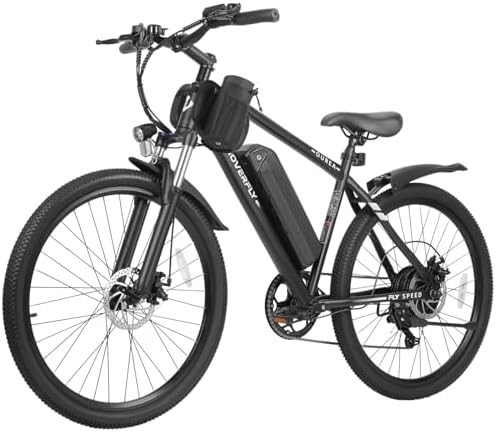
A commuter e-bike is built for one job: getting you to work, school, or the shops and back, day after day, in normal clothes. The frame is upright, the tires roll quietly on pavement, and the extras you need for daily riding — rack, fenders, lights, and often a kickstand — are part of the bike, not add-ons to research later. For a beginner, that matters more than any single specification.
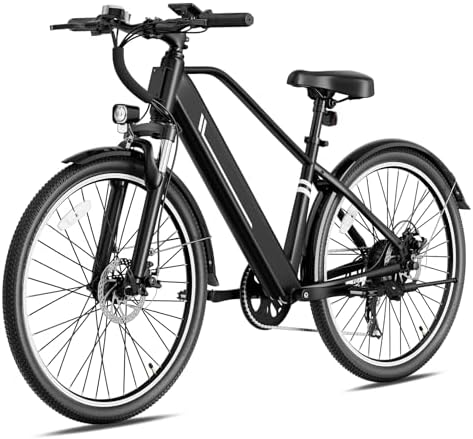
A hybrid e-bike blends a road bike’s efficiency with a mountain bike’s comfort. It has flat handlebars, an upright position, and tires that are wider than a road bike’s but narrower than a mountain bike’s. On pavement it is quick and easy to handle; on a packed gravel path it stays steady where a slim road tire would feel nervous. If your riding is a mix — road to the park, then a gravel trail — a hybrid is made for that blend.
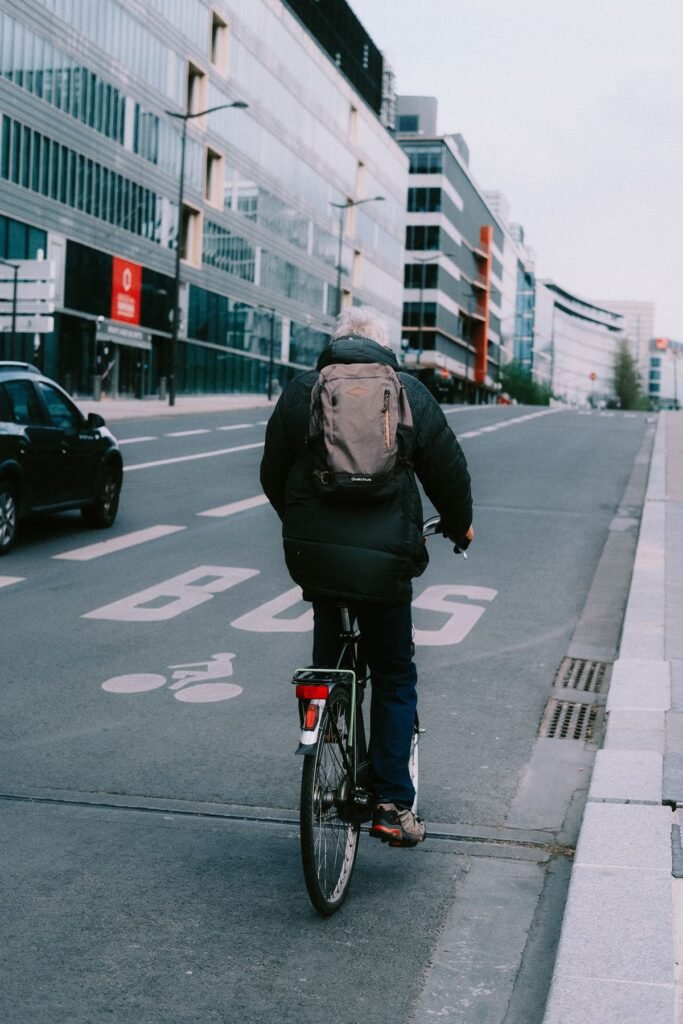
Commuter E-Bike vs Hybrid E-Bike: The Core Differences
On paper the two look alike: flat bars, upright position, electric assist.
| Attribute | Commuter E-Bike | Hybrid E-Bike | What to Watch |
|---|---|---|---|
| Best for | Daily paved trips in traffic | Mixed paved and packed-gravel riding | If your ride is almost all pavement, the commuter wins |
| Riding position | Upright, often with swept-back bars | Upright, slightly more forward | Pick the position that lets you see over traffic |
| Tires | Smooth and quiet on pavement | Medium-width with light tread | Slim tires feel fast but slip on loose gravel |
| Built-in gear | Rack, fenders, lights, kickstand usually included | Often sold without rack, fenders, or lights | Add the cost of missing extras before comparing prices |
| Gearing | Tuned for steady speed on flat roads | Wider range for hills and mixed surfaces | Test the lowest gear on your steepest hill |
| Weight | Heavier, because of the fitted kit | Usually lighter at the same motor class | If you must carry it up stairs, check the weight first |
| Comfort | Wide saddle and upright bars on many models | Comfort comes from tire volume and position | Sit on both for at least 10 minutes before deciding |
| Maintenance | Fenders and chain guard keep things cleaner | More cleaning after gravel or wet trails | Check how easy the wheels are to remove and refit |
When the Answer Changes
The commuter wins the default case. These five situations flip it.
- Your route is half gravel. If a regular ride leaves the pavement for a canal path, park trail, or packed dirt road, the hybrid’s tires and gearing earn their keep.
- You ride in rain often. A commuter’s full fenders, chain guard, and lights matter most in wet weather. If your hybrid lacks them, add them before your first wet week — or choose the commuter. Good brakes matter in the rain too; see Disc Brake vs Rim Brake: Which Is Better After Rain? before you decide.
- You carry loads. A commuter’s rack is made for daily bags, and many models take a child seat or panniers without fuss. A hybrid can do the same work, but only if it has proper rack mounts — check for them, not just a rack held on with clamps.
- Your commute is long and hilly. Assist takes the edge off either way, but the hybrid’s wider gear range helps on mixed climbs.
- You store the bike upstairs. A commuter’s fitted kit adds weight. If you carry the bike up steps every day, a lighter hybrid — or removing the battery before lifting — makes a real difference.
The 20-Minute Beginner Test
You do not need a full day to tell these bikes apart. Ride each one for 20 minutes on your real route.
- Set the assist to the lowest level. If the bike still feels natural with little help, the fit and gearing are right.
- Ride your real route, not the shop street. Include your worst hill, your worst junction, and your worst surface.
- Stop and start three times. Traffic lights and junctions are where beginners wobble. Put a foot down, restart, and turn across a quiet junction. It should feel steady, not rushed.
- Climb your steepest hill. Stay seated, use the lowest gear, and raise the assist one step at a time.
- Turn in a tight space. A U-turn in a narrow street shows whether the bars, weight, and steering suit you.
- Carry the bike for 30 seconds. Lift it over a kerb or up a few steps, with the battery in.
What a Fail Looks Like
- Legs spinning fast but speed stays low — gearing too low for your pace — try a higher assist level.
- Hands or wrists ache within 10 minutes — bars too low or too far away — raise the stem or choose a more upright frame.
- Tires slip on a gravel corner — tread too smooth for your route — move to a hybrid tire with light tread.
- You feel pushed around by wind or passing traffic — position too stretched or tires too narrow — shorten the reach or pick the commuter’s swept bars.
- Starting from a stop feels jerky — assist kicks in too hard — lower the starting assist level and practice on a quiet street.
Myth: A hybrid e-bike is just a commuter e-bike without a rack.
Fact: The frame, tires, and gearing are tuned for different ground. A rack does not turn one into the other.
Myth: More assist levels mean a better bike.
Fact: Smooth, predictable assist matters more than the number of levels. Test the lowest level first.
Before you test: wear a helmet, check brakes and tire pressure, and start on a quiet street. If brakes feel soft or a tire is flat, do not ride — ask the shop to fix it first.
The Method: How to Choose in One Afternoon
Do this once, in order, and you will not need to research for weeks.
What You Will Need
- Your three most common rides, written down — where they start, where they end, and what the surface is.
- A helmet and the shoes you actually ride in.
- A phone, to note what each bike felt like while it is fresh.
- A tape measure, to compare saddle height and reach between models.
- One shop that lets you test ride both types on a real road.
The Method
- Write down your three regular rides. A commute, a shop run, and a weekend ride cover nearly everything. Note the surface of each.
- Count the paved share. If more than four rides in five are on pavement, start with a commuter. If gravel appears most weeks, start with a hybrid.
- Test ride both types. Ride the same 20-minute route on each.
- Score comfort, control, and confidence. Give each bike a simple score out of 10 for each.
- Add the extras to the price. If a bike needs a rack, fenders, and lights, add their cost.
- Check the mounts and the weight. Look for proper rack and fender mounts, lift the bike once with the battery in.
Note: Run the test on the route you will actually ride.
When the Damage Is Already Done
Bought the wrong one? Most mismatches are fixable without selling the bike.
- You bought a commuter but ride gravel every weekend. Fit the widest tires the frame and fenders allow, run the pressure slightly lower.
- You bought a hybrid but commute daily. Add a proper rack, full fenders, and good front and rear lights.
- Your hands go numb. Raise the bars, fit wider grips, and check that you are not leaning on locked elbows.

The Safe Alternative: Start With a Hybrid E-Bike
If you are still unsure after the test, a hybrid e-bike is the safer first buy. It commutes on pavement during the week and takes a gravel path at the weekend without a tire change. You give up the commuter’s ready-fitted kit, but you keep your options open. Riders who mostly carry loads may still prefer the commuter route; see Commuter E-Bike vs Cargo E-Bike if carrying is your main job.
- Pick a hybrid with rack and fender mounts. Mounts are cheap at the factory and awkward to add later.
- Fit medium-width tires with light tread. They roll well on pavement and grip packed gravel.
- Add a rack, fenders, lights, and a lock. These turn a weekend bike into a weekday commuter. If you want tested options, see 5 Commuter Ebikes That Are Actually Worth the Money in 2025.
What to Do Next, in Order
- Map your three regular rides and note the surface of each.
- Decide: mostly pavement means commuter, regular gravel means hybrid.
- Test ride both types for 20 minutes on your real route.
- Add the cost of rack, fenders, and lights to any bike that lacks them.
- Buy the bike, then fit lights, a lock, and a helmet.
Never Do This
- Never buy without a test ride on your own route.
- Never choose by top speed alone. Comfort and control matter every day; top speed matters for seconds.
- Never ride new without a helmet and lights. Visibility and protection are not optional extras.
- Never buy a bike you cannot lift. If you cannot carry it up your steps, you will dread it at home.
In Short
For most beginners, the commuter e-bike is the better first buy for a paved daily trip, because it arrives with the rack, fenders, and lights that daily riding needs. The hybrid e-bike is the better first buy when your routes mix pavement with packed gravel, and it is the safer choice if you are still unsure what kind of rider you are.
The Essentials
- A commuter e-bike suits paved daily trips; a hybrid e-bike suits mixed paved and gravel routes.
- Both are electric — the difference is purpose and fitted equipment, not power.
- Test both for 20 minutes on your real route before buying.
- If unsure, start with a hybrid.
More Questions, Answered
Is a hybrid e-bike good for commuting?
Yes, once it has a rack, fenders, and lights. Without them it is a weekend bike doing a weekday job.
Can a commuter e-bike go on gravel?
It can handle a short smooth packed path, but loose gravel is not its ground. For regular gravel, choose the hybrid.
Do I need a rack and fenders?
For daily riding, yes. A rack keeps weight off your back, and fenders keep road spray off you and the bike.
Additional Details
- Name: Commuter E-Bike vs Hybrid E-Bike: Which Is Better for Beginners?
- Description: Commuter e-bike vs hybrid e-bike: which is better for beginners? Compare comfort, tires, gear and range, then run the 20-minute test before you buy now.
- Published: November 9, 2026