Part of our guide on E-Bikes.
A step-through e-bike motor problem usually shows up at the worst moment: the assist fades on a hill, the motor hums but the bike barely moves, or the power cuts out halfway to work. Most faults are not a dead motor. They are usually a low battery, a dirty pedal sensor, or a loose motor cable.
This guide shows how to look after a step-through e-bike motor in a safe order, from the checks that take two minutes to the point where a part is the right answer. It covers hub motors and mid-drive motors. For a standard commuter frame, read Commuter E-Bike Motor Care Guide for Beginners; for off-road use, read Electric Mountain Bike Motor Care Guide for Beginners.
Quick facts
| Fact | What it means for your ride |
|---|---|
| Problem this guide fixes | A step-through e-bike motor that gives weak, noisy, uneven or no assist |
| Check first | The battery charge, the display, the pedal sensor, the motor cable and the rear wheel |
| Most common causes | A low battery, a dirty sensor, a loose cable, dragging brakes or soft tyres |
| Tools you need | Your manual, the correct charger, a dry cloth, a pump and Allen keys |
| Stop and get help | Grinding, a burning smell, smoke, or a very hot motor casing |
| Related guides | Commuter E-Bike Motor Care Guide for Beginners, Electric Mountain Bike Motor Care Guide for Beginners |
Quick recap
- Start with the battery, the display, the pedal sensor and the motor cable.
- No assist is often a battery, sensor or cable problem, not a worn-out motor.
- Weak assist on hills, with a heavy load or in cold weather, is often normal.
- Only ride with a battery that is charged, seated and locked.
- Stop at once if the motor grinds, smells hot or smokes.
- When a fix needs a part, match the motor and connectors exactly, and leave motor repairs to a qualified shop.
The short answer: check the battery, the sensor and the cable before you blame the motor
Most step-through e-bike motor problems are not a dead motor. Weak, noisy or uneven assist is far more likely to come from a low battery, a dirty pedal sensor, or a loose cable than from a motor that failed without warning.
The symptoms overlap: a loose cable can cut power on bumps and look like a dying motor, a dirty sensor can delay the assist, and a cold battery can cut the power on a healthy motor.
The rest of this guide follows that rule: diagnosis finds the fault, the reference section matches symptoms to causes, and the later sections cover load, weather and settings.
How to check a step-through e-bike motor, step by step
Work through these steps in order, and note when the fault happens.
- Check the battery charge first. Read the level on the display and the battery, and charge fully before you judge the motor.
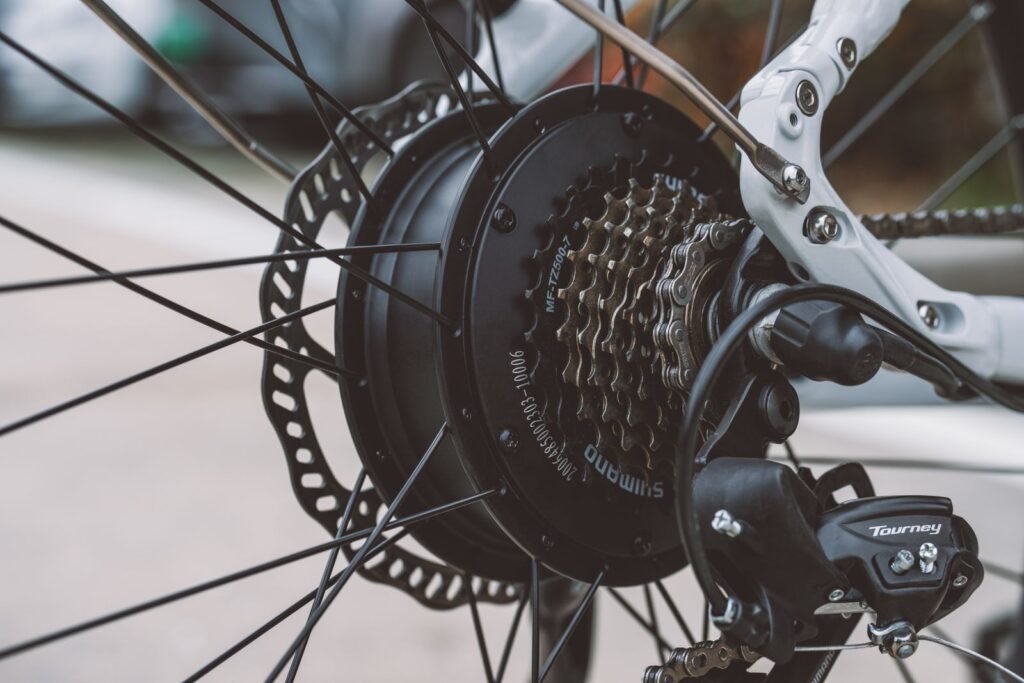
- Listen to the motor on a short ride. On a flat road on low assist, a healthy motor hums quietly; grinding means get a shop test.
- Look at the motor cable and connectors. Follow the cable from the motor, check for cuts or damp, and push each connector home.
- Check the pedal sensor. Find the sensor ring near the pedals and wipe it clean with a dry cloth.
- Spin the rear wheel by hand. It should turn freely, with no grinding, wobble or drag.
- Check the brakes and tyres. Make sure neither brake rubs, and pump the tyres to the sidewall pressure.
- Ride a short test route on low assist. Note whether the fault happens on bumps, hills, or a nearly empty battery.
If every step looks normal, get a shop to test the motor, sensor and battery.
What you’ll need
- Your manual or motor label, for the motor type and wheel size
- The original charger, or an exact replacement
- A dry cloth, and a clean, dry place to work
- A pump; soft tyres waste motor power
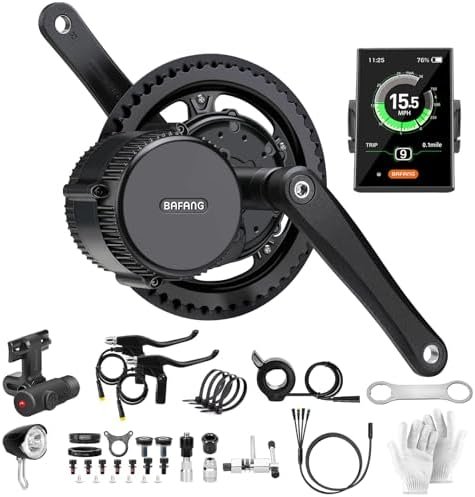
One Amazon product in this section only: the mid-drive motor kit below is for a matching bike. Only use it if it matches your frame and bottom bracket.
What the symptom usually means
Match what you notice with what to try first. If the motor shows any sign of damage, skip the table and get qualified help.
| Situation | What you’ll notice | What to try |
|---|---|---|
| No assist | Display on, pedals turn, no push | Check charge, refit battery, clean sensor |
| Weak on hills | Motor hums, bike slows on slopes | Charge fully, check tyres and brakes |
| Assist comes and goes | Power cuts on bumps | Push connectors home, refit battery |
| Noisy or grinding | Rattling or grinding under load | Stop riding, get a shop test |
| Assist starts late | Several pedal turns before the motor joins in | Clean sensor, check its gap |
| Cuts out when battery is low | Power stops with bars still showing | Charge fully, test the battery |
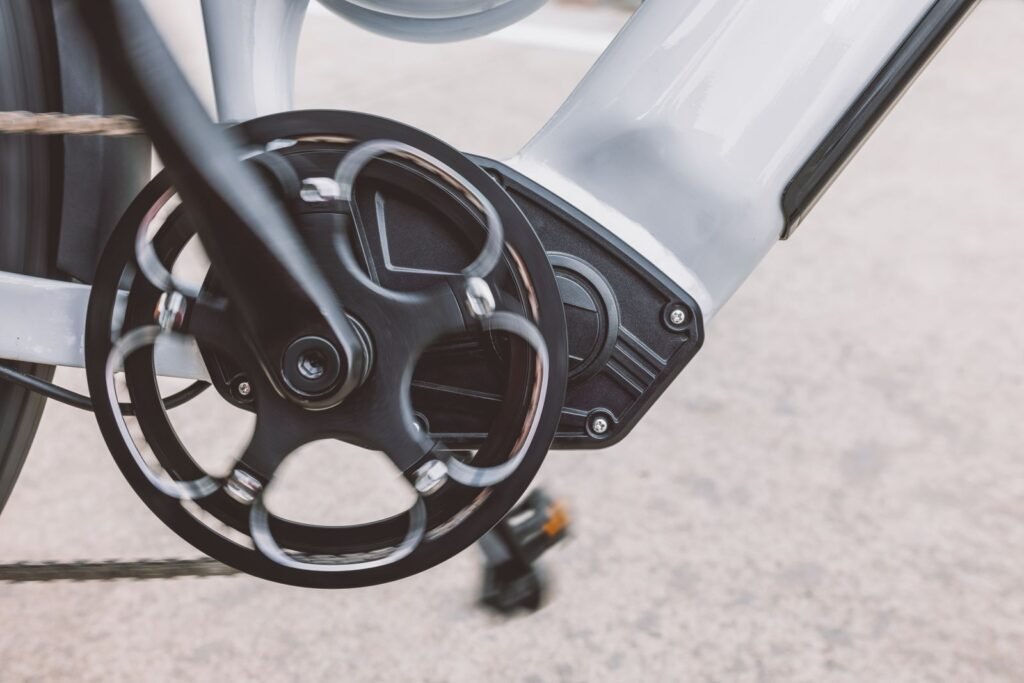
The step-through e-bike below is the kind of low-step bike this guide is written for.

How load, hills and weather change the answer
The same motor can feel different on a steep hill, with a full shopping load, or on a cold morning. A step-through e-bike often carries shopping, a child seat, or a heavy lock. Judge the motor on a flat road, with a full battery. For cold-weather batteries, read How to Fix Commuter E-Bike Battery Problems.
Cold matters too: a battery left in a cold garage gives the motor less power until it warms up.
What works
- Test the motor on a flat road, with a full battery and an empty rack
- Bring the battery indoors to warm up before charging
- Use a lower gear on steep hills, and let the motor cool after a climb
What to watch
- Do not judge motor health from one cold ride or one steep hill alone
- Do not keep riding a motor that gets very hot or smells strange after a climb
- Do not leave a battery in a closed car or in direct sun on a hot day
Settings and controls that affect motor assist
Before deciding a motor is weak, check the settings. The lowest assist on a flat road can feel like no motor at all, and a rider who changed the assist level by accident can mistake the result for a motor fault.
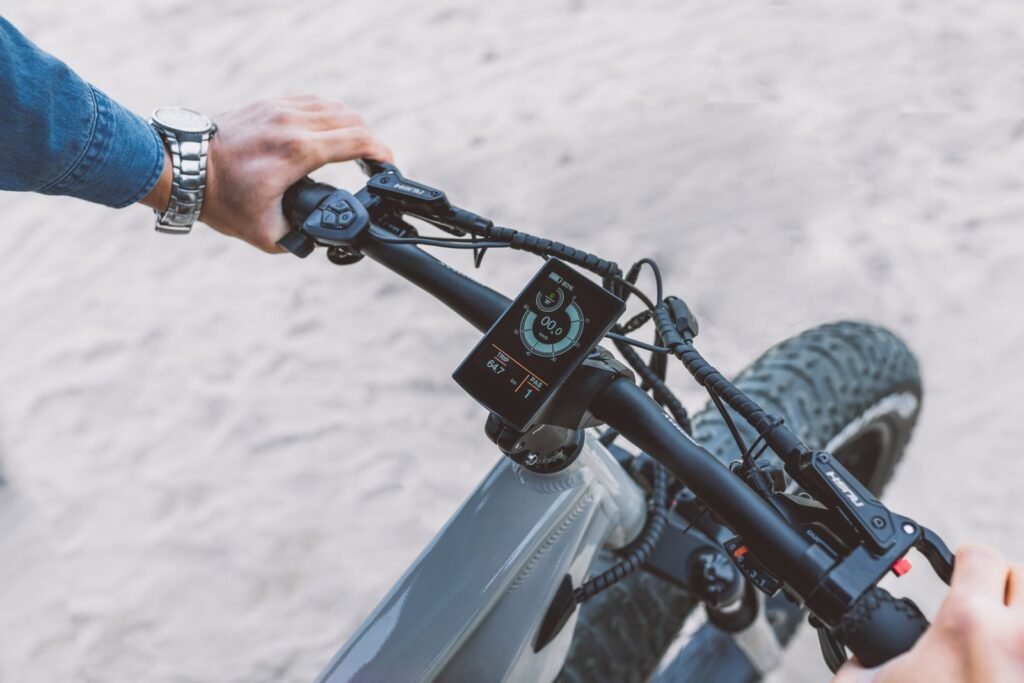
The display is part of the diagnosis too. Its battery bars measure charge, while a range estimate is only a guess. If the display goes blank while the battery still shows charge, check the connection first. If a button sticks, switch the bike off.
What works
- Use the lowest assist that keeps the ride comfortable, and save the highest for hills
- Compare the assist on the same route, on similar days, instead of trusting one ride
- Check that the display and its cable are seated after any knock or wet ride
What to watch
- A display that drops from full to empty in minutes points to a connection or battery fault
- An assist level that changes by itself needs a check before the next ride
- Do not ride with a display that resets or shows an error you cannot clear
When a fix needs a part or a replacement
Some motor problems have a simple fix, and some need a part. A loose cable can be refitted, a dirty sensor cleaned, a dragging brake adjusted. A grinding motor or a burnt smell cannot be fixed at home.
| Fix | Best use | Limit |
|---|---|---|
| Refit the cable connectors | Assist cuts out on bumps or after rain | No help if the cable is damaged |
| Clean and realign the pedal sensor | Assist starts late or comes and goes | Do not bend the sensor ring |
| Adjust the brakes and pump the tyres | Motor feels weak or the wheel drags | Only removes the drag |
| Replacement motor cable | Visible damage, or a loose connector | Must match the connectors exactly |
| Professional diagnosis or replacement | Grinding, heat, smell or smoke | Do not open the motor casing |
What works
- Keep the manual and motor label with the bike
- Ask a shop to test the motor before buying a replacement
- After any fix, start with a short, low-assist ride
What to watch
- A cheap motor that only fits the plug can damage the battery
- A second-hand motor with no history can carry the same fault
- Do not ride a motor a shop told you to stop using
If a shop tells you the motor is beyond repair, the step-through e-bike below is one replacement to compare before you decide.

The verdict
Most step-through e-bike motor problems are fixed by charging the battery, cleaning the pedal sensor, and refitting the motor cable, not by buying a new motor. When those checks fail, or the motor grinds or smells hot, a shop test is the right next step.
Readers also ask
Why does my step-through e-bike motor feel weak on hills?
Start with the battery charge, tyre pressure, brakes and load. Weak assist only on hills or with a heavy load is often normal.
Why does my e-bike motor cut out while I am riding?
It often means the cable is loose, the battery is not seated, or a connector is dirty. Cut-outs only under load need a professional test.
Why does the assist start late when I pedal?
The pedal sensor may be dirty or out of line. Clean it, check the gap, and check the assist setting.
Can I wash my e-bike motor with a hose?
No. Do not use a hose or a pressure washer on the motor or sensor. Wipe them with a dry cloth.
How do I know if my e-bike motor needs replacing?
When the assist stays far below normal on the flat, with a full battery, after the checks above, and a shop test agrees.
Affiliate Disclosure: We may earn a commission when you buy through links on this site, at no extra cost to you.
Additional Details
Name: Step-Through E-Bike Motor Care Guide for Beginners
Description: Learn how to look after a step-through e-bike motor: diagnose weak, noisy or missing assist, fix the common causes, and know when repair or replacement is the right call.
Published: November 17, 2026