Part of our guide on E-Bikes.
A step-through e-bike battery problem usually shows up at the worst moment: the display stays blank, the range fades halfway home, or the battery stops taking a charge. Most of these faults are not a dead battery. On a step-through bike the battery usually sits inside the downtube or on the rear rack, and it is taken off and refitted often, so a loose mount, a dirty contact, a wrong charger, or a charging habit are the usual causes.
This guide shows how to fix step-through e-bike battery problems in a safe order, from the two-minute checks to the point where a replacement is the right answer. For charging and care, read How to Make Your E-Bike Battery Last Longer and How to Charge an E-Bike Battery Safely; for replacement batteries and storage, read E-Bike Battery Care Companion.
Quick facts
| Fact | What it means for your ride |
|---|---|
| Problem this guide fixes | A step-through e-bike battery that will not charge, loses range, or cuts out |
| Check first | The battery mount, the key lock, the contacts, the charger and the display |
| Most common causes | A battery not seated or locked, a dirty contact, a wrong charger, and wearing charging habits |
| Tools you need | Your manual, the battery key, the correct charger, and a dry cloth |
| Stop and get help | Swelling, heat, a strange smell, leaking, smoke, or a cracked case |
| Related guides | E-Bike Battery Care Companion, How to Charge an E-Bike Battery Safely |
Quick recap
- Start with the mount, the lock, the contacts, the charger and the display.
- A step-through battery is removed and refitted often, so check it is seated and locked.
- A battery that will not charge is often a charger, connector or mount problem, not a worn-out battery.
- Shorter range in cold weather, with soft tyres, high assist or a heavy load is often normal.
- Only use the charger made for your battery, and charge indoors.
- Stop at once if the battery swells, overheats, smells strange, leaks, or smokes.
The short answer: check the mount, the lock, the charger and your habits first
Most step-through e-bike battery problems are not a dead battery. A battery that suddenly loses range, refuses to charge or cuts out is usually loose, unlocked, dirty at the contacts, or paired with the wrong charger. Work through the simple checks first.
That order matters because the symptoms overlap. An unlocked battery can shift on bumps and look like a dying motor. A wrong charger can leave a battery half full.
The rest of this guide follows that rule.
How to diagnose a step-through e-bike battery problem, step by step
Work through these steps in order, and note the charge level, the weather, and whether the fault happens on bumps, hills, or low charge.
- Seat and lock the battery again. Switch the bike off, remove the battery, and refit it until the lock clicks.
- Look at the case, mounts and contacts. Check for cracks, swelling, damp, dirt or corrosion. Do not charge a swollen, cracked or wet battery.
- Read the charge level in two places. Compare the level on the battery with the level on the display.
- Check the charger and the socket. Try a different wall socket, check the cable and plug for damage, and watch the charger light.
- Check the charge port. Look for dirt, bent pins or damp, and make sure the plug seats fully.
- Ride a short test route on low assist. On a flat route, note whether the power cuts only on bumps, hills, or low charge.
- Note when it happens. Cold mornings, hot afternoons, wet rides and a full load all change what to expect.
If every step looks normal and the problem stays, get a qualified shop to test the battery and charger.
What you’ll need
- Your manual, or the battery label, for voltage and charger details
- The battery key, to remove, refit and lock the battery
- The original charger, or an exact replacement
- A dry cloth for the contacts, and a dry place to charge
One Amazon product in this section only: the replacement battery below is a 48V pack for step-through and folding e-bikes. Only use it if it exactly matches your battery.

What the symptom usually means
| Situation | What you’ll notice | What to try |
|---|---|---|
| Battery will not charge | No charger light | Refit and lock the battery |
| Range has fallen a lot | Same ride needs a charge sooner | Check tyres, assist and load |
| Power cuts out while riding | Assist stops on bumps or low charge | Refit and lock the battery |
| Display and battery disagree | Battery shows charge; display is blank | Check the display connection |
| Battery charges very slowly | Hours on charge add little range | Check the charger |
| Battery is hot, swollen or smells strange | Heat, swelling, a smell, or leaking | Stop charging and riding |

How temperature, age and charging habits change the answer
Cold is the most common surprise: a battery that spent the night in a cold garage gives less range and charges more slowly. Bring it indoors, let it warm up, then charge it. For the winter routine, read E-Bike Battery Care Companion.
Heat matters too: a battery left in direct sun or in a closed car should not be charged until it has cooled. Age shows up more slowly, as the range on a familiar route falls a little each season. Charging a damaged or very hot battery will wear it down.
What works
- Bring the battery indoors to warm up before charging.
- Charge indoors, in a dry place, away from flammable materials.
- Plan shorter trips or lower assist on very cold rides.
What to watch
- Never charge a frozen, swollen, cracked, hot or damp battery.
- Do not leave a battery in a closed car or in direct sun.
- Do not judge battery health from one cold ride alone.
Settings and controls that affect battery range
Before deciding a battery is weak, check the settings that decide how much of it you use. Assist level is the biggest one: the highest assist on a flat ride can empty a battery far sooner than the lowest assist. Step-through riders often sit upright, which makes high assist feel natural.
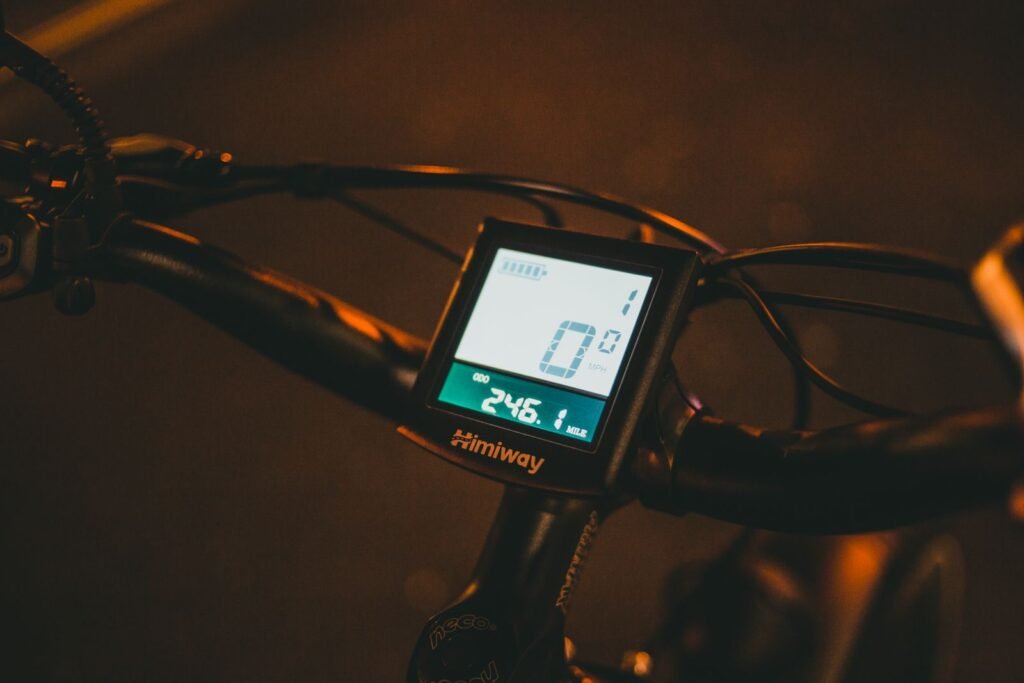
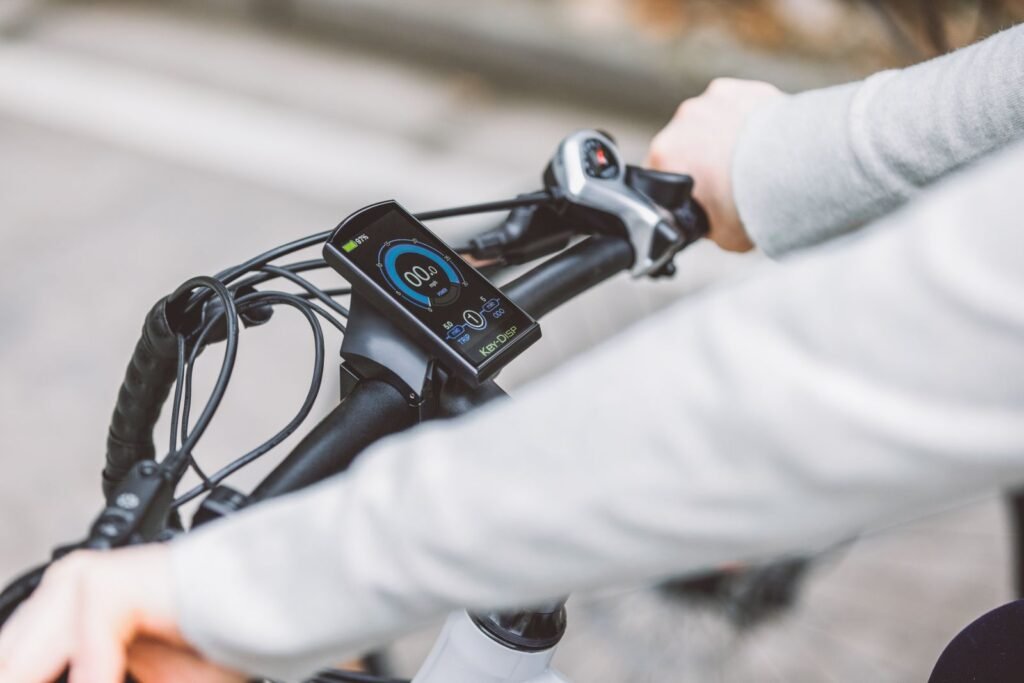
The display is part of the diagnosis too. Its battery bars measure charge, while a range estimate is only a guess based on recent riding. If the display goes blank while the battery shows charge, check the connection first.
What works
- Use the lowest assist that keeps the ride comfortable, and save the highest level for hills.
- Compare the battery bars on the same route, on similar days, instead of trusting one range estimate.
- Check that the display and its cable are seated and undamaged after any knock or wet ride.
What to watch
- A display that drops from full to empty in minutes points to a connection or battery fault.
- A range estimate that changes wildly is a guess, not a measurement.
- Do not ride with a display that sticks, resets, or changes assist by itself.
When a fix needs a part or a replacement
Some battery problems have a simple fix, and some need a part. A loose mount, a dirty contact and a wrong charger can all be fixed. A swollen, cracked or leaking battery cannot be fixed at home. When a part is needed, match it exactly: a replacement battery must match the bike, the mount and the motor system.
| Fix | Best use | Limit |
|---|---|---|
| Refit and lock the battery | Power cuts out on bumps | No help if the mount or lock is worn |
| Clean dry contacts | Intermittent power after wet rides | Do not use water |
| Replacement charger | Charger light never comes on | Must match voltage and maker approval |
| Replacement battery | Range stays far below normal | Must match bike, mount type and motor |
| Professional diagnosis | Swelling, heat, smell, or smoke | Do not open or repair a damaged battery |
What works
- Keep the manual and battery label with the bike.
- Ask a qualified shop to test a battery before buying one.
- After any fix, start with a short, low-assist ride.
What to watch
- A cheap charger that only fits the plug can damage the battery.
- A second-hand battery with no history can carry the same fault.
- Do not keep charging a battery a shop has told you to stop using.
A replacement battery is the last step. The pack below is made for a step-through frame, so compare it against your battery’s label first.

The verdict
Most step-through e-bike battery problems are fixed by refitting and locking the battery, cleaning dry contacts, and using the charger that exactly matches it. When those checks fail, or the battery is swollen, hot or damaged, a qualified shop test is the right next step.
Readers also ask
Why does my step-through e-bike battery lose range in winter?
Cold reduces the range a battery gives, and a cold battery charges more slowly. Bring it indoors, let it warm up, then charge it.
Why will my step-through e-bike battery not charge?
Start with the mount, the lock, the charger and the charge port. A battery not seated and locked, a damaged cable, a dirty port, or a wrong charger will all stop a charge.
Can I use any charger that fits my step-through e-bike battery?
No. A plug that fits is not proof that a charger matches. Use only the maker charger or an exact maker-approved replacement.
How do I know if my step-through e-bike battery needs replacing?
When the range on a familiar route stays far below normal on warm days, after the mount, lock, contacts, charger, tyres and assist level are checked.
Why does my step-through e-bike battery cut out while I am riding?
Power that cuts out on bumps often means the battery is not seated or locked, or a contact is dirty or loose. Power that cuts out only under load needs a test.
Is it safe to keep charging a battery that gets hot or smells strange?
No. Stop charging and riding at once, do not open or puncture the battery, and move it away from flammable materials only if safe.
Affiliate Disclosure: We may earn a commission when you buy through links on this site, at no extra cost to you.
Additional Details
Name: How to Fix Step-Through E-Bike Battery Problems
Description: Learn how to fix step-through e-bike battery problems: diagnose charging faults, range loss and cut-outs, and know when repair or replacement is the right call.
Published: November 17, 2026