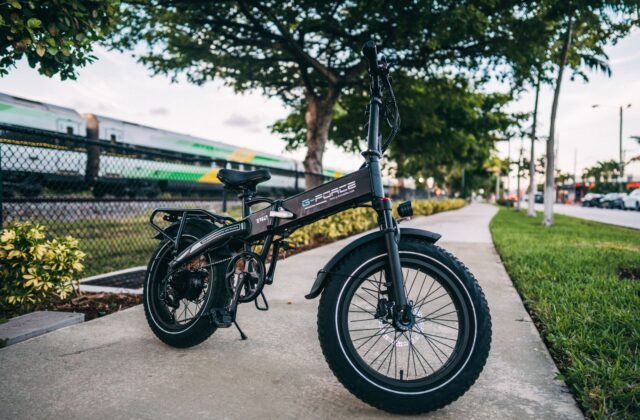
Straight answer: In a folding e-bike vs hybrid e-bike choice, the hybrid e-bike is better for most daily riders. It is more comfortable on a regular route, goes further on a charge, and costs less than a folding e-bike with the same motor and battery. A folding e-bike is better only when you must carry the bike — onto a bus or train, up stairs, or into a small flat. Choose the hybrid unless storage or a mixed commute forces you to fold.
Introduction
A folding e-bike and a hybrid e-bike can both get you to work, the shops or school, but they solve different problems. A folding e-bike folds in half so you can carry it and store it in a small space. A hybrid e-bike is a full-size bike with a comfortable upright position, wider tyres and a motor that helps on hills and in headwinds. It does not fold, so it needs a proper place to park. Both types are covered in the E-Bikes Hub.
The mistake most buyers make is choosing for the folding feature alone. A bike that folds is useful only if you actually fold it most days. If it stays unfolded in a garage or on a bike rack, you paid extra for a feature you never use. The right choice depends on where the bike sleeps at night and how much of your trip is on public transport.
This guide compares the two for daily use: comfort, range, weight, storage, cost and care. Read the comparison, then run the five-step test before you buy. Our Commuter E-Bike vs Folding E-Bike and Commuter E-Bike vs Hybrid E-Bike guides go deeper into each side.
Folding E-Bike vs Hybrid E-Bike: The Comparison
| Attribute | Folding E-Bike | Hybrid E-Bike | What to Watch |
|---|---|---|---|
| Ride comfort | Quick but less settled on small wheels | Steadier on full-size wheels | Test both on your own route |
| Daily range | Shorter on the same battery | Longer, with a smoother cruising speed | Check range against your real distance |
| Weight and carrying | Heavy for its size, but it carries folded | Lighter to ride, hard to lift upstairs | Lift the folded bike before you buy |
| Storage | Folds into a hallway, cupboard or car boot | Needs a rack, hook, shed or parking | Measure the space first |
| Public transport | Fits on a bus or train, under a desk | Stays at the station or needs a rack | Check your bus or train rules |
| Cargo | Limited by the small frame | Takes a rack, panniers and a child seat | Check the rack and weight limit |
| Care and repairs | Hinges and latches need checks | Standard parts, easy to service | Check the latch every week |
| Price | Costs more for the folding frame | Costs less for the same power | Compare motor and battery, not price |

When the Answer Changes
- Bus or train every day: the folding e-bike wins. A hybrid cannot go on a crowded bus.
- You live upstairs or have no garage: storage decides. A folded bike fits in a hallway; a hybrid needs a rack or a shed.
- Your route is long or hilly: the hybrid wins. Bigger wheels roll more easily, and the upright position is kinder on your back.
- You ride with luggage or children: the hybrid wins. A full-size frame takes a rack, panniers and a child seat more easily.
- You travel by car: the folding e-bike wins. It fits in a small car boot without a rack; a hybrid needs a bike rack.

Test Before You Buy: The Five-Step Daily-Use Test
- Fold it and time it. Fold and unfold the bike twice. Over a minute or needing tools means you will soon stop folding it.
- Carry it. Carry the folded bike about 50 metres and up one flight of stairs. Too heavy now means worse when you are tired.
- Ride your real route. Ride the same roads you use every day. A car park test will not show how the bike feels.
- Check the folded size. Measure your hallway, cupboard, car boot or train space, and compare it with the size in the listing.
- Ride it loaded. Take your daily bag, your lock and anything else you carry. A bike that feels fine empty can feel very different loaded. Our best budget commuter e-bike guide shows what to expect at lower prices.
What a Fail Looks Like
- Handlebar wobbles and twitchy steering: small wheels react fast. Fix: slow down, relax your grip, and practise in a quiet street.
- Your back aches after 20 minutes: the saddle or handlebar is set too low. Fix: raise both and take a longer test ride.
- The battery runs low too soon: the motor is doing most of the work. Fix: use a lower assist level, pedal more, and pump the tyres up.
- You never fold it: the fold is awkward or the bike is too heavy folded. Fix: choose the hybrid — the fold must be easy, or it will not happen.
Myth vs fact:
Myth: Folding e-bikes are slow and weak. Fact: Many use the same class of motor as full-size bikes, so the difference is comfort on longer trips, not power.
Myth: A hybrid is too big for a small flat. Fact: A hybrid needs a wall hook, a shed or hallway space. Measure first — if the space is there, the hybrid is the better daily bike.
Before you test: Wear a helmet and test in a quiet area. Check both brakes before you ride, and never test a folding e-bike with a loose latch — the hinge must click fully shut.

How to Choose the Right One for Daily Use
What You Will Need
- A tape measure for your hallway, cupboard, car boot or storage
- Your daily bag and bike lock
- Your bus or train timetable, if part of the trip is on public transport
- The folded size from the listing
The Method
- Measure first. Measure where the bike will live and every space it must pass through.
- Weigh the transport question. If a bus or train is part of your trip, only a folder works. If not, a hybrid is usually better. Our foldable electric bike guide explains what to check on a folder.
- Test both types on your route. Ride a folder and a hybrid on the same road, on the same day.
- Check the battery routine. Make sure you can charge at home or at work, and plan how to look after the battery. See our battery care guide.
- Decide by the storage answer. If the bike cannot be stored safely where you live, storage is the decision.
Tip: A bike with disc brakes stops more safely in wet weather, which matters on a daily commute. Check the brakes on both types during your test ride.

48V 20.8Ah removable battery, 30+ MPH and up to 80 miles max range.
When the Damage Is Already Done
- Bought a folder but never fold it: ride it daily for a month. If it stays unfolded, sell it and put the money towards a hybrid.
- Bought a hybrid with nowhere to store it: fit a wall hook or fold-down rack, or find secure parking with a ground anchor and lock.
- Bought a hybrid but wish it folded: a folder covers the train or bus leg. Keep the hybrid for full rides and the folder for mixed trips.
- Back or wrists hurt: change the saddle height, handlebar height and hand position before blaming the bike type.
- Range too short: lower the assist level, pedal more, and charge properly. Still short? You need a bigger battery, not a different frame.
The Safe Alternative: Choose a Folding E-Bike
If the hybrid does not work for your home or commute, a folding e-bike is a sound alternative. It does everything a hybrid does on a short trip, and it solves the storage problem that rules the hybrid out.
- Measure your space. Check the folded size in the listing against your hallway, cupboard, office corner and car boot.
- Check the folded weight. Lift the folded bike yourself. If you cannot lift it up one flight of stairs, it is the wrong folder.
- Test the fold. Fold and unfold it three times in the shop. The hinge should click shut and feel solid.
- Ride your normal trip. Take the folder on your bus or train leg, then ride the rest.
- Buy only if the fold is a daily need. Fold three days a week or more, and the folder is worth it.

500W brushless motor, 20 MPH top speed and up to 37 miles on pedal assist.
What to Do Next, in Order
- Measure where the bike will live and every door, stair and boot.
- Write down your daily route: distance, hills and any bus or train leg.
- Run the five-step test on a folder and a hybrid, on the same day.
- Choose the hybrid unless storage or public transport forces you to fold.
- Check the price and warranty before you buy.
- After you buy, check the folding latch weekly and brakes before each ride.
Never Do This
- Never buy a folding e-bike without folding it: a stiff fold is a feature you will stop using.
- Never buy a hybrid without measuring your storage: a bike that does not fit at home gets stolen or left in the rain.
- Never ride with a loose folding latch: stop and close it fully before you set off.
- Never guess your range: check your round-trip distance against the battery.
- Never skip the loaded test ride: your bag and lock change how the bike rides.
In Short
For most daily riders, a hybrid e-bike is the better buy: more comfortable, further on a charge and cheaper than a folding e-bike with the same power. A folding e-bike wins only when you must carry or store the bike in a small space, or take it on a bus or train. Measure your storage, run the five-step test on both types, and let your route decide — not the feature list.
The Essentials
- Hybrid e-bike: best for most daily riders
- Folding e-bike: best when you must carry it or store it in a small space
- Measure your storage and folded size before you buy
- Test both bikes on your real route, with your daily bag and lock
- Check the folding latch weekly and the brakes before each ride
- Use the right assist level and charge the battery as the maker says
More Questions, Answered
Can a folding e-bike be used every day?
Yes. A folding e-bike works for daily use if your route is short to medium and you fold it often. It is less comfortable than a hybrid on longer rides, so check the latch each week.
Is a hybrid e-bike good for a daily commute?
Yes — it is the best choice for most commutes. The upright position and full-size wheels suit a daily round trip, and a rack or panniers carry your bag and lock. Make sure you have safe parking at each end.
Which type holds its value better?
Neither type holds value on its own. A well-kept bike with a healthy battery and regular servicing sells far better than a neglected one of either type.
Additional Details
Name: Folding E-Bike vs Hybrid E-Bike: Which Is Better for Daily use?
Description: Folding e-bike vs hybrid e-bike: which is better for daily use? Compare comfort, storage, range and cost, then pick the right one for your commute today.
Published: November 9, 2026
Affiliate Disclosure: This article contains affiliate links. We may earn a commission when you buy through links on this site, at no extra cost to you.