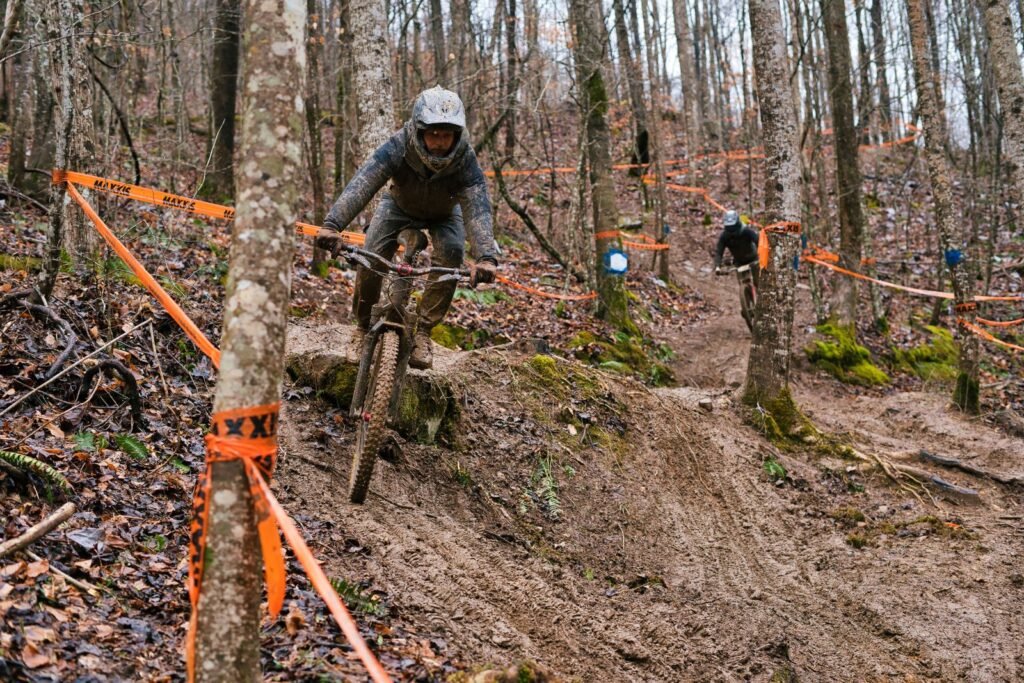
Straight answer: The trail mountain bike wins in most mud. It is lighter, so it stays on top of soft ground instead of sinking, and it has no motor or battery to protect from water and grit. The electric mountain bike wins only on short, steep, sticky climbs, where its motor keeps the rear wheel turning when your legs would stall.
Mud changes the rules of a trail ride. Grip disappears, wheels sink, and every part of the bike comes home coated in grit. A trail mountain bike and an electric mountain bike start from the same idea – a bike built for rough, mixed terrain – but they deal with mud in opposite ways. One is light and simple. The other is heavy and powerful.
This comparison tests both on the same muddy ground: flat wet trail, sticky climbs, and the wash afterwards. It covers weight, traction and cleaning, so you can pick the right bike before you buy. For the wider family of trail bikes, see the Mountain Bikes hub.
Trail Mountain Bike vs Electric Mountain Bike in Mud: The Core Comparison
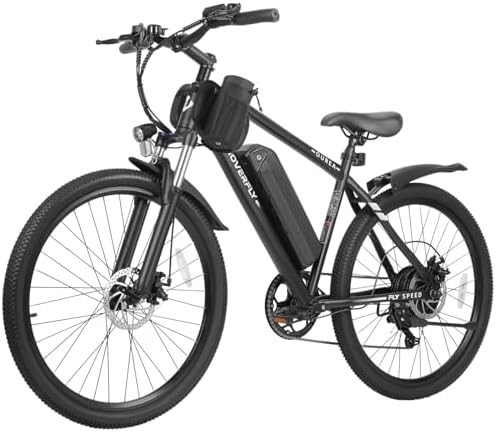
A trail mountain bike is pedal-powered and built for rolling, mixed terrain. An electric mountain bike adds a motor and a battery to a similar frame, so it is heavier, but it can push you up climbs with far less effort.
| Attribute | Trail Mountain Bike | Electric Mountain Bike | What to watch |
|---|---|---|---|
| Weight and sinking | Lighter, so it floats over soft ground. | Heavier, so it sinks deeper. | Deep mud punishes weight most. |
| Climbing torque | Only as strong as your legs. | Motor torque keeps the wheel turning. | Too much power spins the wheel. |
| Traction on flat mud | Good; you can feel the rear wheel. | Good, but weight pushes the front wheel wide. | Use low assist on flat mud. |
| Cleaning after the ride | Quick: frame, drivetrain, brakes, dry, lube. | Slow: the same wash, plus motor and battery. | Mud on seals causes wear. |
| Water and grit risk | Low: no electrics. | Higher: motor and battery must dry fully. | Never aim a hard jet at the motor. |
| Effort and range | All effort is yours; you tire faster. | Assist saves your legs, but mud drains the battery. | Plan the ride home if it runs low. |
| Cost of a mud mistake | Usually a worn chain, pads or tyres. | The same wear, plus motor and battery parts. | Grit costs more on an e-bike. |
| Best mud type | Wet loam, puddles, rolling trails. | Short, steep, sticky climbs. | Deep clay suits neither bike. |
When the Answer Changes
Mud type matters most. Loose, wet loam drains and lets tyres find grip, so the light trail bike wins easily. Sticky clay packs into tread and turns tyres into slicks; here the e-bike’s torque can keep you moving, but only until the tyres clog completely. Deep, soupy mud suits neither bike, and the lighter one at least lifts out more easily.
Gradient, tyres and fitness flip the verdict. On flat ground, weight is all downside. On a steep, muddy climb, torque is everything, and the e-bike pulls ahead – as long as you use a low assist mode and a steady pedal stroke, so the wheel grips instead of spinning. The same climb on a trail bike needs momentum and a clean line, and a stall usually means walking. Tyres can beat the bike itself: open, mud-shedding tread on a trail bike will out-grip an e-bike on worn tread, and lower pressure adds grip on soft ground – check the guide to mountain bike air pressure before you change it. On a long, muddy loop, fatigue builds and the e-bike’s assist keeps you riding instead of walking. A downhill mountain bike suits steep descents, while a fat-tyre bike floats better on soft ground – see Trail Mountain Bike vs Fat Mountain Bike.
Test It Yourself: A Simple Mud Test
One wet trail, ridden the same way on both bikes, tells you more than any review. Keep the tyres, route and effort the same, and change only the bike.
- Pick a short loop with a flat muddy stretch, a puddle section and one steep muddy climb.
- Set both bikes to the same tyre pressure and tread condition.
- Ride the loop on the trail bike first, and note where the wheels slip or sink.
- Ride the same loop on the e-bike in its lowest assist mode, then in a middle mode.
- Compare where each bike slipped, where each stalled, and how tired your legs felt.
What a fail looks like
- Rear wheel spins and digs in on a climb → too much power or too hard a gear → use a lower assist mode and an easier gear, with your weight over the rear wheel.
- Front wheel washes out in a muddy turn → too much speed or weight pushing wide → slow down before the turn and look through it.
Myth: An e-bike is always better in mud because it has more power. Fact: Power only helps where the tyre can grip. In soft, flat mud the e-bike’s extra weight sinks the tyres deeper, and a spinning wheel digs a hole faster than legs ever could.
Before you test: Check your brakes before the muddy section, not in it, because wet pads need more lever pull. Wear gloves and eye protection, tell someone your route, and carry a phone, a pump and a basic tool.
How to Ride Mud on Either Bike
What you will need
- Open, mud-shedding tyres in good condition
- A pump and a pressure gauge
- A bucket, a soft brush, a sponge and bike cleaner
- Chain lube and a clean rag
- Gloves, eye protection and a helmet
- On an e-bike: a dry cloth for the battery contacts and motor area
The method
- Drop tyre pressure a little from your dry setting, so the tread spreads on soft ground.
- On the e-bike, pick the lowest assist mode that keeps you moving; add power only on climbs.
- Keep your speed steady through mud, and look ahead to the firmest line.
- Stay seated and smooth on climbs, with your weight over the rear wheel.
- Stand and shift your weight back on descents, and brake early, before the slippery part.
- Wash the bike the same day: rinse gently, brush off packed mud, dry the drivetrain, then lube the chain. On the e-bike, wipe the battery contacts and motor area dry, and check the seals.
Note: The clean-up is part of the comparison. A trail bike can be washed in minutes with no worry about electrics. An e-bike needs the same wash plus careful drying around the motor and battery, and a rushed wash there can cost far more than a new chain.
When the Damage Is Already Done
If you already bought the wrong bike for your mud, the fix is not a new bike – it is a setup change and an honest look at your trails.
- Bought a trail bike, but your climbs are steep and sticky: fit open mud tyres, lower your pressure a little, and use an easier gear with a steady, seated pedal stroke. If you still stall on the same climb every ride, that trail is an e-bike climb – or a walk.
- Bought an e-bike, but your mud is flat and endless: ride in the lowest assist mode, keep your weight centred, and fit mud tyres so the weight has something to grip with. Clean the motor area and battery contacts every single time.
- Drivetrain is packed with clay and grinding: stop riding it dry. Rinse gently, brush the chain and cassette clean, dry it, and lube it before the next ride.
The Safe Alternative: Choose the Other Side Properly
- Match the bike to your worst climb, not your best trail. If one climb stalls you every time, that climb decides the bike.
- On an e-bike, learn the assist modes before the mud: lowest mode for flats, middle mode for climbs, and never full power on soft ground.
- On a trail bike, spend the money on mud tyres first. Tyres change the mud result more than any other part.
- Weigh the wash as well as the ride. If you will not clean a motor area properly after every muddy ride, the simpler bike is the safer buy.
For the electric side, see Electric Mountain Bike vs Mid-Drive E-Bike and Commuter E-Bike vs Electric Mountain Bike. For the pedal-powered side, see the hardtail vs full-suspension comparison and Trail Mountain Bike vs Cross Country Mountain Bike.
What to Do Next, in Order
- Walk your local trail after rain and note where the mud is deep, sticky or flat.
- Decide which job matters more: floating over flat mud, or climbing steep mud.
- Check your tyres and pressure first – a good mud tyre beats a new bike on the wrong tread.
- Test-ride both bikes on the same muddy loop, using the steps above.
- Buy the bike that fits your worst mud, not your best day.
Never Do This in Mud
- Never blast a jet of water at the motor or battery – it drives grit and water into seals that are hard to dry.
- Never use full power on soft, flat mud – the wheel spins, digs in, and leaves you worse off than pedalling.
- Never leave mud to dry on the drivetrain – dried clay grinds the chain and cassette on the next ride.
- Never skip the brake check before a muddy descent – wet pads stop slower, and finding out mid-descent is too late.

In short
In mud, the trail mountain bike is the better choice for most riders because it is lighter, simpler and quicker to clean, while the electric mountain bike earns its place only where steep, sticky climbs need torque that legs cannot give. Pick the bike that matches your worst mud, fit proper mud tyres, and wash the bike the same day.
The essentials
- Trail bike wins most mud: lighter, simpler, faster to wash.
- E-bike wins steep, sticky climbs: motor torque keeps the wheel turning.
- Weight sinks in soft mud; power only helps where tyres can grip.
- Mud tyres and slightly lower pressure matter more than the bike.
- Clean the same day, and be extra careful around the motor and battery.
More Questions, Answered
Is an electric mountain bike good in mud? Yes, on steep, sticky climbs where its motor torque keeps the rear wheel turning. On flat, soft mud it is worse than a trail bike, because its extra weight sinks the tyres deeper.
Which bike is easier to clean after a muddy ride? The trail mountain bike. It has no motor or battery to protect, so a gentle rinse, a brush and chain lube are enough.
Which bike should I buy if my trails are muddy all winter? If your trails are mostly flat or rolling, buy the trail mountain bike and spend the difference on mud tyres. If one steep, muddy climb stalls you on every ride, an electric mountain bike is the better buy – as long as you will clean it properly after every ride.
Additional Details
Name: Trail Mountain Bike vs Electric Mountain Bike: Which Is Better for Mud?
Description: Trail mountain bike vs electric mountain bike in mud: which grips, climbs and rinses clean better? Compare weight, torque, tyres and upkeep before you buy.
Published: November 10, 2026